 REINFORM
Develop the Cape Before the Rainwear Claim
Equestrian Poncho Manufacturer for OEM/ODM Development
Work with a poncho manufacturer on a sewn equestrian cape: define neck balance, arm exits, side snaps and evidence for the intended rain-use brief.
PUBLICATION /
CONTENT REVIEW /
A development direction for your brand. Final material, construction and performance by specification and sample approval.START WITH
THE RIDER.
For adult equestrian apparel brands and teamwear buyers commissioning a cape-shaped rain over-layer over named clothing. The useful first decision is whether the shoulder balance, arm access and lower drape can be developed into an acceptable sample before a material system or performance claim is frozen.
Product development context
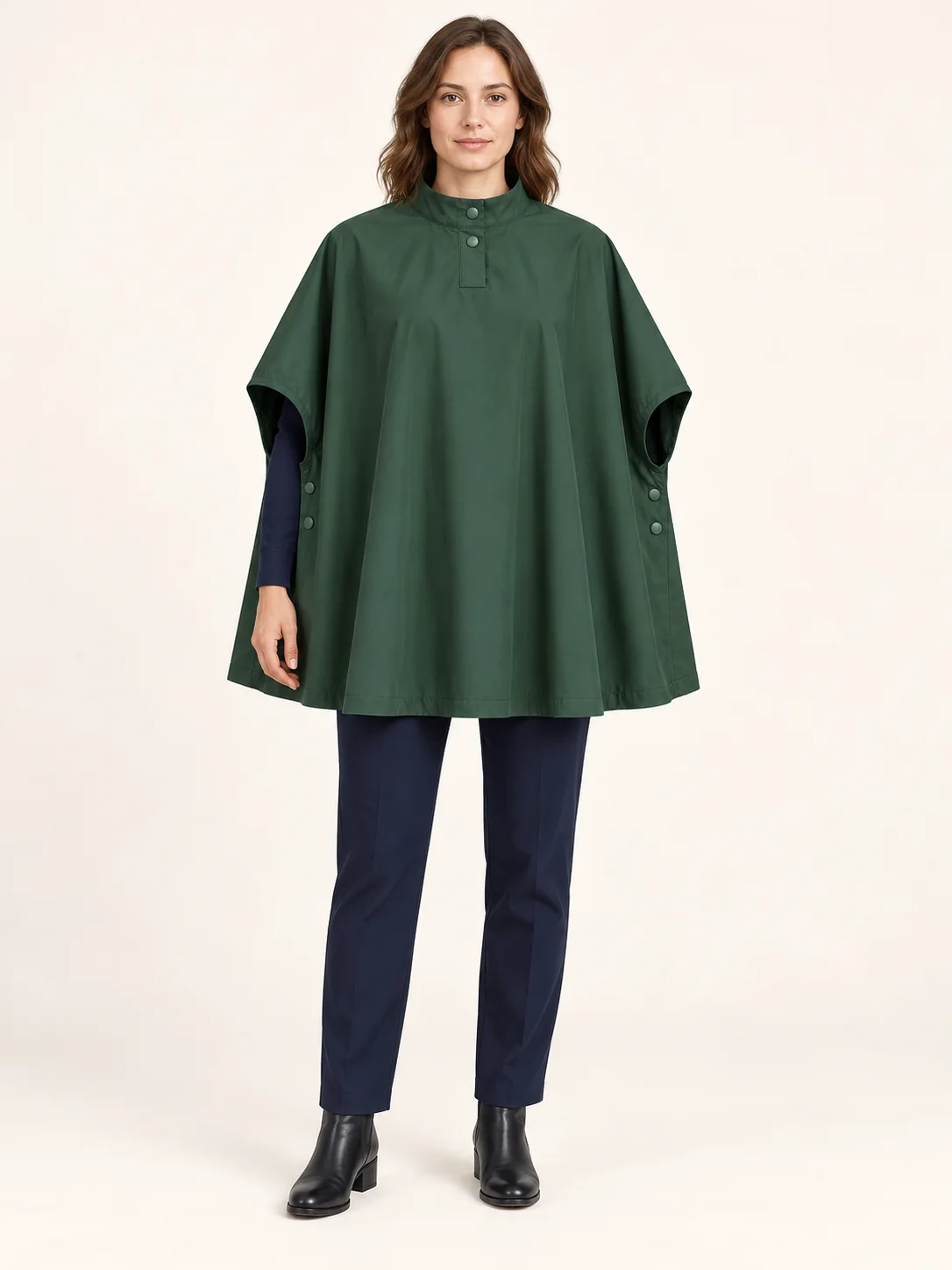
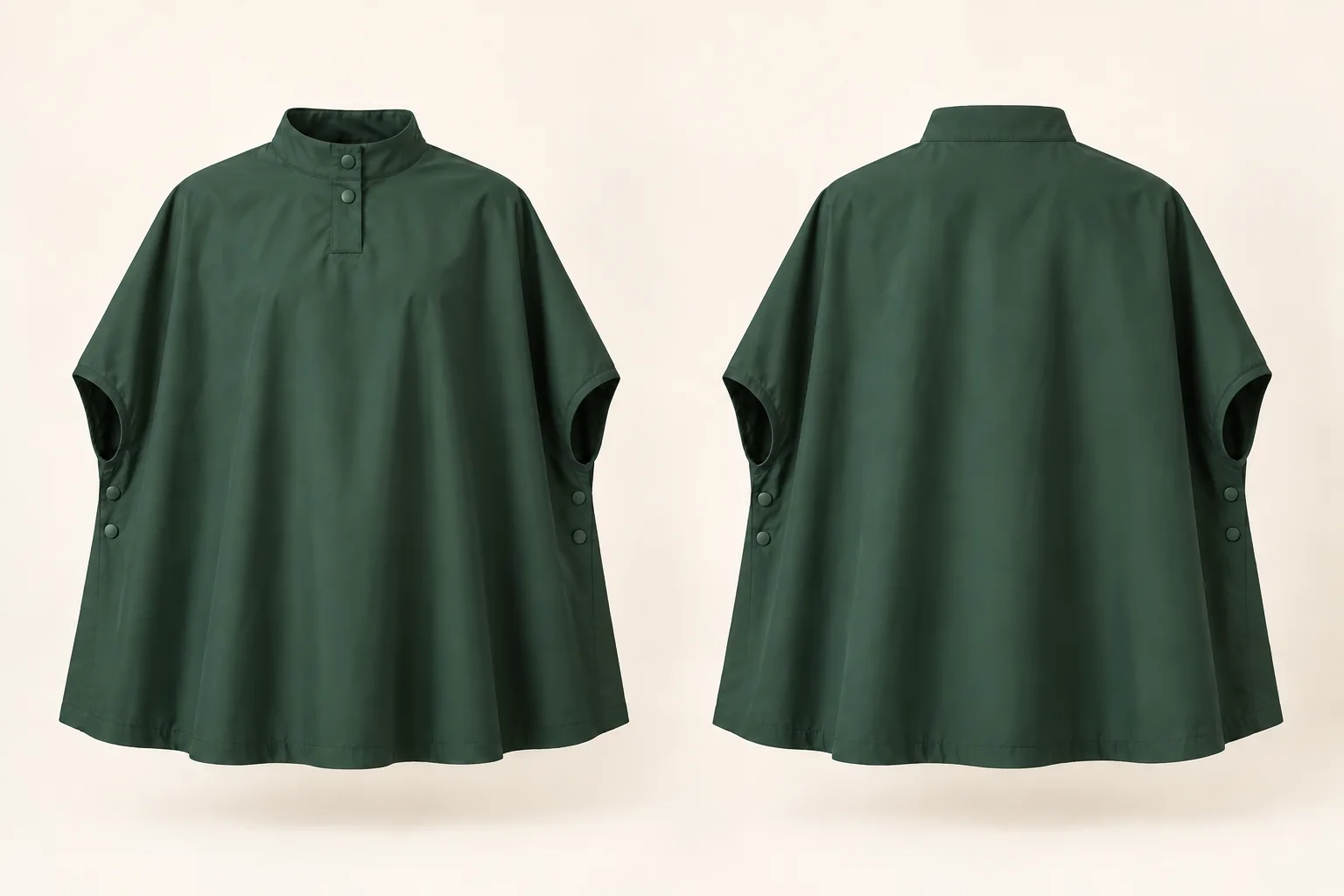
This sewn cape proposal is for brands developing a riding rain poncho with an OEM/ODM poncho manufacturer. Muted forest-green cape panels fall across the shoulders and upper arms. A short stand neck has a short front opening with two tonal press snaps; each upper side has a separate hand/arm exit, with two side-closing snaps below it. The controlled hem is straight. There is no hood, conventional sleeve, cuff, zip, pocket, foot strap or tie. REINFORM supports OEM/ODM pattern and sample development for this cape architecture, including neck, arm exits, side closures and rain-fabric seam development. No completed sample, stock item or verified weather or riding performance is represented. REINFORM has operated its own factory since 2016. MOQ is 300 pieces per style per colour. Sampling takes 7–10 working days from the agreed start. Bulk production takes 30–45 working days after sample approval, confirmation of the specification, materials and order details, and agreement of the production start date. Sample revisions and shipping are planned separately; a production commitment follows project review and approval.
Balance the whole cape over the named layers
Name the clothing beneath the poncho and agree how the cape should sit at the neck and shoulders. Compare front and back length, cross-body span and the fall around the upper arms on the same sample. A broad flat outline alone cannot establish how the garment hangs during reaching or bending. Record any imbalance before moving the arm exits or changing panel width.
Locate access and side closures together
Treat each bound arm exit and the two snaps beneath it as one side assembly. Mark the top and lower end of the opening from agreed pattern landmarks, then check hand access with the intended layers and gloves, if relevant to the brief. Review the side overlap open and closed. Do not assume that extra span or another closure automatically resolves access, comfort or drape.
Keep the rain-use claim dependent on evidence
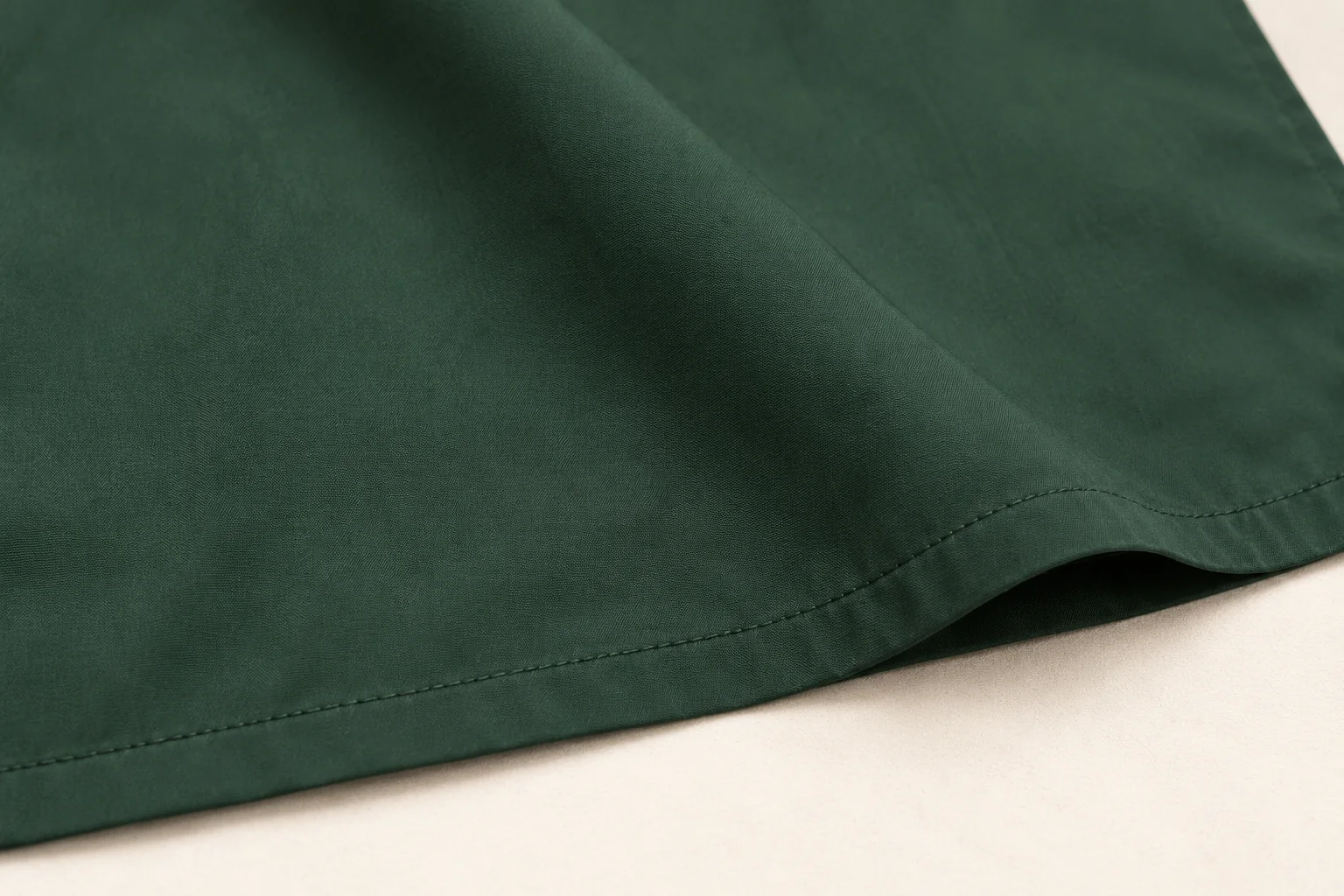
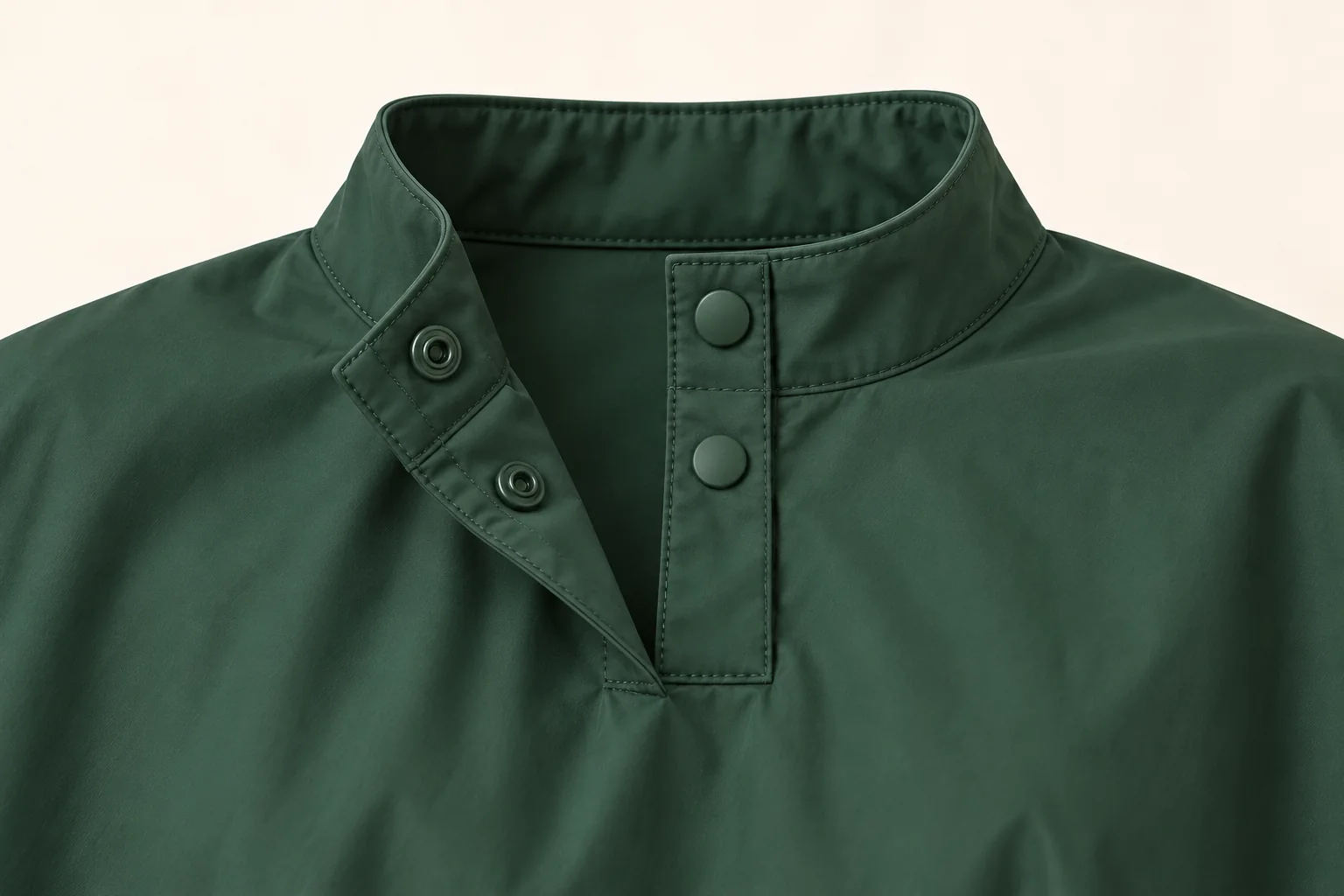
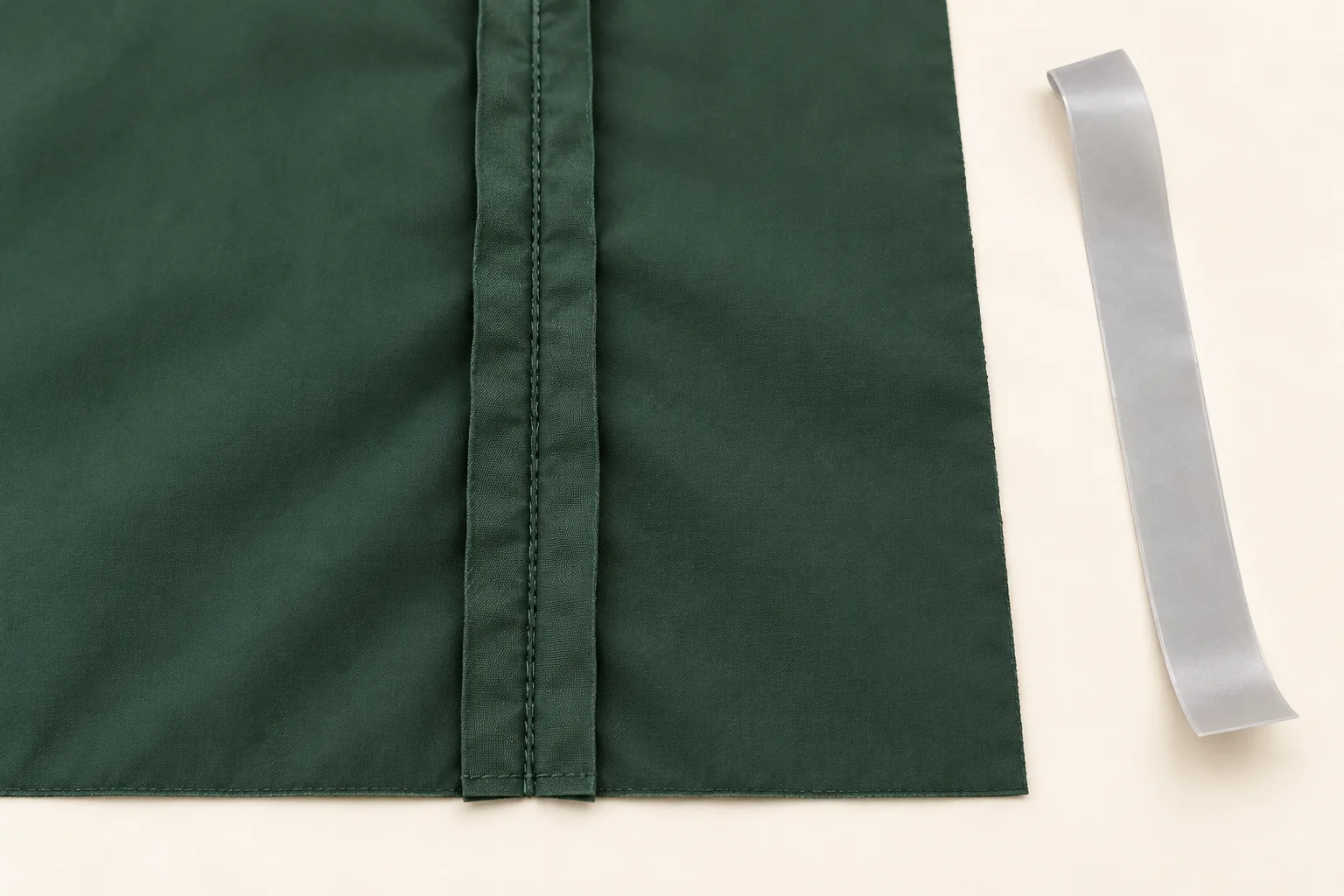
Choose the intended weather-use brief before sourcing the shell or selecting a seam treatment. Ask which material, seam and completed-garment evidence the buyer requires, including the agreed care state. The face, neck and seam images are development references. They establish neither waterproofness nor breathability, and the separate strip shown beside a seam is an unselected option for compatibility review.
THE FABRIC
SETS THE FEEL.
Compare material directions against your rider, climate and care expectations. Request the actual fabric specification and evidence for any performance claim.
| Material direction | Why consider it | What to verify |
|---|---|---|
| Forest-green shell direction | The proposed smooth matte shell gives the cape its colour and fall. Fibre composition, construction, mass, finish and any coating or laminate remain open sourcing decisions. Select a physical material for the intended rain application and the whole silhouette; the illustration supplies no material specification. | Request supplier identification and relevant material evidence, agree the shade reference and compare handle, drape and appearance on a sewn sample. Record the actual material revision and the claims still awaiting verification. A supplier fabric report does not by itself approve the neck opening, arm exits, seams or complete poncho. |
| Neck facing and two-snap assembly | The short neck opening needs a compatible facing and two closure positions so the buyer can review passage, overlap and contact at the neck. Facing construction, local support, snap type and attachment are not fixed by the concept. Their weight and stiffness can change the way the cape hangs from the neck. | Review the actual inner facing and both complete snap sets with the chosen shell. Check alignment, opening and closing, local distortion, edge finish and contact comfort. Agree any attachment-strength question with the buyer and competent laboratory; no closure force or pass criterion is supplied here. |
| Panel seam and candidate sealing approach | Rain-use development includes choosing how the selected panels are joined and whether a compatible sealing treatment is appropriate. The reference shows a sewn join with a separate, unattached candidate strip. It does not establish that tape is specified, installed, compatible or effective. | Compare the proposed seam and any treatment on the selected material before freezing the construction. Record appearance, flexibility, attachment or adhesion questions and the agreed care state, then obtain the evidence needed for the intended claim. Do not transfer a strip supplier's statement to the completed garment without the relevant review. |
These are sourcing comparisons, not a list of stocked or certified fabrics. Confirm composition, weight, finish, availability and testing with the material selected for your project.
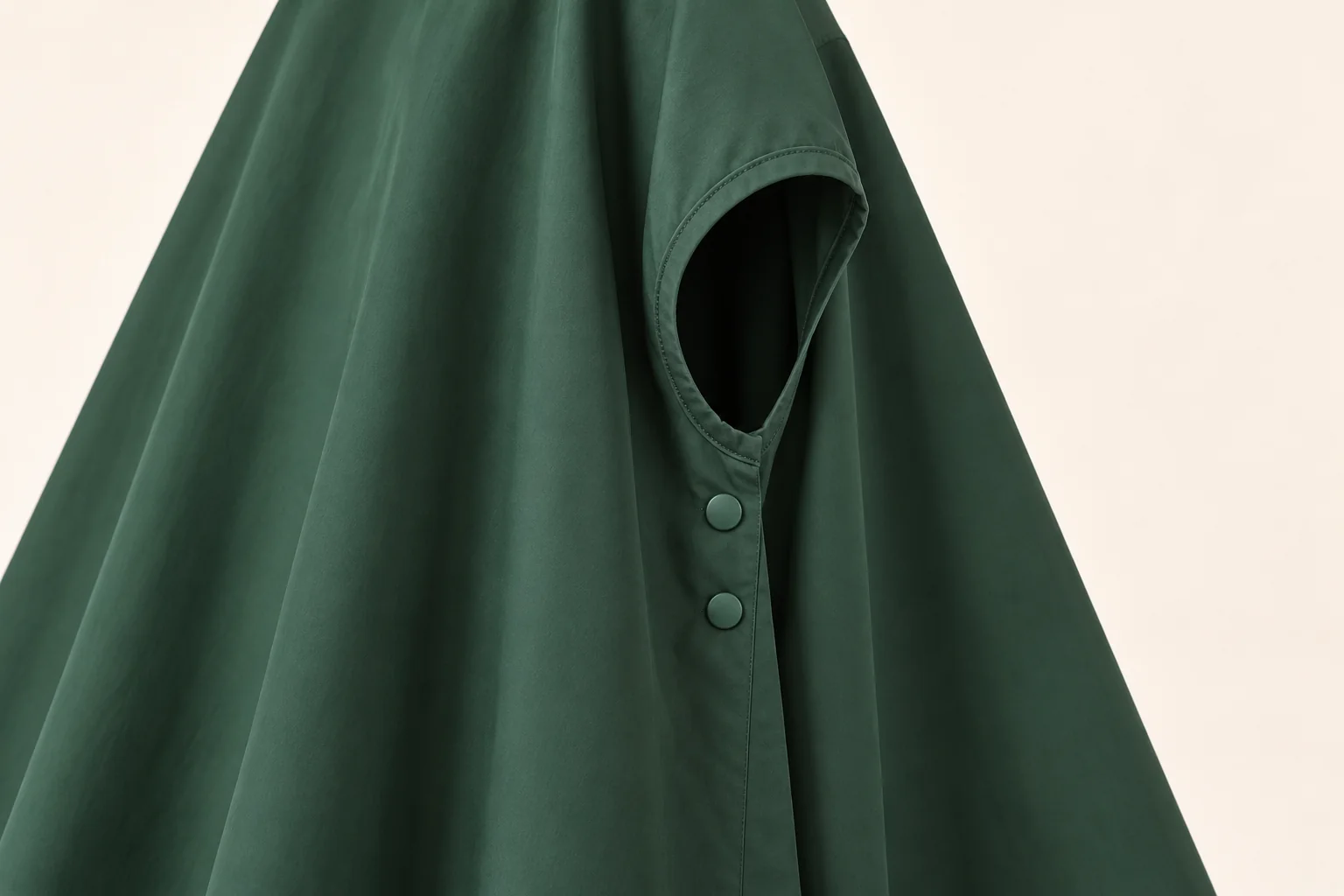 Proposed arm-exit and two-snap side overlap. Opening dimensions, closure support and rain-use performance require sample review.
IT’S IN
THE DETAILS.
Continuous cape body
Develop broad front and back panels that fall from the short neck across the shoulders and upper arms. Keep the garment free of a conventional separate sleeve and sleeve-head block. Map the real panel joins on the specification so the pattern, material consumption and any rain-related seam review refer to the same construction.
Short two-snap neck opening
Keep a short centre-front opening with exactly two tonal snap positions. Define neck height, opening depth, overlap and facing on the sample specification. Check the opening released and fastened; neither the short stand neck nor the snaps establish weather sealing or coverage for the head.
Two independent side-access assemblies
Provide one clearly defined hand/arm exit at each upper side. Below each exit, place exactly two side-closing snaps on the front/back overlap. Specify the opening limits, closure spacing and edge finish from named landmarks. Keep both sides consistent, with no sleeve tube, cuff, hanging tie or underfoot strap.
Controlled straight lower edge
Set the nominal straight hem and its finished treatment after reviewing the cape over the named layers. Assess front, side and back drape together rather than approving length from a hanger. The proposal has no pocket, zip or hem tie; any later structural revision needs an updated specification and matching reference views.
FROM THE BRIEF.
INTO THE WORKROOM.
Develop the cape over the named layers, keeping shoulder balance, the two-snap neck and both arm-exit/side-closure assemblies on one brief. Select the shell and seam approach for the intended rain use; these references establish no approved material system or weather result.
Explore our factory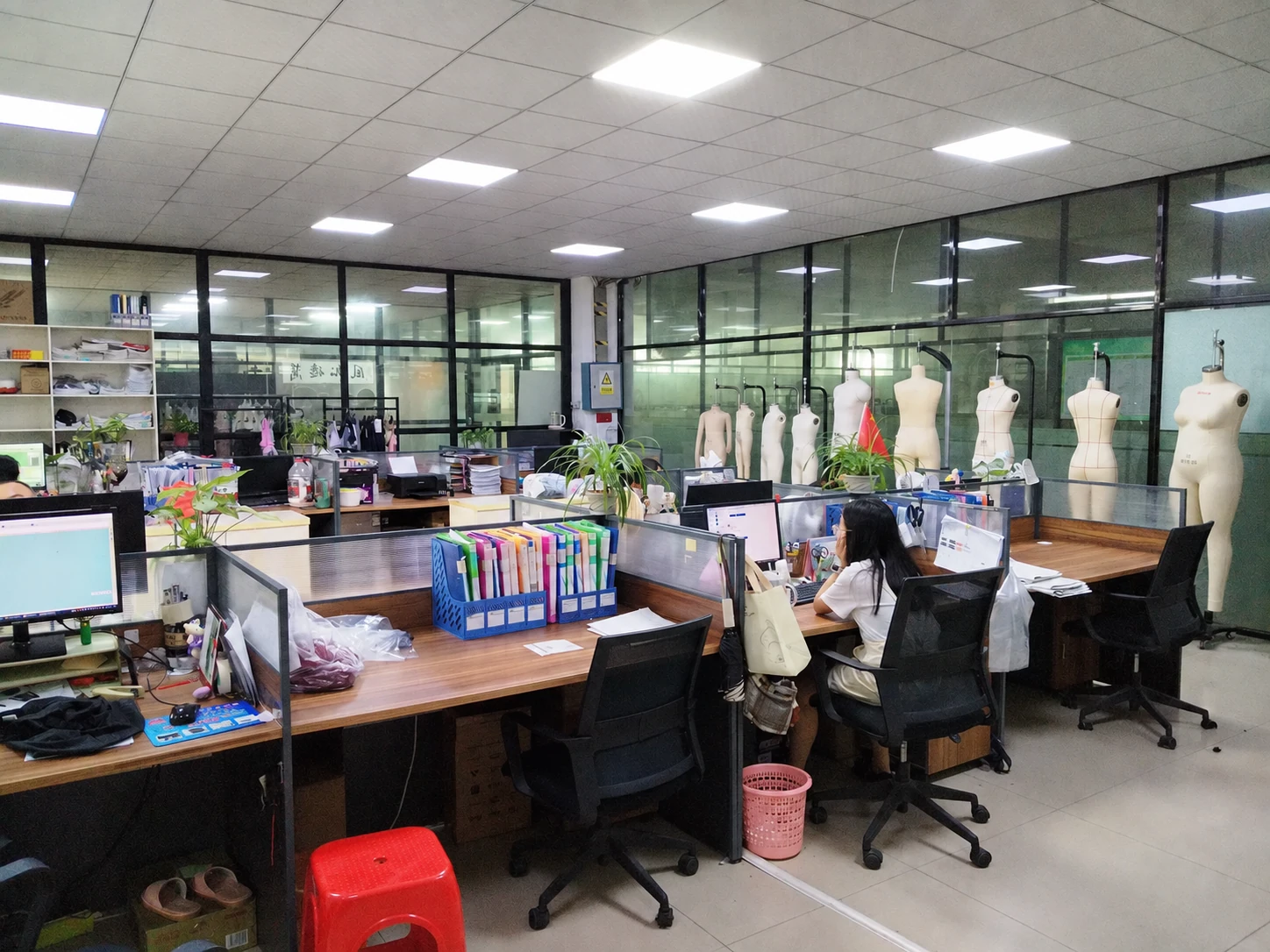
Continuous cape body
Develop broad front and back panels that fall from the short neck across the shoulders and upper arms. Keep the garment free of a conventional separate sleeve and sleeve-head block. Map the real panel joins on the specification so the pattern, material consumption and any rain-related seam review refer to the same construction.
Carry this into approval Factory views show our working environment. Your garment follows its agreed specification and sample.GET THE
RIGHT FIT.
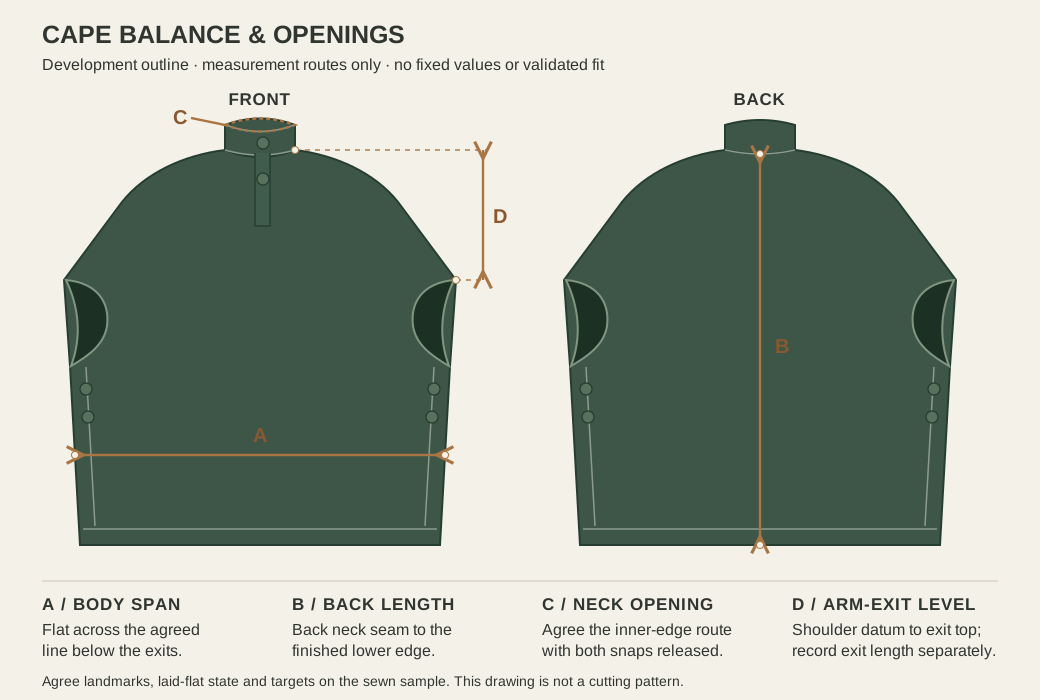
A size label is only the beginning. Agree the measurement method, review the garment in use and keep the approved fit record with your specification.
Your fit-session checklist
Record the size worn, body measurements, intended underlayers and every proposed correction with the dated sample.
Note the size worn, body measurements, intended underlayers and each proposed correction. Recheck the affected measurement after a revision; confirm the size breakdown for each style and colour before bulk.
MAKE IT
RECOGNISABLY YOURS.
Use the product’s construction to guide decoration and finishing. Ask for placement, colour and material approval on the relevant sample.
Small details.
One identity.
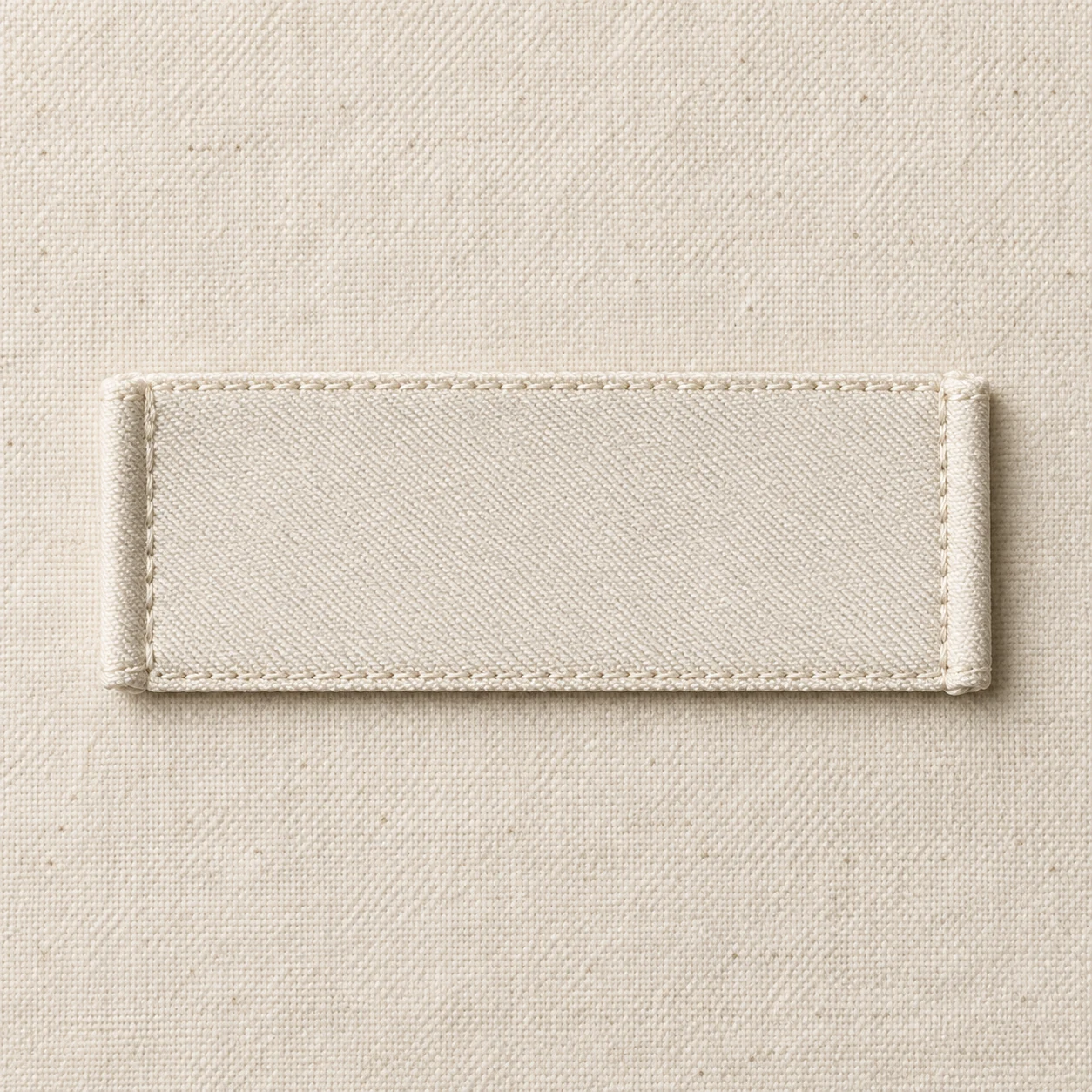
Folded edges · fine weave

Textured stock · cord attachment
Raised edge · stitched placement
Material mockups with a live wordmark study. Print, weave, colour matching and placement are confirmed on your physical sample.
Size and layering matrix
Provide target body measurements, named underlayers and a size ratio. Agree how body span, back length, neck opening and arm-exit location change between sizes. A loose cape still needs a defined fit range; no unisize claim is assumed.
Shell and forest-green shade
Use a physical colour reference and select the actual shell through sourcing review. Review facing, stitching and tonal snap colour beside it. Composition, mass and weather-related finish are project decisions, with evidence requirements agreed before claims are printed.
Closure and facing specification
Keep the locked two front snaps and two snaps below each arm exit. Select the physical components, local support and facing after compatibility review, then approve attachment and operation on the sewn assembly. Component substitutions require the buyer's review.
Branding, care and packing
Mark artwork location and method on the cape panels after the seam and material plan is known. Review its effect on the chosen assembly and any requested claim. Supply destination-specific label, care and packing information; do not use a logo or care label as evidence of weather performance.
APPROVE THE DETAIL.
THEN THE ORDER.
The first sample helps you make decisions. Define review conditions and acceptance criteria before you compare the result.
Review the equestrian riding poncho sample
Sampling takes 7–10 working days from the agreed start. Record each decision against the dated sample before bulk approval.
Rider, material direction, measurements and artwork.
DEFINE THE STARTTurn the agreed direction into a garment to review.
7–10 WORKING DAYSReview fit, finish and changes. Confirm the final specification.
REVISE IF NEEDEDProceed with agreed quantities, colours, labels and packing.
30–45 WORKING DAYSA shared development direction
Bring reference garments, your rider profile, target colours and any artwork. We turn these into the measurements, materials and construction questions that the sample needs to resolve.
Sample feedback can return to development. Revisions and transit are planned separately; timing begins from the agreed specification and start date.

KEEP THE APPROVAL.
WITH THE ORDER.
One agreed reference for the workroom: the dated sample, its specification and your confirmed order breakdown.
Sample decisions
- Whole-cape balance
Photograph front, side and back over the named layers, with the neck and side snaps closed. Record panel balance, neck drag, hem position and changes during agreed off-horse movement. Relate each comment to the sample and measurement revision. These views document fit observations, not a completed riding or safety validation.
- Neck and closure operation
Inspect the facing and both complete front snap sets, released and fastened. Check passage, overlap, alignment, local distortion and contact at the neck with the intended layers. Keep any closure-strength test question separate from an appearance approval, with the specimen and decision agreed by the buyer and laboratory.
- Arm exits and side overlap
Check the two upper-side openings individually and compare their positions from the same datum. Open and close the two side snaps beneath each one; record hand access, overlap behaviour and fabric caught at the closure. Review both the inner and outer faces before changing opening length or closure placement.
Style, colour & size allocation
Confirm each style and colour separately, with the size allocation attached. The minimum is 300 pieces per style, per colour.
Labels, packing & timing
Agree label artwork, packing instructions and the production start. Bulk production takes 30–45 working days from the confirmed start; revisions and transit are planned separately.
A CLEARER BRIEF.
A MORE USEFUL QUOTE.
Price follows an agreed product, quantity and delivery scope. Use these inputs to compare proposals on the same basis.
Cape panel usage and grading
Broad panel span, finished length, material width and the size matrix influence consumption, cutting layout and pattern work. Confirm the actual material and finished measurements before treating a concept-based estimate as an agreed quotation.
Rain-material and seam development
The selected shell, any finish or laminate, seam layout, proposed treatment and requested evidence change the development route. Compatibility work and sample revisions should be identified in the quotation instead of assuming an unspecified sealing process is included.
Openings, facing and six snap positions
Two front snap positions and two on each side require chosen components and compatible attachment construction. Arm-exit binding, facing and local support add operations; their final specifications follow material and sample review.
Order and approval schedule
MOQ is 300 pieces per style per colour. Confirm colour splits, size ratio, material availability, sample decisions and the agreed production start when planning bulk. Revisions, verification and shipping need their own allowances in the project schedule.
Bring these six things
Planning baseline: 300 pieces minimum per style, per colour. Sampling takes 7–10 working days; bulk production takes 30–45 working days from the agreed start.
300 pieces minimum per style, per colour. State each colour quantity separately; confirm your proposed size allocation.
GOOD QUESTIONS.
BETTER DECISIONS.
Product-specific sourcing questions to resolve before sampling.
Can the proposed poncho be described as waterproof?
No verified waterproof or breathability claim is established for this proposal. Rain-use is the development target. The buyer must select the material and seam system and agree relevant evidence for the completed garment, including its neck and arm openings and the intended care state. Another supplier's fabric rating or poncho description cannot be transferred to this design.
How does this cape differ from a long-sleeve rain shell?
The cape falls across the shoulders and upper arms without a conventional separate sleeve and cuff. Hands pass through defined upper-side exits, with two side-closing snaps below each exit. That changes the pattern, layering balance and access decisions. The short stand neck has two snaps and no hood; there is no implied head coverage or completed riding validation.
What poncho development scope has REINFORM confirmed?
REINFORM has confirmed OEM/ODM pattern and sample development for the cape body, neck, arm exits, side closures and rain-fabric seam development described here. This confirms a development scope, not an already sewn sample, stock, a particular material specification or a performance rating. The actual construction and any subsequent production commitment remain subject to project review, sample approval and the agreed order.