 REINFORM
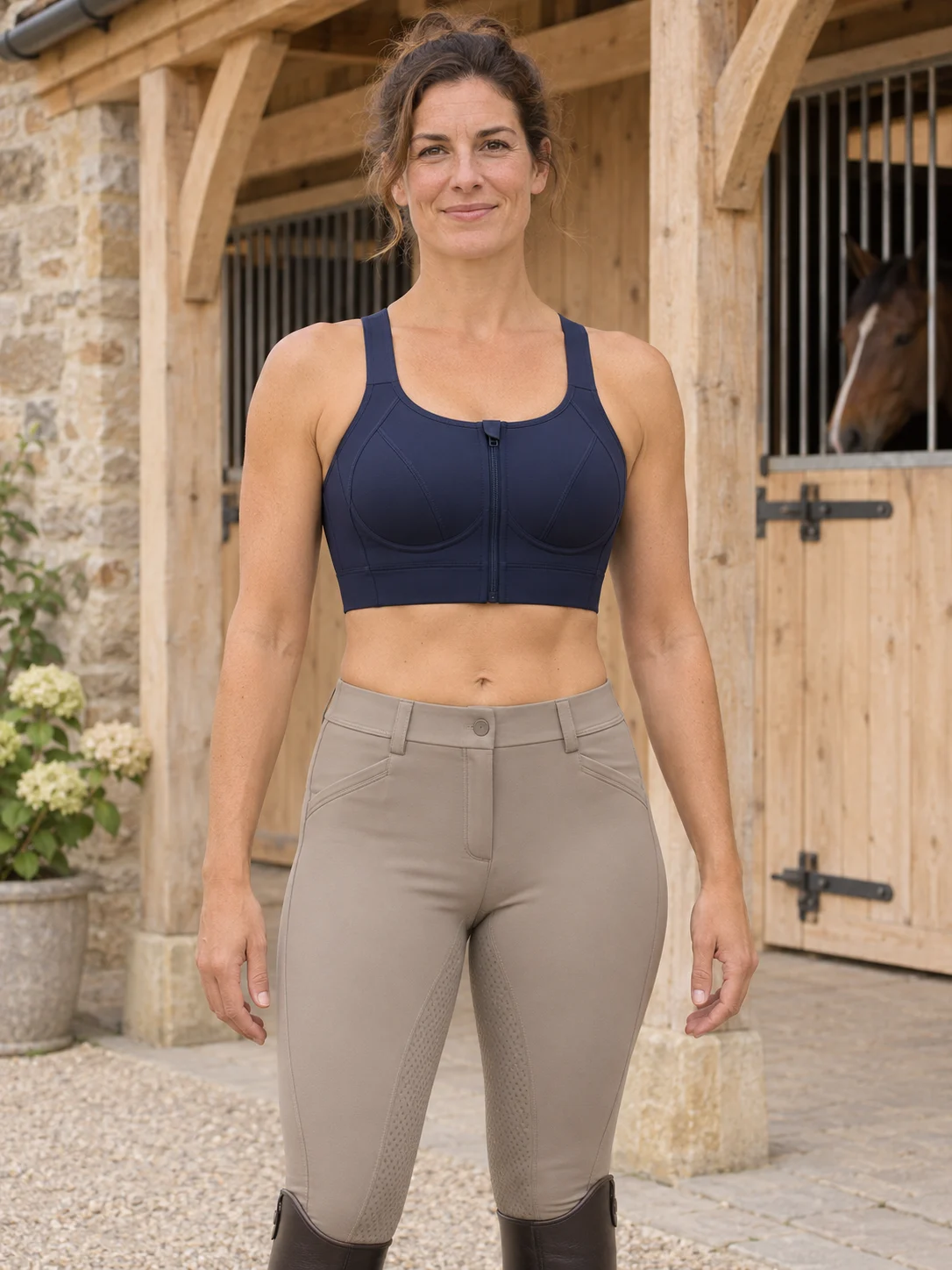
Approve the cups, band and front entry together.
Sports bra manufacturer for sewn equestrian underlayer development
Brief a sports bra manufacturer for a sewn rider underlayer: define cups, cradle, wings, underband, straps and a guarded front zip before sample approval.
PUBLICATION /
CONTENT REVIEW /
A development direction for your brand. Final material, construction and performance by specification and sample approval.START WITH
THE RIDER.
For equestrian apparel brands and technical sourcing teams developing an adult sewn bra and needing one traceable fit, component and front-entry reference before a bulk order.
Product development context
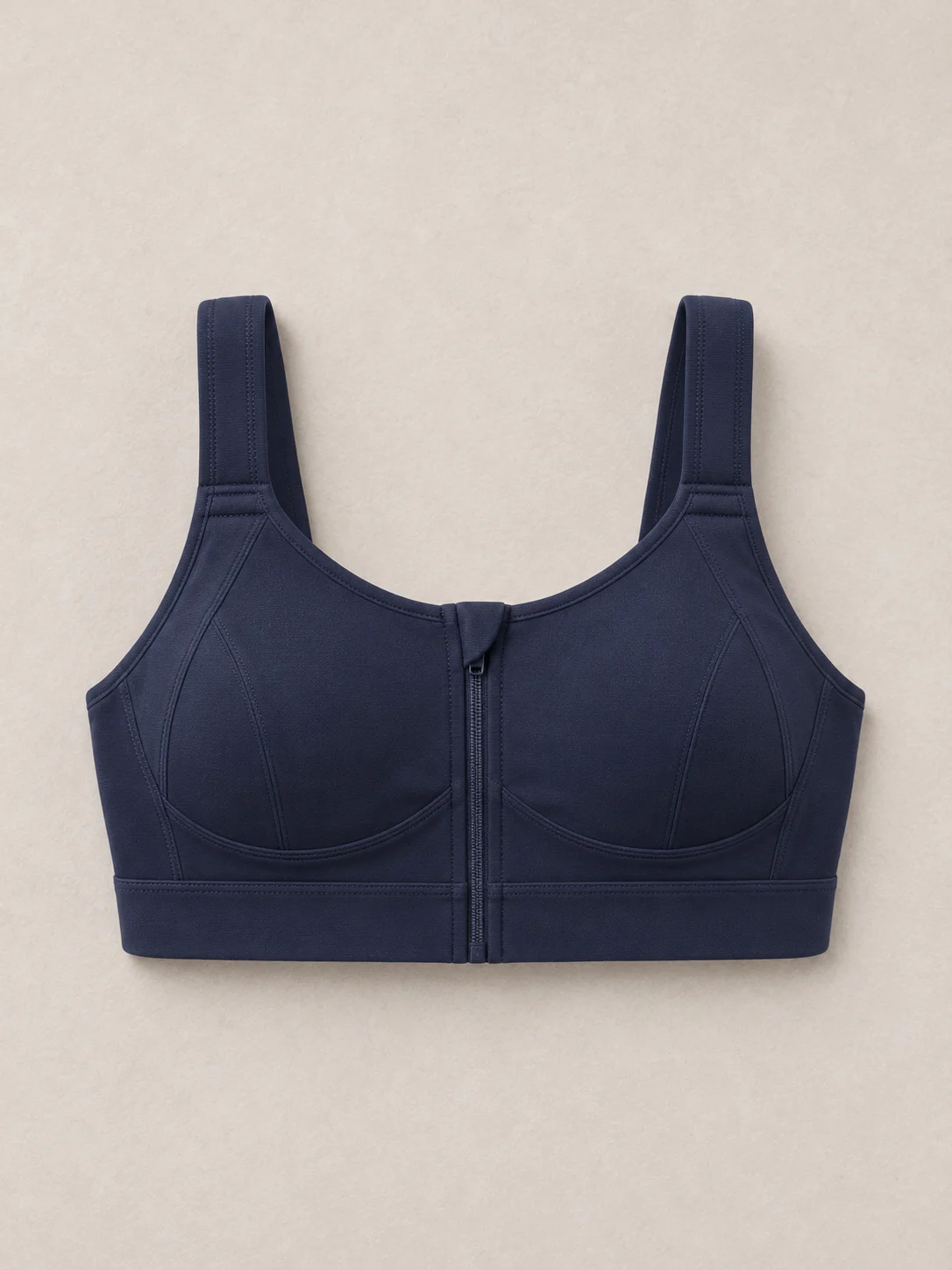
An equestrian brand briefing a sports bra manufacturer needs a complete bra assembly, rather than a shortened training top. REINFORM supports OEM/ODM pattern and sample development for panelled soft cups, a separate cradle and side/back wings, underband and strap connections, and a front zip with an internal guard. The proposed navy direction uses a matte knit appearance, broad fixed shoulder straps and a wide lower band. It is intended for review as a rider underlayer beneath the named training or competition top. Material selection, sizing, quotation and physical sample approval still define the new SKU. The illustrations explain the intended construction; they do not represent stock, a completed factory sample or verified garment performance.
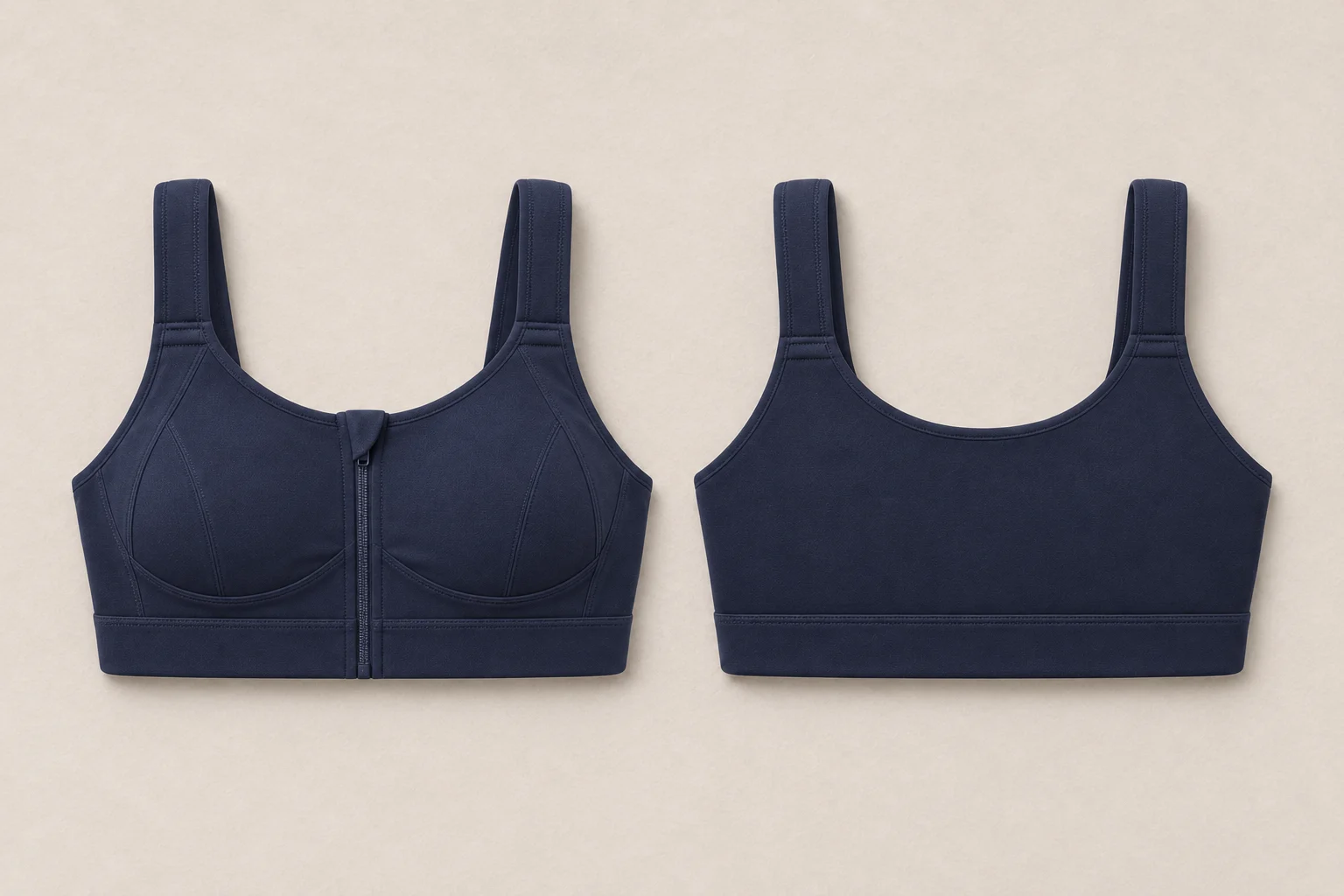
Defined cups and a separate cradle
Identify the soft-cup panels and the curved lower cradle as different components. Mark their joins and lining boundaries on front and inside drawings. Compare the left and right assemblies on one sample so a cup correction does not disappear into an unrecorded change to the band or wing.
A connected band, wing and strap layout
Draw how each cup meets the side/back wing, where the lower band attaches and where both broad fixed straps begin and end. Review this complete layout against the intended adult fit reference. Agree any size progression on the assembled bra rather than scaling every component identically.
Front entry with a visible inner guard
The centre opening must allow dressing and close through the lower band junction without leaving the guard or lining undefined. Check the zip’s top and bottom terminations, contact at the centre front and clearance from loose fabric on the sewn sample. Keep the component reference with the approved construction.
THE FABRIC
SETS THE FEEL.
Compare material directions against your rider, climate and care expectations. Request the actual fabric specification and evidence for any performance claim.
| Material direction | Why consider it | What to verify |
|---|---|---|
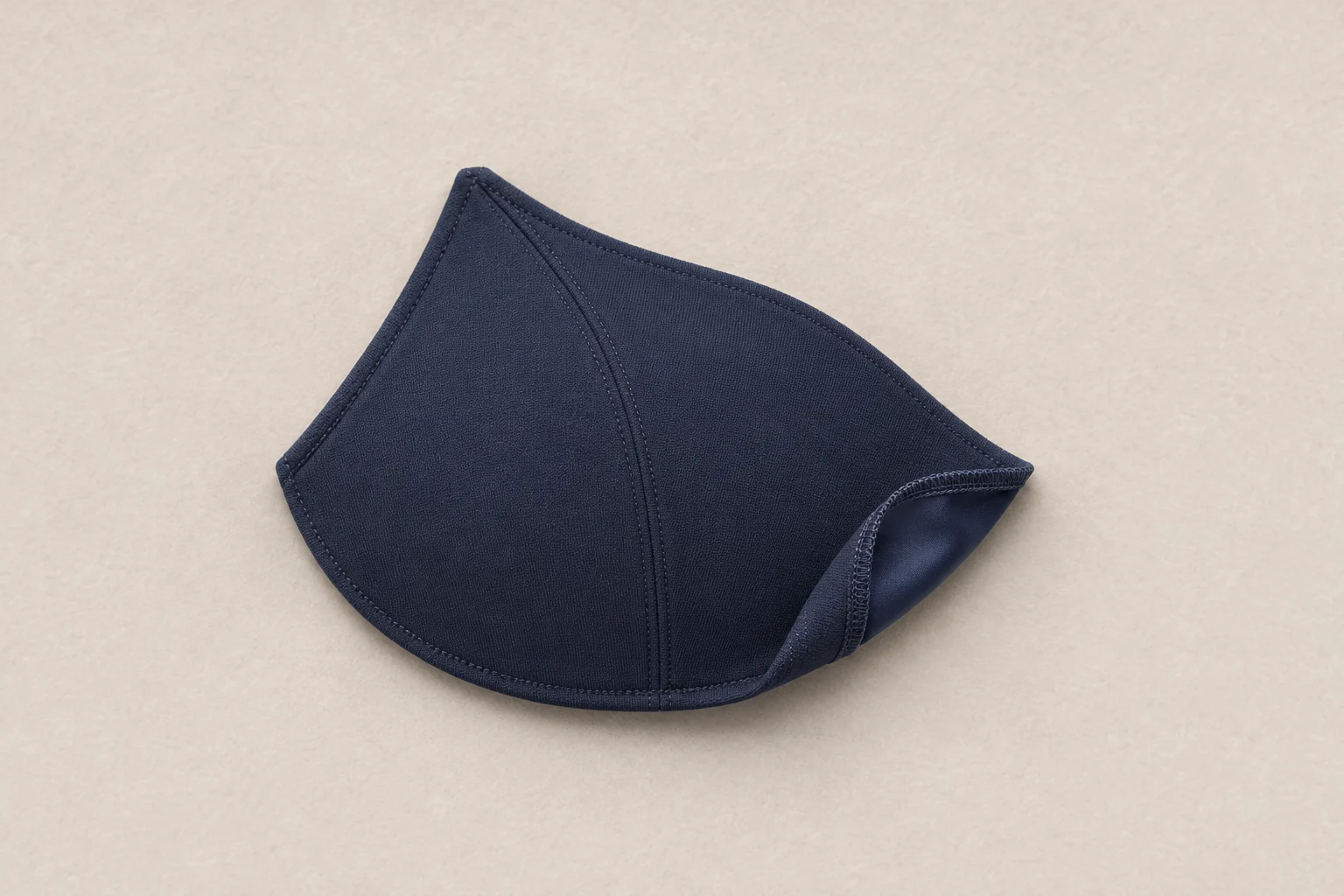
| Sewn cup, outer knit and lining | The proposed cup uses joined navy knit panels with a separate lining. The component illustration shows a turned edge so the face, reverse and seam can be discussed together. Fibre blend, weight, extension and the final lining remain selections for this project; the pictured shape is not a moulded foam insert. | Record both material articles, the panel map and each inside join. Coats identifies required seam stretch, bulk, appearance and softness as selection considerations. Compare the nominated thread, seam and lining on the actual layered cup, and keep substitutions visible in the sample revision. |
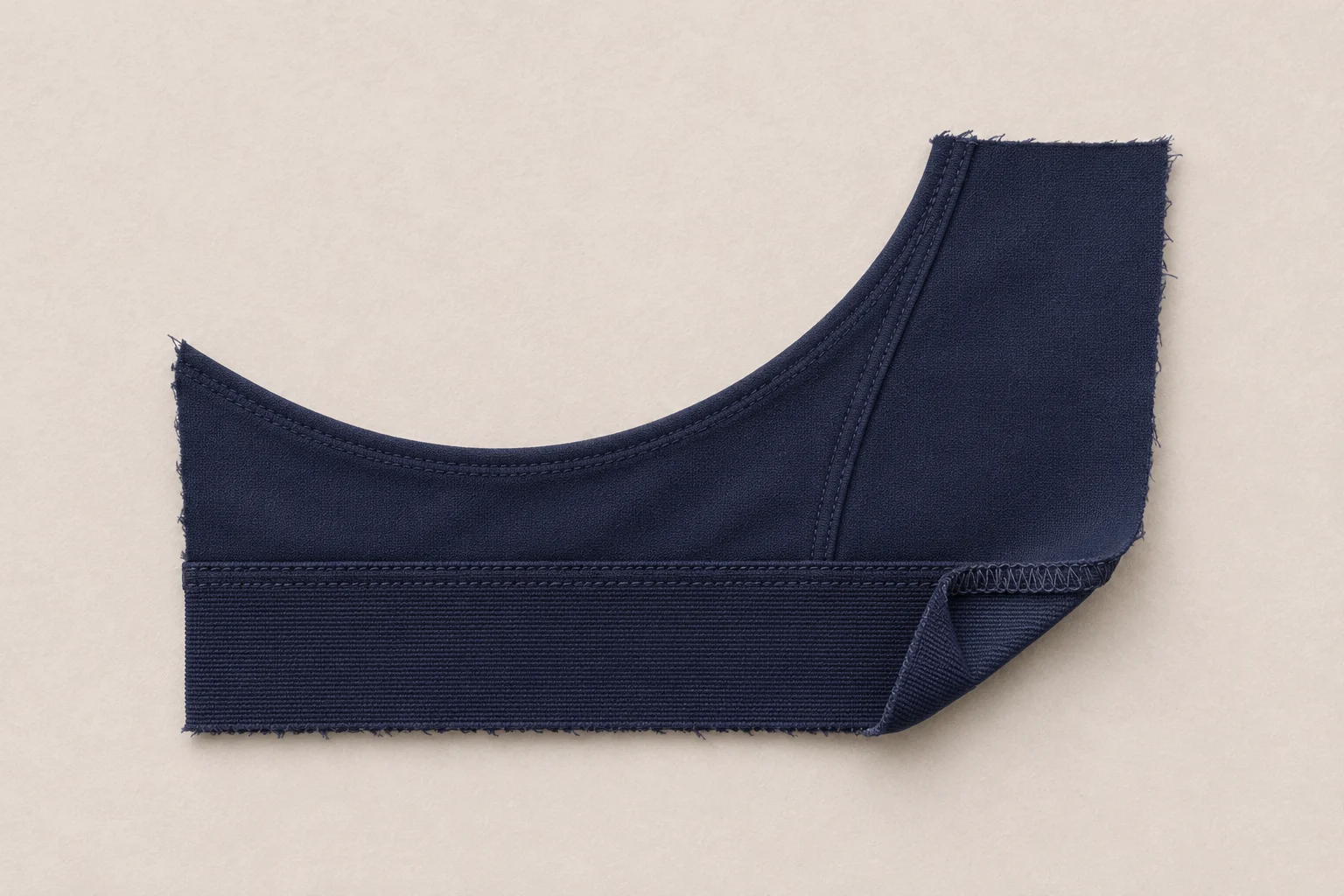
| Cradle, wing and underband junction | The curved cradle, broader side/back wing and lower band are distinct connected pieces. The raw-edge trial illustrates their joining order and a turned corner; it does not show a finished production edge. Specify the band build and any elastic separately from the adjacent body knit. | Retain the material references and a sewn junction with the complete bra sample. Check where cradle and wing seams meet the band, their inside finish and the response under the buyer’s agreed handling and care route. Agree dimensions and evidence before treating this junction as the approved reference. |
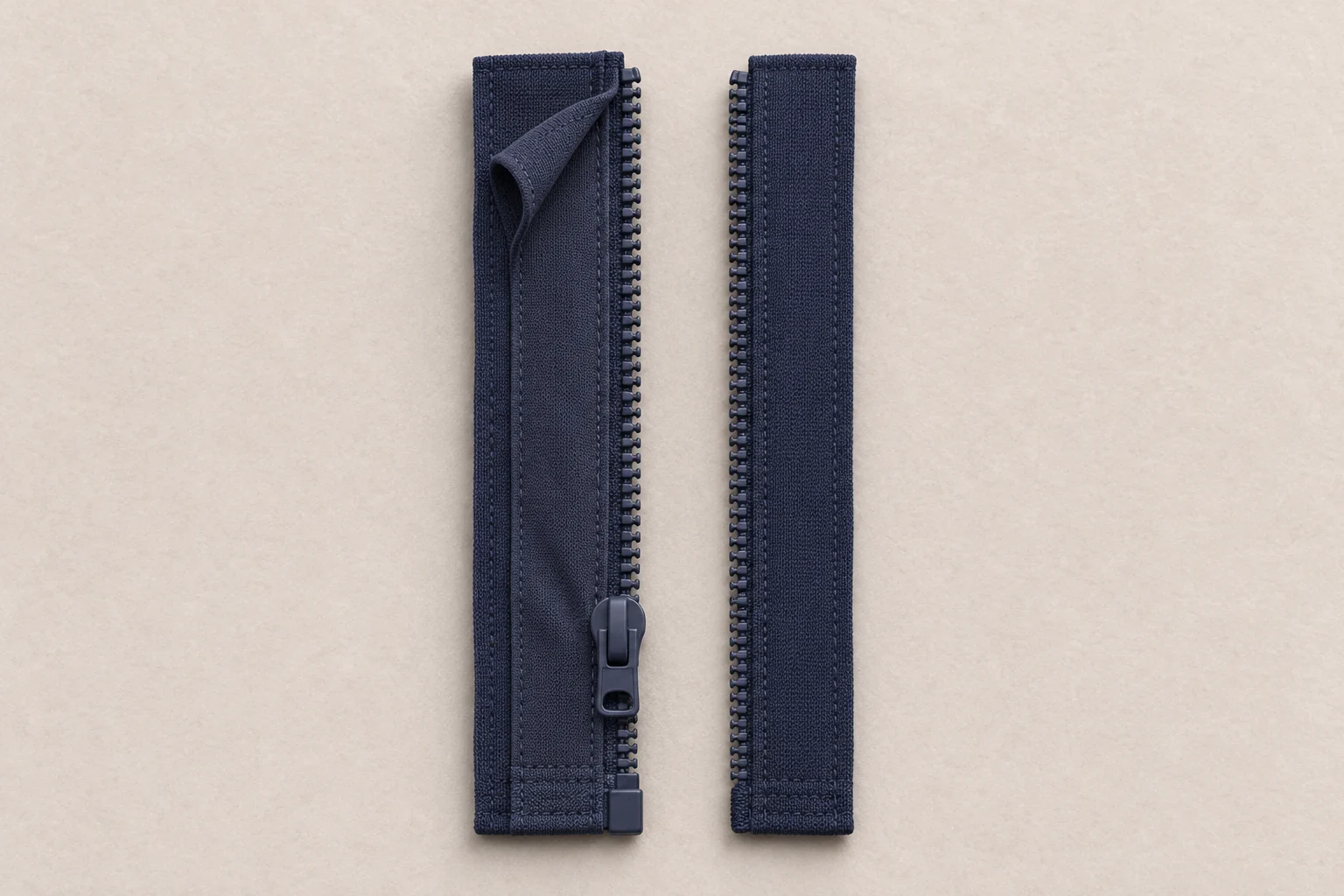
| Front-zip guard and local attachment | A separate soft guard lies behind one side of the front zipper. The small trial isolates that attachment; the larger garment detail shows its relationship with the cups and lower band. Guard material, finished edges, zipper tape and any nominated local reinforcement need one clear component specification. | Record the guard attachment, both terminals and the band-end connection on an opened drawing. YKK advises application-specific zipper attachment review. Consult the nominated component supplier about this sewn assembly without assuming a zipper brand, tape type or universal reinforcement recipe. |
These are sourcing comparisons, not a list of stocked or certified fabrics. Confirm composition, weight, finish, availability and testing with the material selected for your project.
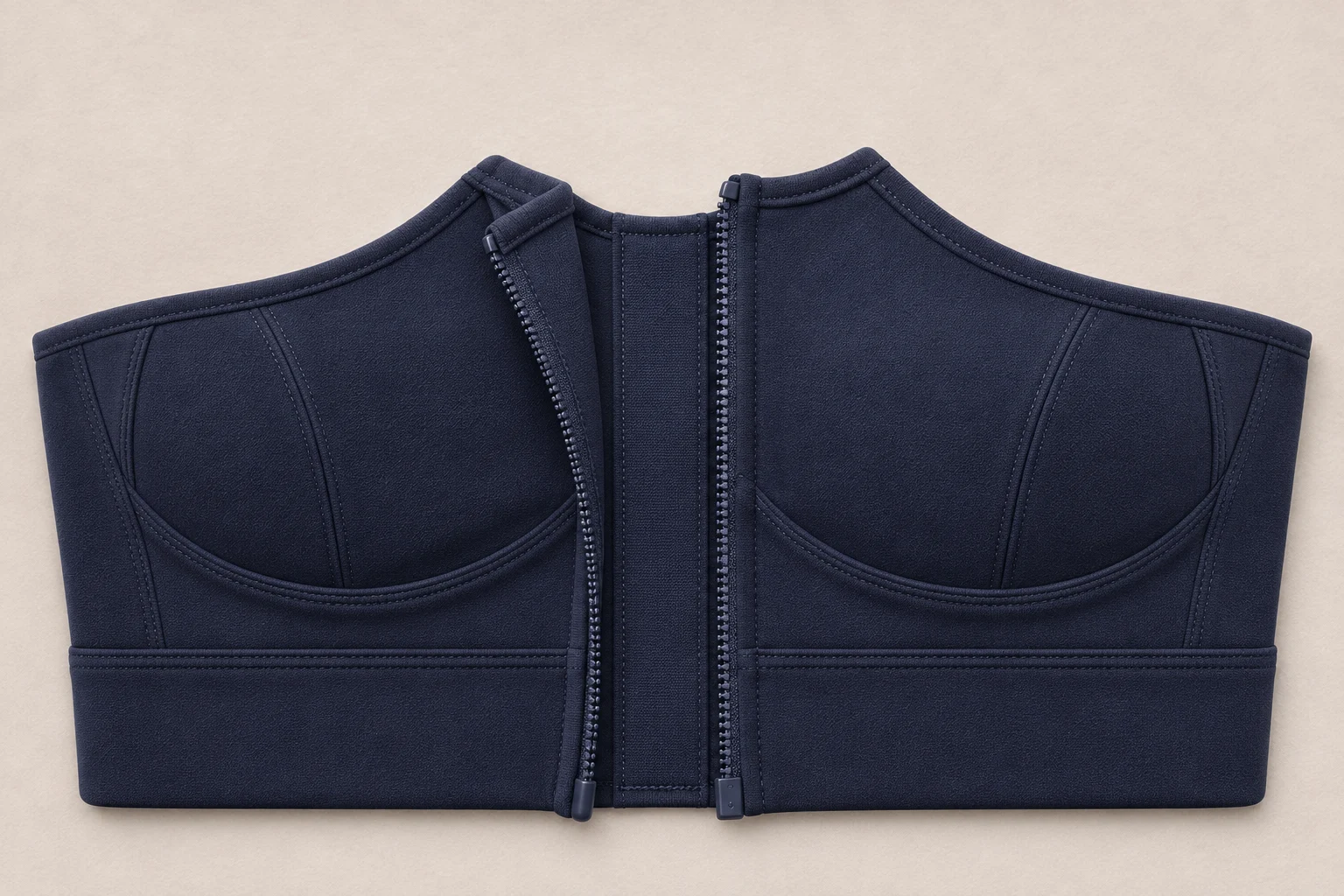 ILLUSTRATIVE FRONT ENTRY / ZIP, INNER GUARD & BAND ENDS
IT’S IN
THE DETAILS.
Panelled soft cups and cradle joins
Draw the individual cup panels, their seam orientation and the separate curved cradle below them. Identify corresponding outer and lining pieces. Approve the left/right join positions, seam ends and inside finish before treating the front view as the production reference.
Side and back wing continuity
Connect each outer cup edge to its side/back wing and mark the upper edge, band join and back strap anchor. Keep the wing shape distinct from a generic cropped-shirt side seam. Review the inside and outside together so the lining follows the intended assembly.
Front zip, guard and lower junction
Specify the front zip route, opening ends, tape attachment and internal guard on an opened drawing. The lower band must reconnect as intended when the zip is closed. Review access and operation on the complete bra; do not approve the opening from a separate component photograph.
Underband and fixed strap anchors
Define the lower band’s finished construction and the attachment of both broad, straight shoulder straps to the cup and back-wing areas. The illustrated straps are fixed, with no sliders or adjustable hardware. Mark edge finishes and seam junctions where several layers meet.
FROM THE BRIEF.
INTO THE WORKROOM.
Develop the sewn cups, separate cradle and wings, fixed straps and guarded front opening as one bra. These component studies identify material and joining questions; raw trial edges are intentional. They do not establish an approved sample, final material specification or verified garment performance.
Explore our factory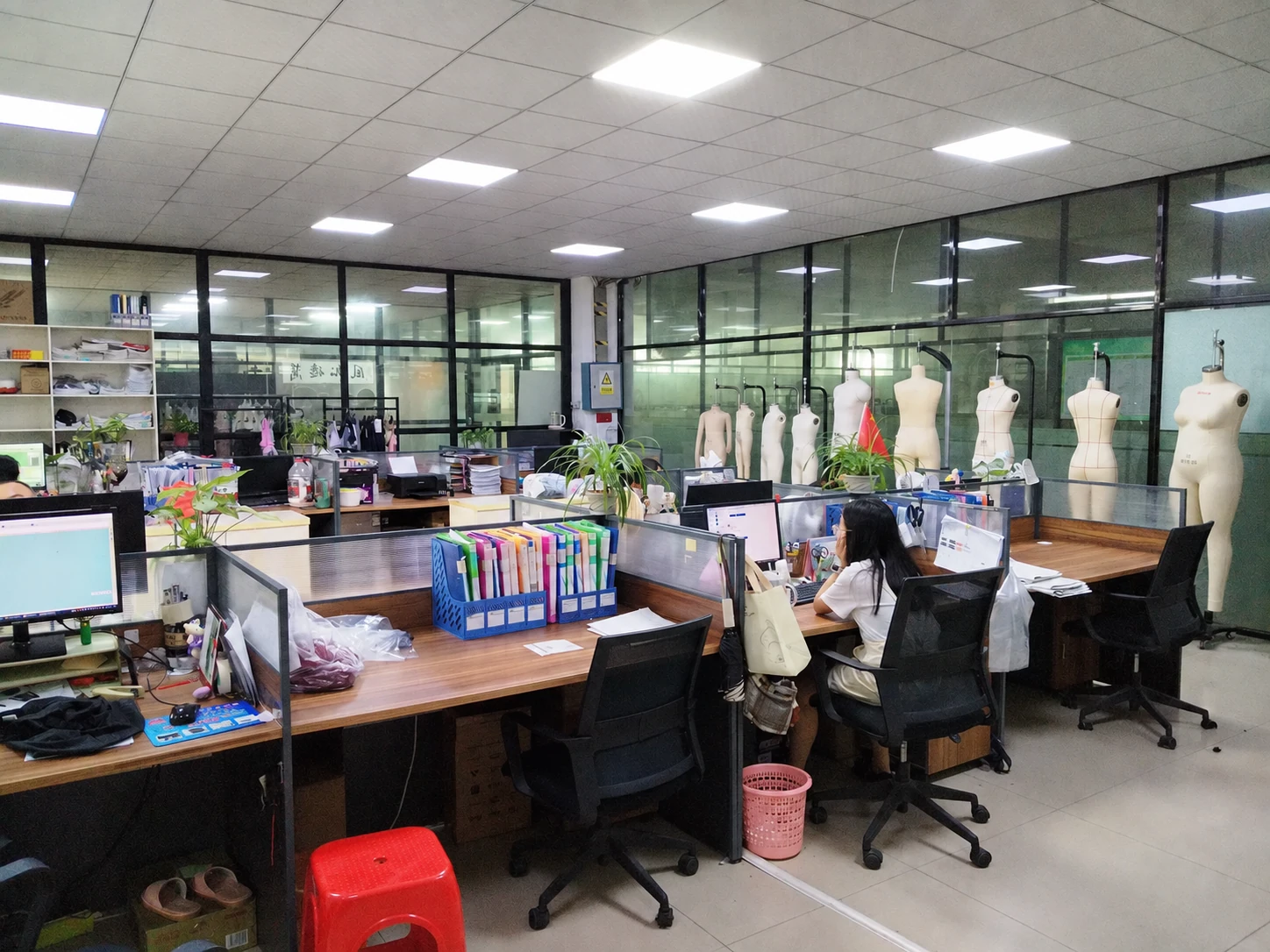
Panelled soft cups and cradle joins
Draw the individual cup panels, their seam orientation and the separate curved cradle below them. Identify corresponding outer and lining pieces. Approve the left/right join positions, seam ends and inside finish before treating the front view as the production reference.
Carry this into approval Factory views show our working environment. Your garment follows its agreed specification and sample.GET THE
RIGHT FIT.
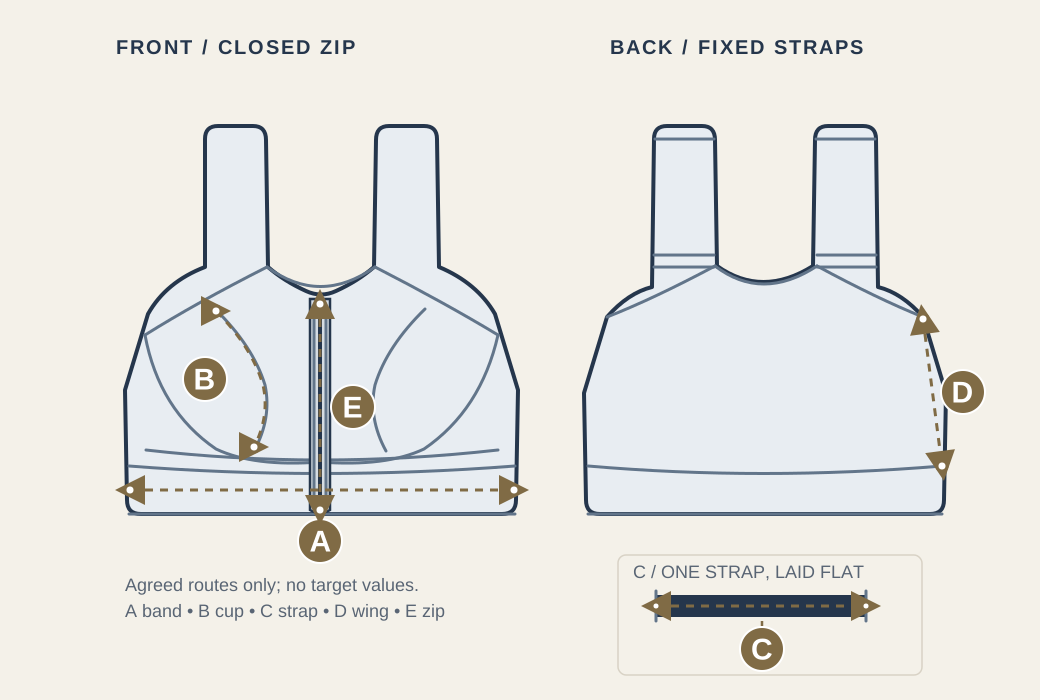
A size label is only the beginning. Agree the measurement method, review the garment in use and keep the approved fit record with your specification.
Your fit-session checklist
Record the size worn, body measurements, intended underlayers and every proposed correction with the dated sample.
Note the size worn, body measurements, intended underlayers and each proposed correction. Recheck the affected measurement after a revision; confirm the size breakdown for each style and colour before bulk.
MAKE IT
RECOGNISABLY YOURS.
Use the product’s construction to guide decoration and finishing. Ask for placement, colour and material approval on the relevant sample.
Small details.
One identity.
Folded edges · fine weave
Textured stock · cord attachment
Raised edge · stitched placement
Material mockups with a live wordmark study. Print, weave, colour matching and placement are confirmed on your physical sample.
Adult cup and band size brief
Supply the target wearer reference, body-measurement method and planned size system. Define cup and band relationships on your own chart and identify sample sizes for review. Do not assume an ordinary tee size chart describes this bra’s fit.
Colour and restrained artwork
Navy is the proposed illustration colour. Nominate the colour standard and any branding location, then review the actual application on the selected knit. Keep artwork away from the cup joins, inner guard and band junction unless a separate placement trial is agreed.
Zip and edge-finish nomination
Agree the component appearance, puller, guard finish and edge treatments through the BOM. A later zipper, elastic or lining substitution can change the relevant junction; record it as a revision and review the affected assembly again.
Brand and care information
Confirm label positions without placing a bulky label at the centre-front guard or another reviewed contact point. Supply destination-specific information for US, UK or European orders after materials and care requirements are confirmed; one market’s wording does not automatically cover another.
APPROVE THE DETAIL.
THEN THE ORDER.
The first sample helps you make decisions. Define review conditions and acceptance criteria before you compare the result.
Review the front-zip rider sports bra sample
Sampling takes 7–10 working days from the agreed start. Record each decision against the dated sample before bulk approval.
Rider, material direction, measurements and artwork.
DEFINE THE STARTTurn the agreed direction into a garment to review.
7–10 WORKING DAYSReview fit, finish and changes. Confirm the final specification.
REVISE IF NEEDEDProceed with agreed quantities, colours, labels and packing.
30–45 WORKING DAYSA shared development direction
Bring reference garments, your rider profile, target colours and any artwork. We turn these into the measurements, materials and construction questions that the sample needs to resolve.
Sample feedback can return to development. Revisions and transit are planned separately; timing begins from the agreed specification and start date.

KEEP THE APPROVAL.
WITH THE ORDER.
One agreed reference for the workroom: the dated sample, its specification and your confirmed order breakdown.
Sample decisions
- Cup, cradle and wing identity
Compare front, back and inside views with the dated component drawings. Confirm separate sewn cups, cradle and side/back wings, then note misplaced joins, unmatched panels or undefined lining edges. Keep corrections attached to the same sample revision.
- Complete fit and layer review
Record the wearer and sample size, agreed A–E methods and intended outer top. Review cup coverage, lower-band position and fixed-strap placement while standing, reaching and seated. Photograph observations as development records, without treating the session as a verified support result.
- Guarded front-entry operation
Inspect the nominated zip, inner guard and both lower-band ends together in open and closed states. Record dressing access, fabric caught at the opening, guard movement and contact at the top and bottom junctions. Agree corrective action rather than assuming a loose zipper result covers the garment.
Style, colour & size allocation
Confirm each style and colour separately, with the size allocation attached. The minimum is 300 pieces per style, per colour.
Labels, packing & timing
Agree label artwork, packing instructions and the production start. Bulk production takes 30–45 working days from the confirmed start; revisions and transit are planned separately.
A CLEARER BRIEF.
A MORE USEFUL QUOTE.
Price follows an agreed product, quantity and delivery scope. Use these inputs to compare proposals on the same basis.
Cup, lining and component preparation
Separate panels, lining pieces and their identification add preparation and joining work. Compare quotations against the same cup/cradle/wing drawing and material references, rather than a generic cropped-top description.
Front entry and lower-band junction
Zip sourcing, guard preparation, attachment and the lower-band ends are part of one quoted assembly. Include their development and sample-review scope instead of costing the loose fastener alone.
Cup/band size development
The requested size range and sample sizes affect pattern, grading and revision work. State the agreed review stages and included rounds; a change to the fit system needs a revised quotation basis.
Material evidence and order finish
Material options, buyer-requested evidence, artwork, labels, packing and delivery terms can change the offer. Keep each item’s inclusion clear and compare fabric-use assumptions on the same controlled style and size mix.
Bring these six things
Planning baseline: 300 pieces minimum per style, per colour. Sampling takes 7–10 working days; bulk production takes 30–45 working days from the agreed start.
300 pieces minimum per style, per colour. State each colour quantity separately; confirm your proposed size allocation.
GOOD QUESTIONS.
BETTER DECISIONS.
Product-specific sourcing questions to resolve before sampling.
Can REINFORM develop the complete sewn bra?
We offer OEM/ODM pattern-and-sample development for sewn soft cups, a separate cradle and side/back wings, underband/strap connections and a guarded front zip. Start with your adult size brief and component drawings, then review the complete physical sample before agreeing the production reference.
Does the illustrated bra include adjustable straps or foam cups?
The proposed design has broad fixed straps and panelled soft cups. Strap adjusters, moulded foam, removable pads and underwires are not part of this brief. A requested alternative would need its own construction review and quotation rather than being assumed from another product’s photograph.
How should I compare a sports bra manufacturer’s quotation?
Send the same cup/cradle/wing drawings, lining and band brief, front-opening details and cup/band size allocation to each supplier. Compare included development, sample revisions and evidence as well as the unit-price scope. Confirm the complete physical reference before authorising the bulk order.