 REINFORM
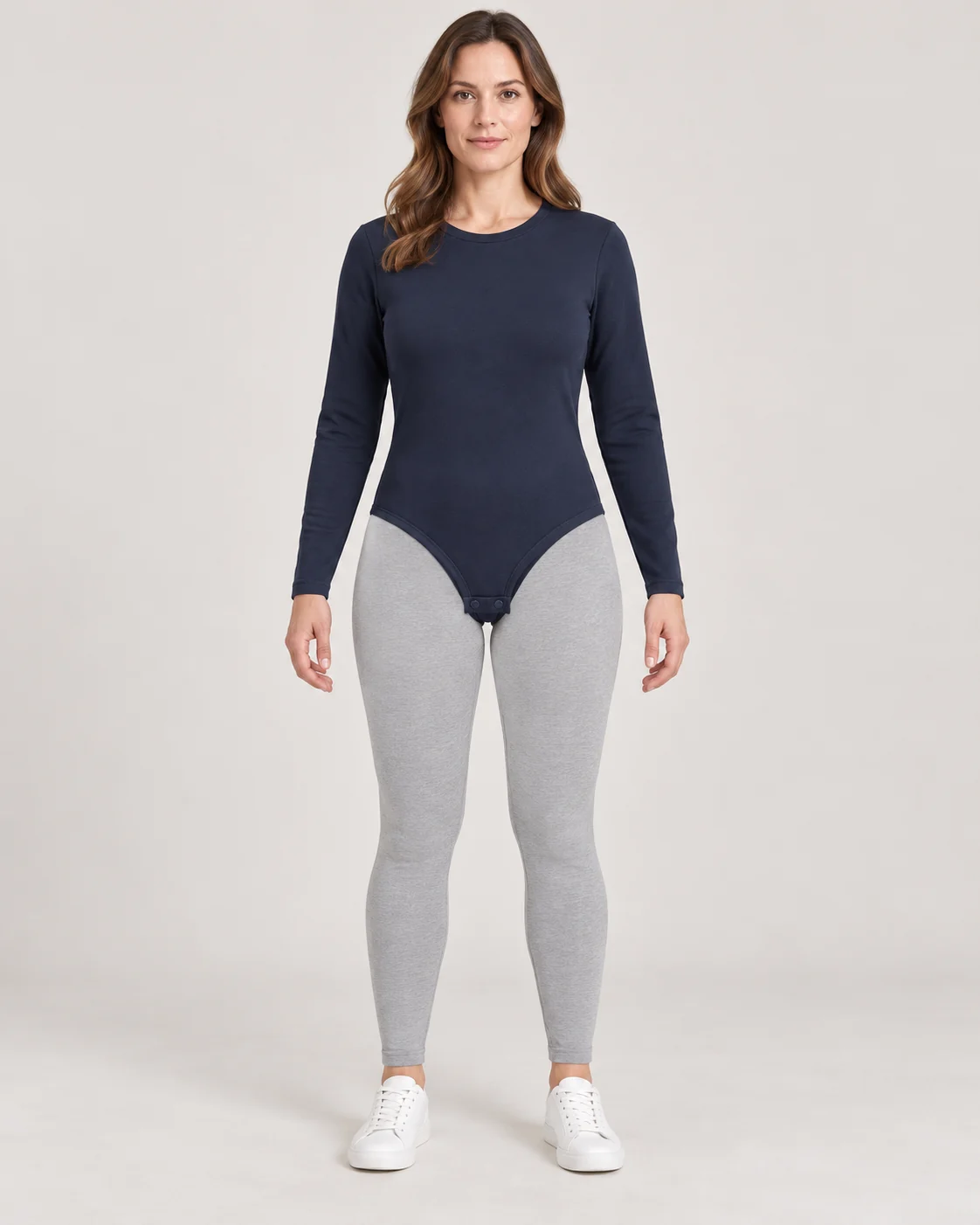
Approve the torso-to-crotch connection as one garment.
Bodysuit manufacturers for equestrian training development
Comparing bodysuit manufacturers for an adult equestrian training layer? Define torso fit, a separate gusset and two-snap crotch before OEM sample approval.
PUBLICATION /
CONTENT REVIEW /
A development direction for your brand. Final material, construction and performance by specification and sample approval.START WITH
THE RIDER.
For equestrian apparel brands developing an adult under-breeches layer and needing to approve lower-body coverage, opening access and torso fit alongside the visible upper body.
Product development context
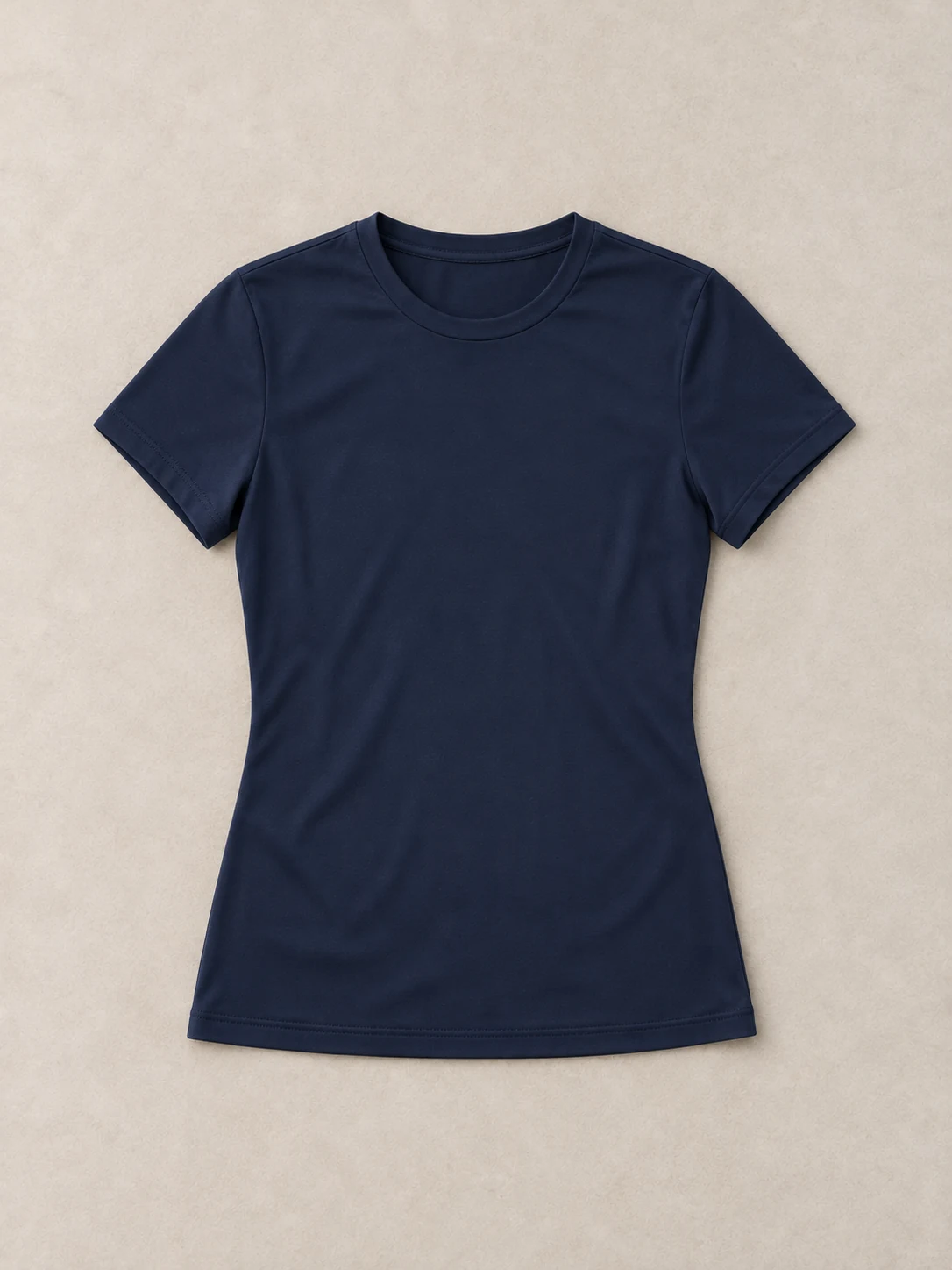
For buyers comparing bodysuit manufacturers, this direction concerns an adult equestrian training bodysuit rather than a separate shirt or shaping garment. REINFORM supports OEM/ODM pattern and sample development for a continuous knit torso, separate gusset, leg openings and reinforced crotch-snap connection. The proposed navy version has a crew neck, set-in long sleeves and two low-profile snaps. Development starts with your specification, material review and quotation; the illustrations show the intended assembly, not a completed physical sample or tested product.
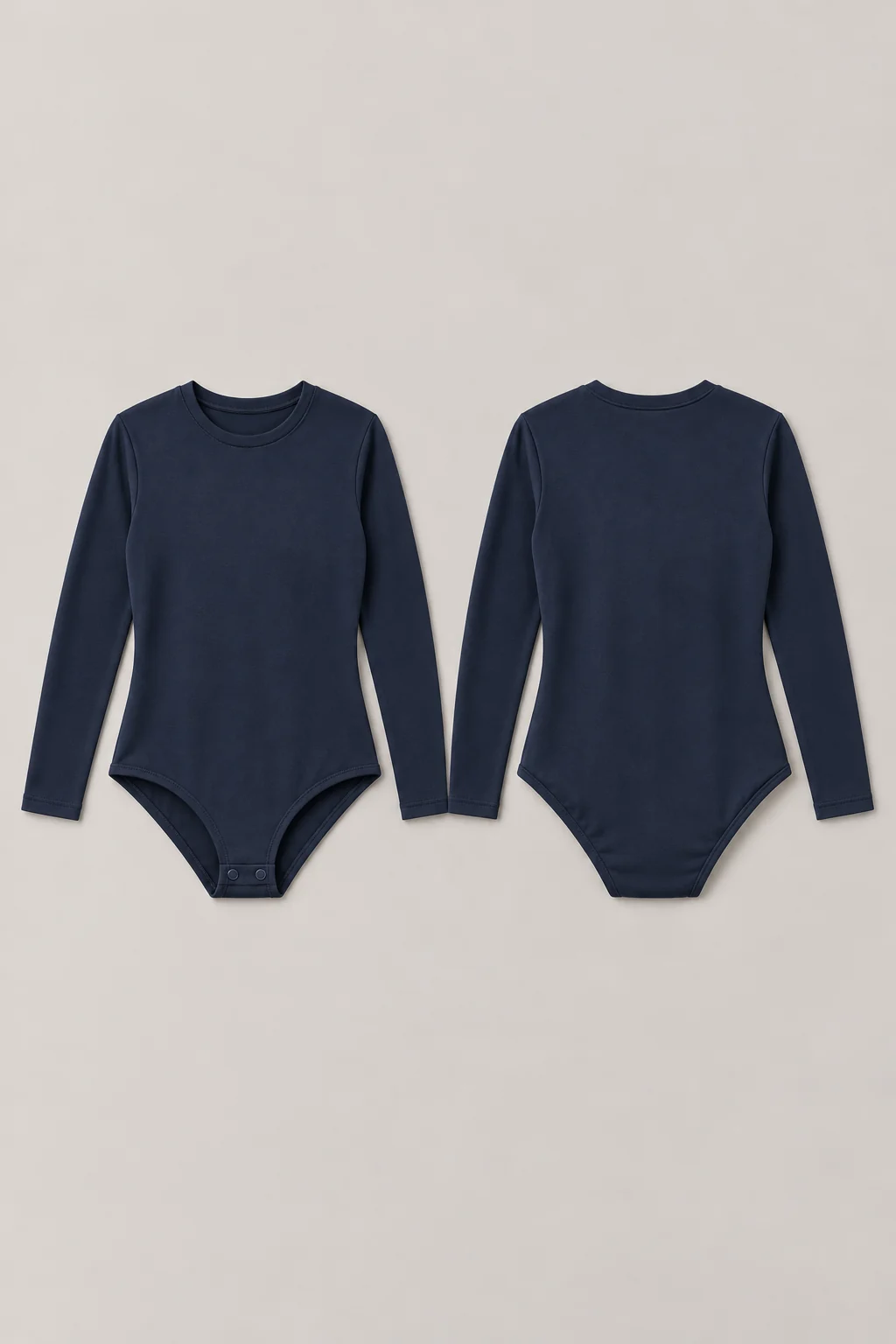
A torso route that works when seated
Connect the front rise, back rise and shoulder position in one fit review. Agree a torso-loop measurement through the crotch, then check reaching and a simulated riding position with the intended breeches. A standing chest measurement alone cannot approve this connected garment.
Separate gusset and controlled leg openings
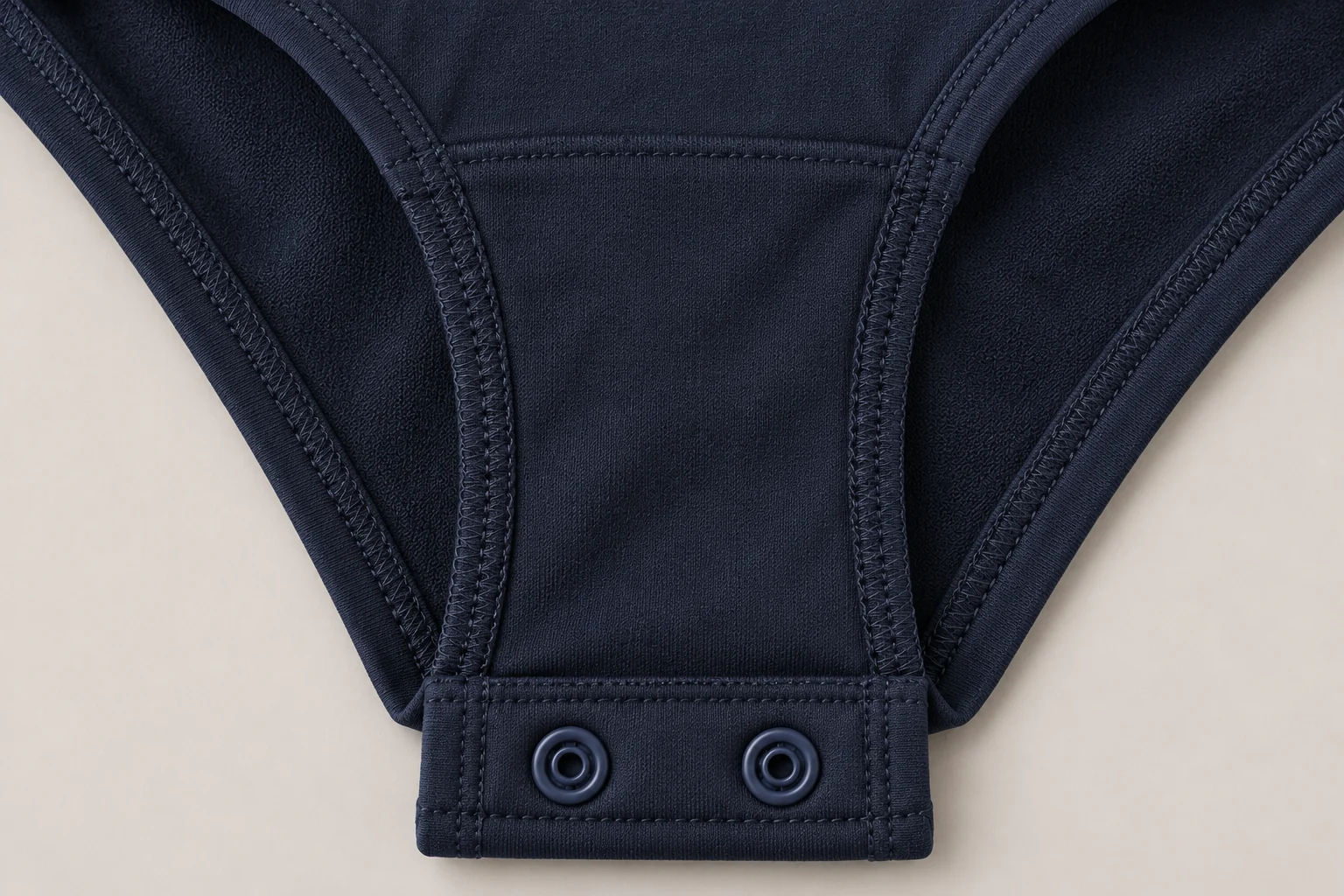
Define where the separate panel begins and ends, which seams touch the body and how each leg edge is finished. Review coverage from both sides. Keep the gusset specification distinct from any local support layer used inside the snap tabs.
Two accessible, reinforced snap positions
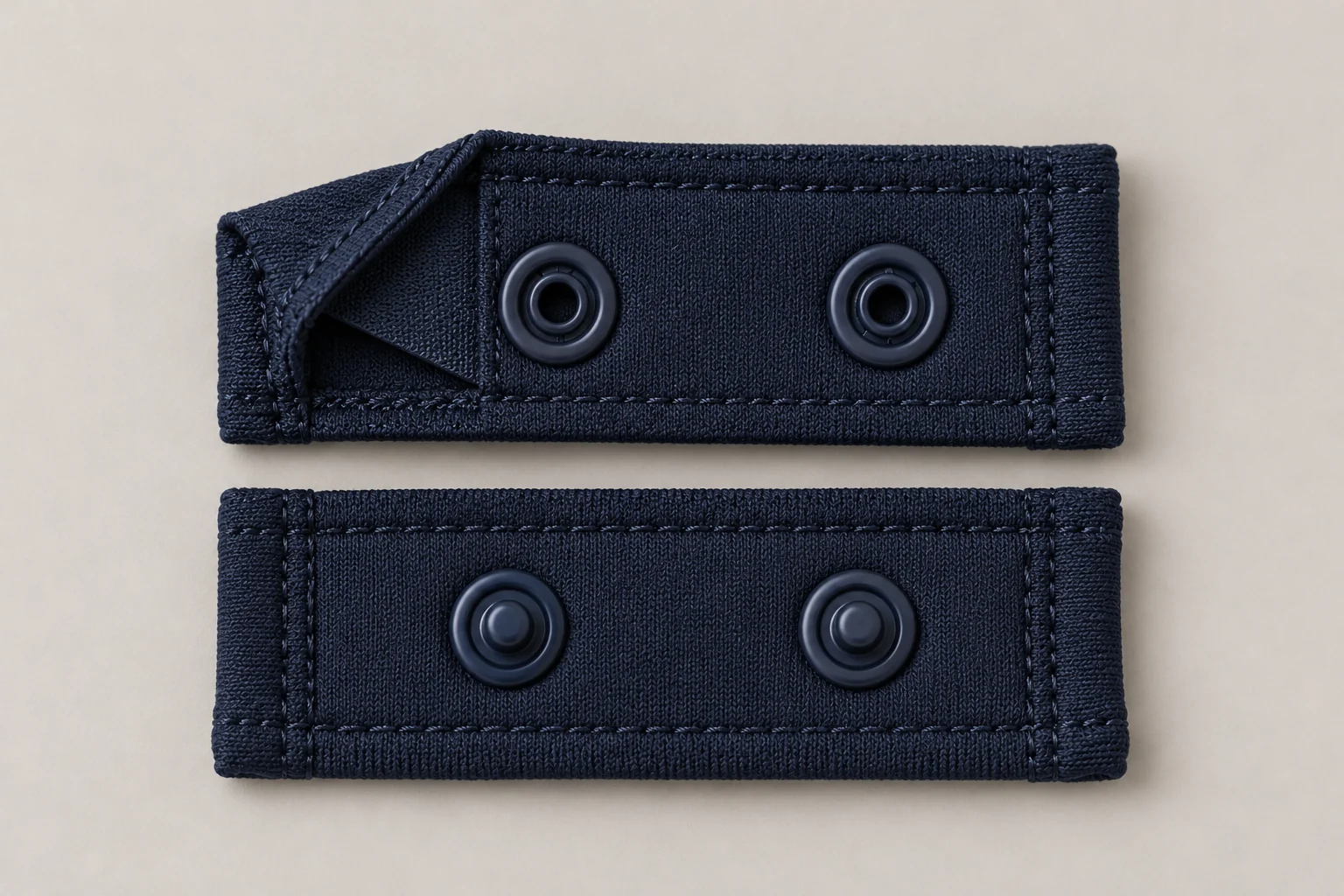
Specify two complete fastening positions across the overlap, with matching halves correctly aligned. Compare access, overlap depth and contact with the wearer on the assembled sample. Approval needs the nominated fastener and actual fabric stack, not a loose snap shown beside a swatch.
THE FABRIC
SETS THE FEEL.
Compare material directions against your rider, climate and care expectations. Request the actual fabric specification and evidence for any performance claim.
| Material direction | Why consider it | What to verify |
|---|---|---|
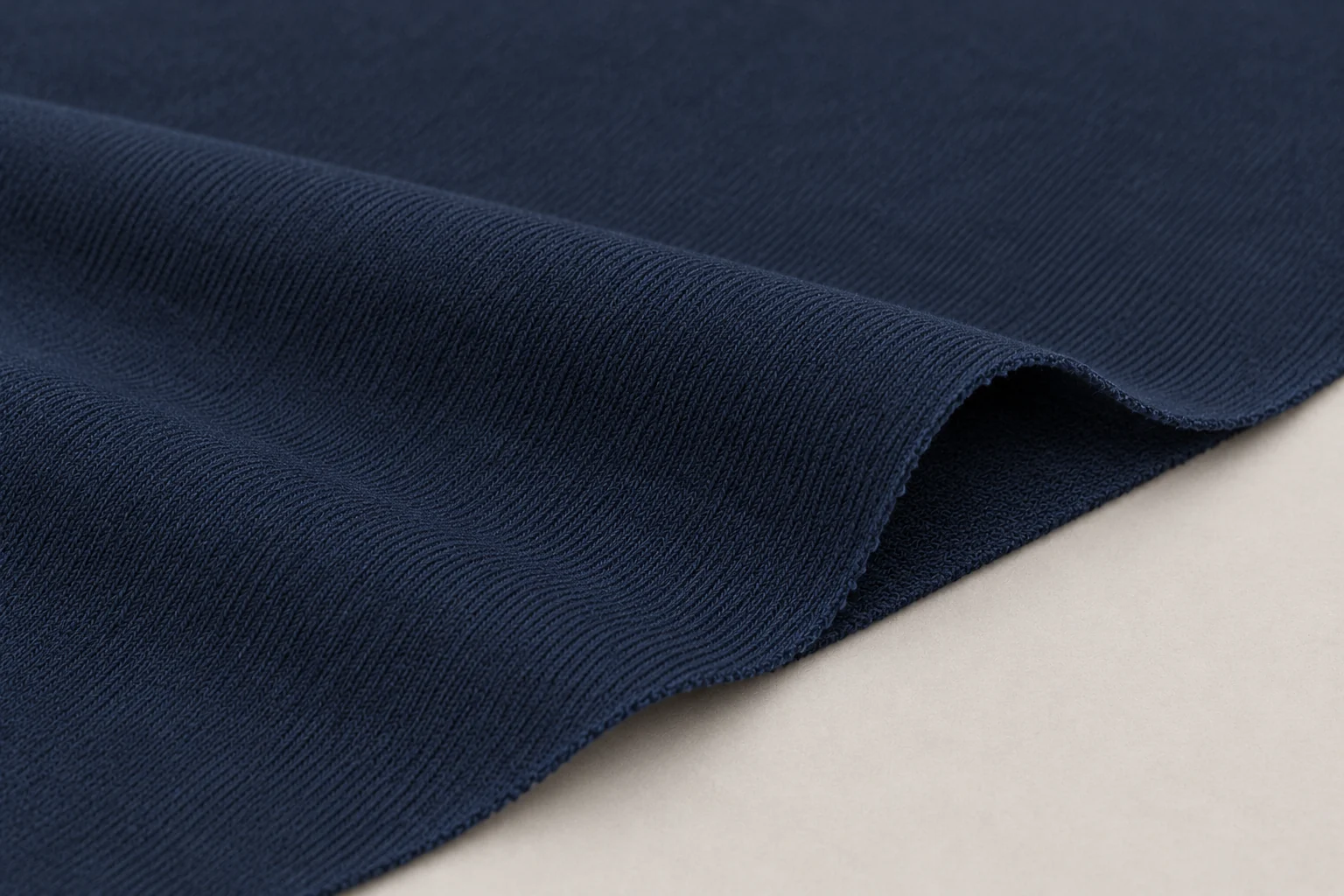
| Smooth body-knit direction | A smooth-face knit is the proposed body direction, with fibre blend, weight and extension still open. Selection affects torso balance and the feel of the layer beneath breeches; the navy illustration does not establish any of those properties. | Review identifiable face-and-reverse swatches, supplier specifications and the buyer's required evidence. Agree the care state and examine the sewn garment again after that care before approving dimensions or any material claim. |
| Separate gusset-panel direction | The gusset is an additional panel attached inside the brief area. Its material can be considered separately from the body, but colour, thickness, seam bulk and care compatibility need to work with the surrounding knit and the intended coverage. | Record the panel material and its attachment edges on the component sheet. Compare a sewn inside-out sample with the drawing, then review both the panel and its joins after agreed care; appearance alone cannot establish comfort or performance. |
| Local snap support and thread selection | A distinct support layer may be needed within the reinforced overlap tabs. YKK identifies fabric foundation and uneven thickness as attachment considerations; Coats treats thread, seam extension and bulk as interdependent selection questions. | Have the nominated fastener supplier review the actual local fabric stack and attachment route. Retain a representative sewn trial, then agree relevant attachment and seam checks with the buyer; no fixed layer recipe, thread ticket or force is assumed here. |
These are sourcing comparisons, not a list of stocked or certified fabrics. Confirm composition, weight, finish, availability and testing with the material selected for your project.
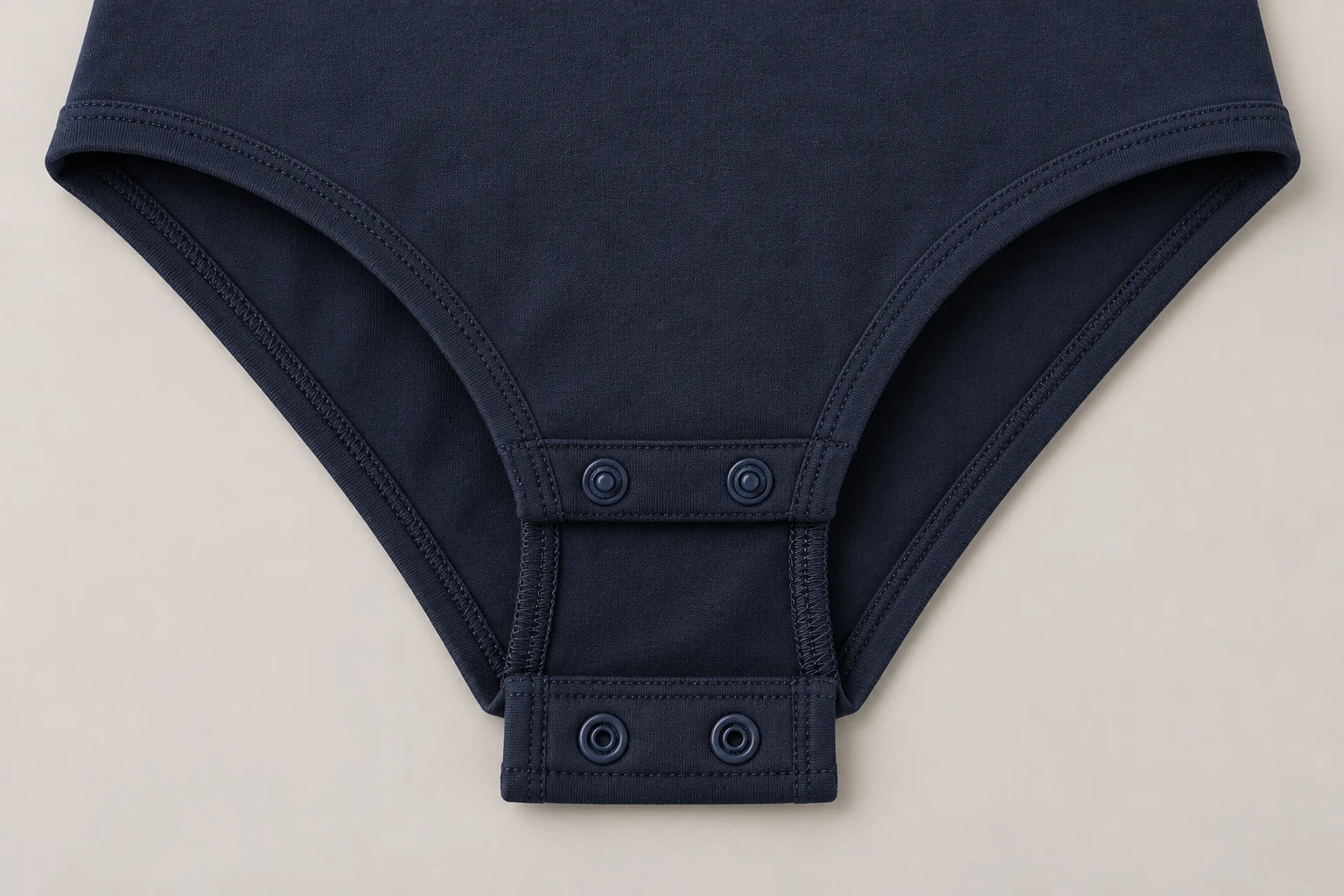 Illustrative development direction: the opened lower assembly separates gusset coverage from the two-snap overlap. Materials, attachment and fit require sample approval.
IT’S IN
THE DETAILS.
Continuous body into the brief
Keep the front torso connected to its brief-shaped lower section, with a plain back and clear left and right leg openings. Mark front and back balance references so a correction to body length is not hidden by changing the neckline or shoulder seam.
Gusset attachment and edge finishing
Show the separate panel on the component drawing, including its finished orientation and joined edges. Review seam allowance placement and the leg-edge return together. Avoid approving a neat outside view while leaving the inner panel and seam ends undefined.
Two-snap overlap assembly
Place two matching snap positions across a reinforced overlap tab and document their orientation. Check that hardware is supported without landing on an uneven seam junction. Use attachment settings appropriate to the nominated components, fabric thickness and supplier advice.
Crew neck and long-sleeve joins
The plain crew neck and set-in sleeves keep the upper body distinct from a polo or zip-neck layer. Agree neck passage, shoulder-seam placement and sleeve-hem finish on the same sample used for torso review, so upper-body corrections remain traceable.
FROM THE BRIEF.
INTO THE WORKROOM.
Develop the continuous torso, separate gusset and two-snap crotch connection together. These component illustrations identify body knit, panel attachment and local support questions; they do not establish an approved material or tested assembly.
Explore our factory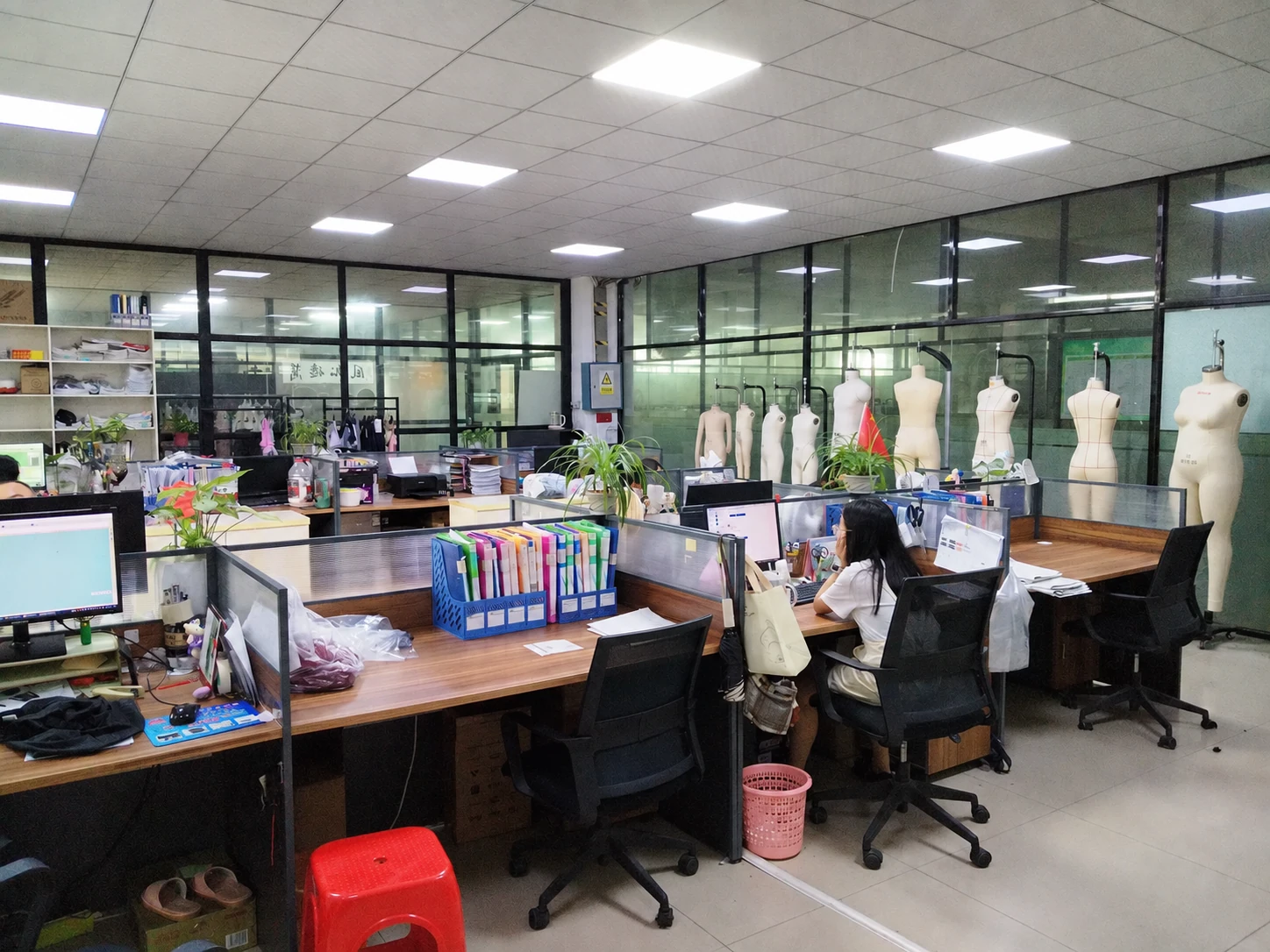
Continuous body into the brief
Keep the front torso connected to its brief-shaped lower section, with a plain back and clear left and right leg openings. Mark front and back balance references so a correction to body length is not hidden by changing the neckline or shoulder seam.
Carry this into approval Factory views show our working environment. Your garment follows its agreed specification and sample.GET THE
RIGHT FIT.
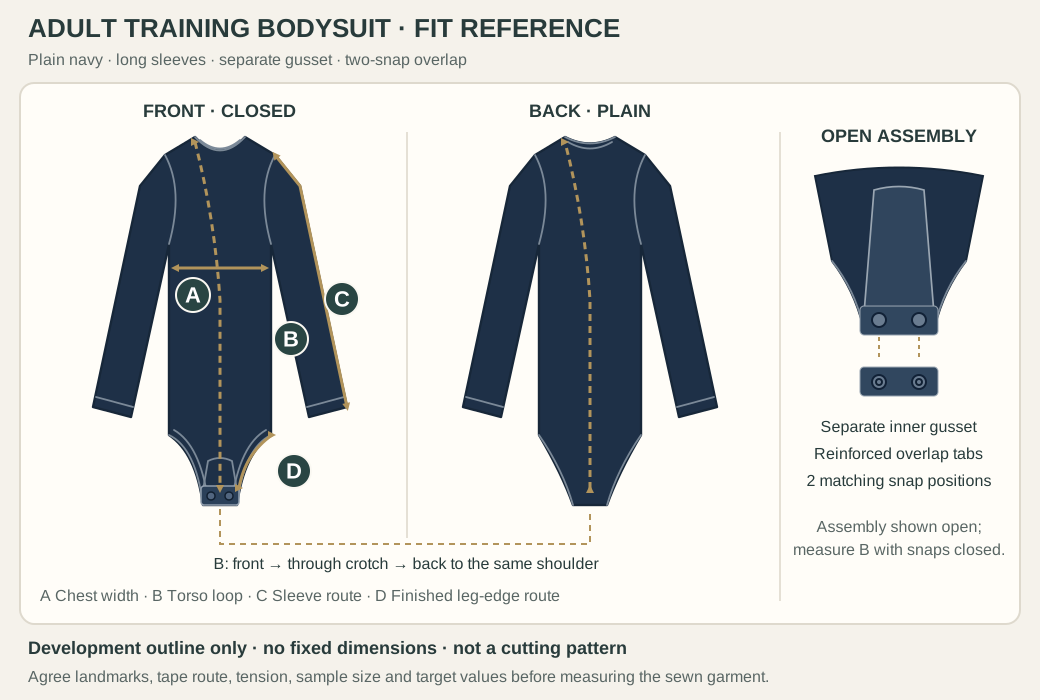
A size label is only the beginning. Agree the measurement method, review the garment in use and keep the approved fit record with your specification.
Your fit-session checklist
Record the size worn, body measurements, intended underlayers and every proposed correction with the dated sample.
Note the size worn, body measurements, intended underlayers and each proposed correction. Recheck the affected measurement after a revision; confirm the size breakdown for each style and colour before bulk.
MAKE IT
RECOGNISABLY YOURS.
Use the product’s construction to guide decoration and finishing. Ask for placement, colour and material approval on the relevant sample.
Small details.
One identity.
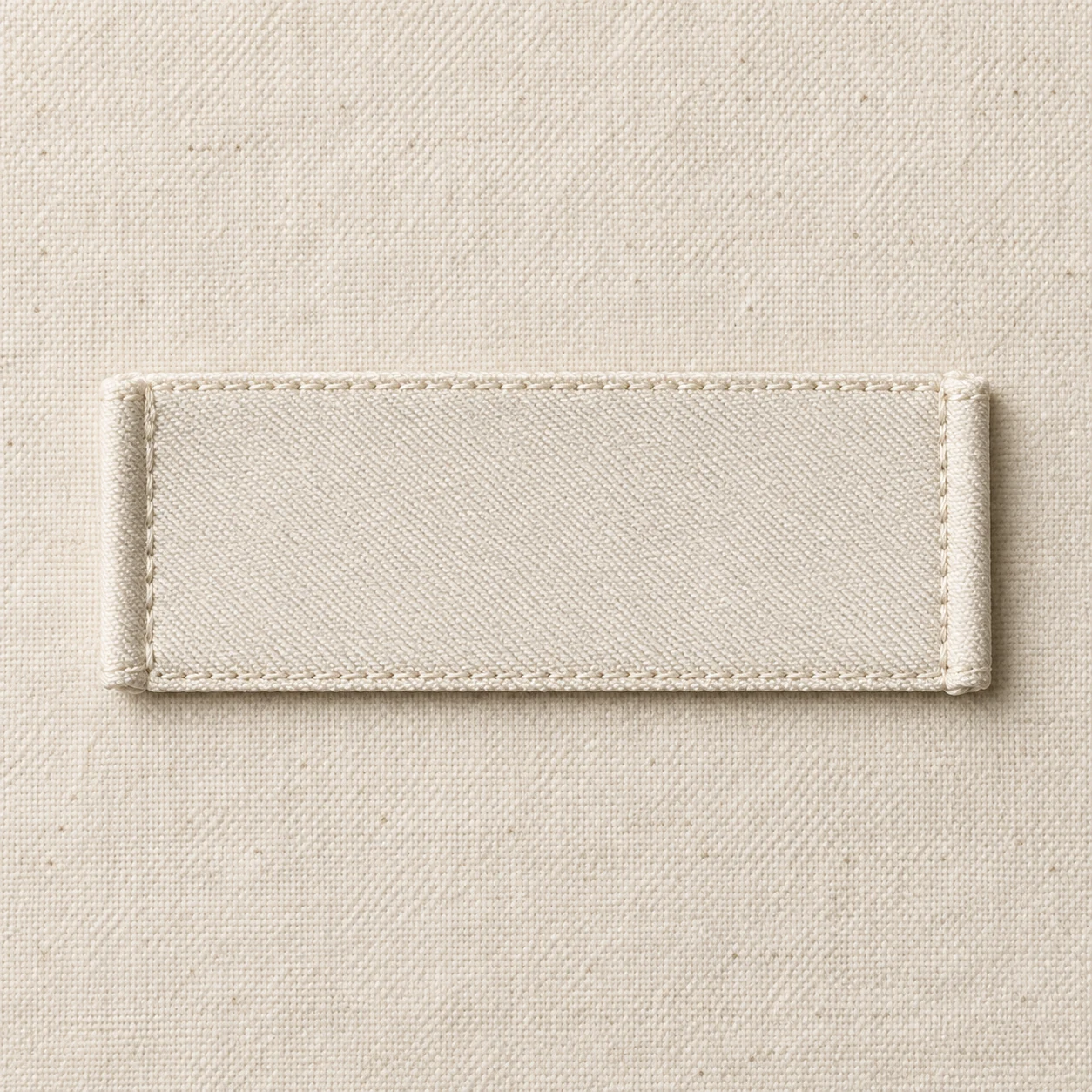
Folded edges · fine weave
Textured stock · cord attachment
Raised edge · stitched placement
Material mockups with a live wordmark study. Print, weave, colour matching and placement are confirmed on your physical sample.
Fit block and size progression
Supply an adult size chart and fit reference, including torso-length needs. Grade the brief and gusset relationships alongside the chest; a uniform length addition across every panel is not an approval plan.
Colour and artwork placement
Navy is the illustrated direction. Confirm colour standards and any artwork position on a full garment, avoiding the gusset, overlap and leg edges unless a separate placement trial is agreed.
Snap and finish nomination
Choose component appearance, supplier and finish through the bill of materials. Changing a snap or support material after approval requires reviewing the attachment assembly again.
Brand and care information
Agree label locations away from the closure review area and supply destination-specific wording. Fibre and care statements depend on confirmed materials and evidence for the intended US, UK or European market.
APPROVE THE DETAIL.
THEN THE ORDER.
The first sample helps you make decisions. Define review conditions and acceptance criteria before you compare the result.
Review the equestrian training bodysuit sample
Sampling takes 7–10 working days from the agreed start. Record each decision against the dated sample before bulk approval.
Rider, material direction, measurements and artwork.
DEFINE THE STARTTurn the agreed direction into a garment to review.
7–10 WORKING DAYSReview fit, finish and changes. Confirm the final specification.
REVISE IF NEEDEDProceed with agreed quantities, colours, labels and packing.
30–45 WORKING DAYSA shared development direction
Bring reference garments, your rider profile, target colours and any artwork. We turn these into the measurements, materials and construction questions that the sample needs to resolve.
Sample feedback can return to development. Revisions and transit are planned separately; timing begins from the agreed specification and start date.

KEEP THE APPROVAL.
WITH THE ORDER.
One agreed reference for the workroom: the dated sample, its specification and your confirmed order breakdown.
Sample decisions
- Connected-garment fit review
Measure the agreed chest, torso-loop and sleeve routes on the identified sample, then document standing, reaching and seated observations with the intended breeches. Keep each requested pattern change linked to the same sample revision.
- Gusset identity and coverage
Turn the lower assembly inside out and compare panel boundaries, joined edges and orientation with the component drawing. Photograph the inside and outside together, noting any exposed seam ends or incomplete attachment for correction.
- Snap alignment and local support
Check two complete fastening positions, matching-half orientation, overlap alignment and the local fabric stack on the assembled garment. Agree any attachment assessment with the buyer and component supplier; a hand check does not replace a specified test.
Style, colour & size allocation
Confirm each style and colour separately, with the size allocation attached. The minimum is 300 pieces per style, per colour.
Labels, packing & timing
Agree label artwork, packing instructions and the production start. Bulk production takes 30–45 working days from the confirmed start; revisions and transit are planned separately.
A CLEARER BRIEF.
A MORE USEFUL QUOTE.
Price follows an agreed product, quantity and delivery scope. Use these inputs to compare proposals on the same basis.
Body and gusset sourcing
Different material minimums, colour matching and handling can change the quote. Confirm both components before comparing offers on an apparently identical navy garment.
Closure components and attachment
Snap supply, local support preparation and attachment operations add separate costs. Include the complete two-position assembly in the quotation scope.
Pattern and size-set work
Torso balance and brief coverage can require revisions across sizes. Agree which sample sizes and revision rounds are included before scheduling approval.
Evidence and order details
Buyer-requested testing, labelling, packing and delivery terms affect cost and timing. Identify these items in the RFQ instead of treating them as unpriced assumptions.
Bring these six things
Planning baseline: 300 pieces minimum per style, per colour. Sampling takes 7–10 working days; bulk production takes 30–45 working days from the agreed start.
300 pieces minimum per style, per colour. State each colour quantity separately; confirm your proposed size allocation.
GOOD QUESTIONS.
BETTER DECISIONS.
Product-specific sourcing questions to resolve before sampling.
Is this an existing stocked or tested bodysuit?
This is an OEM/ODM development direction within our confirmed adult knit pattern-and-sample capability. The new SKU still needs material selection, quotation, physical sampling and approval. No stock, test result or finished production sample is represented by the illustrations.
Can the gusset use a different material from the body?
It can be discussed as a separate component direction. Confirm its specification, care compatibility and seam arrangement with the whole garment before approving it; a different fibre or weight is not included by default.
What should buyers send when comparing bodysuit manufacturers?
Send the same garment drawing, size and torso-route methods, body/gusset material brief and two-snap attachment requirements to each supplier. Compare the included development, evidence and approval work as well as price, using our 300-piece minimum per style per colour for the proposed order.