 REINFORM
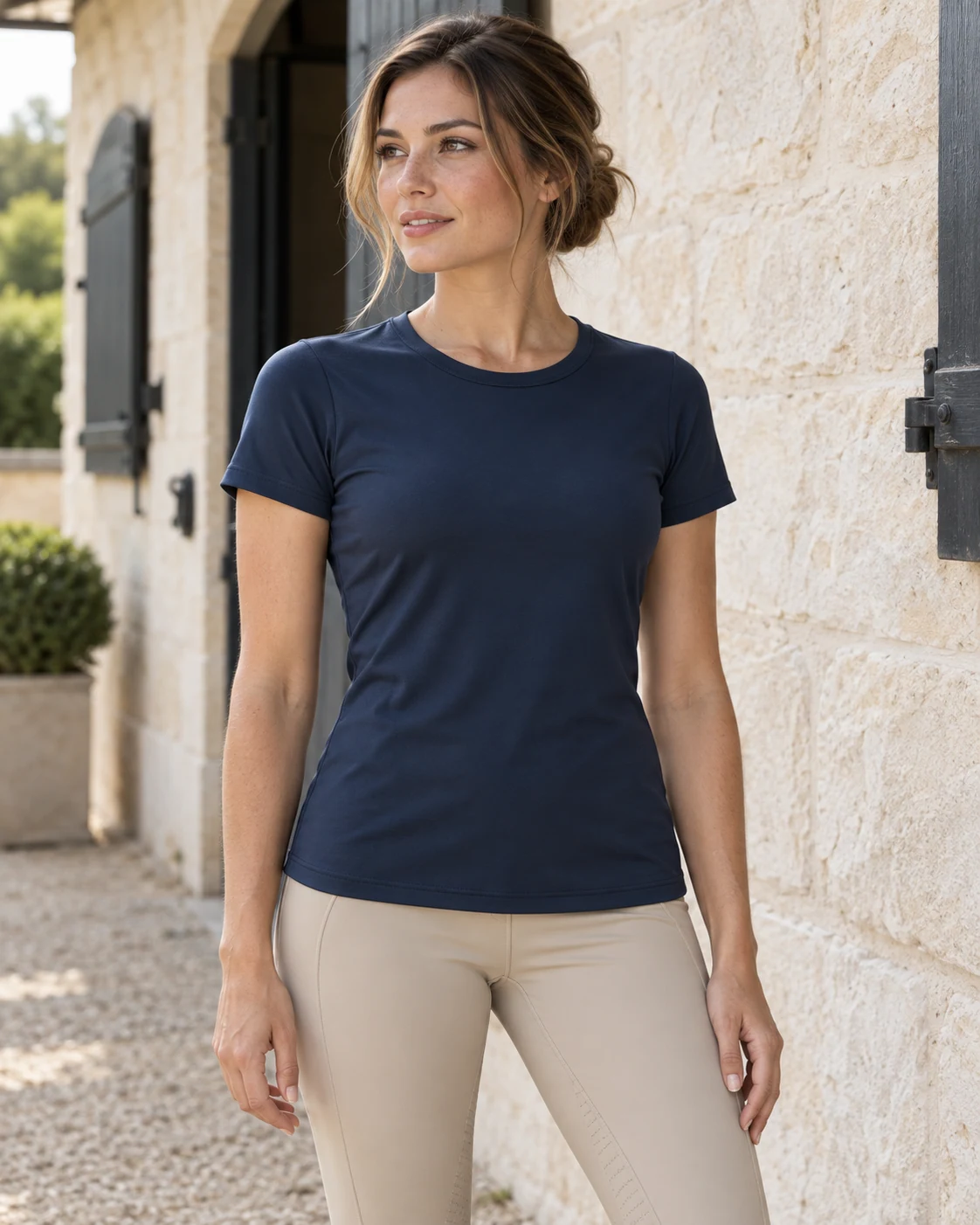
Approve the Short Sleeve in Rein Position
T shirt manufacturer for fitted equestrian training development.
Brief a t shirt manufacturer on a fitted equestrian training top: crew-neck finish, short sleeves, riding fit and sample approval. MOQ 300 per style/colour.
PUBLICATION /
CONTENT REVIEW /
A development direction for your brand. Final material, construction and performance by specification and sample approval.START WITH
THE RIDER.
For equestrian brands developing a fitted adult training tee for the US, UK and Europe, with named undergarments, riding bottoms and intended outer layers.
Product development context
An equestrian brand briefing a t shirt manufacturer needs a defined training garment, not only a logo position. This proposed navy direction is a fitted short-sleeve knit top with a crew neckline and continuous front. There is no collar, placket, zip, bib or mesh. It develops the existing base-layer and technical-knit scope into a shorter-sleeve training option, with its own neck opening, armhole and layering review. REINFORM can review the OEM/ODM brief subject to specification, material and construction feasibility, quotation and whole-garment sample approval. Fibre, weight and performance remain unselected; the concept is not an approved stock style or evidence of completed production.
Define fitted without inventing compression
Set body measurements, garment ease and the intended undergarment before reviewing the silhouette. Check chest, shoulder and upper-arm movement together; fitted describes the brief and does not establish a support or compression claim.
Review the sleeve opening while reaching
Record sleeve length and opening using named measurement points. Compare the relaxed arm with bent-elbow rein reach, observing sleeve migration, underarm contact and whether the armhole pulls the body upward.
Keep the neckline and hem in the same review
A closed crew neck needs dressing passage and a stable resting shape. Review it with body length and tuck preference so a correction to the opening does not conceal shoulder or back-balance problems.
THE FABRIC
SETS THE FEEL.
Compare material directions against your rider, climate and care expectations. Request the actual fabric specification and evidence for any performance claim.
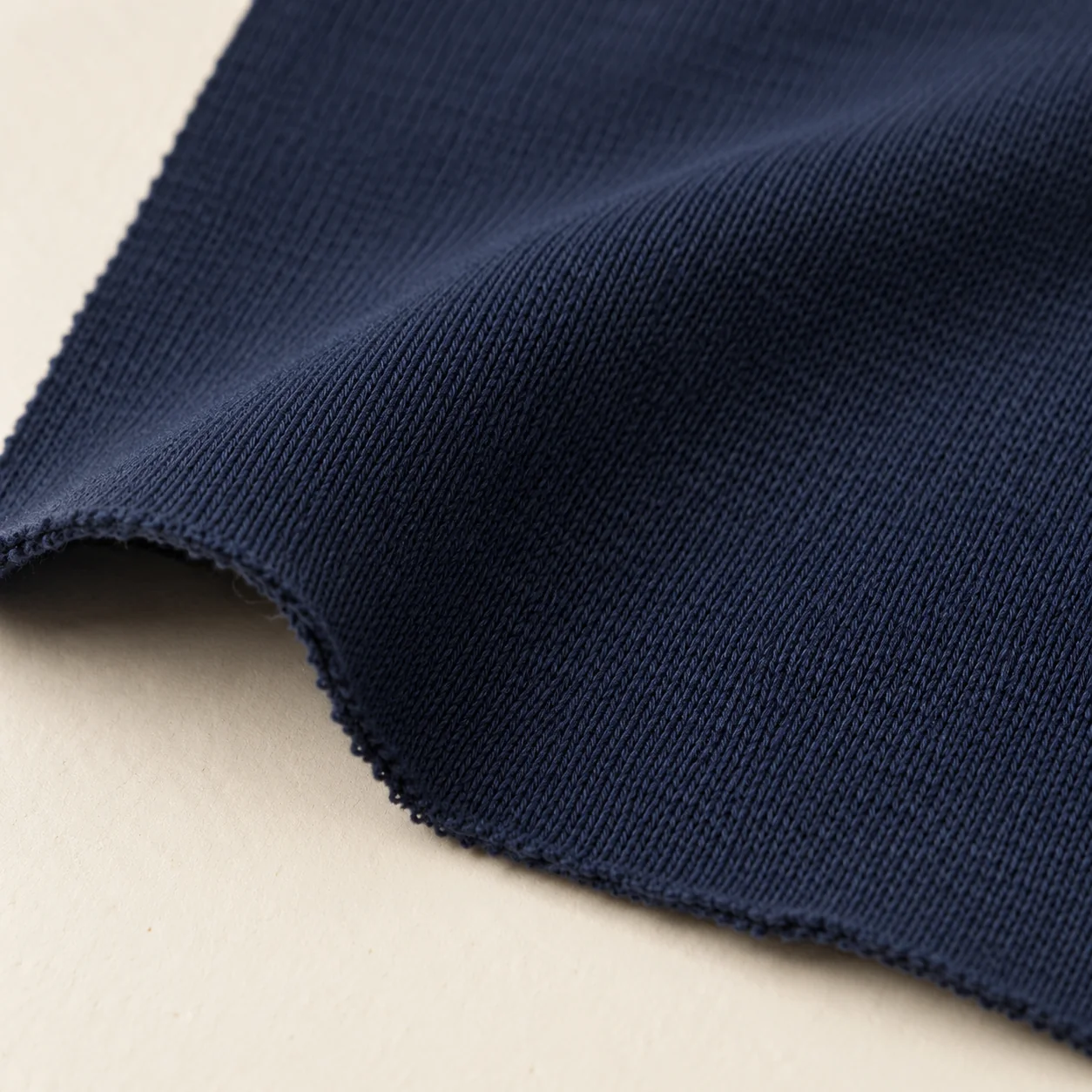
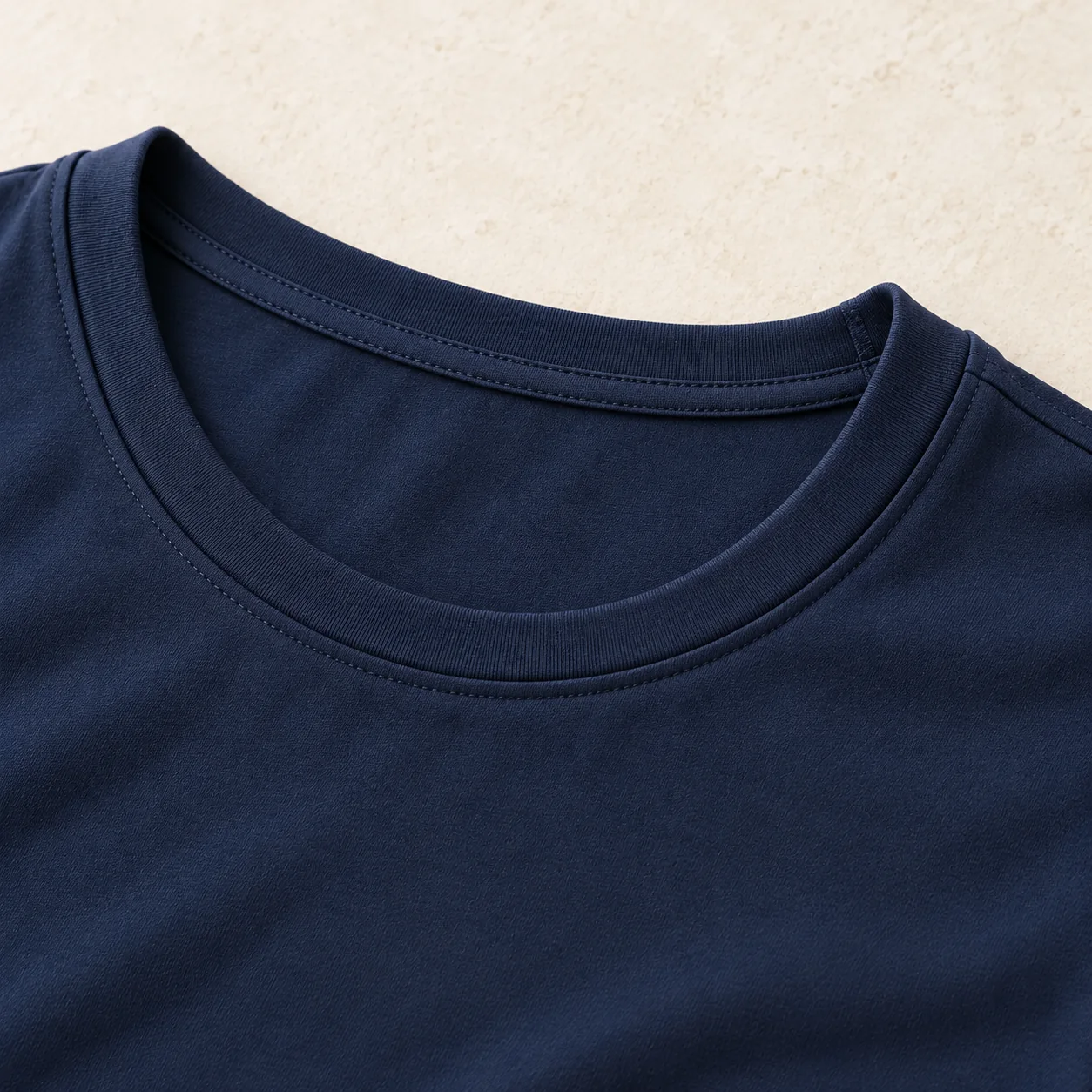
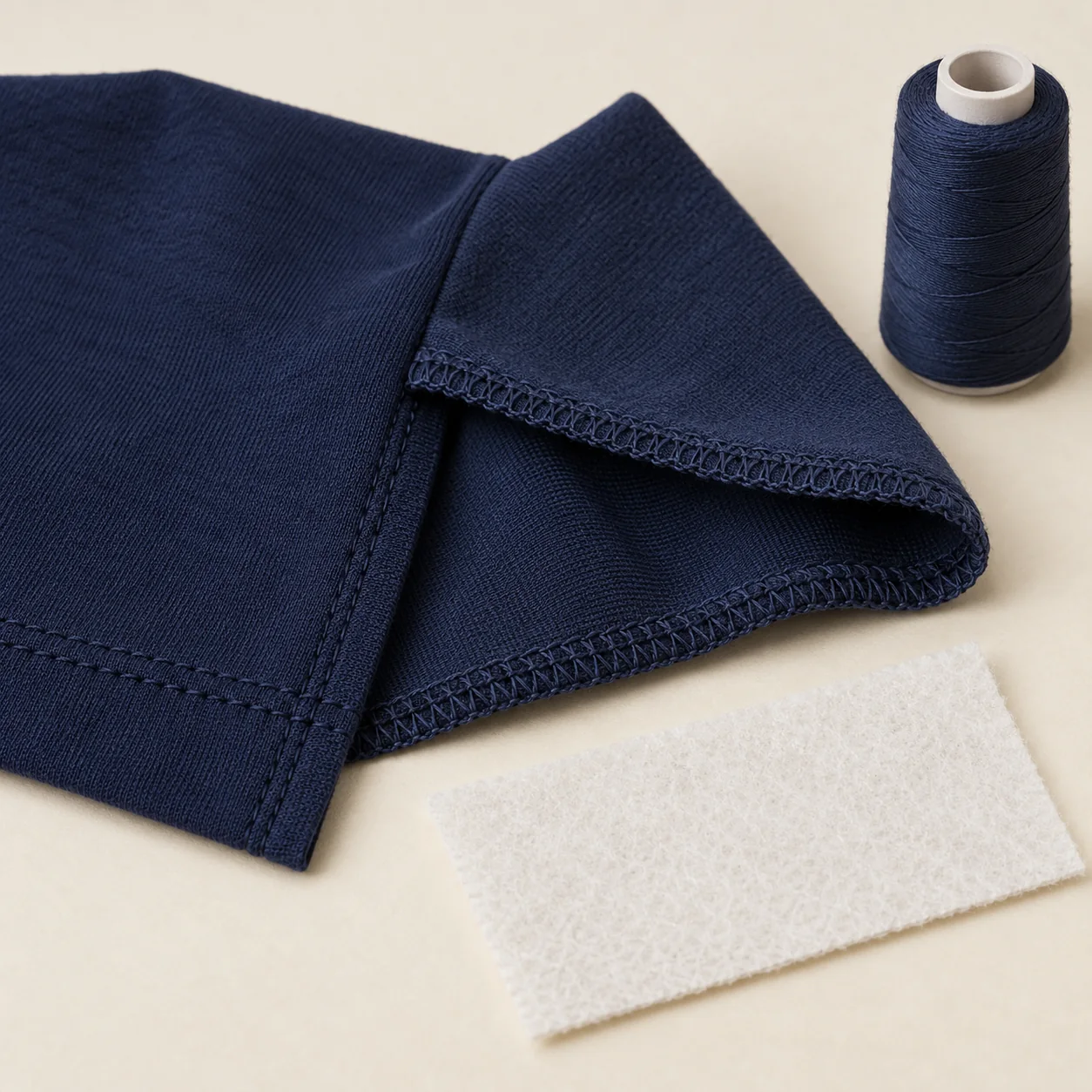
| Material direction | Why consider it | What to verify |
|---|---|---|
| Smooth jersey for the training body | Compare selected knit references against the intended close fit and layering role. Material extension, hand and coverage must be reviewed together; navy colour or a smooth surface does not identify composition or weight. | Record material identity and colour, then assess recovery, dimensional change, opacity under the intended extension and care response. Define separate evidence requirements before using moisture, drying, odour or protection language. |
| Crew-neck band or binding assembly | A narrow neck finish keeps this tee distinct from a collared polo or competition shirt. Its material, width and attachment need selection alongside the body rather than being inferred from a neckline photograph. | Review a sewn neck trial for head passage, edge contact, return to shape and visible waviness. Compare body and neck components after care, inspecting the actual join instead of approving only matching colour swatches. |
| Thread, seam finish and artwork backing | This top may contact skin directly or sit over a named undergarment. Thread, inner seam arrangement and any decoration backing should therefore be listed at their actual positions in the construction brief. | Check the proposed seams during normal dressing and reach for extension, stitch damage, bulk and contact. Trial artwork on the selected knit and record changes in appearance, handle or fit after the agreed care process. |
These are sourcing comparisons, not a list of stocked or certified fabrics. Confirm composition, weight, finish, availability and testing with the material selected for your project.
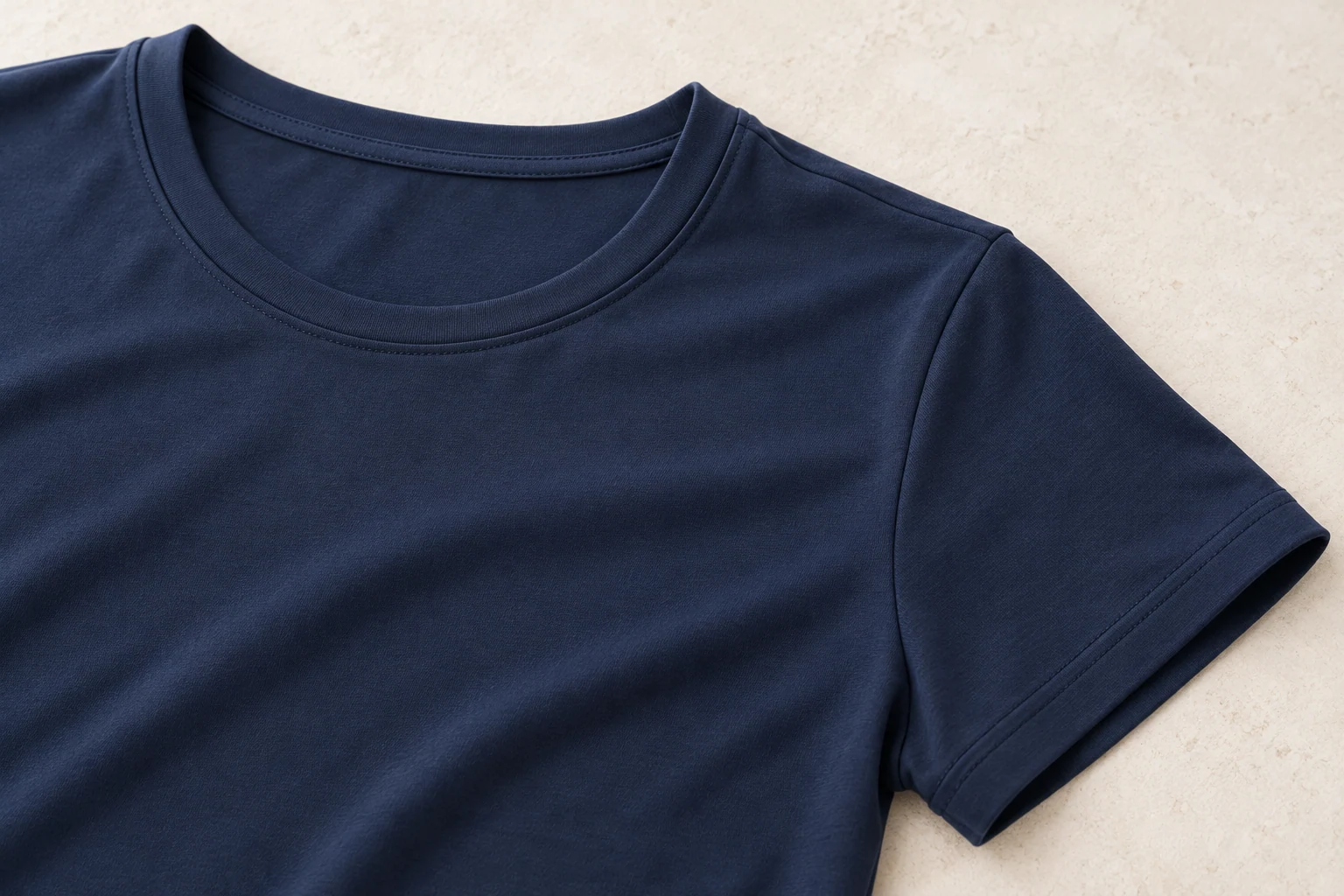 DEVELOPMENT DETAIL / TRAINING TEE NECKLINE
IT’S IN
THE DETAILS.
What your t shirt manufacturer needs
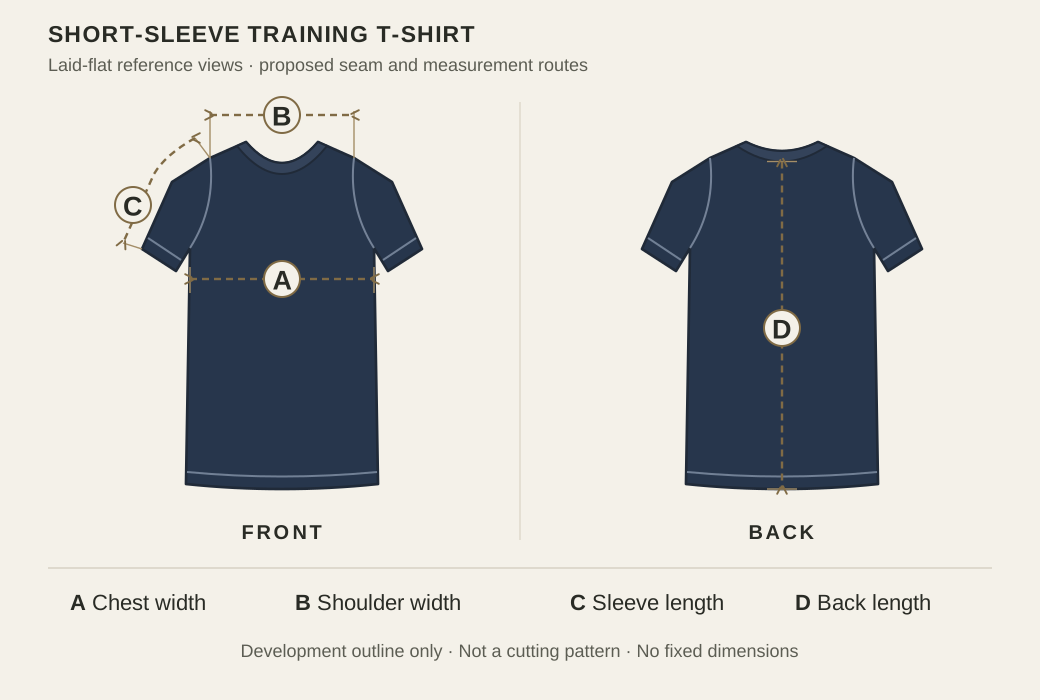
Provide front and back drawings for a continuous-front crew-neck top. Mark short-sleeve length, shoulder route, armhole, side seams and hem, with the measurement chart and dated pattern revision.
Neck finish without a front opening
Specify the neckband or binding join, attachment and inner finish. Keep the illustrated front free of a placket, zip or bib. Inspect neckline symmetry, seam bulk and dressing passage on the sewn sample.
Short sleeve and underarm intersection
Set sleeve pitch and opening around the target arm and riding reach. Inspect joined seams at the underarm for bulk and distortion, rather than simply shortening an existing long-sleeve pattern without a fit review.
Body seams and turned hems
Draw the intended sleeve and lower-hem finish and record the proposed stitch route. Coats distinguishes seam construction from stitch specification; keep both clear in the brief and approve appearance and movement on the selected knit.
FROM THE BRIEF.
INTO THE WORKROOM.
Develop the plain crew-neck layer around neck opening, short-sleeve reach and seam comfort with the intended underlayer.
Explore our factory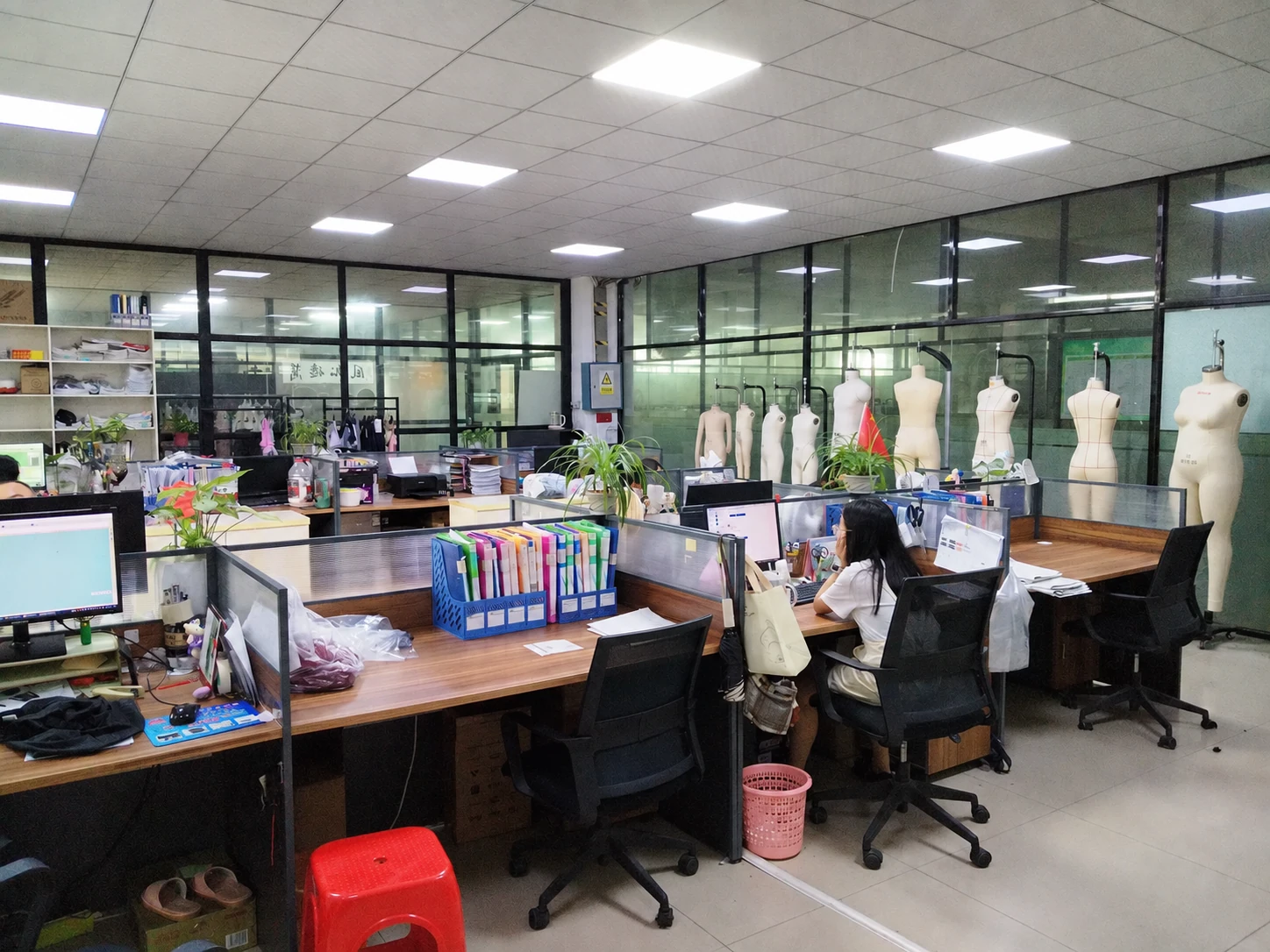
What your t shirt manufacturer needs
Provide front and back drawings for a continuous-front crew-neck top. Mark short-sleeve length, shoulder route, armhole, side seams and hem, with the measurement chart and dated pattern revision.
Carry this into approval Factory views show our working environment. Your garment follows its agreed specification and sample.GET THE
RIGHT FIT.
A size label is only the beginning. Agree the measurement method, review the garment in use and keep the approved fit record with your specification.
Your fit-session checklist
Record the size worn, body measurements, intended underlayers and every proposed correction with the dated sample.
Note the size worn, body measurements, intended underlayers and each proposed correction. Recheck the affected measurement after a revision; confirm the size breakdown for each style and colour before bulk.
MAKE IT
RECOGNISABLY YOURS.
Use the product’s construction to guide decoration and finishing. Ask for placement, colour and material approval on the relevant sample.
Small details.
One identity.
Folded edges · fine weave
Textured stock · cord attachment
Raised edge · stitched placement
Material mockups with a live wordmark study. Print, weave, colour matching and placement are confirmed on your physical sample.
Neck and short-sleeve proportions
Develop opening shape, sleeve length and sleeve sweep against the target body chart. Keep revisions measurable; a changed neckband material or sleeve pitch needs review on the complete top.
Navy and collection colours
Provide separate physical references for body, neck component and thread. Approve the combined appearance and record which material and colour versions need renewed coverage or colourfastness evidence.
Artwork on a fitted surface
Map logos against armhole, neckline and hem positions across sizes. Review the application while the knit is worn at its intended extension, including backing contact and post-care appearance.
Labels and size identification
Choose label position with skin contact and layering in mind. Supply destination wording, size identification and packing allocation, keeping the approved care and material declarations with the current garment revision.
APPROVE THE DETAIL.
THEN THE ORDER.
The first sample helps you make decisions. Define review conditions and acceptance criteria before you compare the result.
Review the short-sleeve riding training t-shirt sample
Sampling takes 7–10 working days from the agreed start. Record each decision against the dated sample before bulk approval.
Rider, material direction, measurements and artwork.
DEFINE THE STARTTurn the agreed direction into a garment to review.
7–10 WORKING DAYSReview fit, finish and changes. Confirm the final specification.
REVISE IF NEEDEDProceed with agreed quantities, colours, labels and packing.
30–45 WORKING DAYSA shared development direction
Bring reference garments, your rider profile, target colours and any artwork. We turn these into the measurements, materials and construction questions that the sample needs to resolve.
Sample feedback can return to development. Revisions and transit are planned separately; timing begins from the agreed specification and start date.

KEEP THE APPROVAL.
WITH THE ORDER.
One agreed reference for the workroom: the dated sample, its specification and your confirmed order breakdown.
Sample decisions
- Neckline dressing and shape
Photograph the relaxed neck, then review normal dressing and reach using the intended undergarment. Record local distortion, neckband return and seam contact against the material and pattern version used for that sample.
- Armhole and short-sleeve movement
Compare relaxed arms with the agreed rein-position sequence. Record opening position, sleeve migration, underarm pressure and body lift; separate a sleeve-pattern correction from a change in overall garment ease.
- Coverage and layer interaction
Review the body at the intended fit and movement, with the chosen undergarment and riding bottoms. Check coverage, back-waist overlap and sleeve rolling under the named outer layer without translating observations into an untested performance claim.
Style, colour & size allocation
Confirm each style and colour separately, with the size allocation attached. The minimum is 300 pieces per style, per colour.
Labels, packing & timing
Agree label artwork, packing instructions and the production start. Bulk production takes 30–45 working days from the confirmed start; revisions and transit are planned separately.
A CLEARER BRIEF.
A MORE USEFUL QUOTE.
Price follows an agreed product, quantity and delivery scope. Use these inputs to compare proposals on the same basis.
Knit and colour requirements
Selected material, colour development and required evidence affect the quotation. Compare proposals using the same fit, coverage and care brief instead of a generic fabric description.
Neck and hem construction
Neck material, join finish, stitch route and sleeve/hem treatment change assembly requirements. Quote any alternative construction separately, including the sample needed to review it.
Fit sizes and decoration
A dedicated short-sleeve fit review, additional size blocks and artwork trials add development work. State planned sample sizes and application versions before comparing costs.
Approval and working days
Sampling is 7–10 working days and bulk 30–45 working days from agreed start conditions. Confirm specifications, materials and approval responsibilities; revisions, evidence work and transit remain separate.
Bring these six things
Planning baseline: 300 pieces minimum per style, per colour. Sampling takes 7–10 working days; bulk production takes 30–45 working days from the agreed start.
300 pieces minimum per style, per colour. State each colour quantity separately; confirm your proposed size allocation.
GOOD QUESTIONS.
BETTER DECISIONS.
Product-specific sourcing questions to resolve before sampling.
Can REINFORM review an original equestrian training T-shirt brief?
Yes. This proposed OEM/ODM direction sits within the existing knit-top development scope. Submit the fit and construction brief for feasibility, material selection, quotation and whole-garment sample approval. It is not a claim of an existing finished specification; MOQ is 300 pieces per style, per colour.
Is this the technical polo or a shortened zip base layer?
It is a separate closed-neck short-sleeve tee. The technical polo has a collar and placket; existing base layers have their own long-sleeve and opening arrangements. This tee needs independent neckline, armhole, sleeve-opening and hem review rather than an automatic transfer of their approval.
Can navy jersey be described as quick-drying or protective?
Not from its appearance. Agree material identity, intended use and appropriate evidence for each claim. Intertek lists care, colourfastness and physical performance as separate testing areas; its service scope does not establish a result for this proposed tee or every colour version.