 REINFORM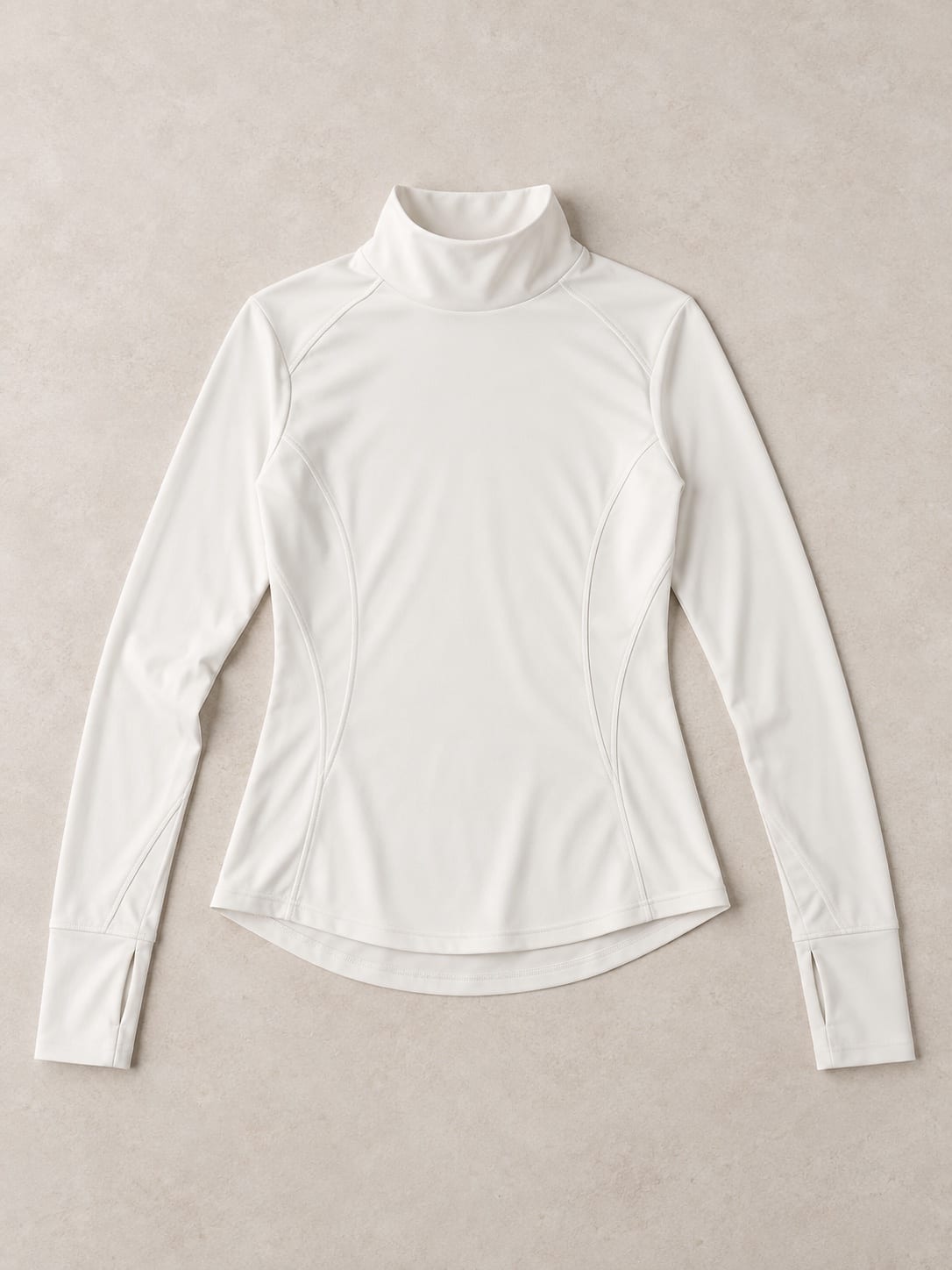
Design Coverage as a System
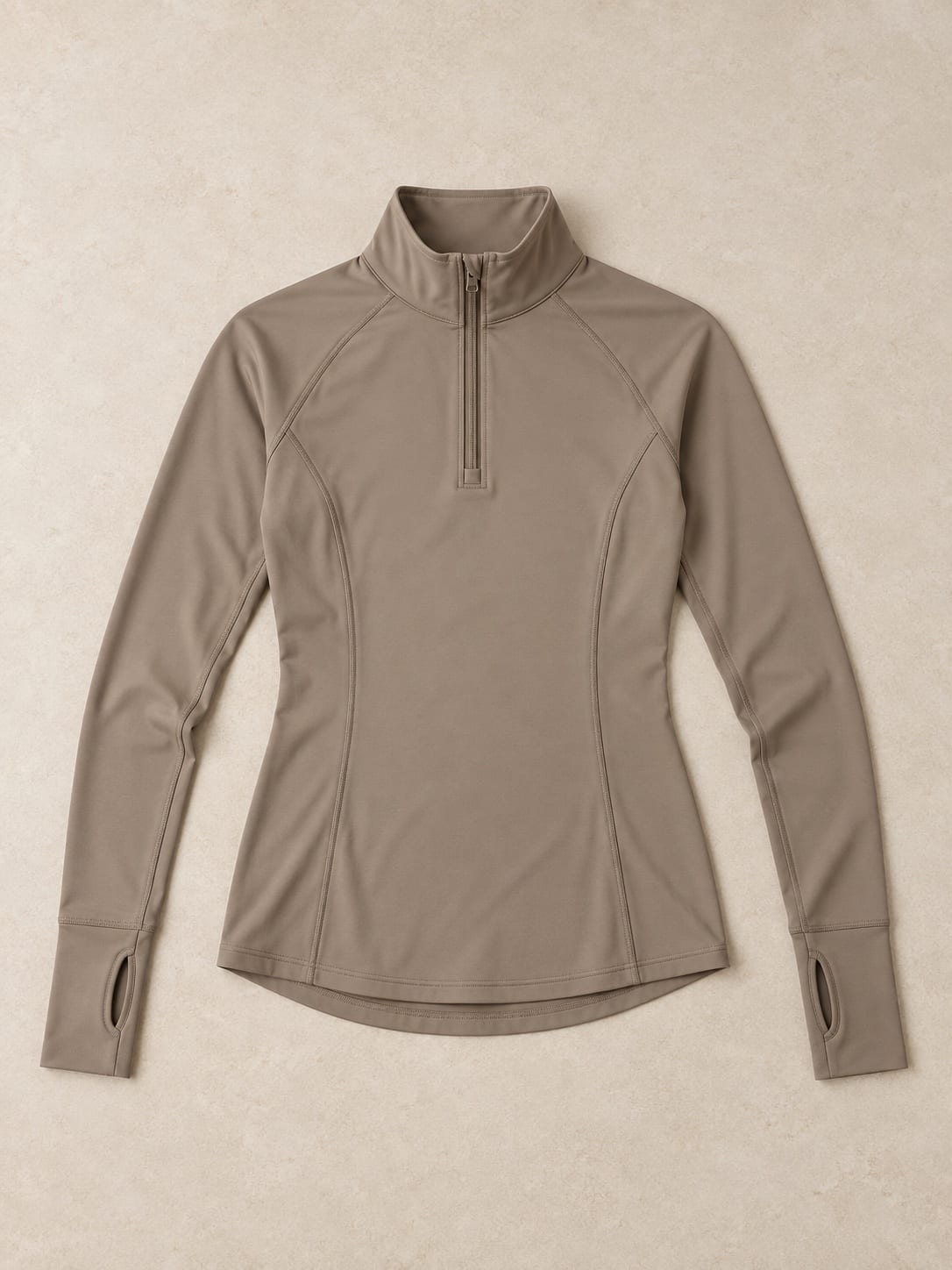
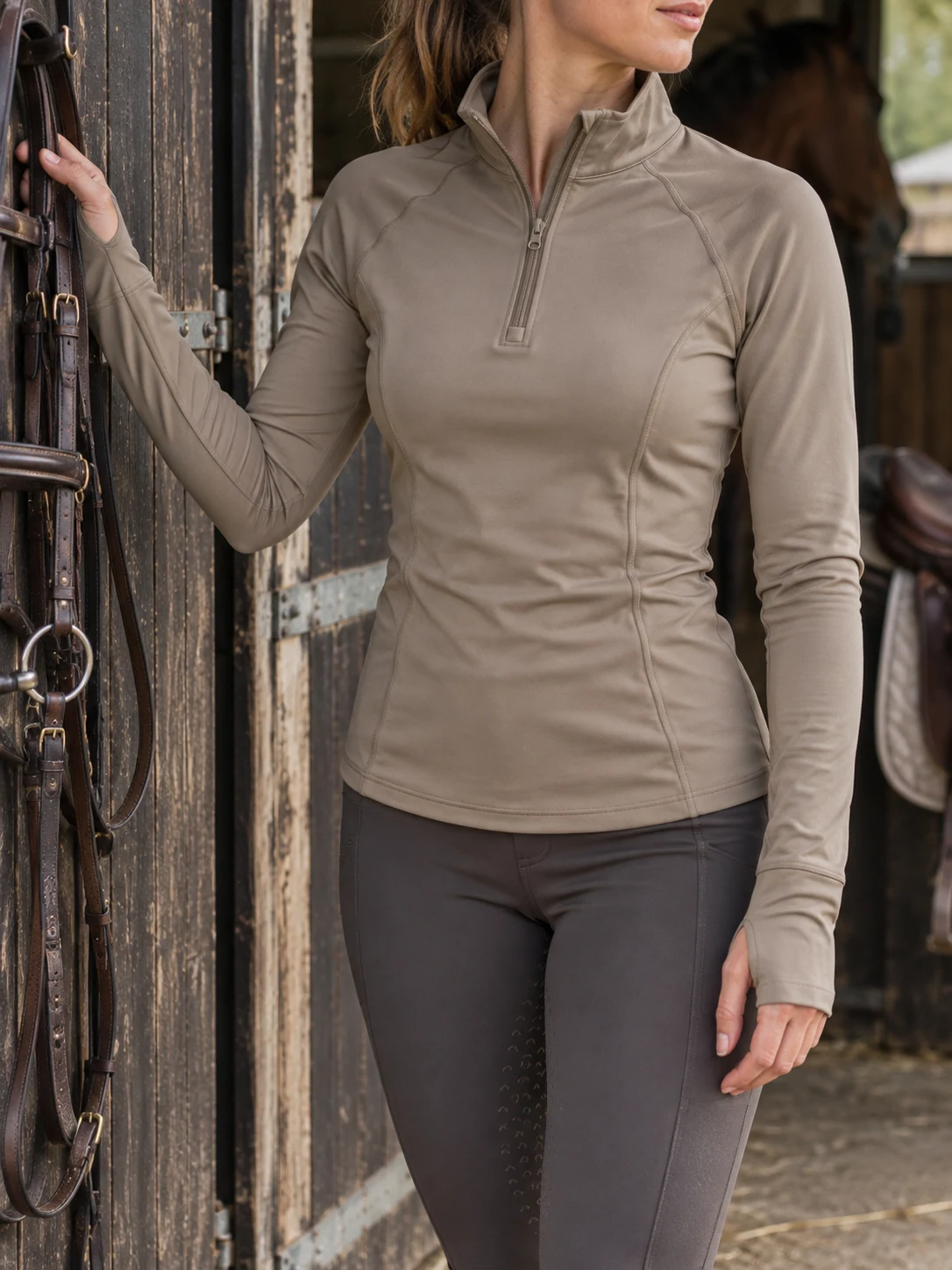
Sun-coverage long-sleeve base layer:
the private label buying guide.
Private label long-sleeve riding base layers for equestrian brands: skin coverage, cuffs, neckline and evidence for any sun-protection claims. Request an OEM quote.
A development direction for your brand. Final material, construction and performance by specification and sample approval.START WITH
THE RIDER.
For warm and high-sun markets, outdoor lesson programmes, endurance or trail-oriented collections, and brands building a practical summer core beyond short sleeves.
Product development context
A sun-coverage riding top must begin with physical coverage: sleeve length in rein position, collar height, neckline opening and whether the hem stays covered. Fabric protection claims are a separate decision requiring evidence for the chosen material, colour and condition of use. Stretch, moisture and repeated laundering may matter to performance, so buyers should avoid borrowing a UPF value from an unrelated fabric. The product brief should define climate, ride duration, skin zones, venting, fit and test expectations, then review the complete garment with helmet, gloves and breeches.
Coverage in riding posture
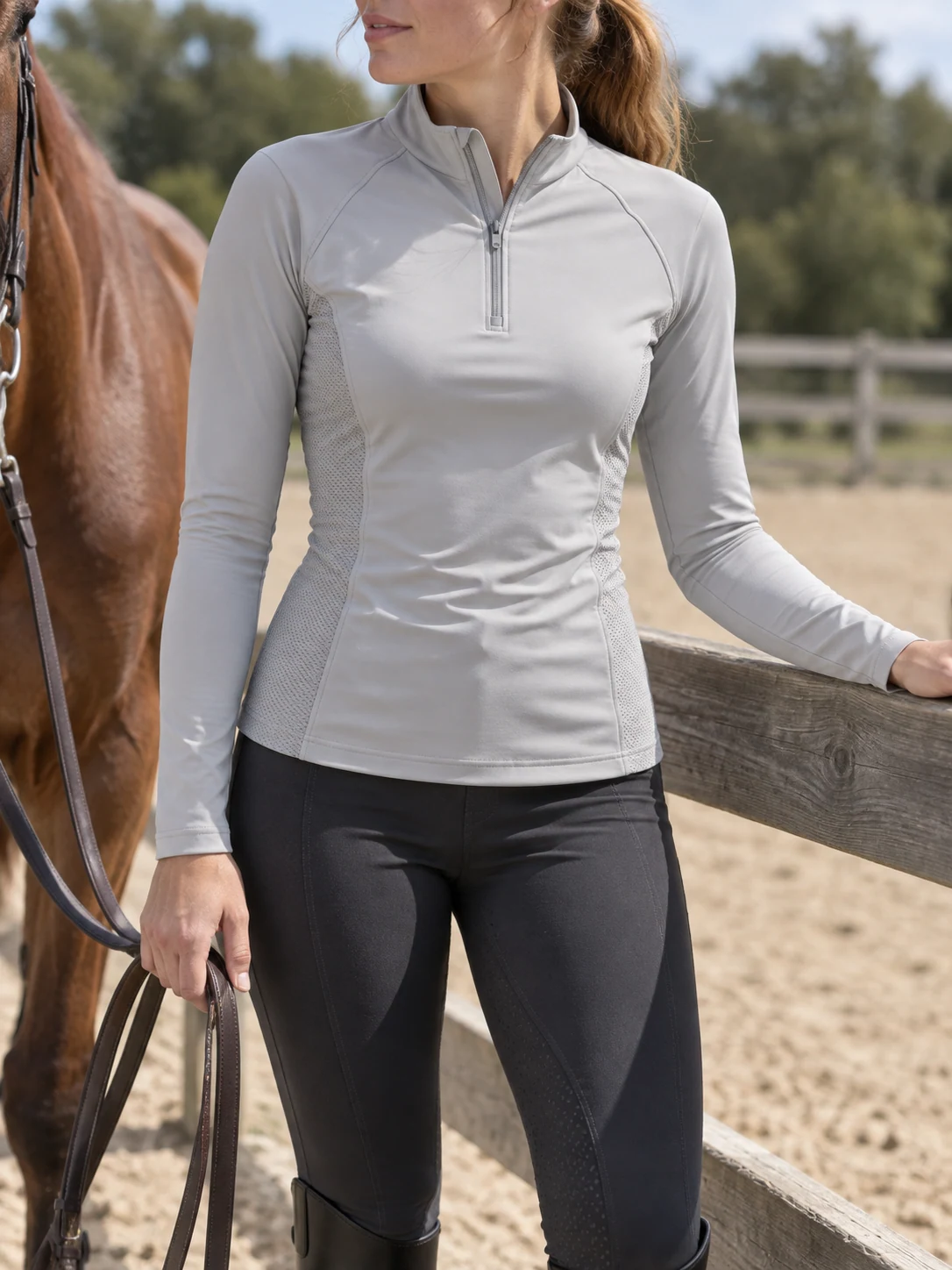
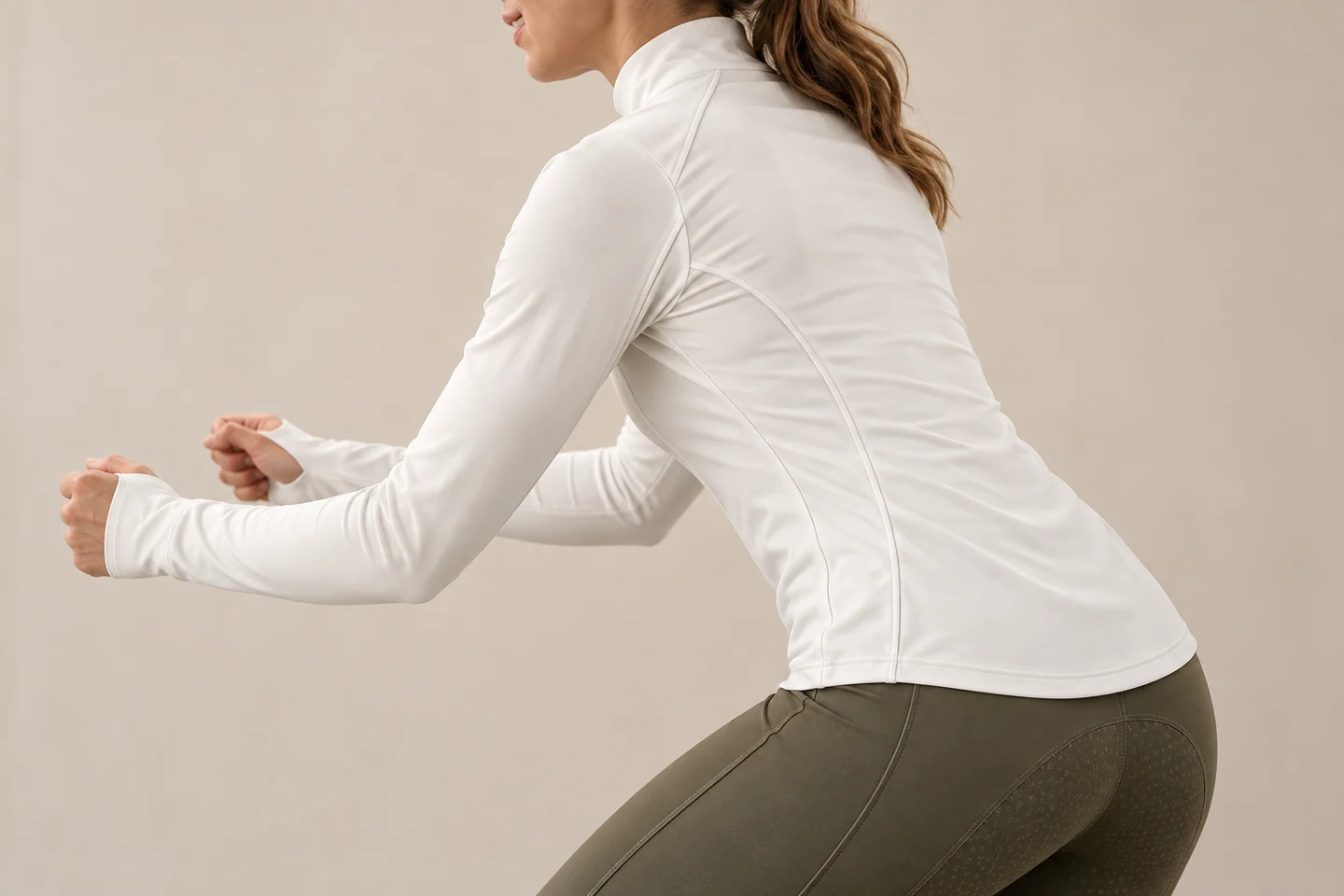
Measure sleeve and body coverage while elbows are bent and arms reach toward the reins. A standing long sleeve may expose wrist or lower back after mounting. Check collar openings and zip ventilation at every intended wearing position.
Responsible protection claims
If the buyer wants a numeric UPF or UV statement, identify the destination-market expectation, test method, material colours and stretch condition. Publish only what the resulting evidence supports and keep garment coverage language distinct from fabric performance.
Heat management
Long coverage should not automatically mean heavy fabric. Balance surface area with weight, airflow, moisture targets, colour and fit, then assess the actual top through a representative warm-weather session and layer configuration.
THE FABRIC
SETS THE FEEL.
Compare material directions against your rider, climate and care expectations. Request the actual fabric specification and evidence for any performance claim.
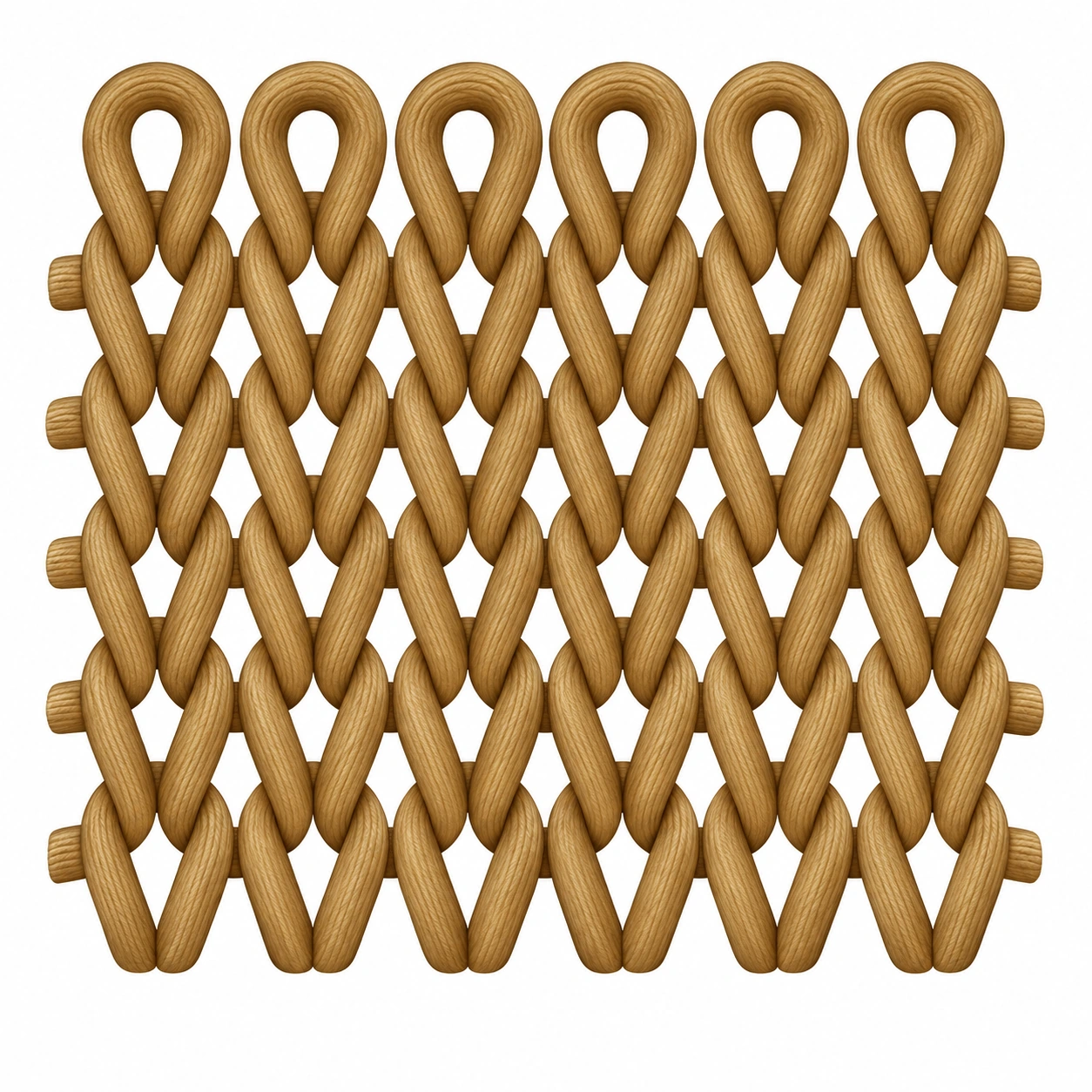
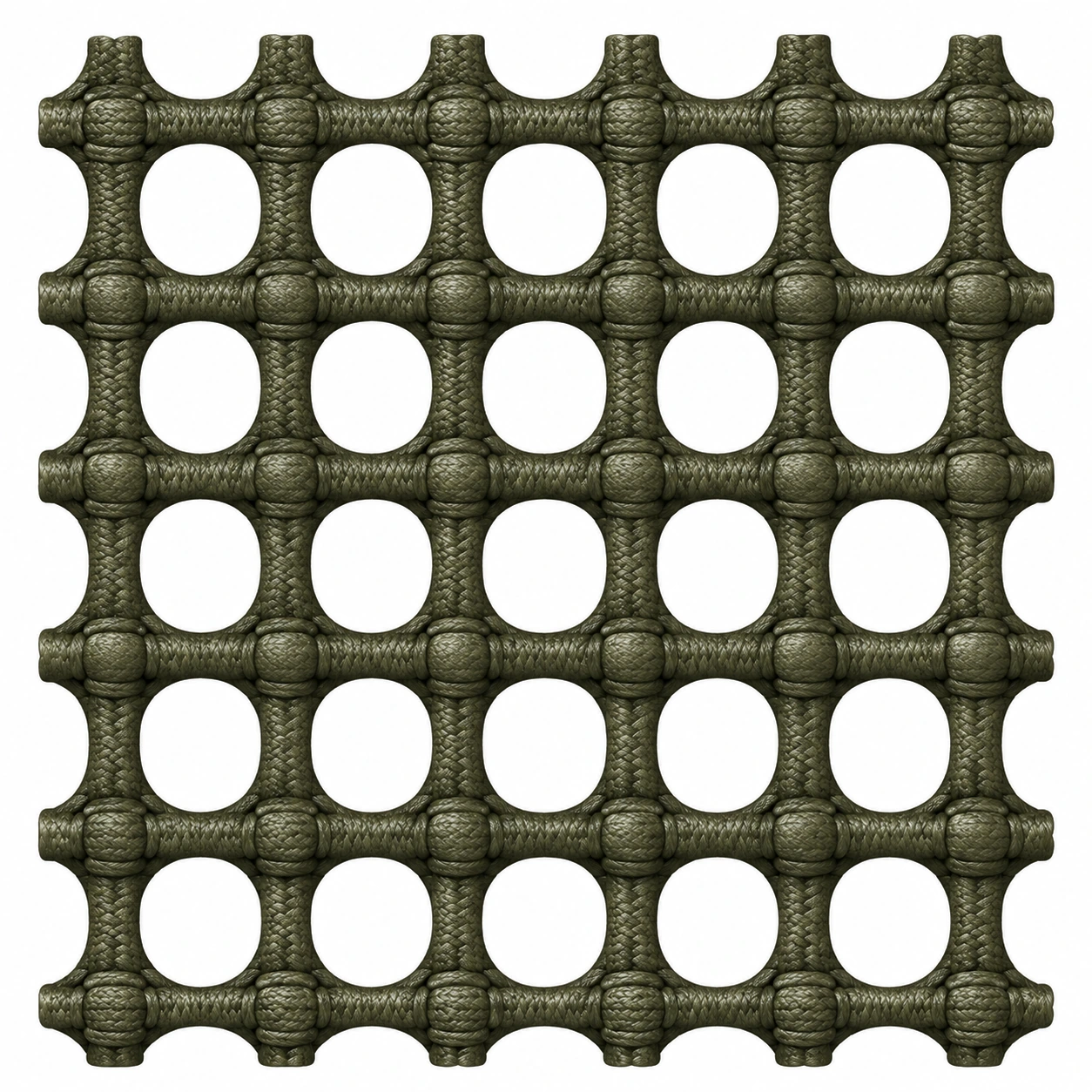
| Material direction | Why consider it | What to verify |
|---|---|---|
| Dense lightweight stretch jersey | A compact knit can provide physical coverage with low bulk and enough movement for riding. Density, colour and strain influence opacity and any potential UV performance. | Test actual production colours under agreed stretch and condition for claimed protection, plus recovery, opacity, pilling, dimensional change and colourfastness. |
| Breathable textured jersey | A subtle texture can reduce cling and create surface interest while maintaining coverage, depending on knit structure and finish. | Evaluate dry and damp hand, snagging, opacity, recovery, drying and protection evidence on the material intended for bulk. |
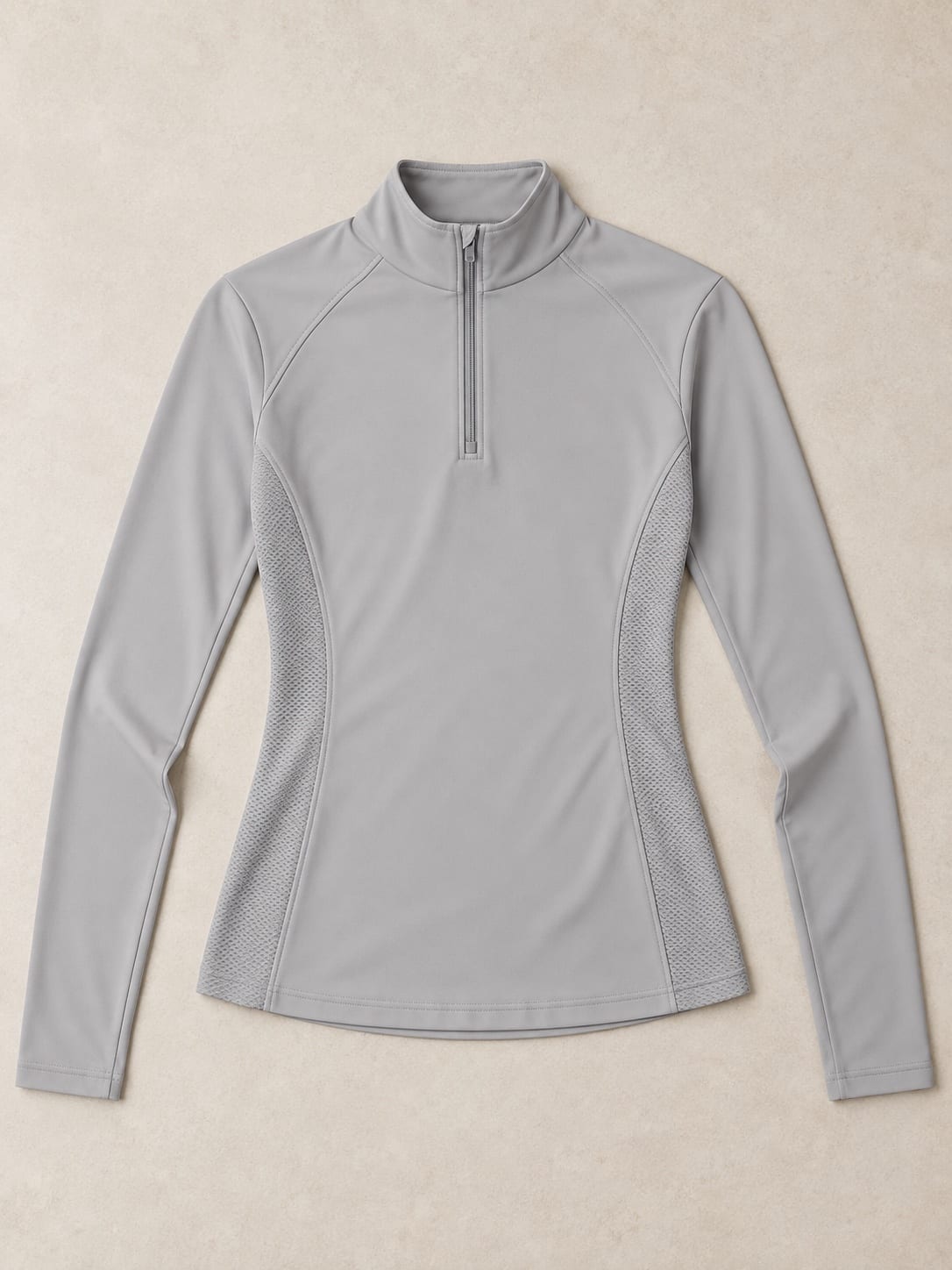
| Localized ventilation mesh | Mesh can help at underarm or upper-back zones, but those areas should be excluded or separately treated in any whole-garment coverage story. | Map mesh precisely, check wet transparency and seam comfort, and ensure marketing language does not imply equal protection across unlike panels. |
These are sourcing comparisons, not a list of stocked or certified fabrics. Confirm composition, weight, finish, availability and testing with the material selected for your project.
 A CLOSER LOOK / DEVELOPMENT CONCEPT
IT’S IN
THE DETAILS.
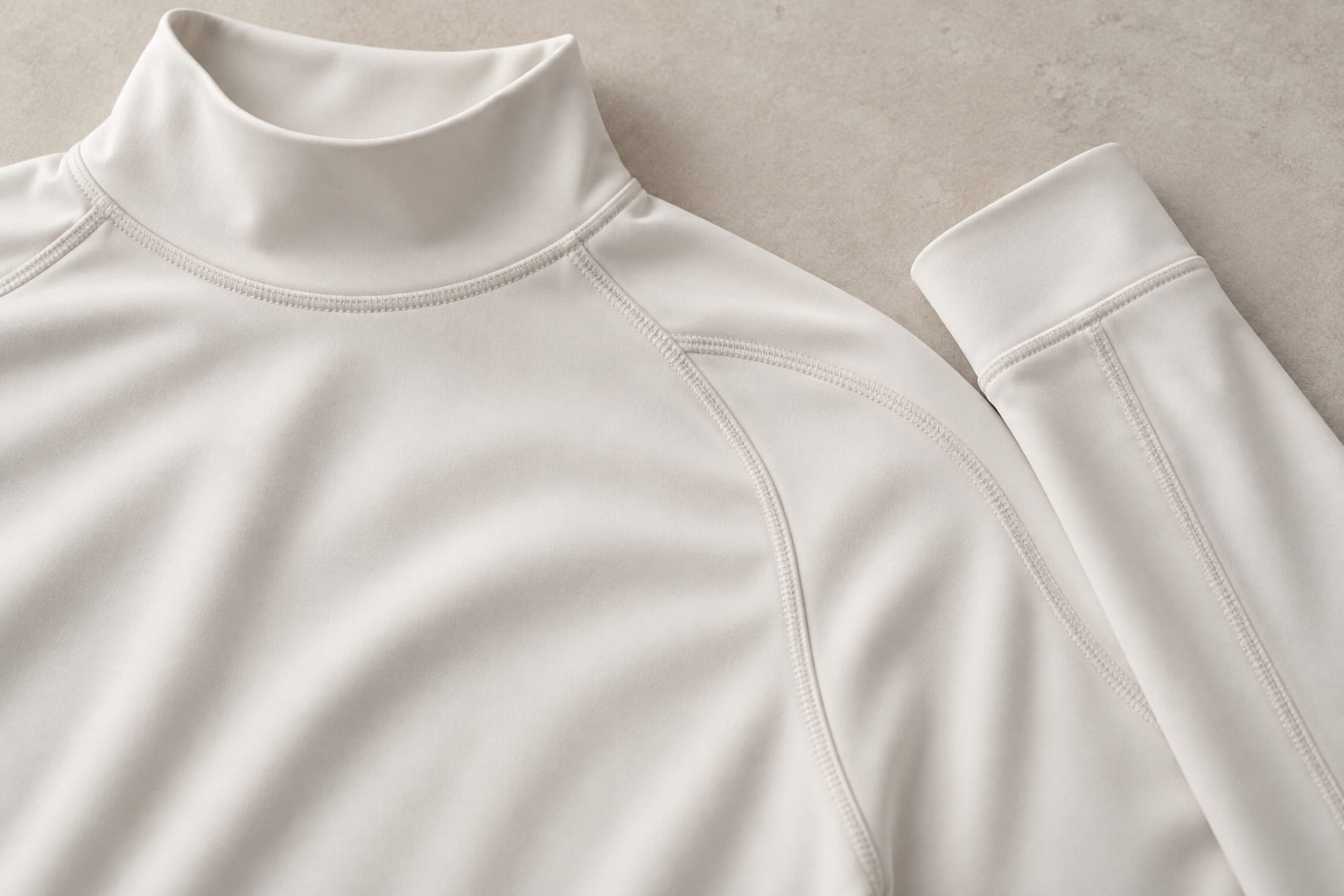
Extended riding sleeve
Set sleeve length with bent elbows and decide whether the cuff overlaps gloves without bunching or leaving a skin gap.
Coverage collar
Shape a comfortable mock or zip neck with enough height to cover skin while avoiding chin friction and heat-trapping bulk.
Stay-covered hem
Provide torso length and sweep that remain tucked or overlapped during mounting, forward reach and stable chores.
Mapped vent zones
Keep lower-protection panels explicit in the pattern, specification and consumer communication so coverage is not overstated.
FROM THE BRIEF.
INTO THE WORKROOM.
Develop the layer around movement and layering. Keep sleeve reach, zip length and inner comfort in the same brief.
Explore our factory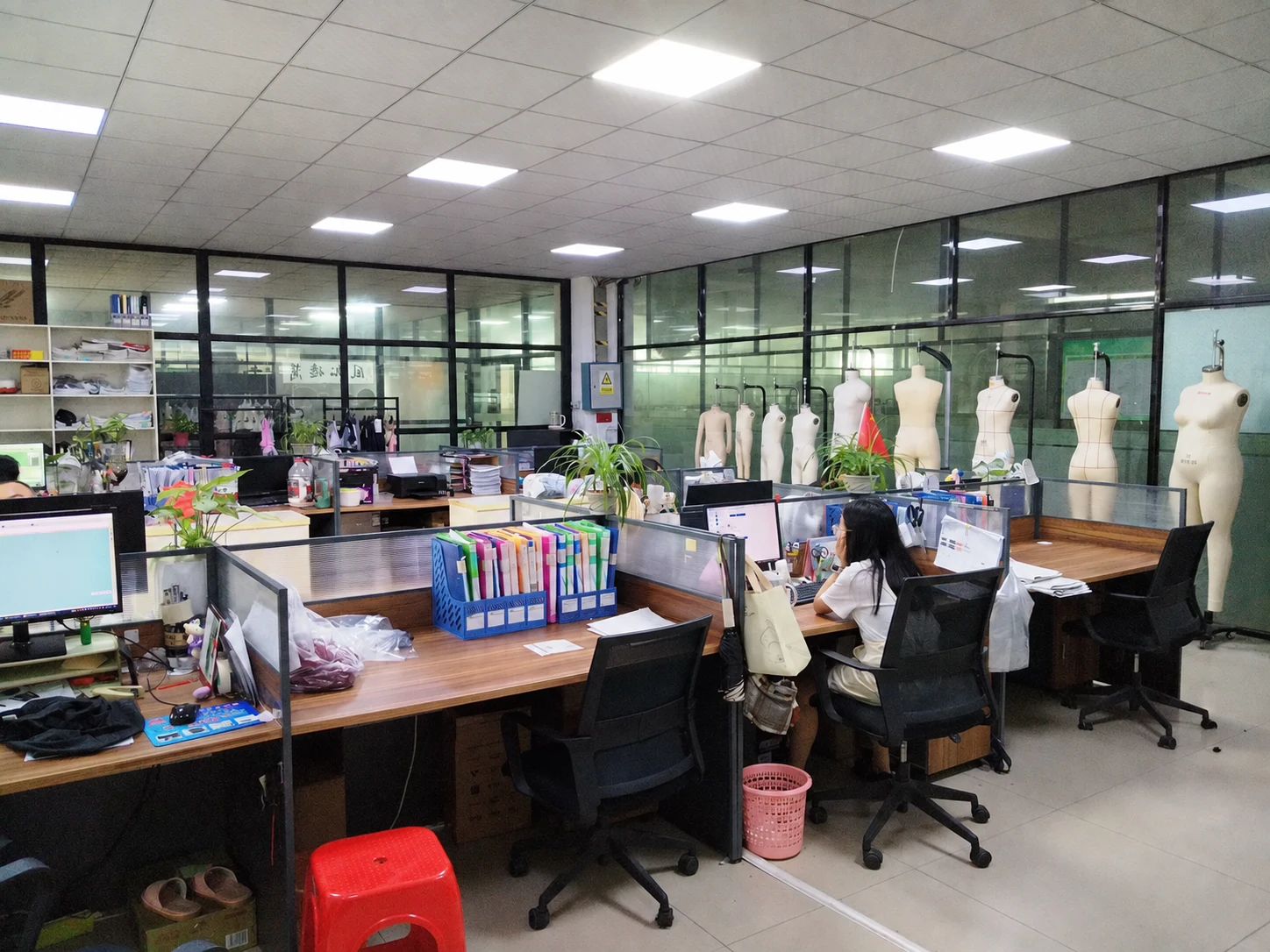
Extended riding sleeve
Set sleeve length with bent elbows and decide whether the cuff overlaps gloves without bunching or leaving a skin gap.
Carry this into approval Factory views show our working environment. Your garment follows its agreed specification and sample.GET THE
RIGHT FIT.
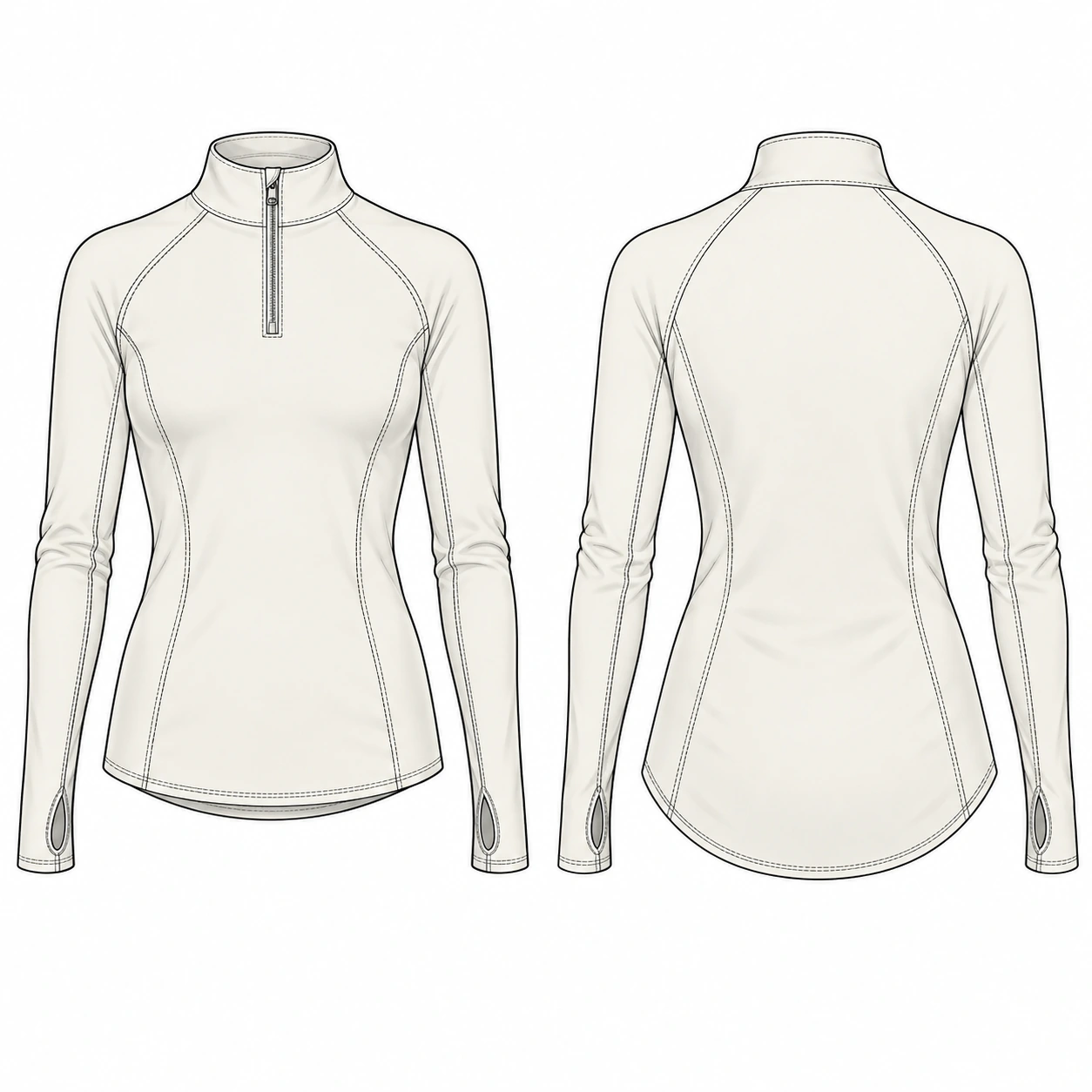
- AChest
- BShoulder span
- CSleeve length
- DBody length
A size label is only the beginning. Agree the measurement method, review the garment in use and keep the approved fit record with your specification.
Your fit-session checklist
Record the size worn, body measurements, intended underlayers and every proposed correction with the dated sample.
Note the size worn, body measurements, intended underlayers and each proposed correction. Recheck the affected measurement after a revision; confirm the size breakdown for each style and colour before bulk.
MAKE IT
RECOGNISABLY YOURS.
Use the product’s construction to guide decoration and finishing. Ask for placement, colour and material approval on the relevant sample.
Small details.
One identity.
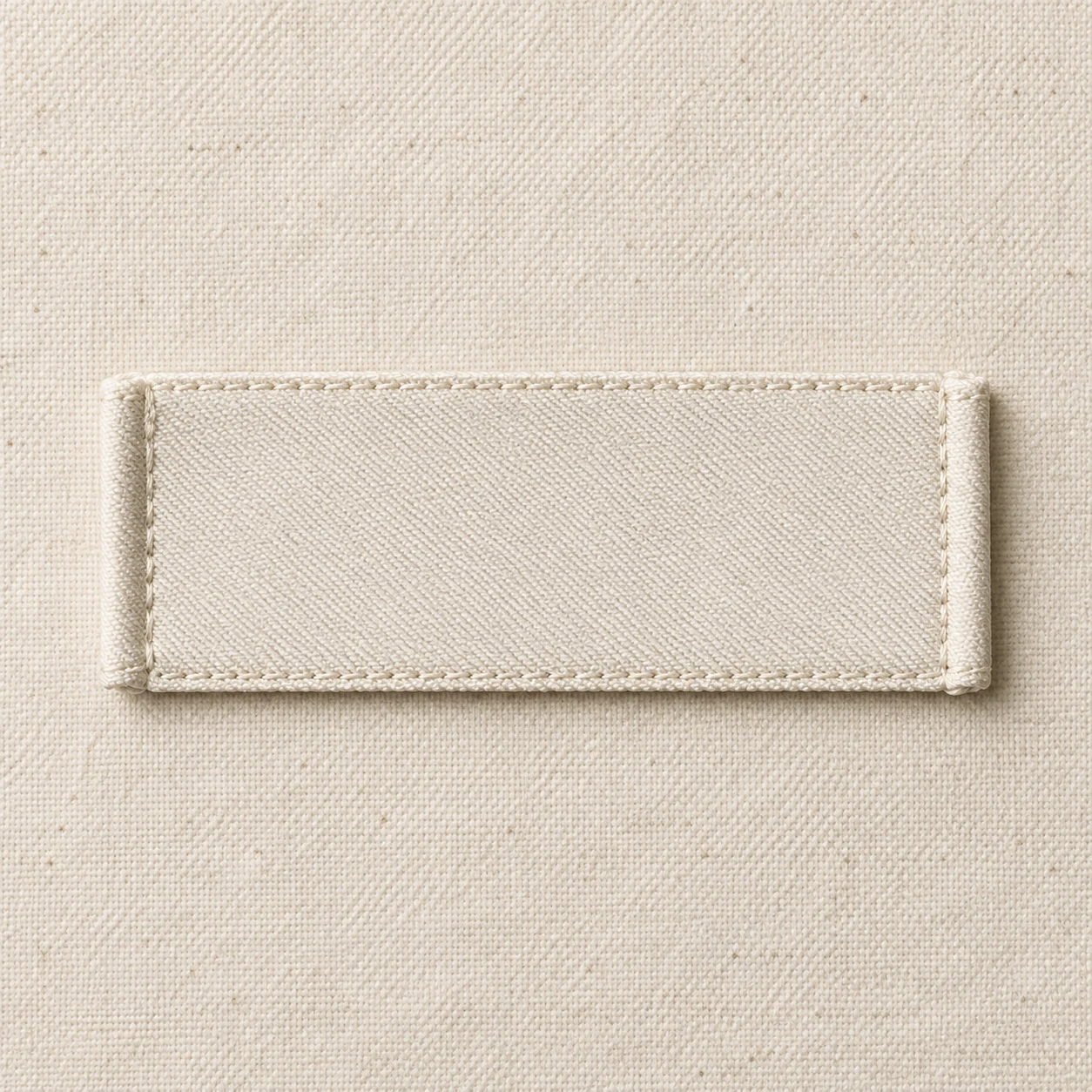
Folded edges · fine weave
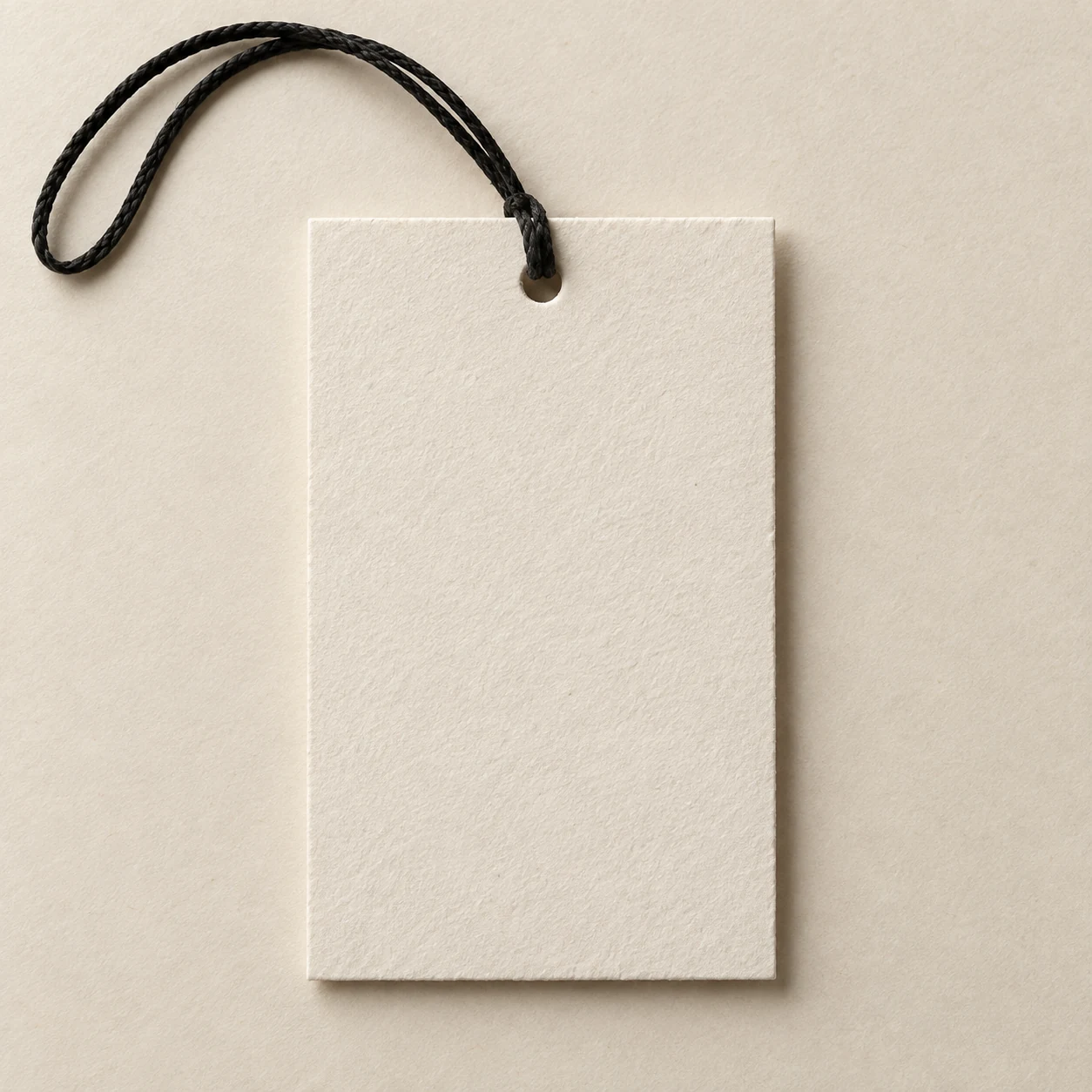
Textured stock · cord attachment
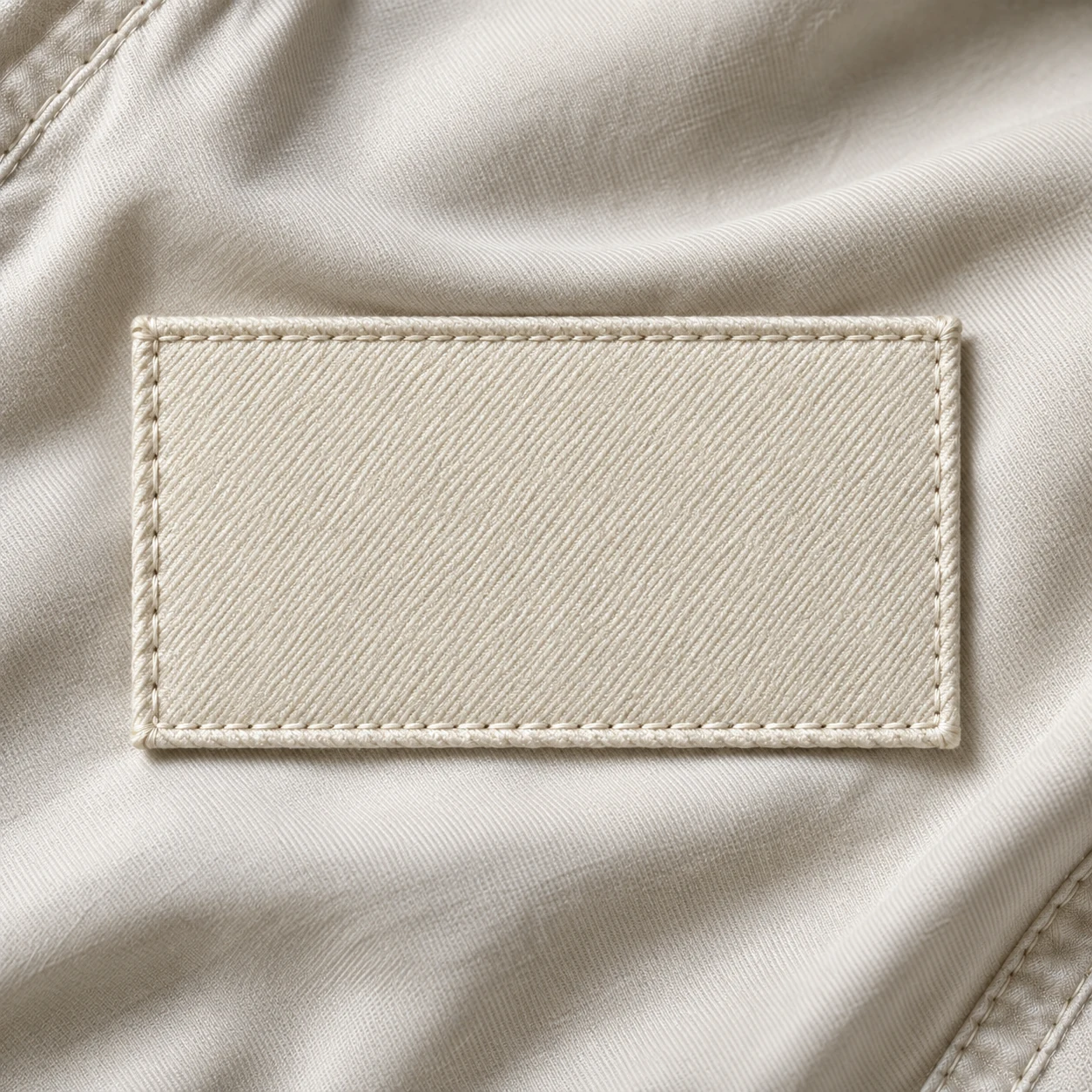
Raised edge · stitched placement
Material mockups with a live wordmark study. Print, weave, colour matching and placement are confirmed on your physical sample.
Neckline options
Choose mock neck, quarter zip or crew based on coverage and venting needs, then document open and closed wearing positions.
Hand coverage
Consider standard cuffs, thumbholes or glove overlap. Test pressure and exposed gaps with the buyer’s actual riding glove and watch placement.
Colour strategy
Approve every colour for opacity, heat perception and any intended protection claim because test results may not transfer across dyes.
Logo map
Keep transfers and prints flexible and place them outside high-sweat or maximum-stretch zones unless the exact application passes sample review.
APPROVE THE DETAIL.
THEN THE ORDER.
The first sample helps you make decisions. Define review conditions and acceptance criteria before you compare the result.
Review the sun-coverage long-sleeve base layer sample
Sampling takes 7–10 working days from the agreed start. Record each decision against the dated sample before bulk approval.
Rider, material direction, measurements and artwork.
DEFINE THE STARTTurn the agreed direction into a garment to review.
7–10 WORKING DAYSReview fit, finish and changes. Confirm the final specification.
REVISE IF NEEDEDProceed with agreed quantities, colours, labels and packing.
30–45 WORKING DAYSA shared development direction
Bring reference garments, your rider profile, target colours and any artwork. We turn these into the measurements, materials and construction questions that the sample needs to resolve.
Sample feedback can return to development. Revisions and transit are planned separately; timing begins from the agreed specification and start date.

KEEP THE APPROVAL.
WITH THE ORDER.
One agreed reference for the workroom: the dated sample, its specification and your confirmed order breakdown.
Sample decisions
- Coverage photography
Photograph front, back and sides while mounted with bent elbows, open and closed collar, gloves and intended breeches.
- Warm-session trial
Wear for the target duration and conditions, documenting sleeve migration, cling, ventilation and comfort without treating one trial as universal proof.
- Protection evidence review
Match reports to exact fabric, colour and test condition, then ensure proposed garment copy stays within the documented result.
Style, colour & size allocation
Confirm each style and colour separately, with the size allocation attached. The minimum is 100 pieces per style, per colour.
Labels, packing & timing
Agree label artwork, packing instructions and the production start. Bulk production takes 30–45 working days from the confirmed start; revisions and transit are planned separately.
A CLEARER BRIEF.
A MORE USEFUL QUOTE.
Price follows an agreed product, quantity and delivery scope. Use these inputs to compare proposals on the same basis.
Protection testing
Each fabric or colour claim may require relevant sampling, laboratory method and documentation.
Technical fabric
Dense lightweight constructions, special finishes and custom colours can increase sourcing cost and minimums.
Thumbhole cuffs
Shaped openings, extra pieces and reinforcement add sewing operations and fit checks.
Ventilation panels
Secondary materials add minimums, colour approvals, pattern pieces, seams and claim complexity.
Bring these six things
Planning baseline: 100 pieces minimum per style, per colour. Sampling takes 7–10 working days; bulk production takes 30–45 working days from the agreed start.
100 pieces minimum per style, per colour. State each colour quantity separately; confirm your proposed size allocation.
GOOD QUESTIONS.
BETTER DECISIONS.
Product-specific sourcing questions to resolve before sampling.
No. Long sleeves describe garment coverage. A UPF or similar claim concerns tested material performance under defined conditions. Buyers should plan both, obtain relevant evidence and avoid implying protected coverage where mesh, openings or fit expose skin.
Yes for product approval, and possibly for performance substantiation depending on the claim and method. Colour can affect opacity and protection results. Match any report to the exact fabric and colour before extending its conclusion across a range.
Use the intended helmet, gloves, breeches and outer layers. Photograph standing, mounting, rein position and raised-arm movement; record wrist, neck and lower-back exposure plus any mesh zones. Repeat on core and grading-risk sizes.