 REINFORM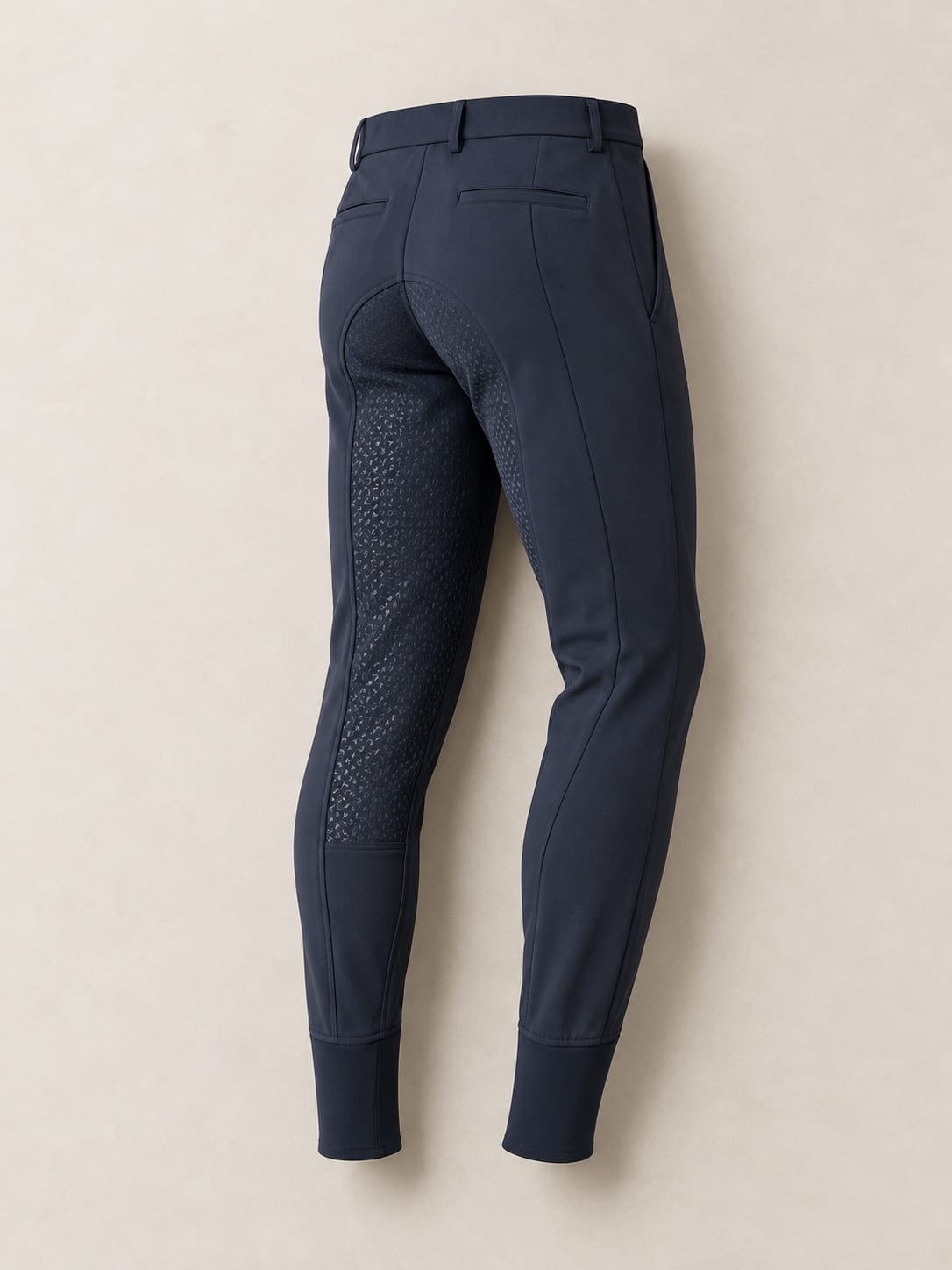
Tailoring That Works in Motion
Men’s tailored breeches:
the private label buying guide.
Private label men’s tailored breeches for equestrian brands: rise, thigh room, seat fit, pockets and a production-ready size chart. Request an OEM quote.
A development direction for your brand. Final material, construction and performance by specification and sample approval.START WITH
THE RIDER.
For men’s equestrian brands, unisex labels adding a credible men’s capsule, team programmes and retailers needing a purpose-built alternative to women’s or generic stretch trousers.
Product development context
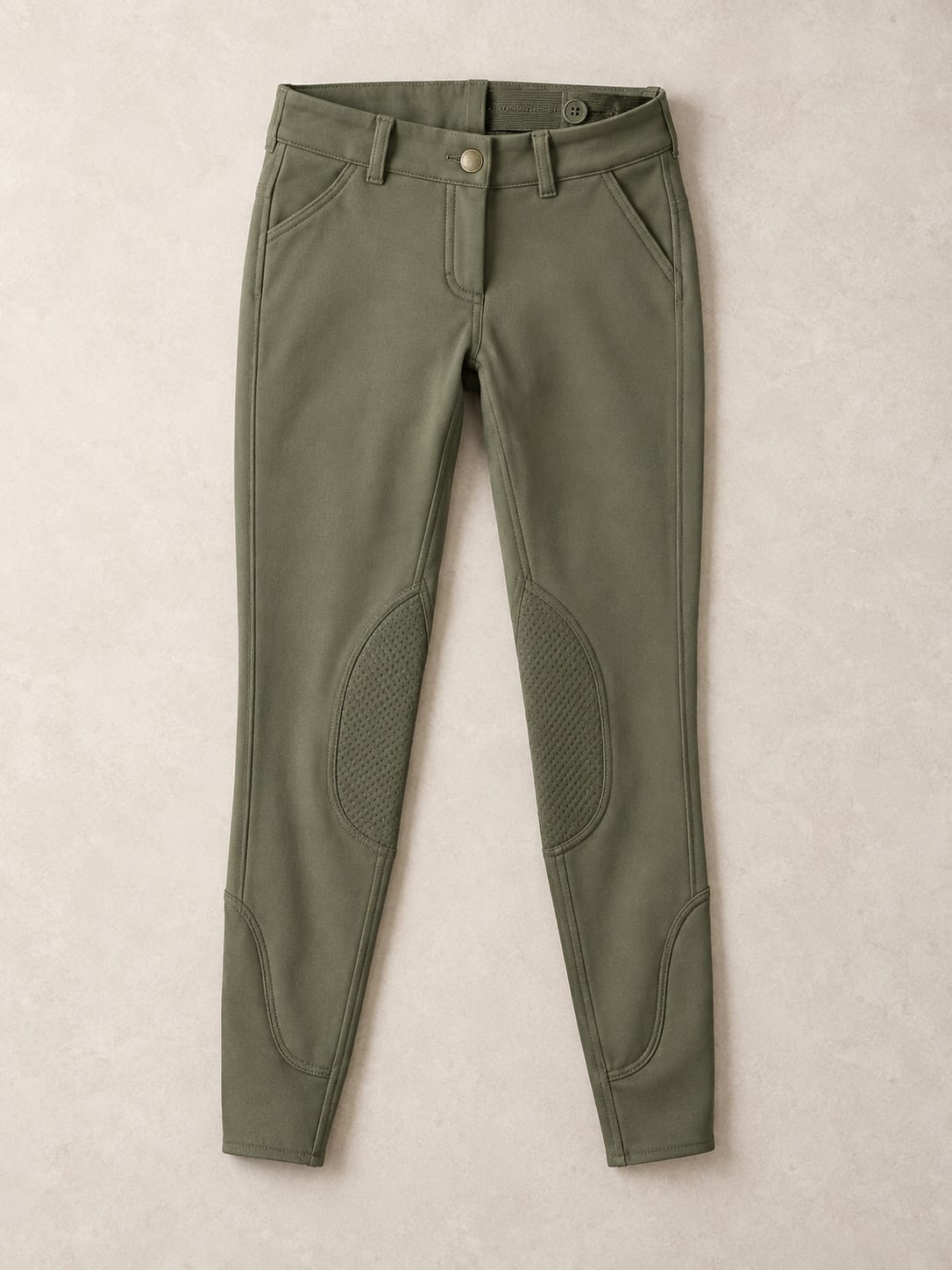
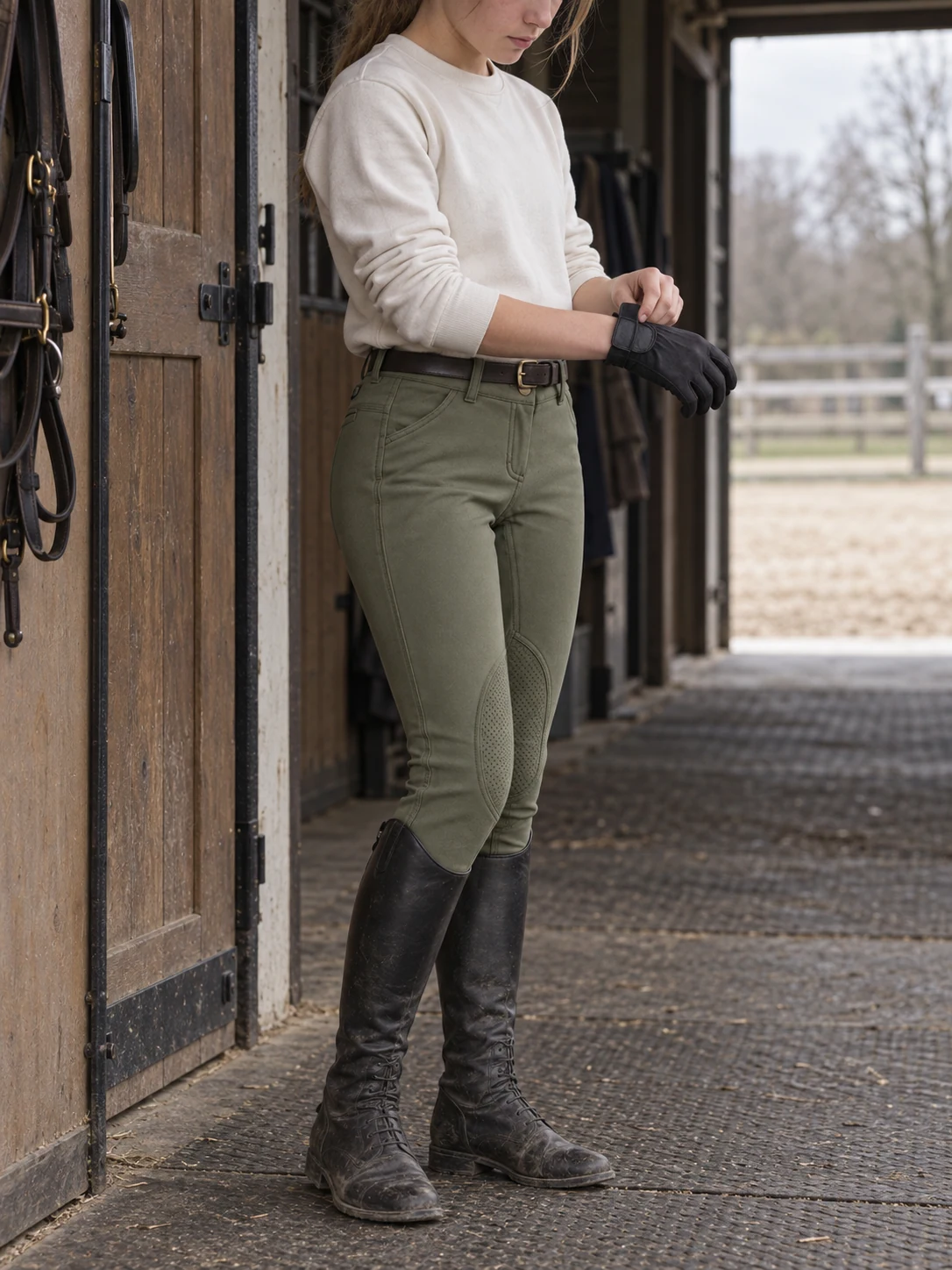
Men’s breeches cannot be created by relabelling a women’s block or widening a few measurements. The product needs its own waist-to-hip relationship, front and back rise, crotch shape, thigh allowance and calf taper. A tailored style also has to preserve clean lines when pockets are loaded and the rider folds at the hip. Buyers should decide whether the range serves dressage, jumping, general training or competition, then establish grip coverage and silhouette around that use. Mounted fittings with more than one body type are central to commercial grading.
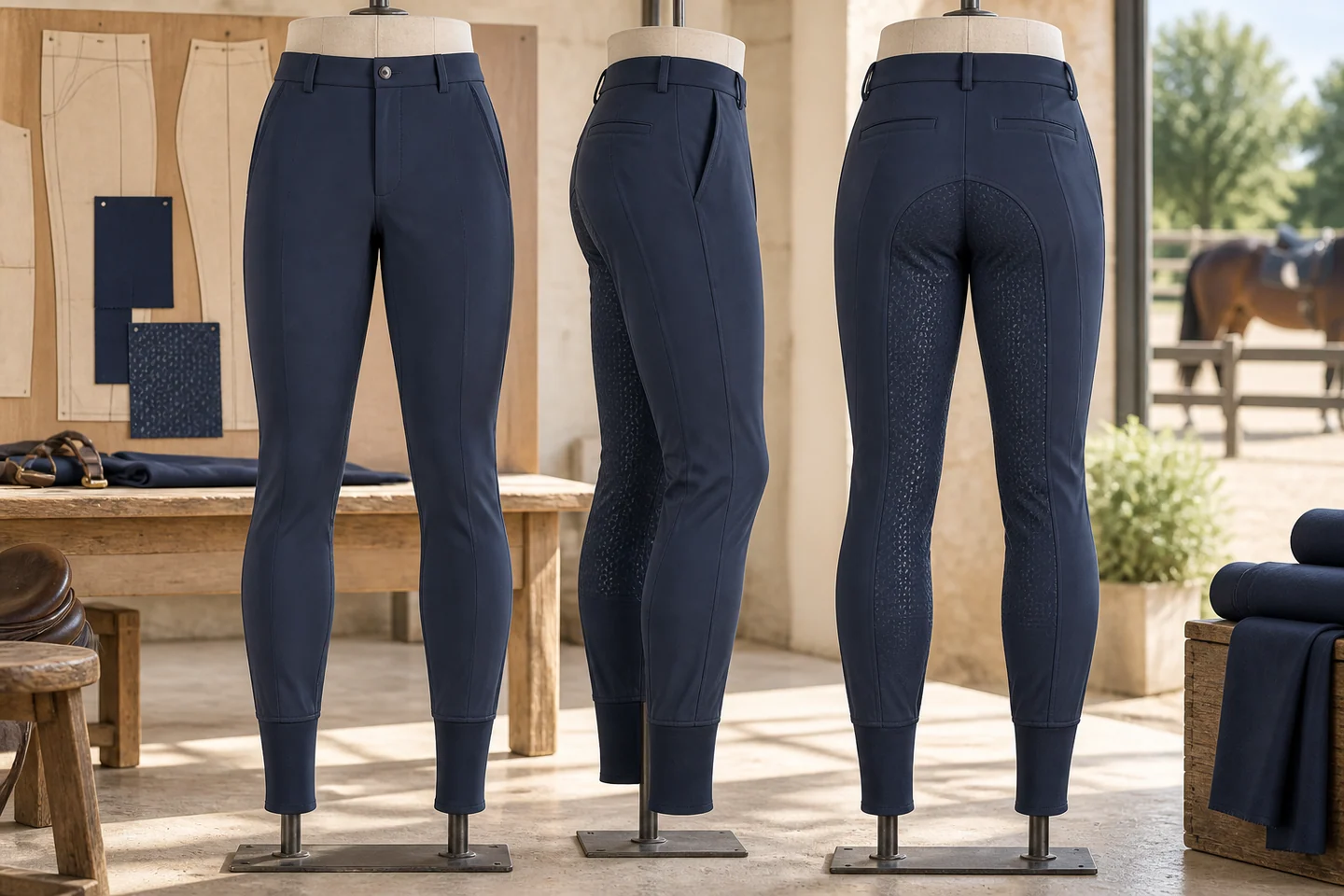
Independent block
Build from the target men’s body chart and garment ease, documenting waist, seat, upper thigh, rise and crotch extension. Fit decisions should be based on the intended customer rather than assumptions about a universal athletic male shape.
Seat and thigh room
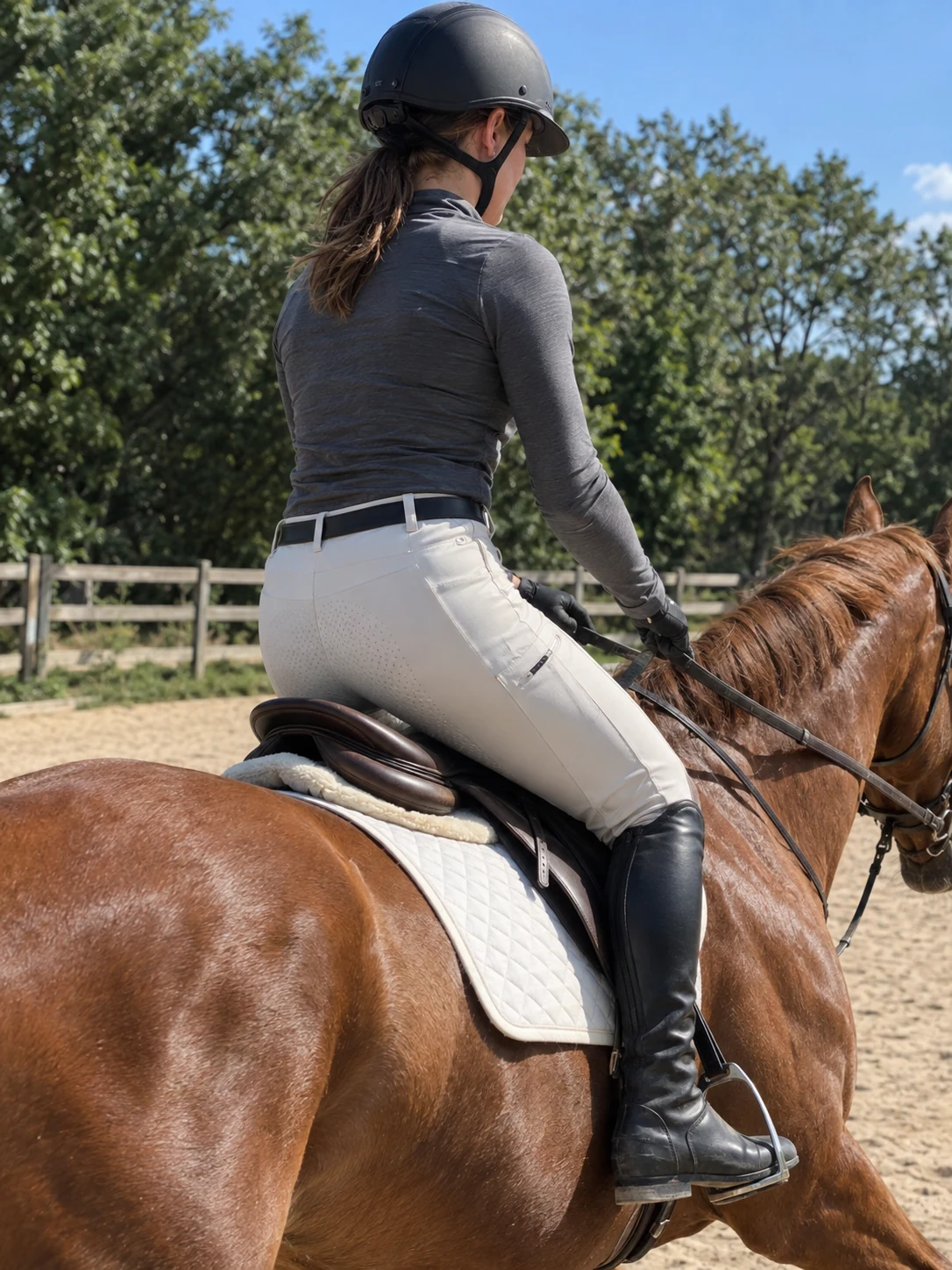
Check seated hip expansion and upper-thigh mobility without allowing excess fabric to fold under the rider. The balance must support deep sitting and forward positions while keeping the waistband level and the front rise comfortable.
Pocket discipline
Men’s customers may expect usable storage, yet bulky bags can conflict with saddle flaps or disturb the tailored face. Define the actual object, pocket depth, entry angle and closure before the pattern is approved.
THE FABRIC
SETS THE FEEL.
Compare material directions against your rider, climate and care expectations. Request the actual fabric specification and evidence for any performance claim.
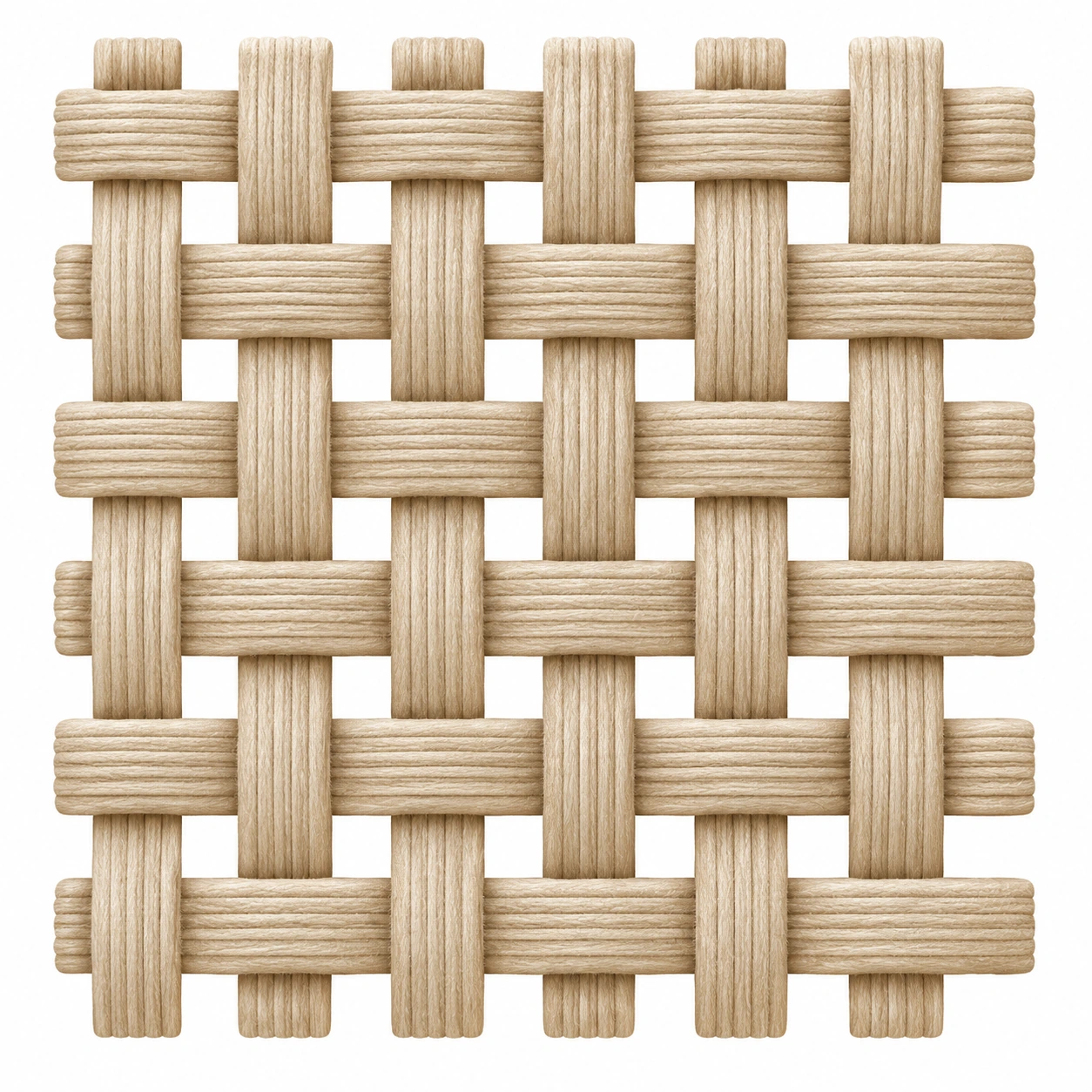
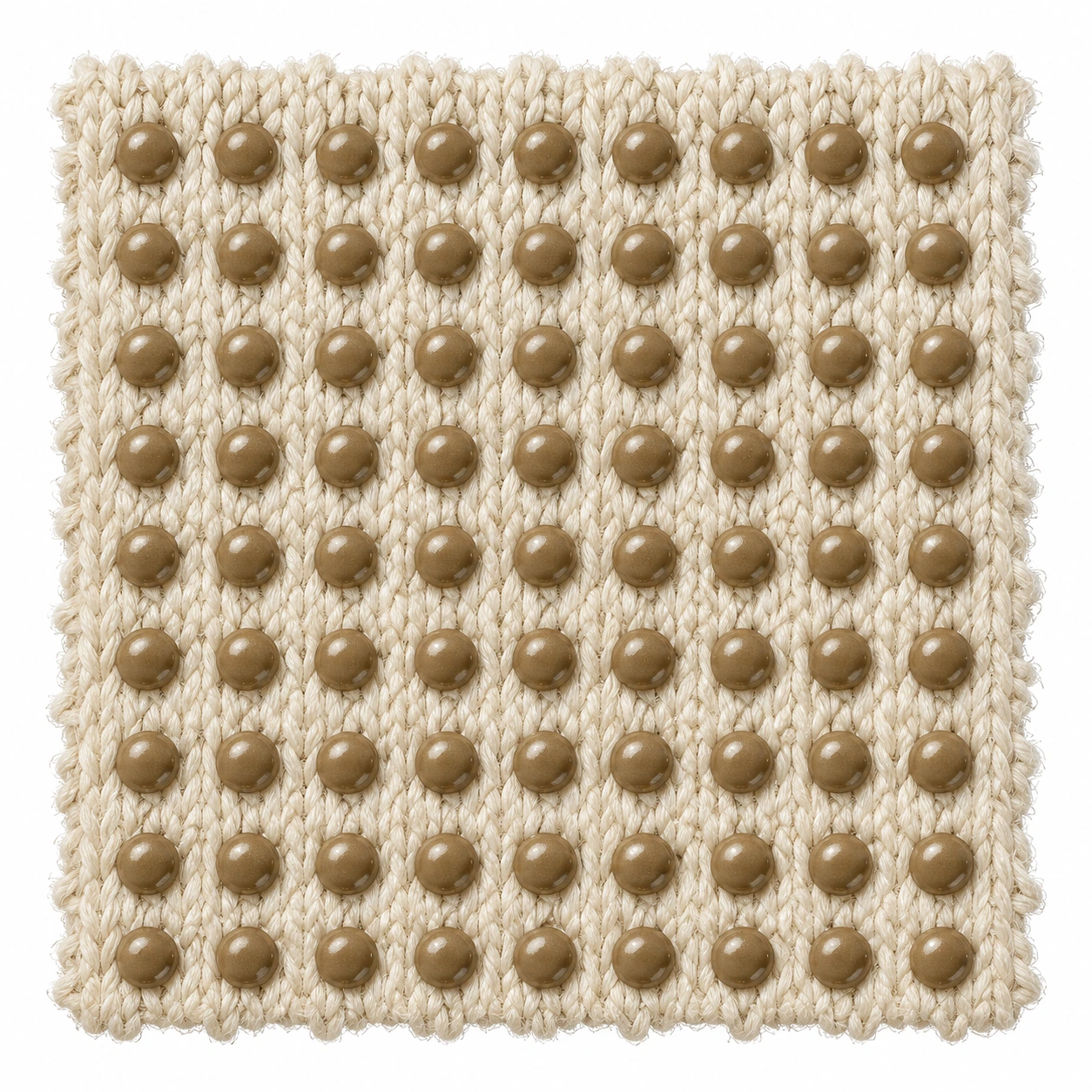
| Material direction | Why consider it | What to verify |
|---|---|---|
| Structured stretch woven | A fabric with a clean face and controlled recovery helps tailored seams and pockets remain sharp while allowing saddle movement. Select weight and hand for the intended season and price point. | Review mill documentation and test the actual colour for stretch, recovery, pilling, abrasion, dimensional change, colourfastness and seam behaviour. |
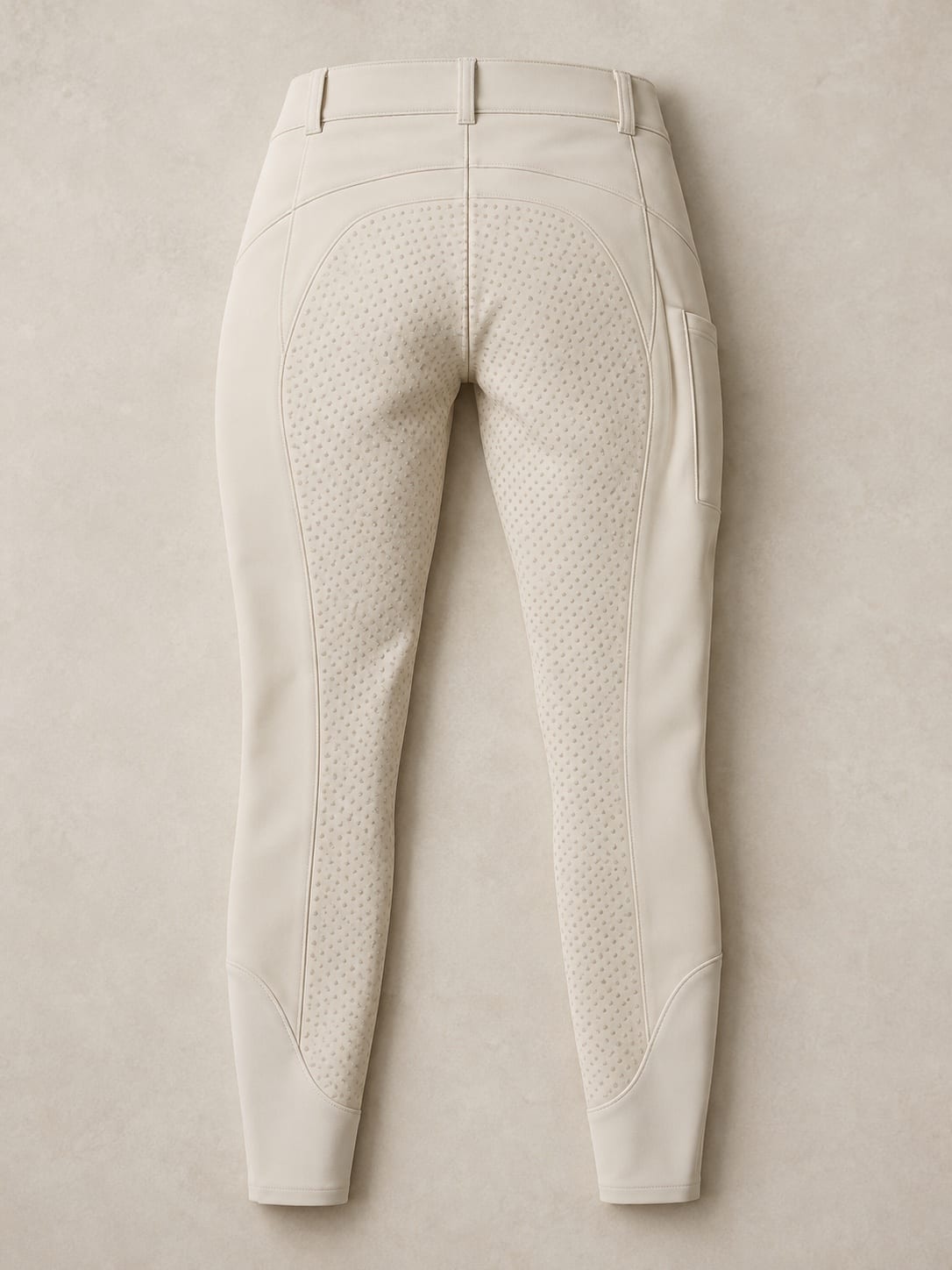
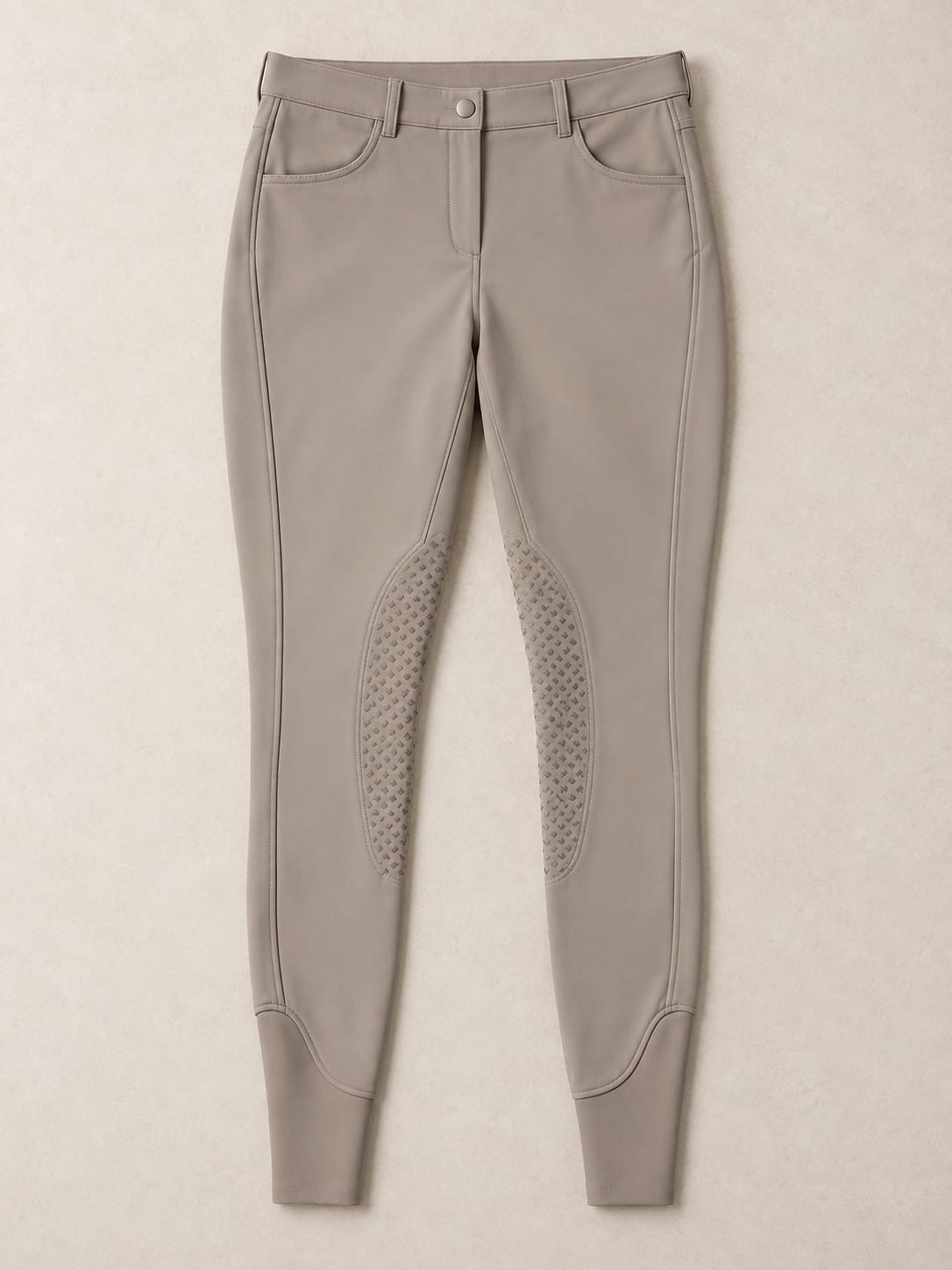
| Silicone knee or full-seat grip | Printed grip can keep the garment visually streamlined and offers precise control of coverage, but its density changes flexibility and rider contact. | Approve motif strike-offs on the chosen shell, then ride and care-test the assembled garment for adhesion, tack balance, cracking and staining. |
| Synthetic patch construction | A separate knee or seat patch creates a traditional look and may suit classic collections. It adds material transitions and seams that must stretch with the main fabric. | Check compatibility under flexion, seam bulk, colour stability, care response and documented fibre information before label copy is finalized. |
These are sourcing comparisons, not a list of stocked or certified fabrics. Confirm composition, weight, finish, availability and testing with the material selected for your project.
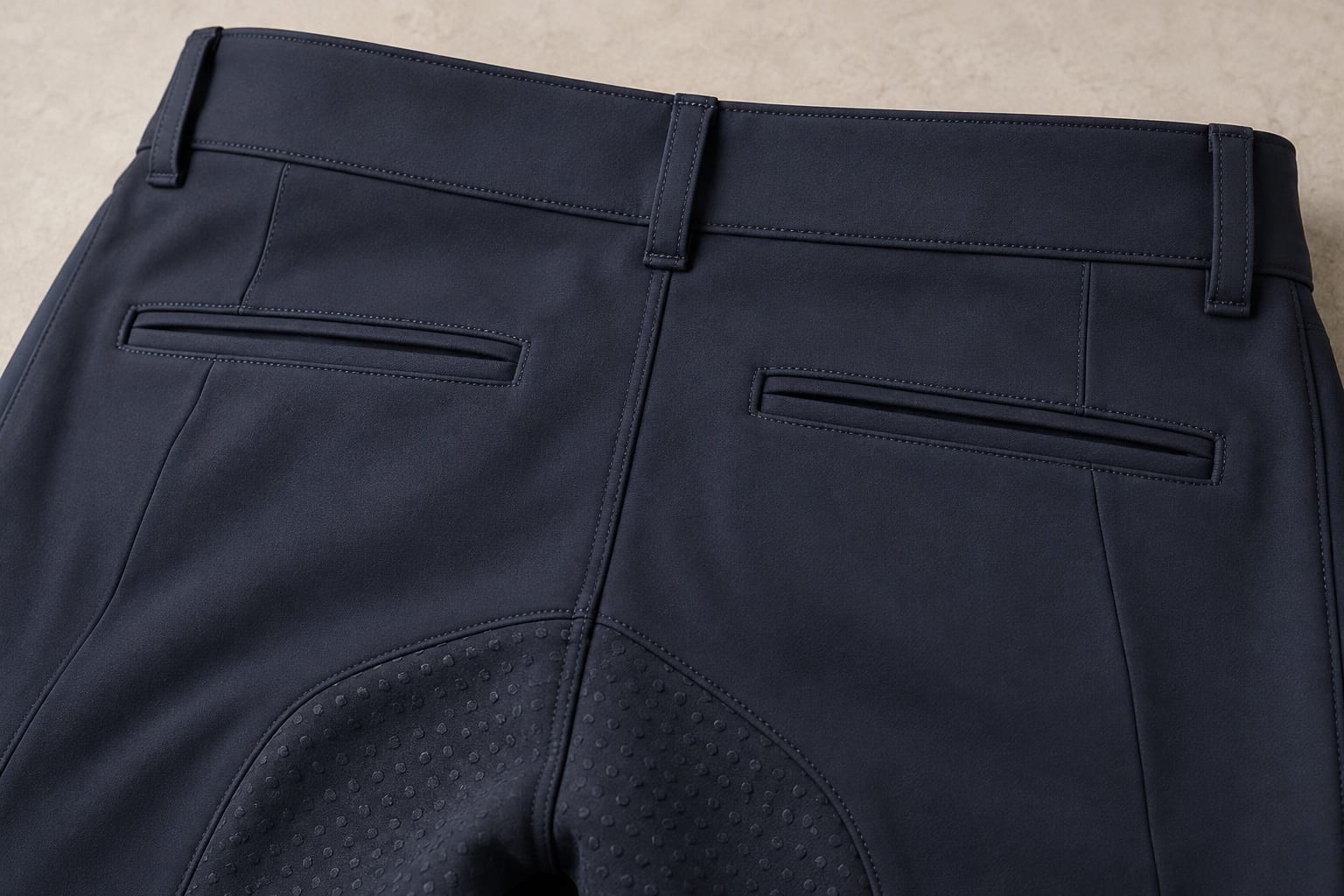 A CLOSER LOOK / DEVELOPMENT CONCEPT
IT’S IN
THE DETAILS.
Men’s rise shaping
Balance front and back rise for seated comfort and waistband stability, with enough room through the crotch without visible sag when standing.
Reinforced belt system
Set loop width and spacing for the intended belt, reinforcing high-load points while keeping internal seam bulk controlled.
Functional front pockets
Shape pocket bags around hip flexion and saddle position; secure them internally so they do not twist or show below the opening.
Calf taper
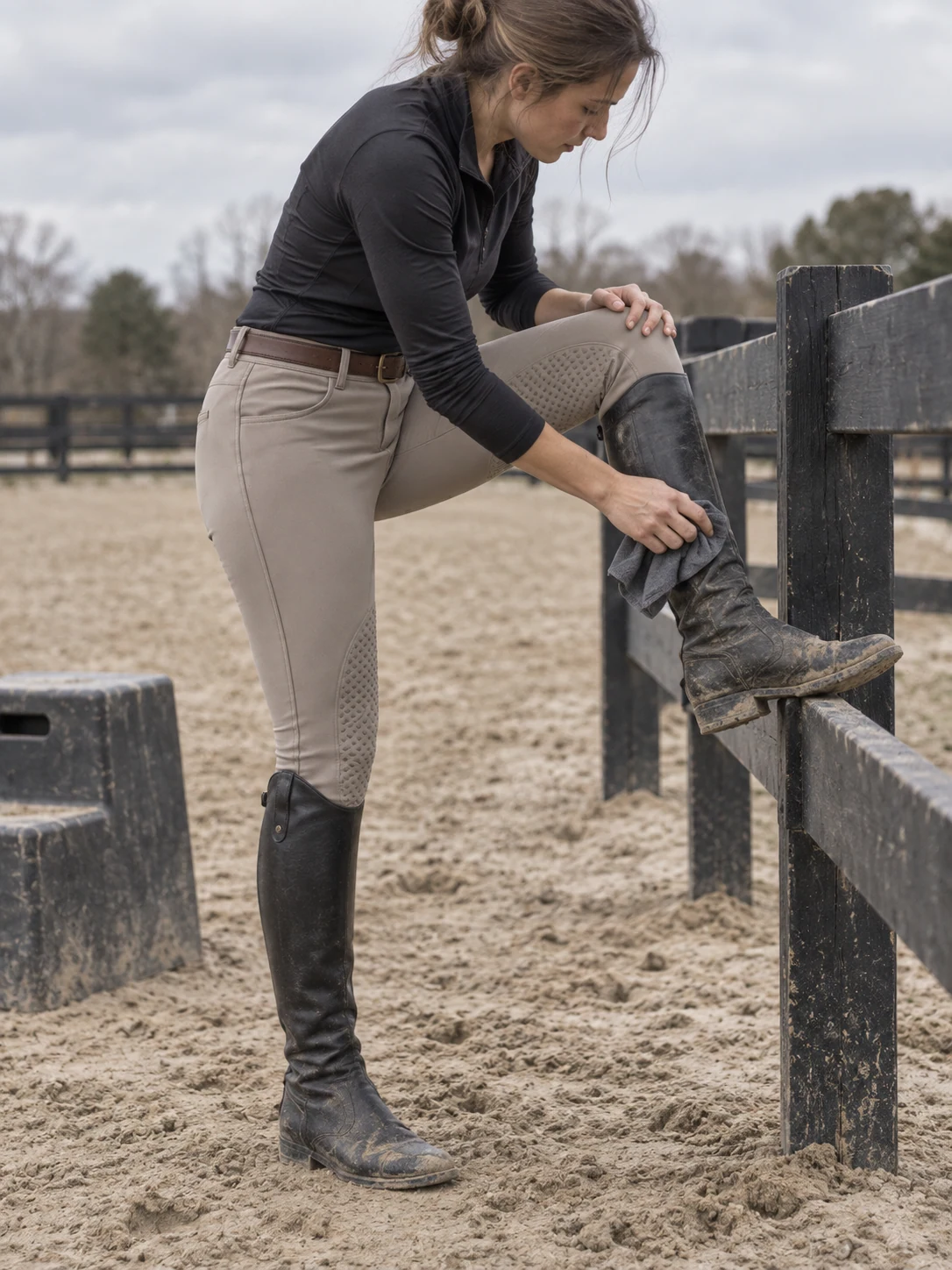
Grade lower-leg circumference from actual target measurements, confirming smooth entry into tall boots without restricting ankle or knee movement.
FROM THE BRIEF.
INTO THE WORKROOM.
Start with the riding position. Carry the agreed rise, leg shape and grip placement through the sample.
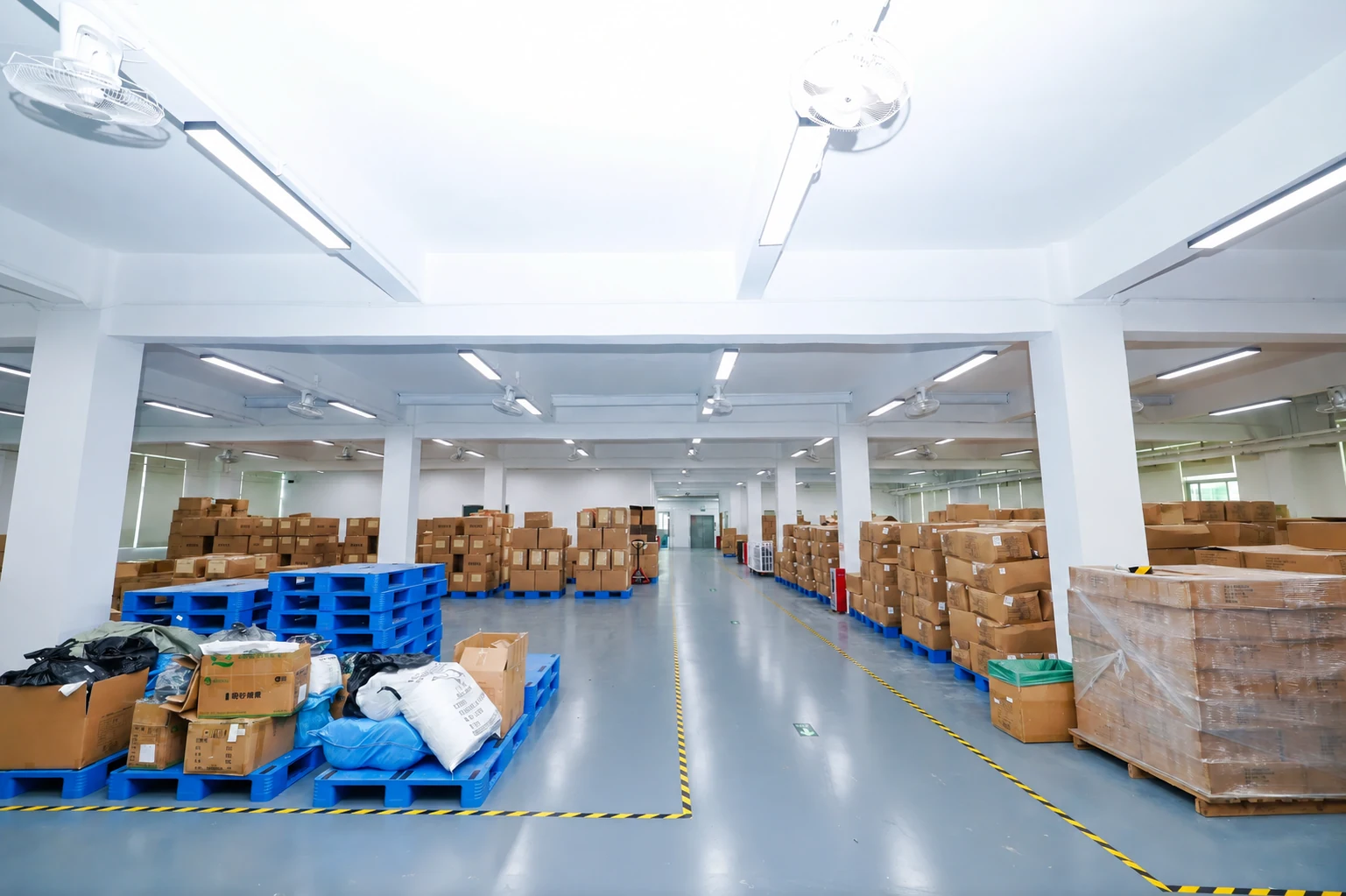
Explore our factory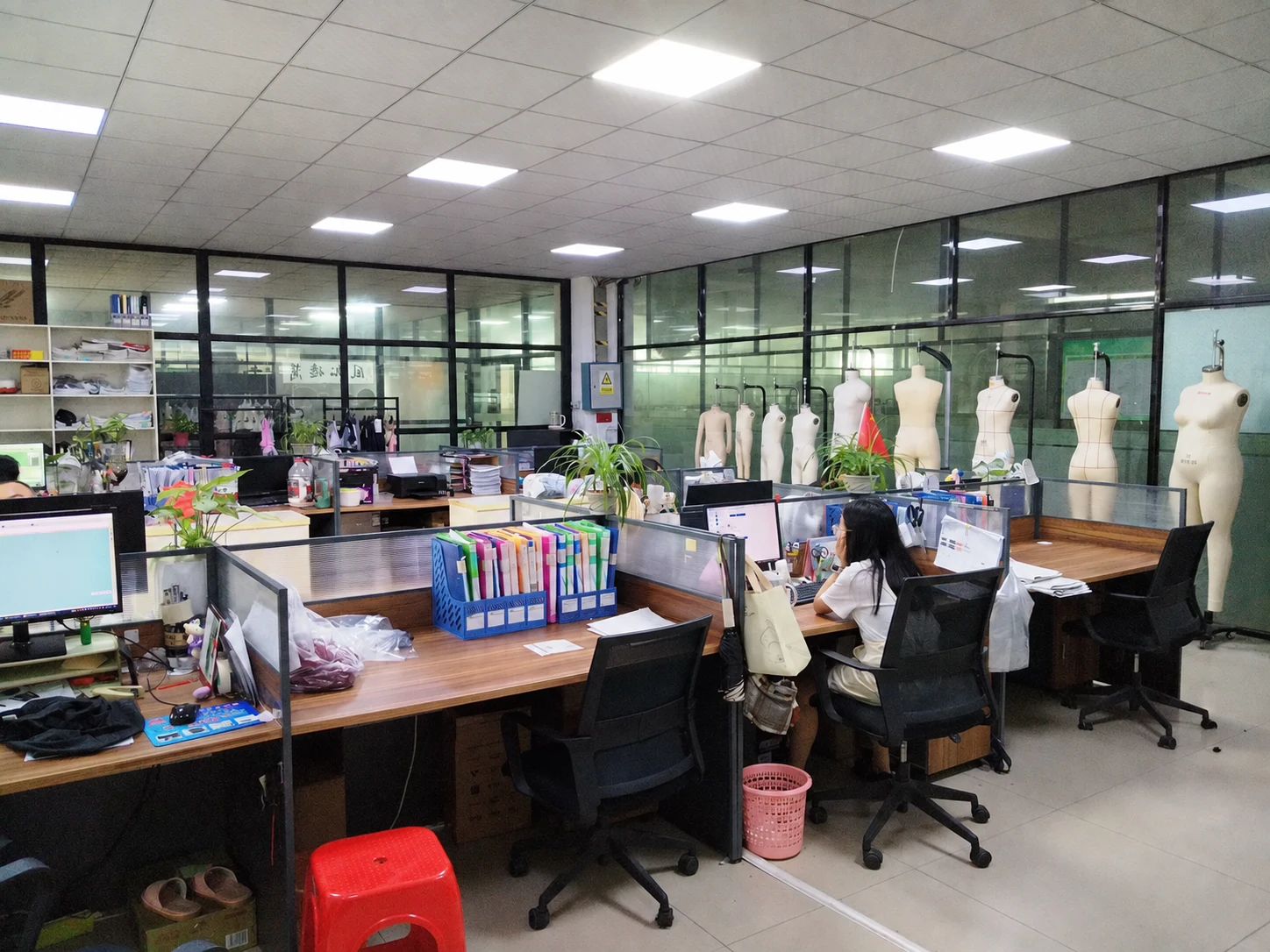
Men’s rise shaping
Balance front and back rise for seated comfort and waistband stability, with enough room through the crotch without visible sag when standing.
Carry this into approval Factory views show our working environment. Your garment follows its agreed specification and sample.GET THE
RIGHT FIT.
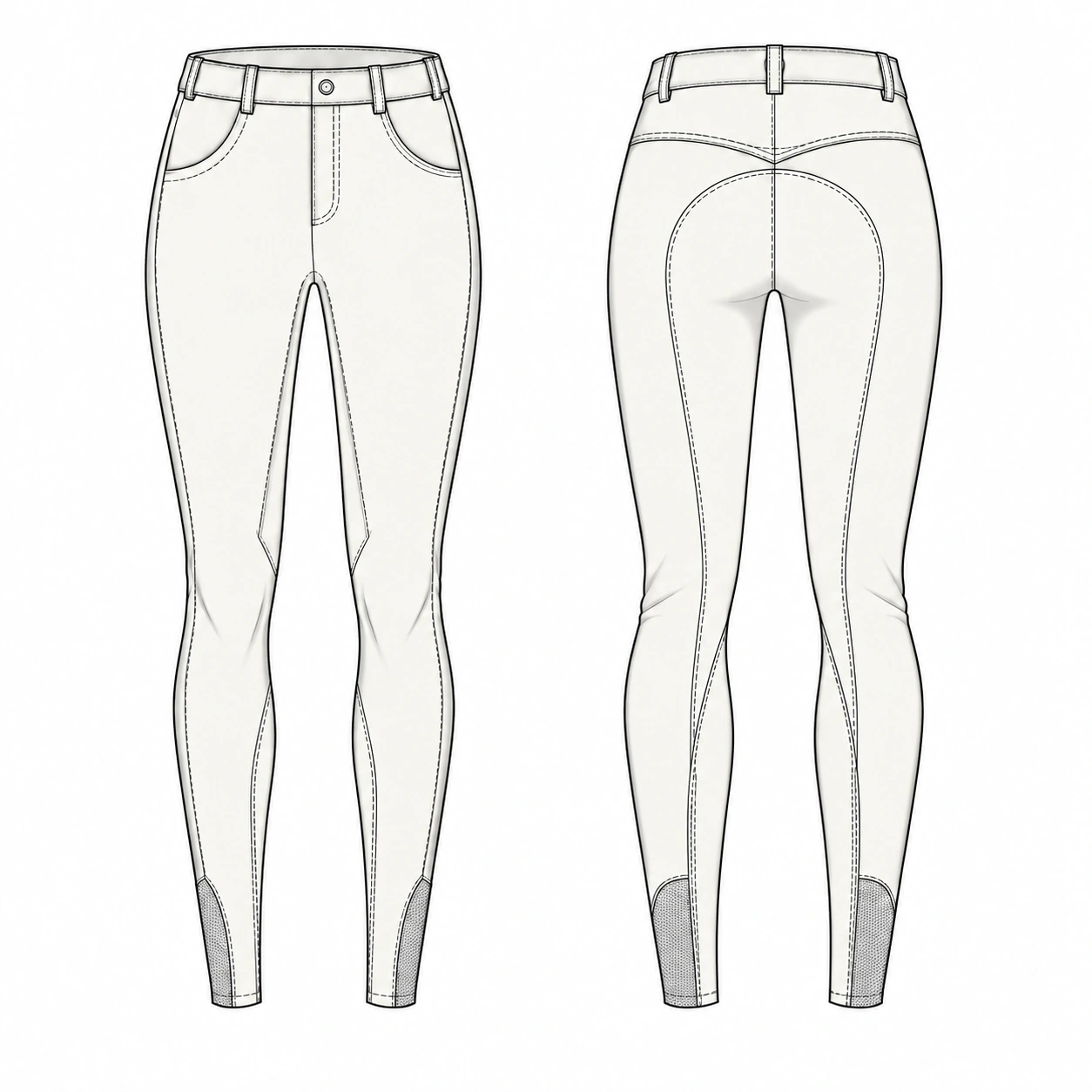
- AWaist
- BHip
- CRise
- DInseam
A size label is only the beginning. Agree the measurement method, review the garment in use and keep the approved fit record with your specification.
Your fit-session checklist
Record the size worn, body measurements, intended underlayers and every proposed correction with the dated sample.
Note the size worn, body measurements, intended underlayers and each proposed correction. Recheck the affected measurement after a revision; confirm the size breakdown for each style and colour before bulk.
MAKE IT
RECOGNISABLY YOURS.
Use the product’s construction to guide decoration and finishing. Ask for placement, colour and material approval on the relevant sample.
Small details.
One identity.
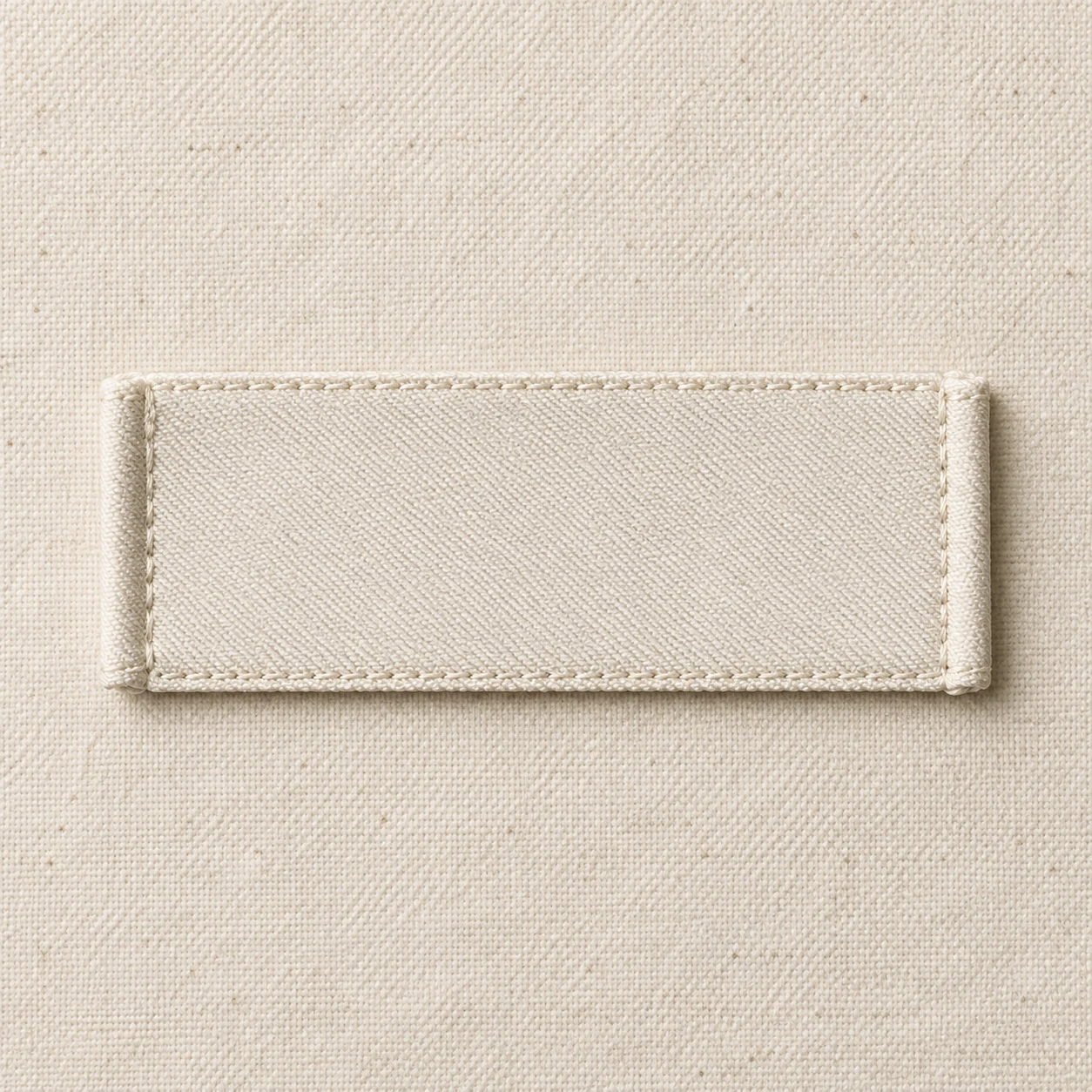
Folded edges · fine weave
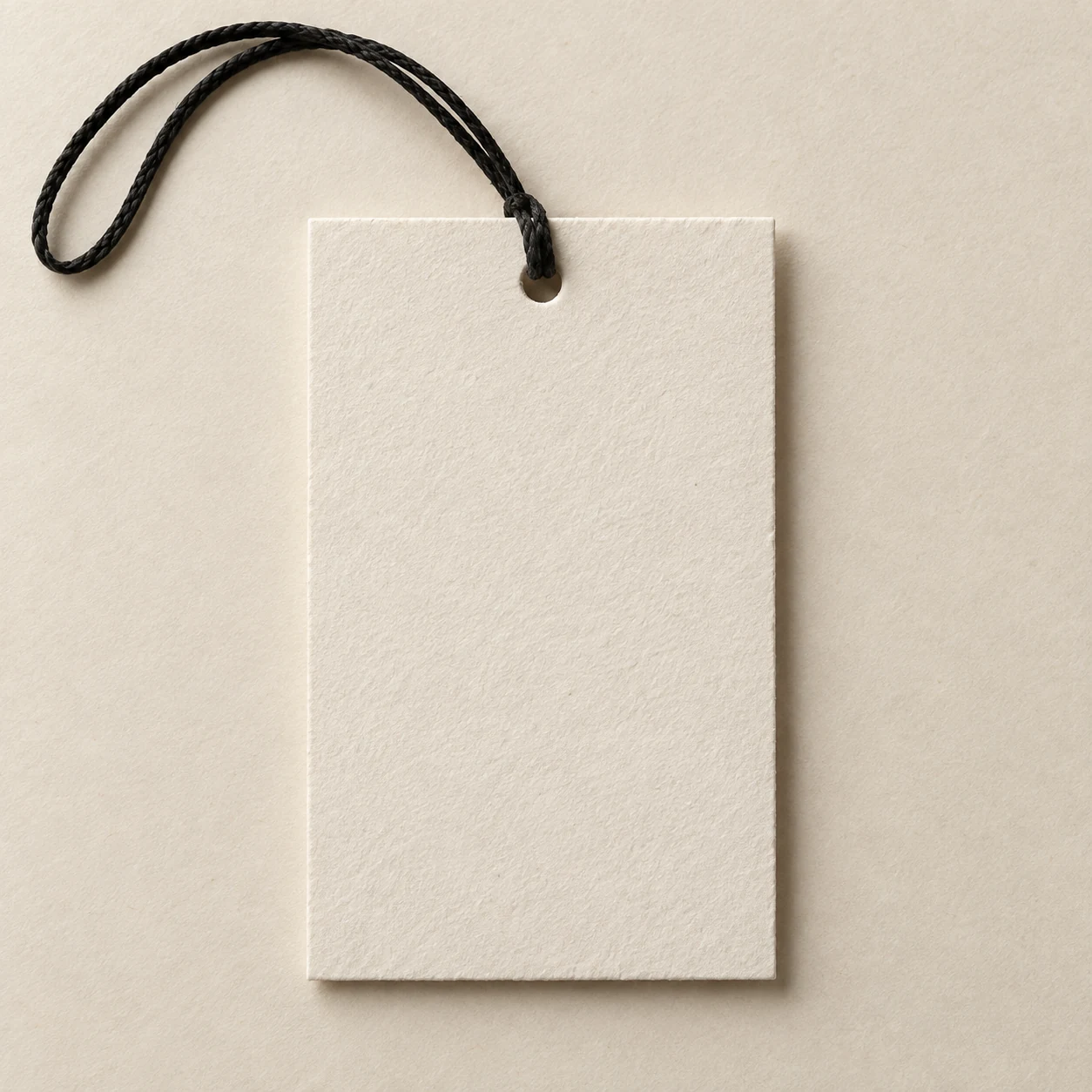
Textured stock · cord attachment
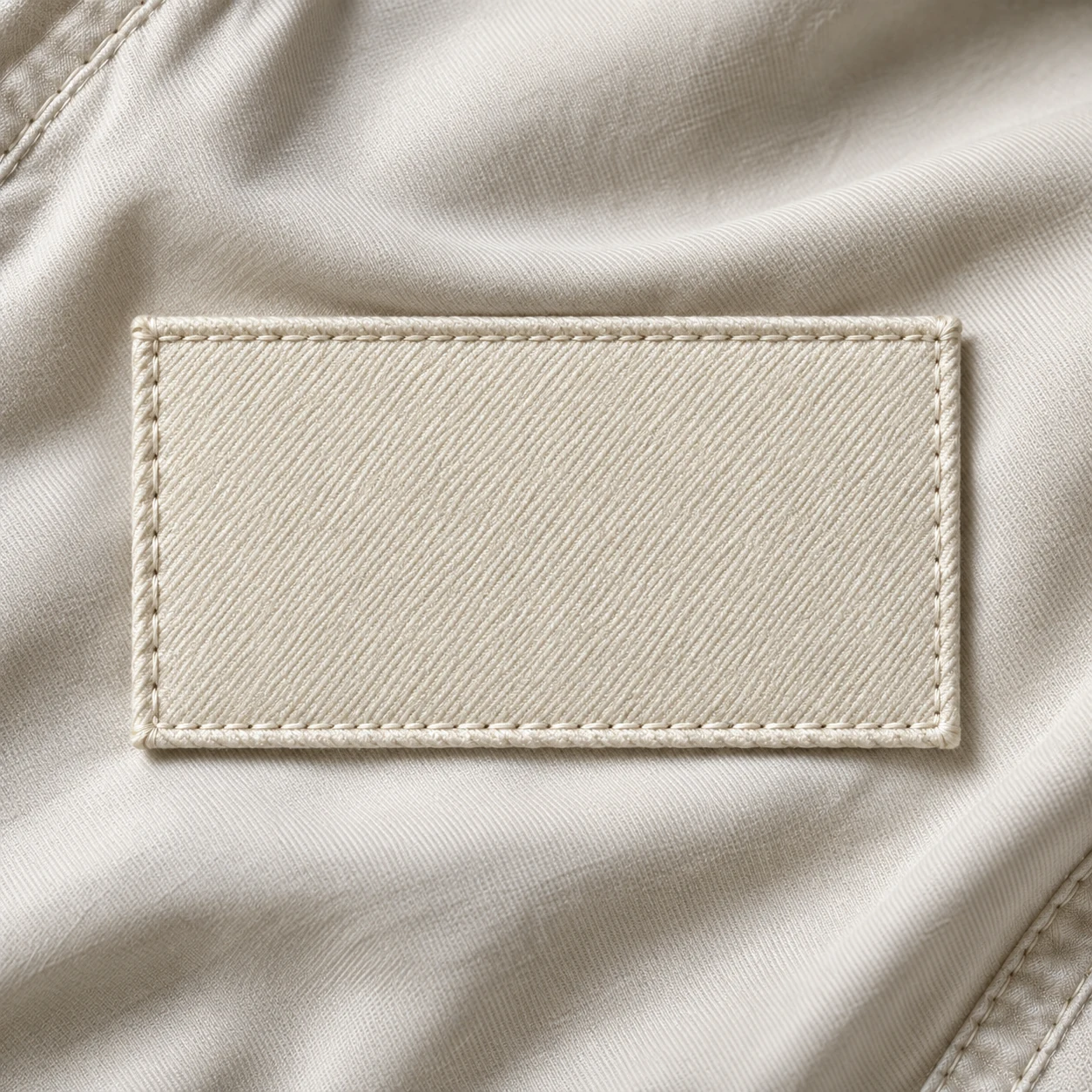
Raised edge · stitched placement
Material mockups with a live wordmark study. Print, weave, colour matching and placement are confirmed on your physical sample.
Grip configuration
Offer knee, full-seat or no-grip development as separate specifications, with a documented map and rider-feel target rather than one graphic applied to every variant.
Pocket set
Choose front, back-welt appearance, secure zip or thigh-phone storage according to the user story; label decorative pockets clearly in the tech pack.
Tailoring details
Specify pleat or flat front, waistband height, fly length, belt loops, piping and hardware finish while protecting movement and saddle compatibility.
Size architecture
Define waist increments, seat and thigh grade, inseam choices and naming convention from target-market data; do not convert women’s sizes mechanically.
APPROVE THE DETAIL.
THEN THE ORDER.
The first sample helps you make decisions. Define review conditions and acceptance criteria before you compare the result.
Review the men’s tailored breeches sample
Sampling takes 7–10 working days from the agreed start. Record each decision against the dated sample before bulk approval.
Rider, material direction, measurements and artwork.
DEFINE THE STARTTurn the agreed direction into a garment to review.
7–10 WORKING DAYSReview fit, finish and changes. Confirm the final specification.
REVISE IF NEEDEDProceed with agreed quantities, colours, labels and packing.
30–45 WORKING DAYSA shared development direction
Bring reference garments, your rider profile, target colours and any artwork. We turn these into the measurements, materials and construction questions that the sample needs to resolve.
Sample feedback can return to development. Revisions and transit are planned separately; timing begins from the agreed specification and start date.
KEEP THE APPROVAL.
WITH THE ORDER.
One agreed reference for the workroom: the dated sample, its specification and your confirmed order breakdown.
Sample decisions
- Multi-body fitting
Fit at least core and edge sizes on riders matching the target chart, recording standing and mounted measurements separately.
- Rise comfort
Test deep seat, posting and two-point positions; note waistband movement, crotch pressure and fly distortion instead of judging only photographs.
- Pocket load
Carry the stated phone or wallet while mounting and riding, checking saddle interference, bounce, access and visible bag outlines.
Style, colour & size allocation
Confirm each style and colour separately, with the size allocation attached. The minimum is 100 pieces per style, per colour.
Labels, packing & timing
Agree label artwork, packing instructions and the production start. Bulk production takes 30–45 working days from the confirmed start; revisions and transit are planned separately.
A CLEARER BRIEF.
A MORE USEFUL QUOTE.
Price follows an agreed product, quantity and delivery scope. Use these inputs to compare proposals on the same basis.
Dedicated pattern development
A credible men’s block and graded fit set require separate pattern, fitting and size validation work.
Pocket and fly package
Functional bags, secure zips, hooks, internal shields and reinforcement add components and sewing time.
Grip option
Coverage area, print passes, custom tooling or separate patch materials change labour and consumption.
Inseam range
Multiple leg lengths increase pattern pieces, markers, sample checks and commercial SKU planning.
Bring these six things
Planning baseline: 100 pieces minimum per style, per colour. Sampling takes 7–10 working days; bulk production takes 30–45 working days from the agreed start.
100 pieces minimum per style, per colour. State each colour quantity separately; confirm your proposed size allocation.
GOOD QUESTIONS.
BETTER DECISIONS.
Product-specific sourcing questions to resolve before sampling.
A reference may inform styling, but commercial fit should start from a men’s target body chart and separate block. Rise shape, waist-to-seat ratio, crotch extension, thigh room and calf grade need mounted validation on the actual customer profile.
Select it from discipline and consumer research. Knee grip often supports a versatile jumping or schooling story; full seat can suit dressage-led users. A no-grip option may serve traditional preferences. Each needs its own fit and contact review.
At minimum, assess the core selling size and a size that exposes grading risk, then review the entire graded measurement table. A wider range, unusual proportions or multiple inseams justifies additional fit samples before a size set is approved.