 REINFORM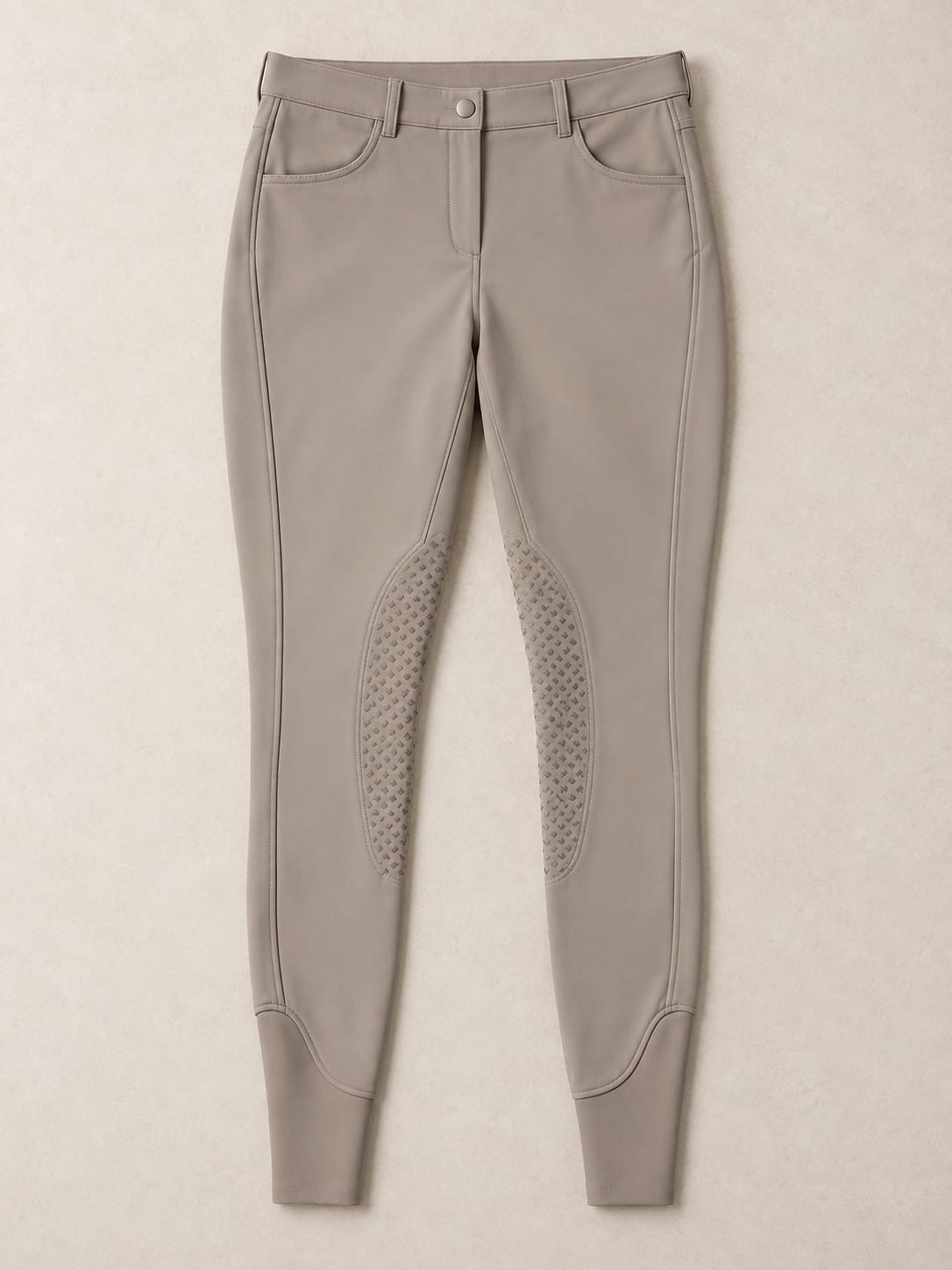
Engineer Freedom Around the Knee
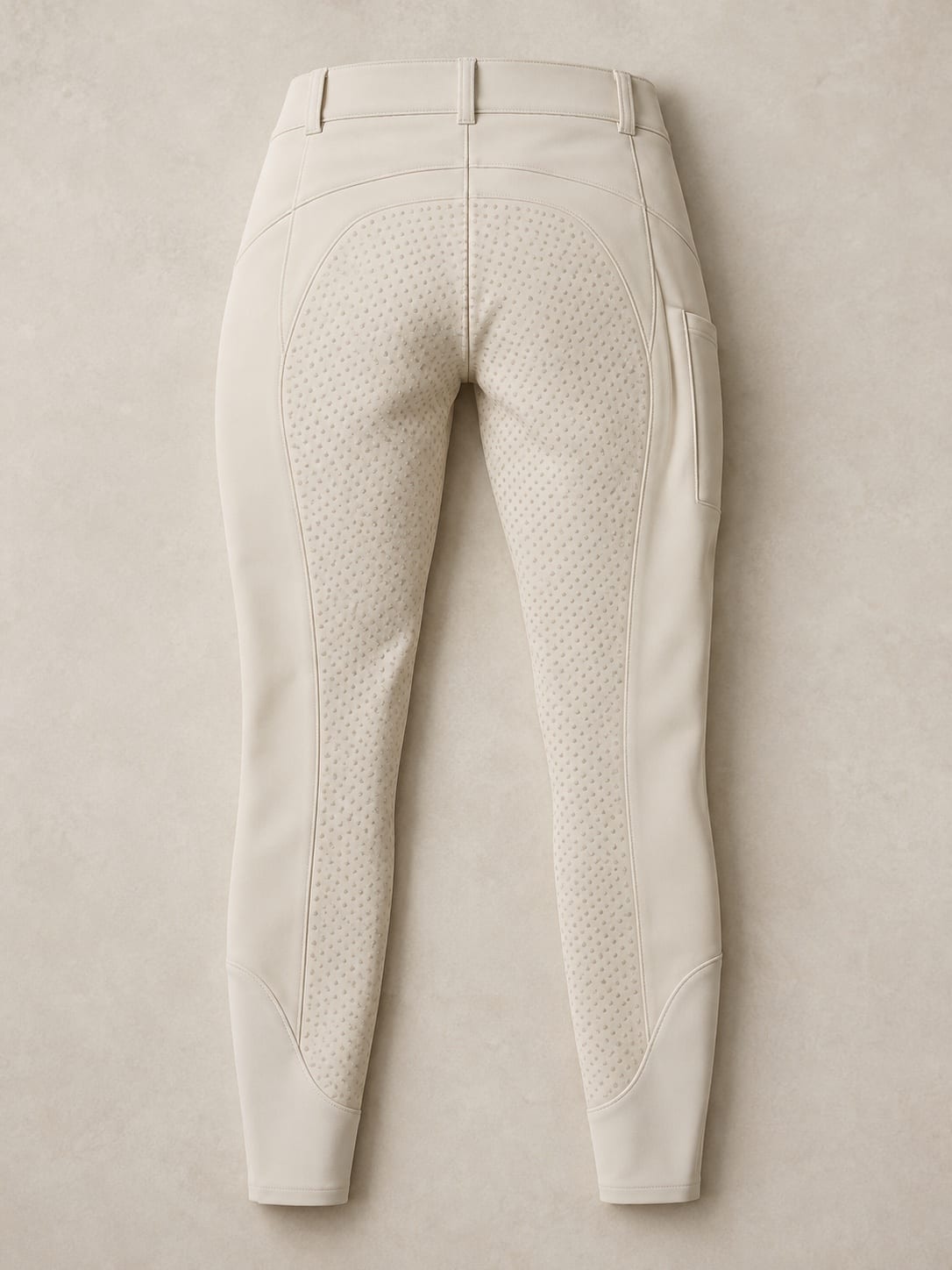
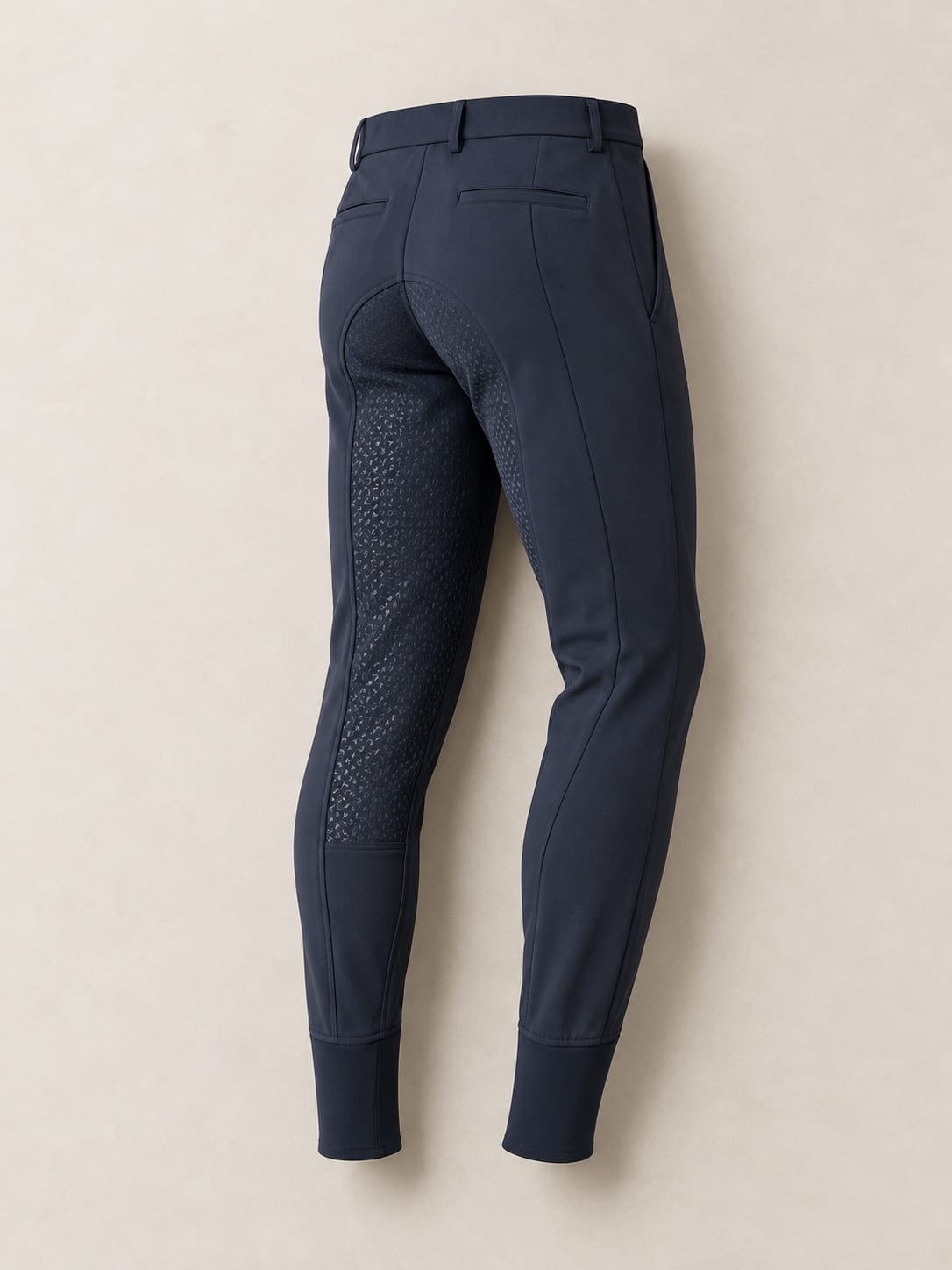
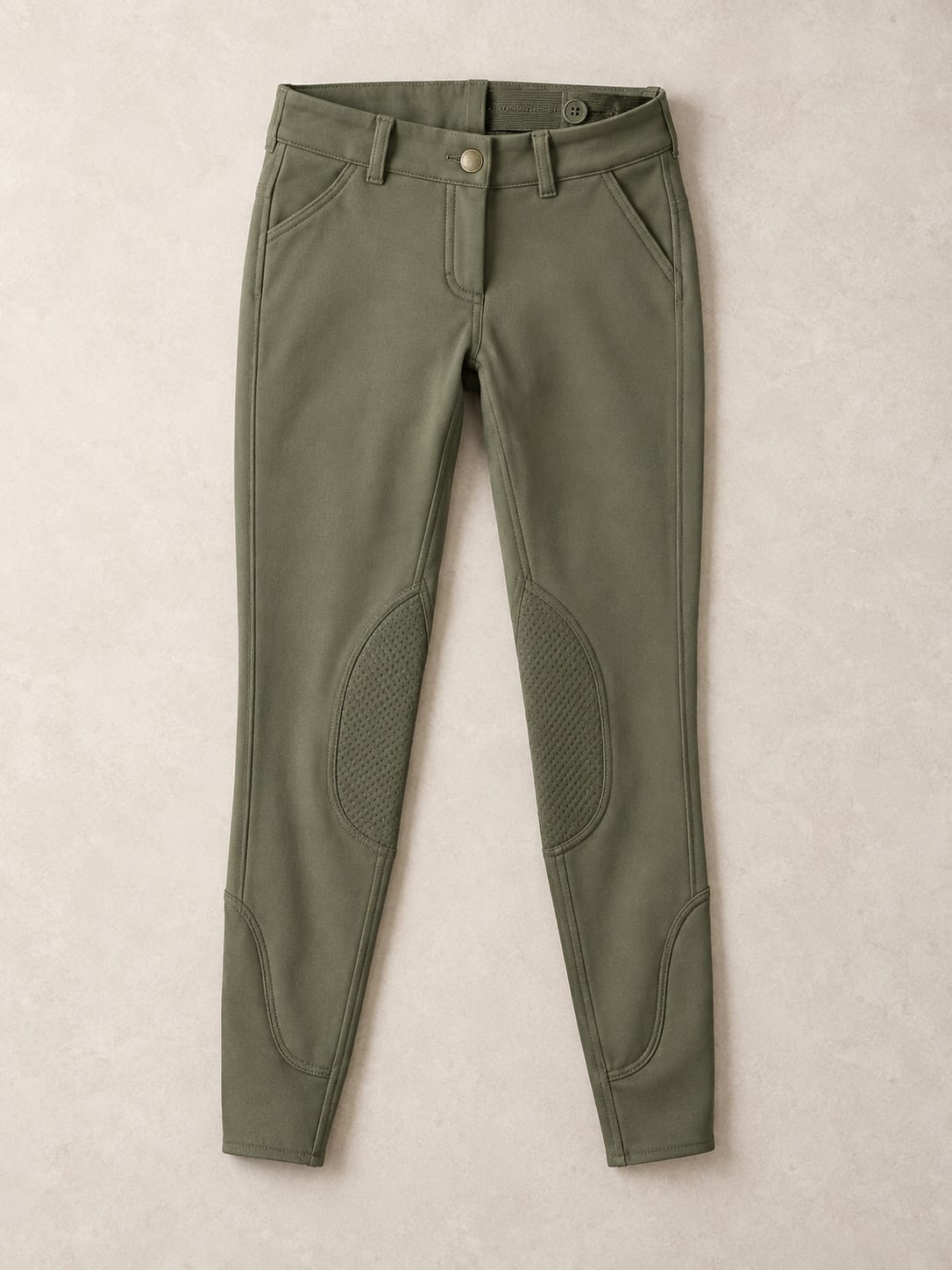
Women’s knee-grip breeches:
the private label buying guide.
Private label women’s knee-grip breeches for equestrian brands: knee patch placement, tailored fit, pocket access and sample approval. Request an OEM quote.
A development direction for your brand. Final material, construction and performance by specification and sample approval.START WITH
THE RIDER.
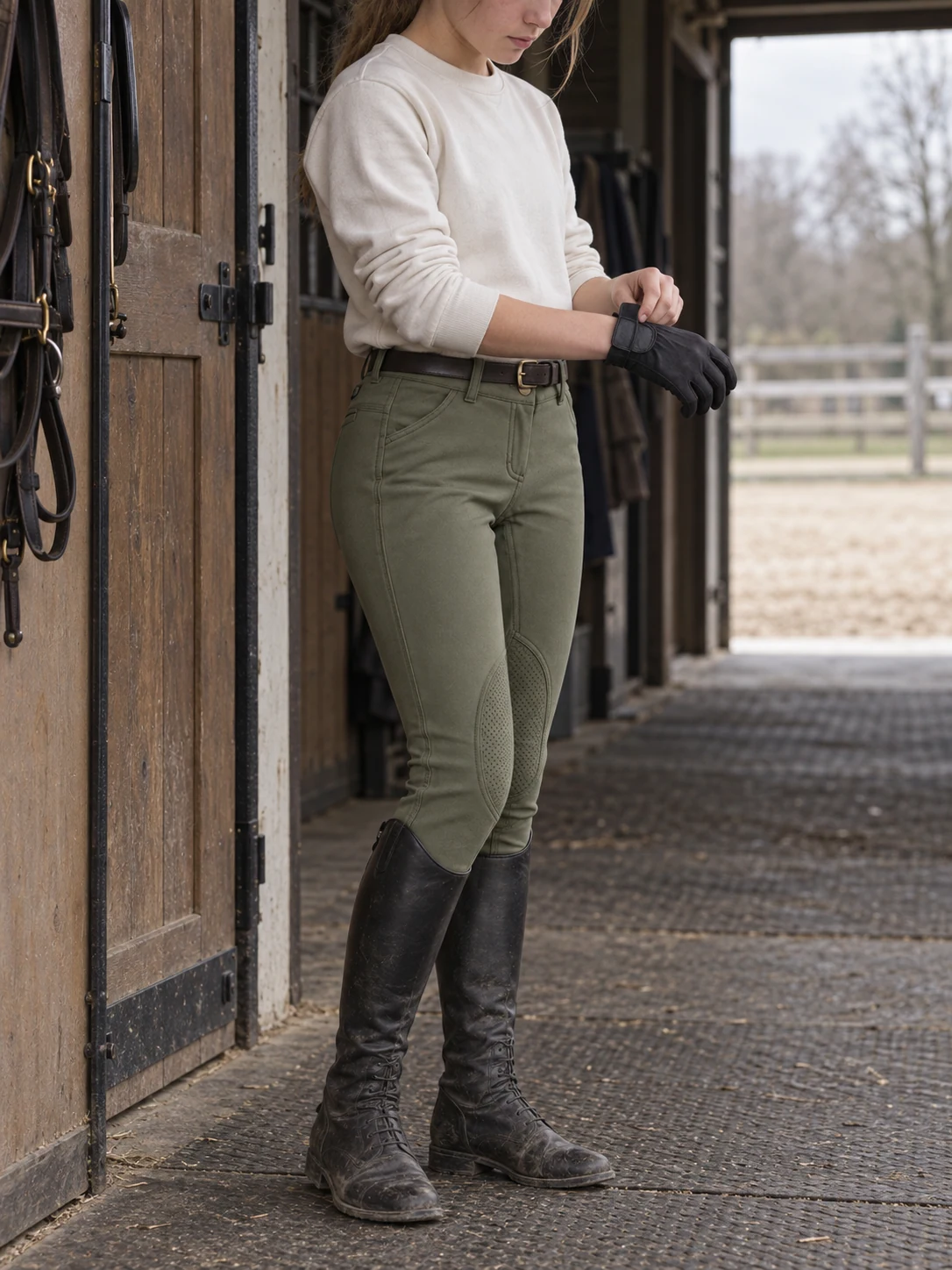
Designed for hunter, jumper and eventing ranges, multi-discipline tack shops, and private labels wanting a recognisable tailored breech that can bridge schooling and show wardrobes.
Product development context
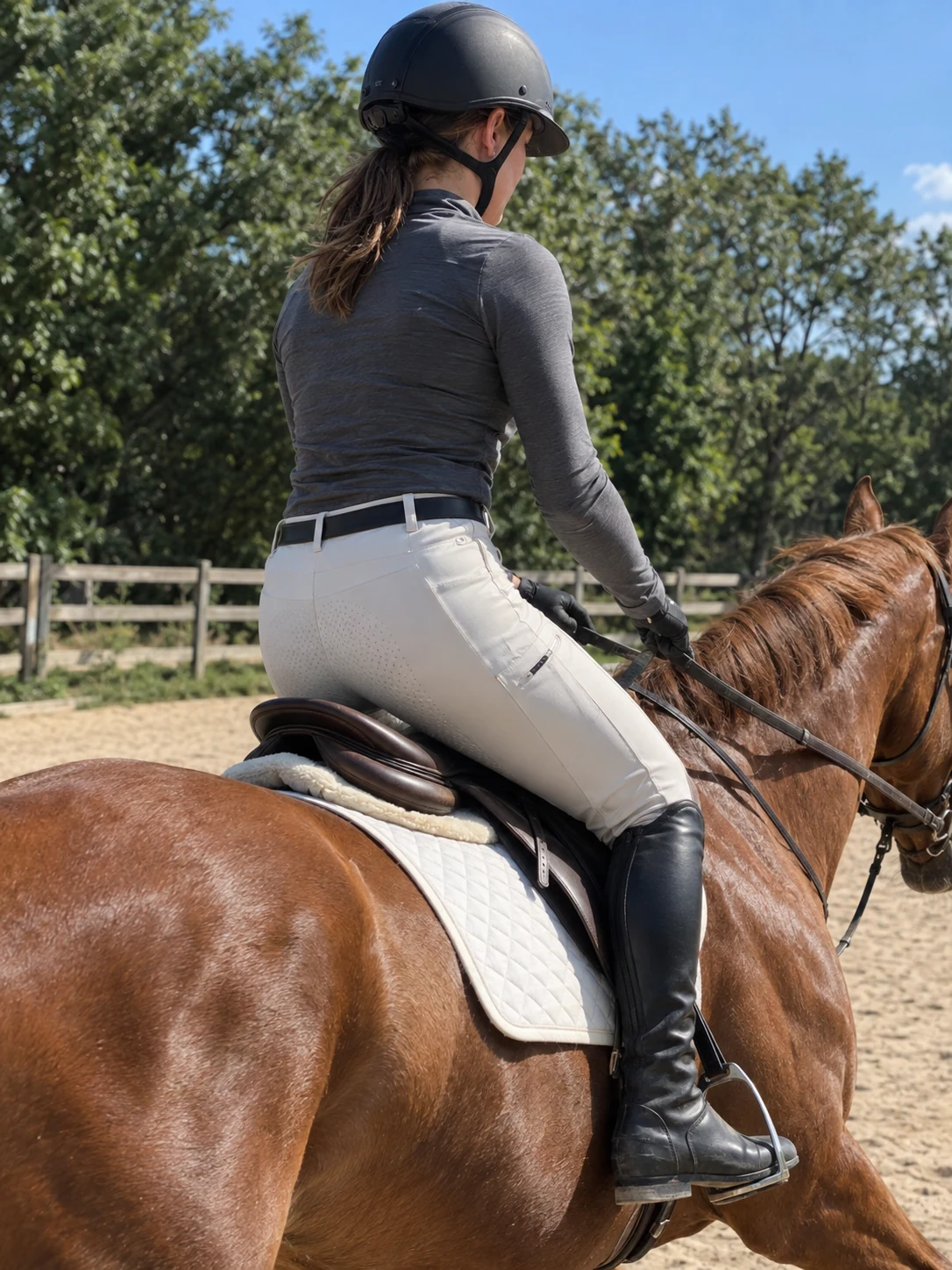
Knee-grip breeches are often bought for jumping, eventing, clinics and versatile schooling because they add contact at the leg without changing the whole seat surface. Their development risk is placement: a grip patch that looks correct on a standing sample may rotate away from the saddle when the knee bends. Start with riding position, stirrup length and boot height, then decide whether the product should read as classic show apparel or an athletic everyday breech. The final brief must connect knee articulation, side-seam balance, pocket access and grip geometry.
Dynamic patch location
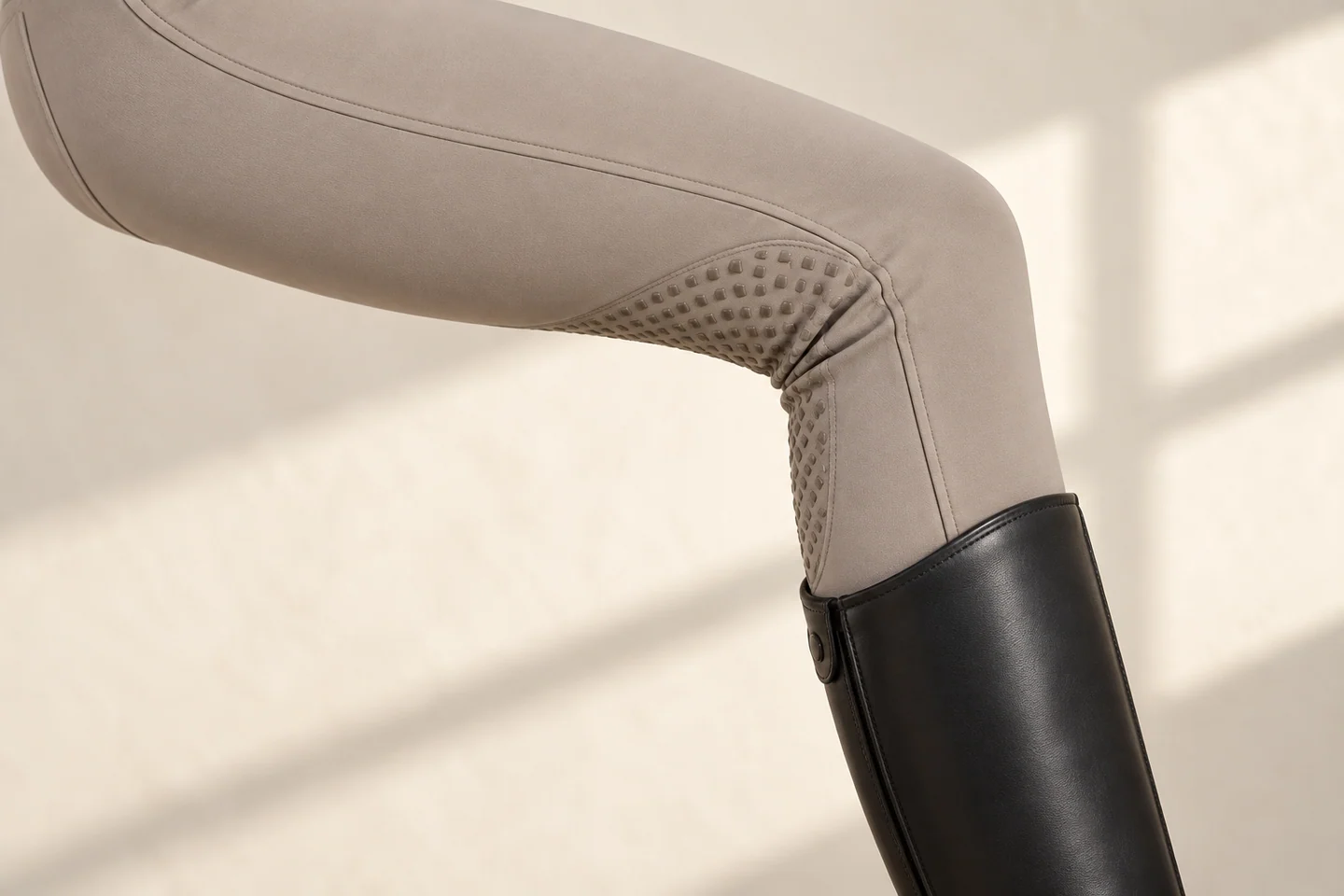
Set the knee-grip boundary on a fit rider in the intended saddle and stirrup length. The patch should meet the contact area after flexion without creeping too far around the front leg or ending at a pressure point under the tall boot.
Hip mobility
A jumping rider closes the hip and lifts out of the saddle, placing different demands on front rise and thigh stretch than a standing fit pose. Review fabric strain, fly tension and pocket opening distortion in two-point and light-seat positions.
Show versus school
Decide early whether the hero colourway needs a conservative show appearance or an overt technical identity. This choice influences logo scale, pocket visibility, seam contrast and grip motif, and prevents a feature-heavy sample that fits neither sales story.
THE FABRIC
SETS THE FEEL.
Compare material directions against your rider, climate and care expectations. Request the actual fabric specification and evidence for any performance claim.
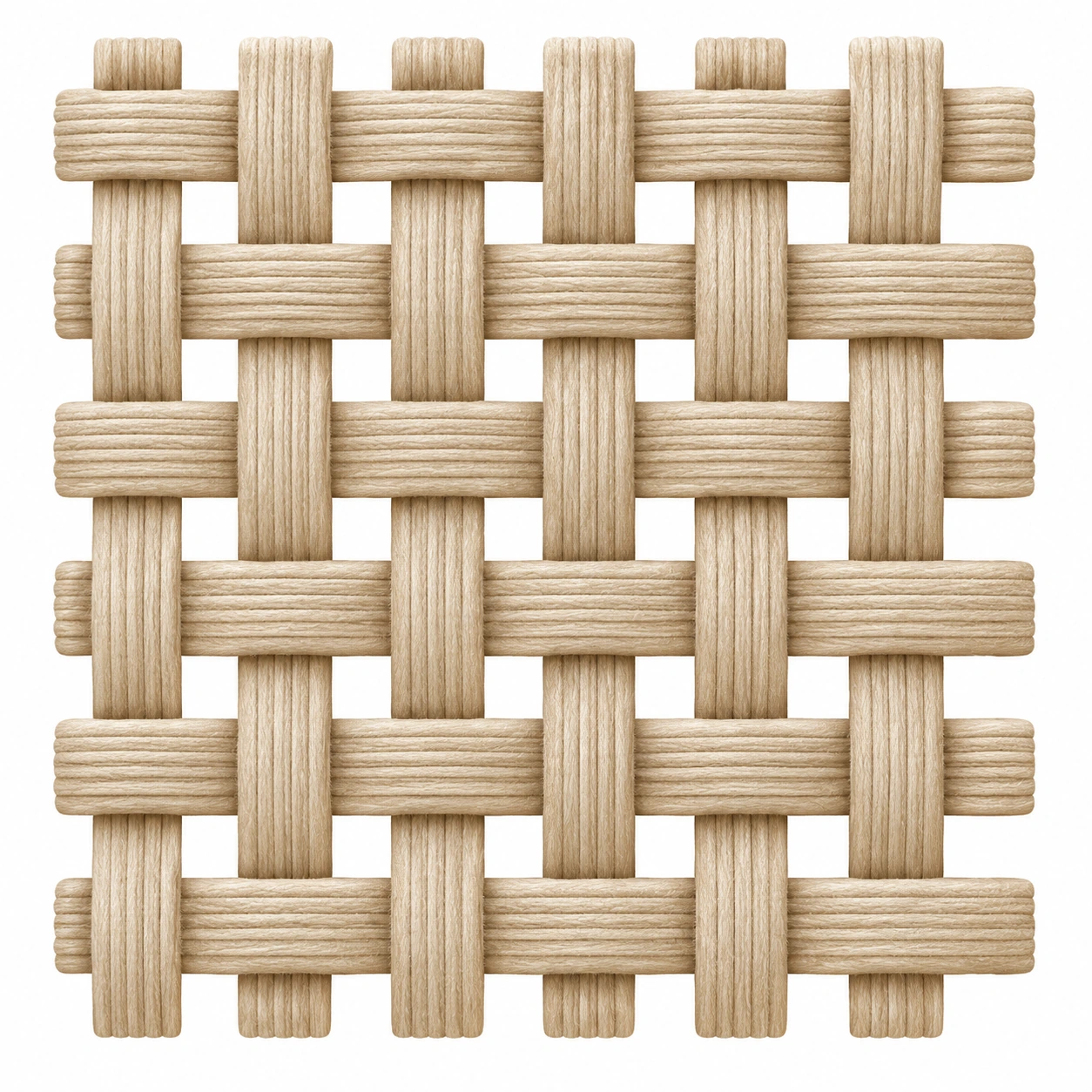
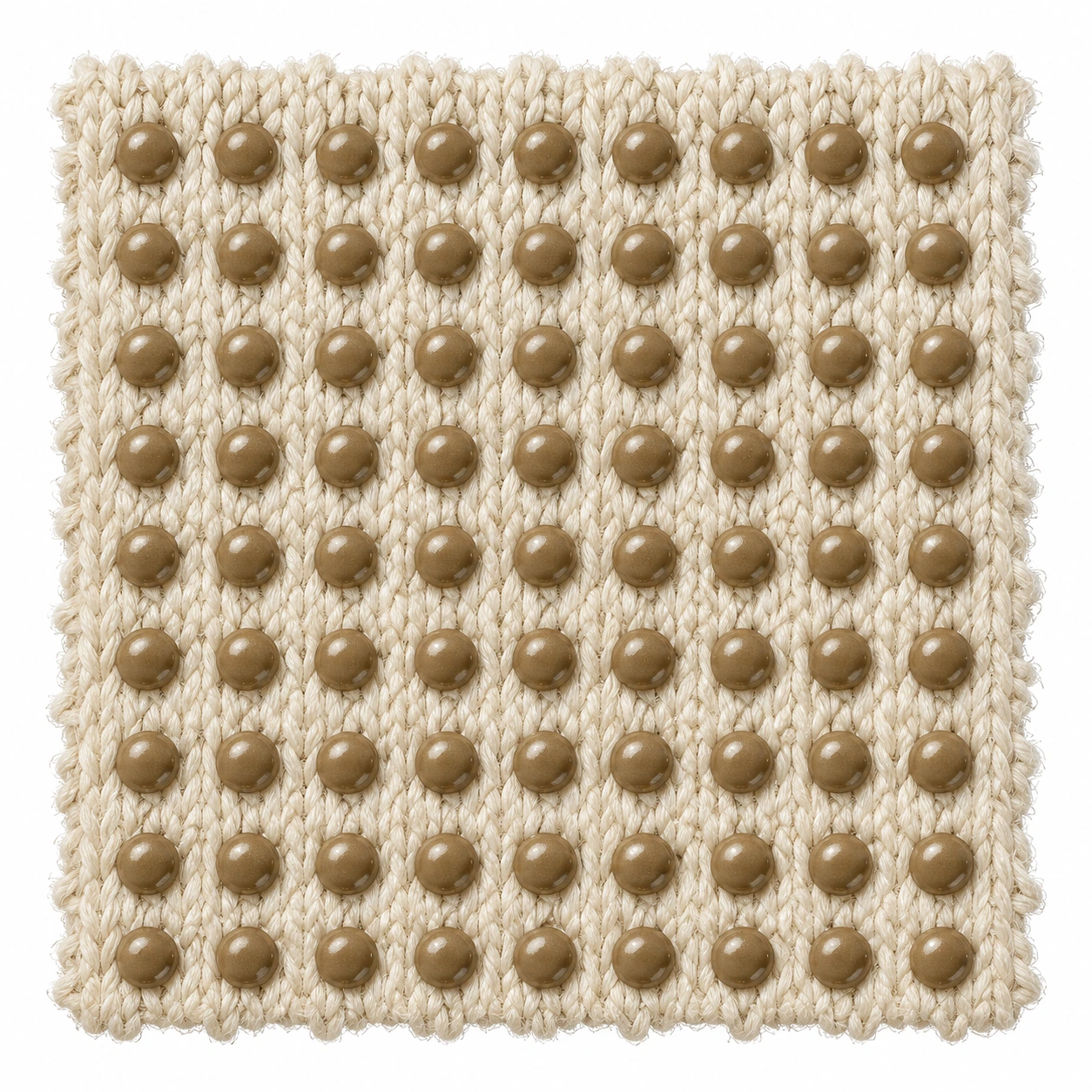
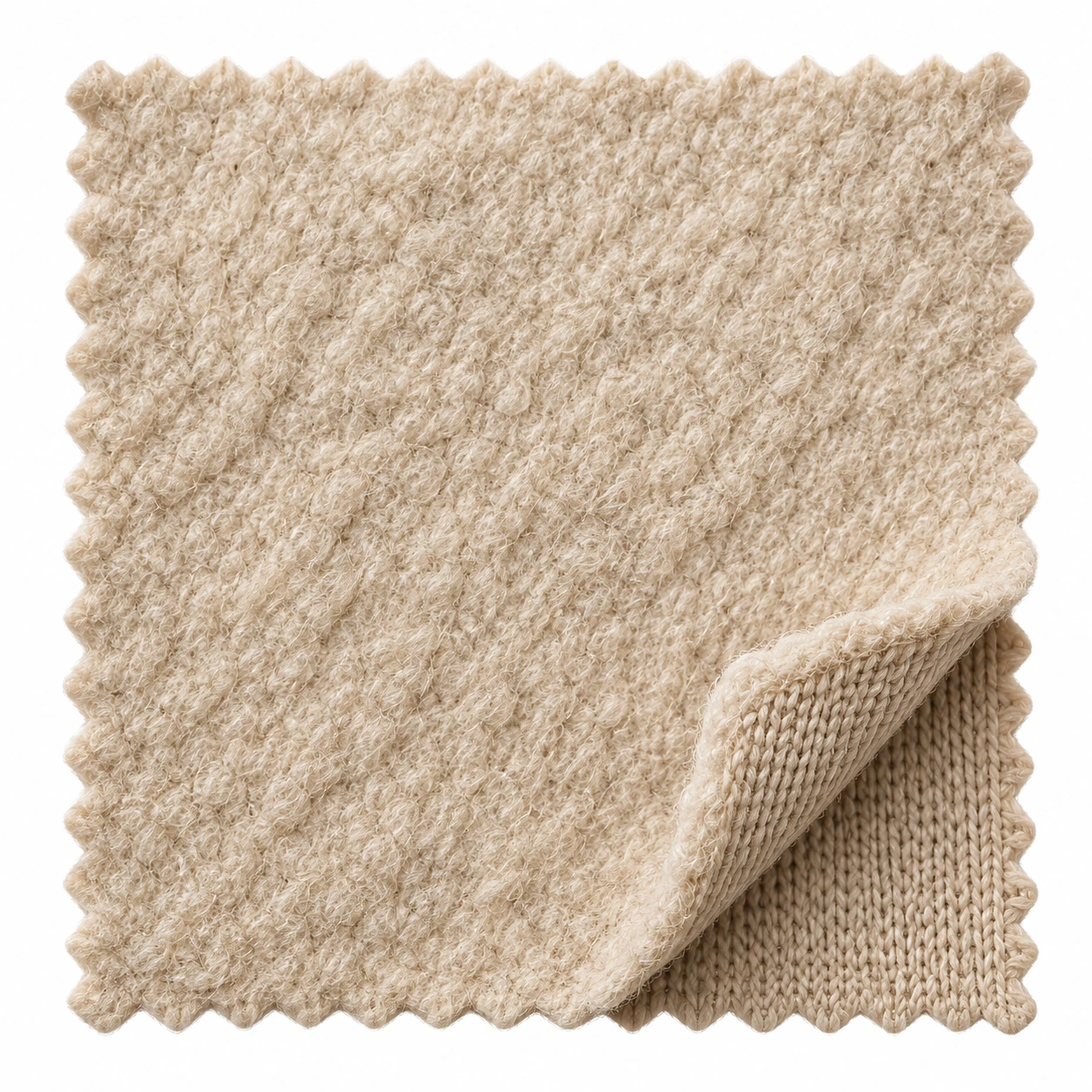
| Material direction | Why consider it | What to verify |
|---|---|---|
| Tailored stretch woven | A smooth, compact face supports belt loops, fly construction and a show-ready line while stretch accommodates repeated hip and knee flexion. Specify desired hand and coverage rather than claiming an unverified performance technology. | Test production-colour fabric for stretch and recovery in both directions, abrasion tendency, pilling, dimensional change, colourfastness and opacity. |
| Printed knee grip | Silicone or comparable grip print can be shaped to the riding contact zone and coordinated with brand artwork. Deposit and pattern density affect flexibility and perceived security. | Approve strike-offs on the actual shell, measure placement on each sampled size, and inspect adhesion and surface change after proposed care cycles. |
| Suede-style knee patch | A cut-and-sew patch gives a classic equestrian signal and can suit buyers who prefer less graphic branding. It introduces an edge seam and a second material stretch profile. | Check patch stretch compatibility, edge comfort under flexion, colour migration risk, declared fibre content and finished-garment care evidence. |
These are sourcing comparisons, not a list of stocked or certified fabrics. Confirm composition, weight, finish, availability and testing with the material selected for your project.
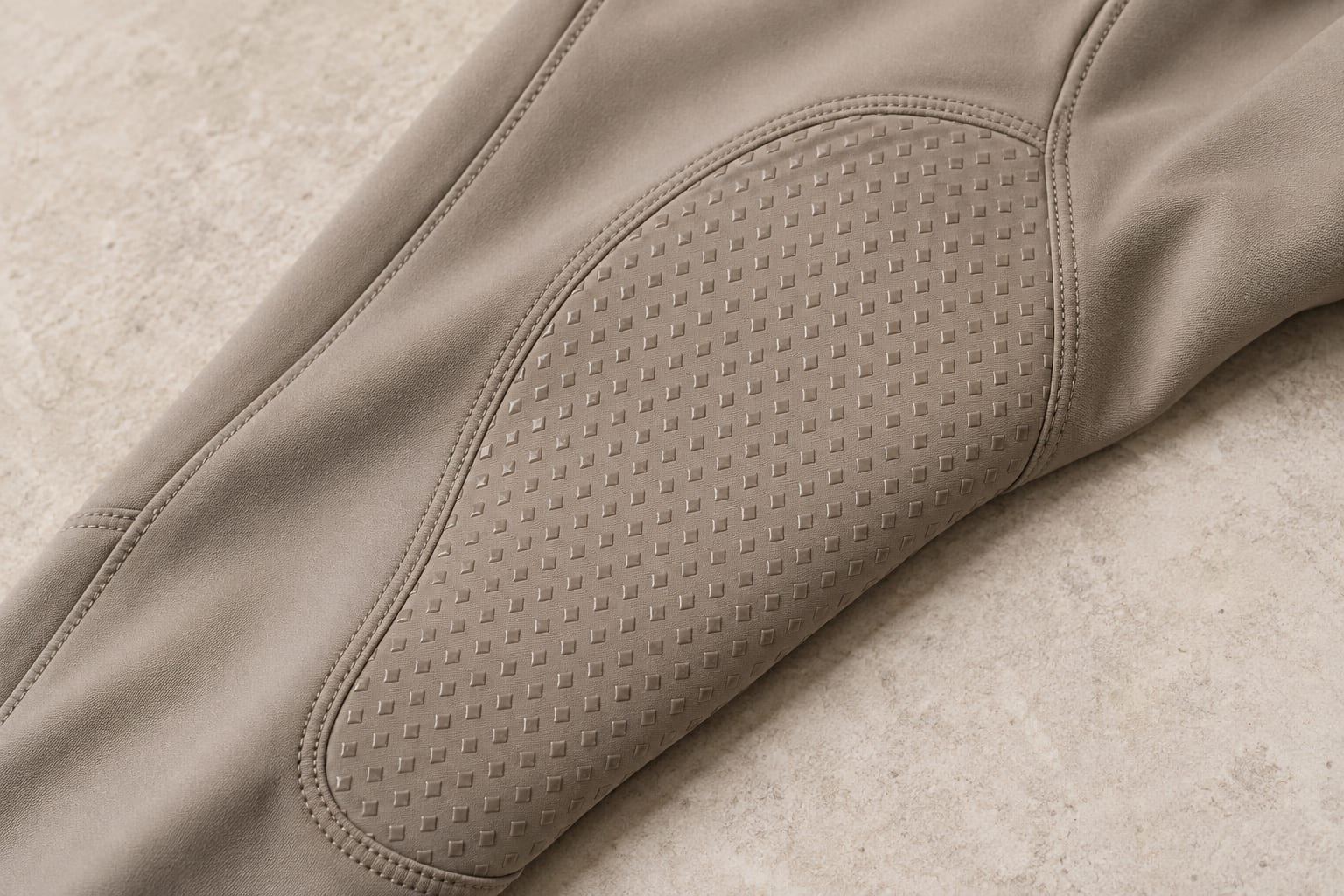 A CLOSER LOOK / DEVELOPMENT CONCEPT
IT’S IN
THE DETAILS.
Articulated knee zone
Shape the leg so the knee bends without horizontal drag lines, then place grip from the flexed fit rather than a flat pattern view alone.
Stable fly front
Balance zip length, internal extension, hook or snap stack and waistband support so the closure stays flat during a forward riding posture.
Saddle-aware pockets
Angle thigh storage for one-hand access while keeping the loaded bag clear of the saddle flap and minimizing bounce during rising trot.
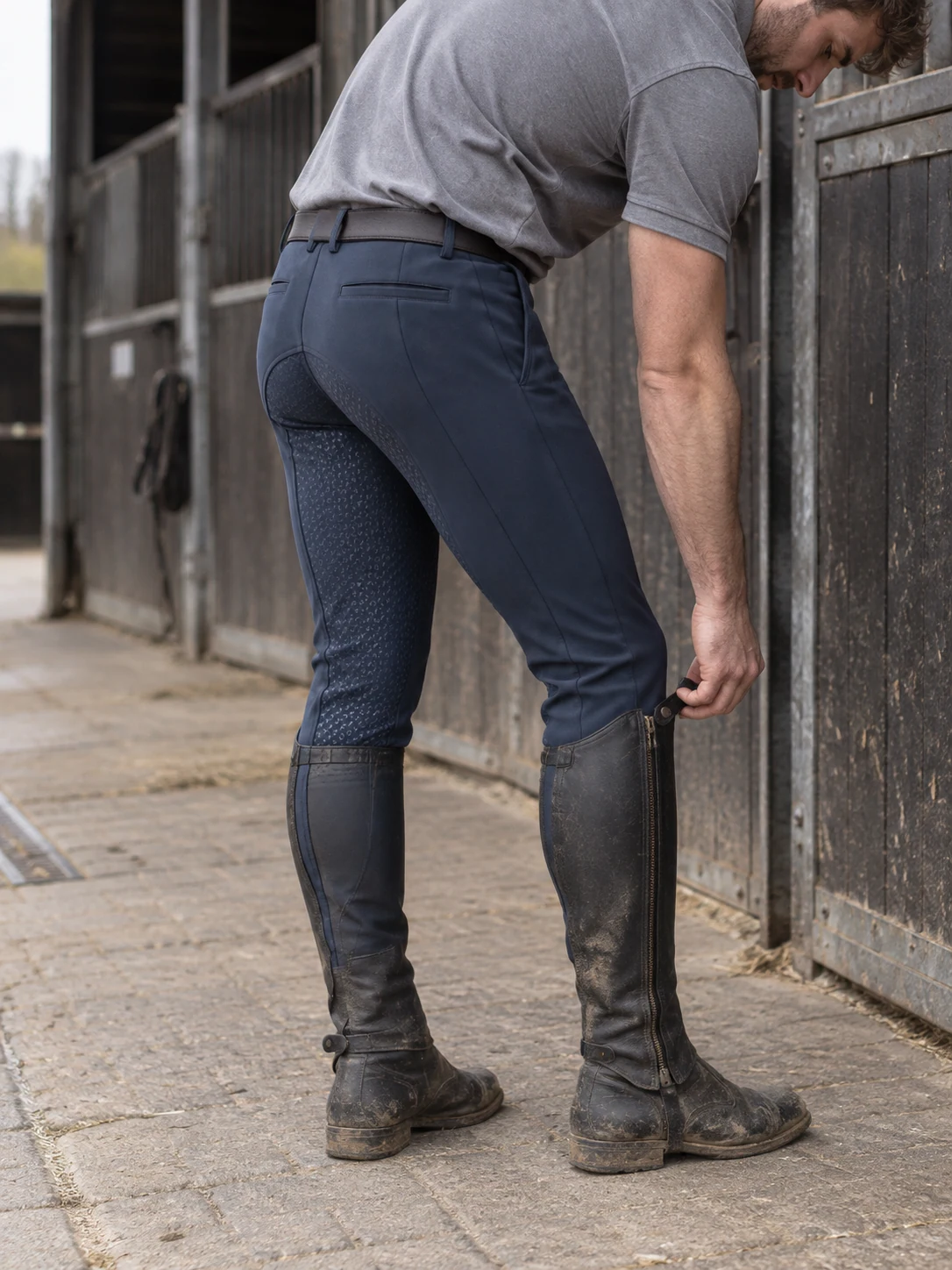
Clean boot transition
Taper calf and ankle with enough recovery for dressing; keep labels, bulky seams and patch edges outside known boot pressure zones.
FROM THE BRIEF.
INTO THE WORKROOM.
Start with the riding position. Carry the agreed rise, leg shape and grip placement through the sample.
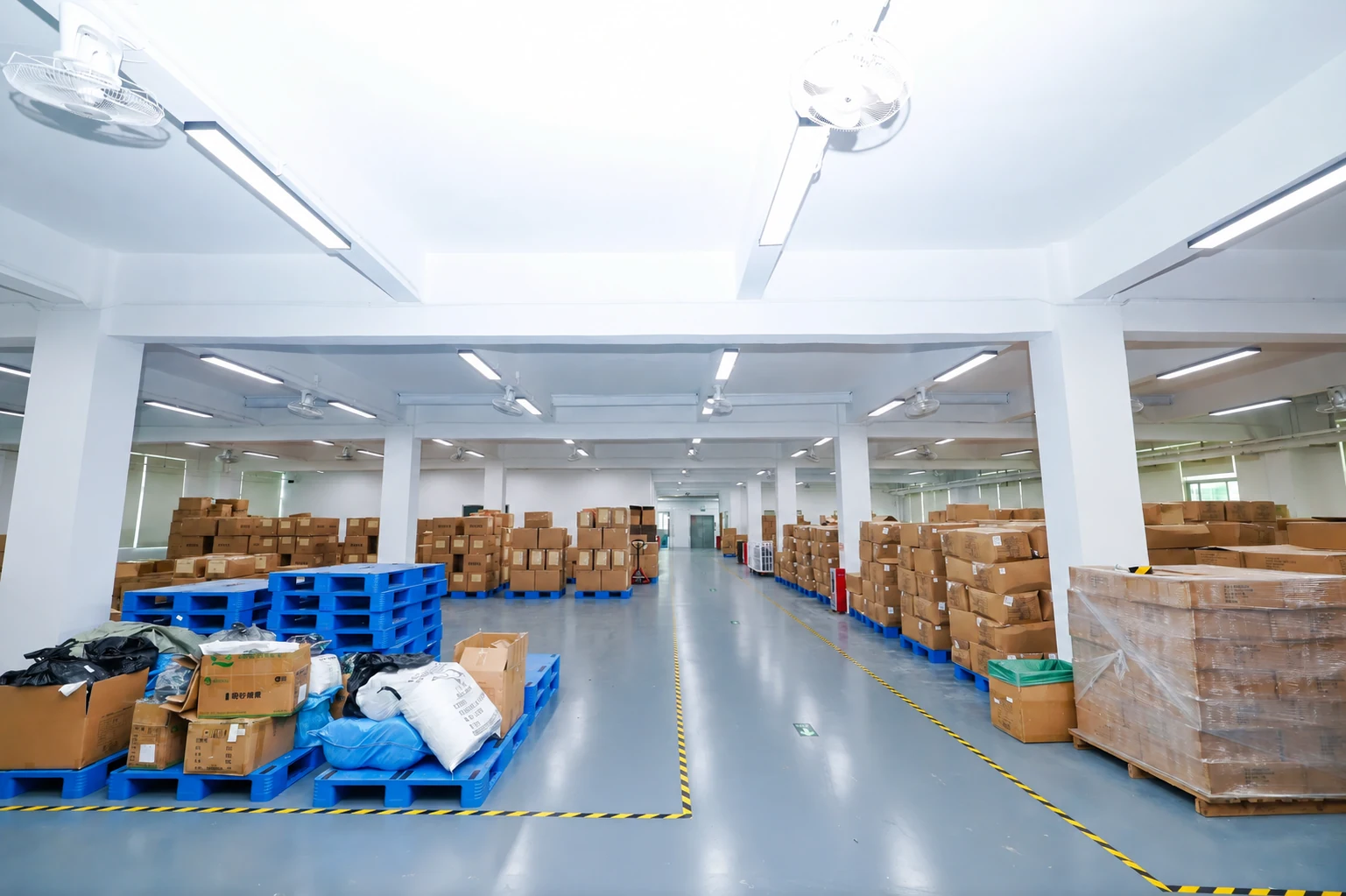
Explore our factory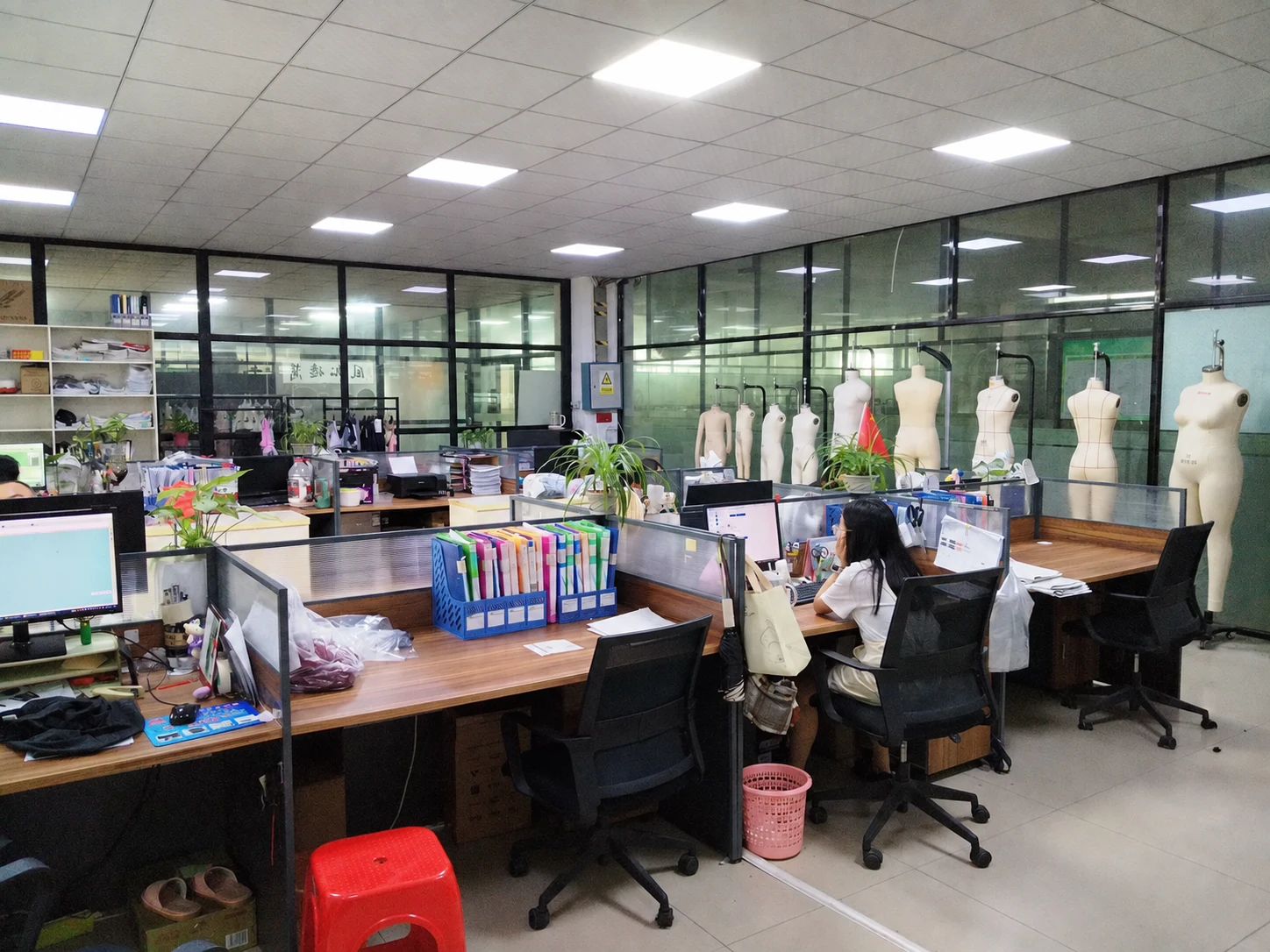
Articulated knee zone
Shape the leg so the knee bends without horizontal drag lines, then place grip from the flexed fit rather than a flat pattern view alone.
Carry this into approval Factory views show our working environment. Your garment follows its agreed specification and sample.GET THE
RIGHT FIT.
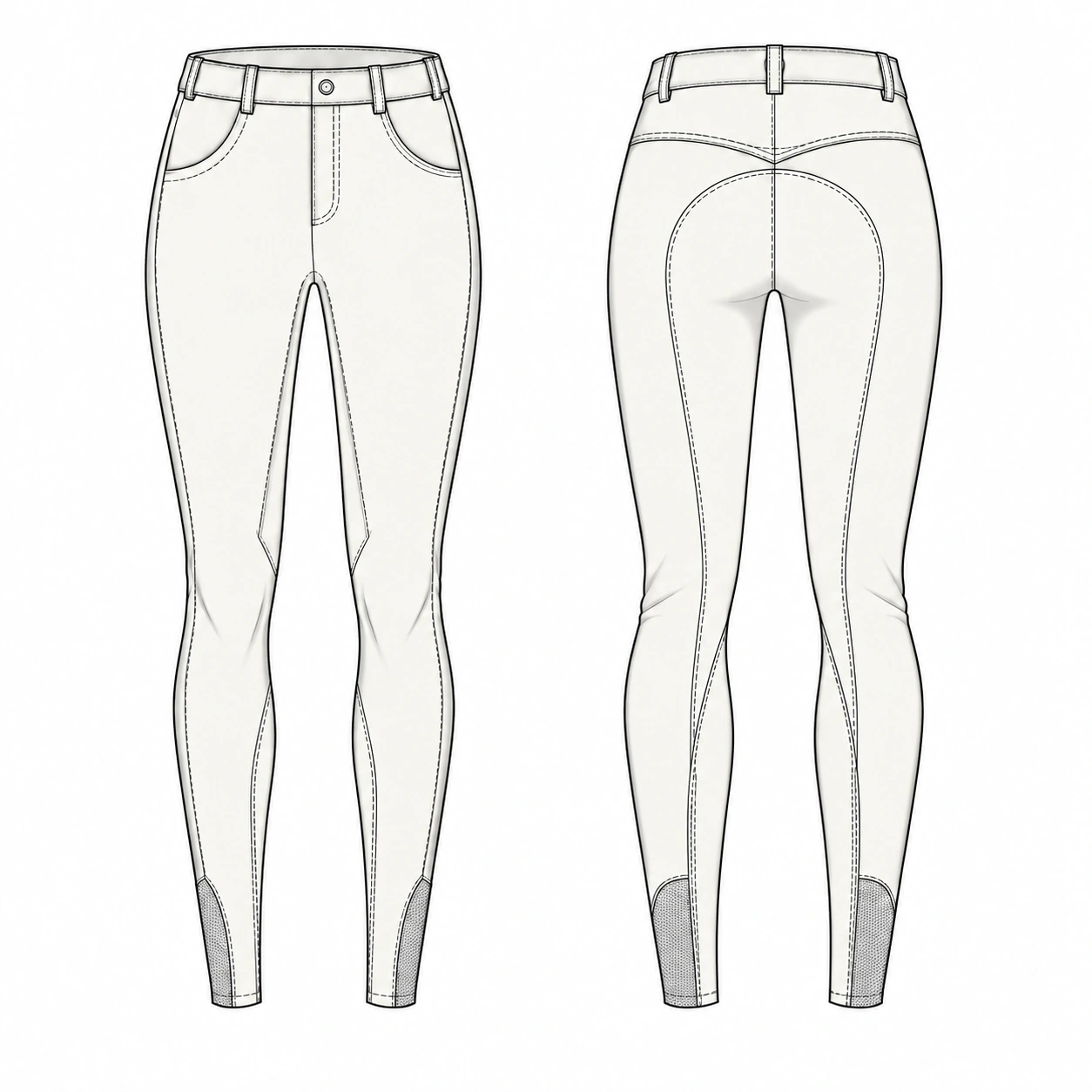
- AWaist
- BHip
- CRise
- DInseam
A size label is only the beginning. Agree the measurement method, review the garment in use and keep the approved fit record with your specification.
Your fit-session checklist
Record the size worn, body measurements, intended underlayers and every proposed correction with the dated sample.
Note the size worn, body measurements, intended underlayers and each proposed correction. Recheck the affected measurement after a revision; confirm the size breakdown for each style and colour before bulk.
MAKE IT
RECOGNISABLY YOURS.
Use the product’s construction to guide decoration and finishing. Ask for placement, colour and material approval on the relevant sample.
Small details.
One identity.
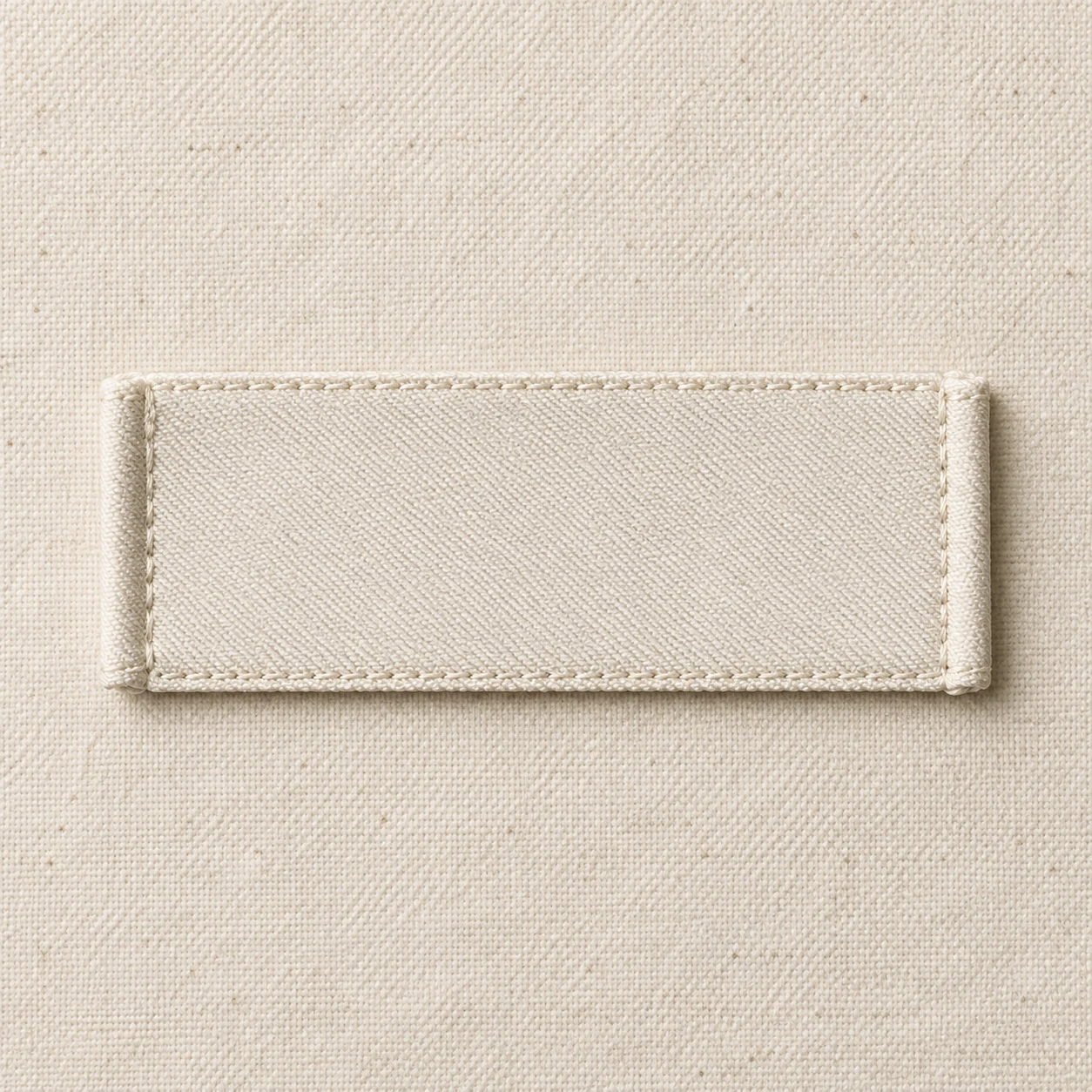
Folded edges · fine weave
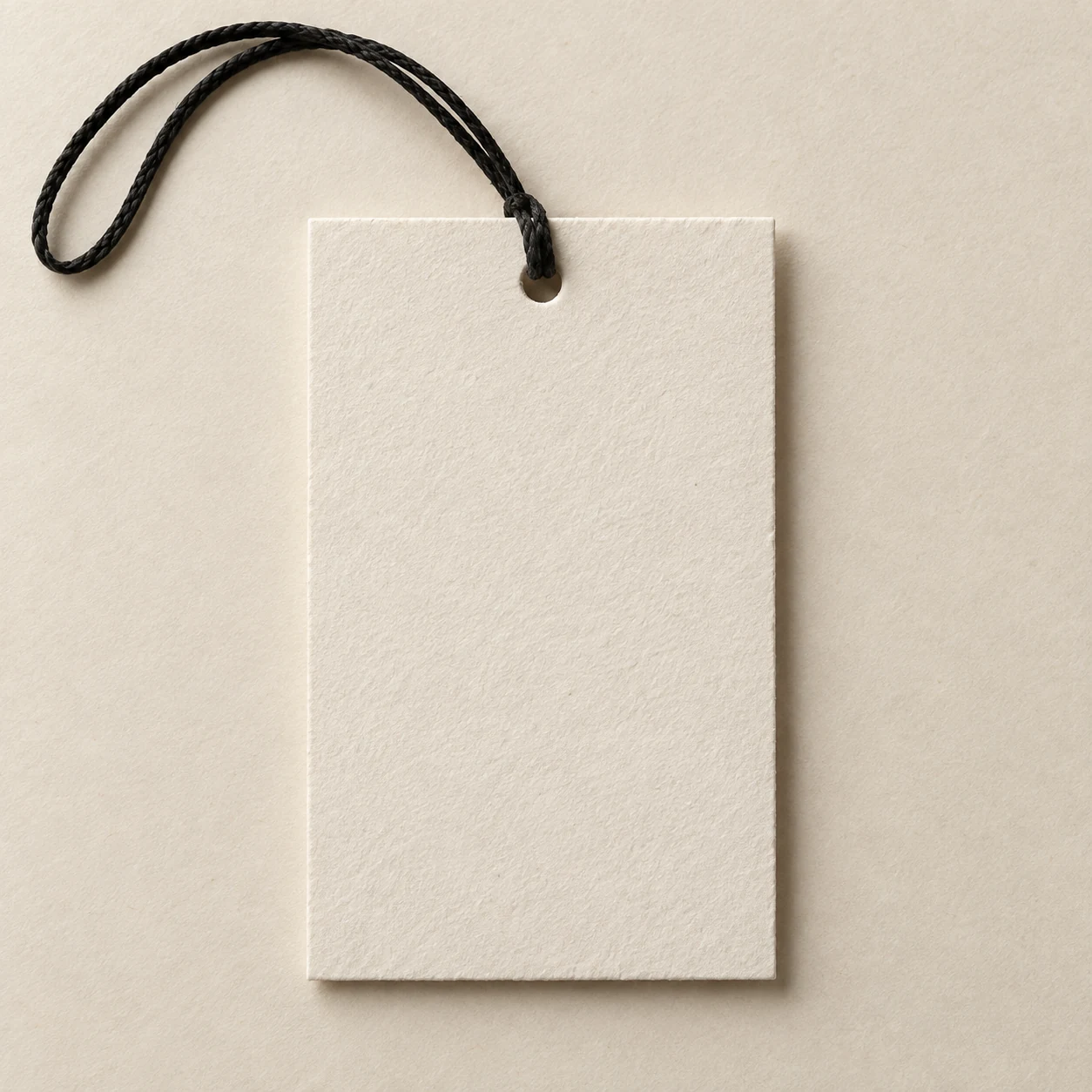
Textured stock · cord attachment
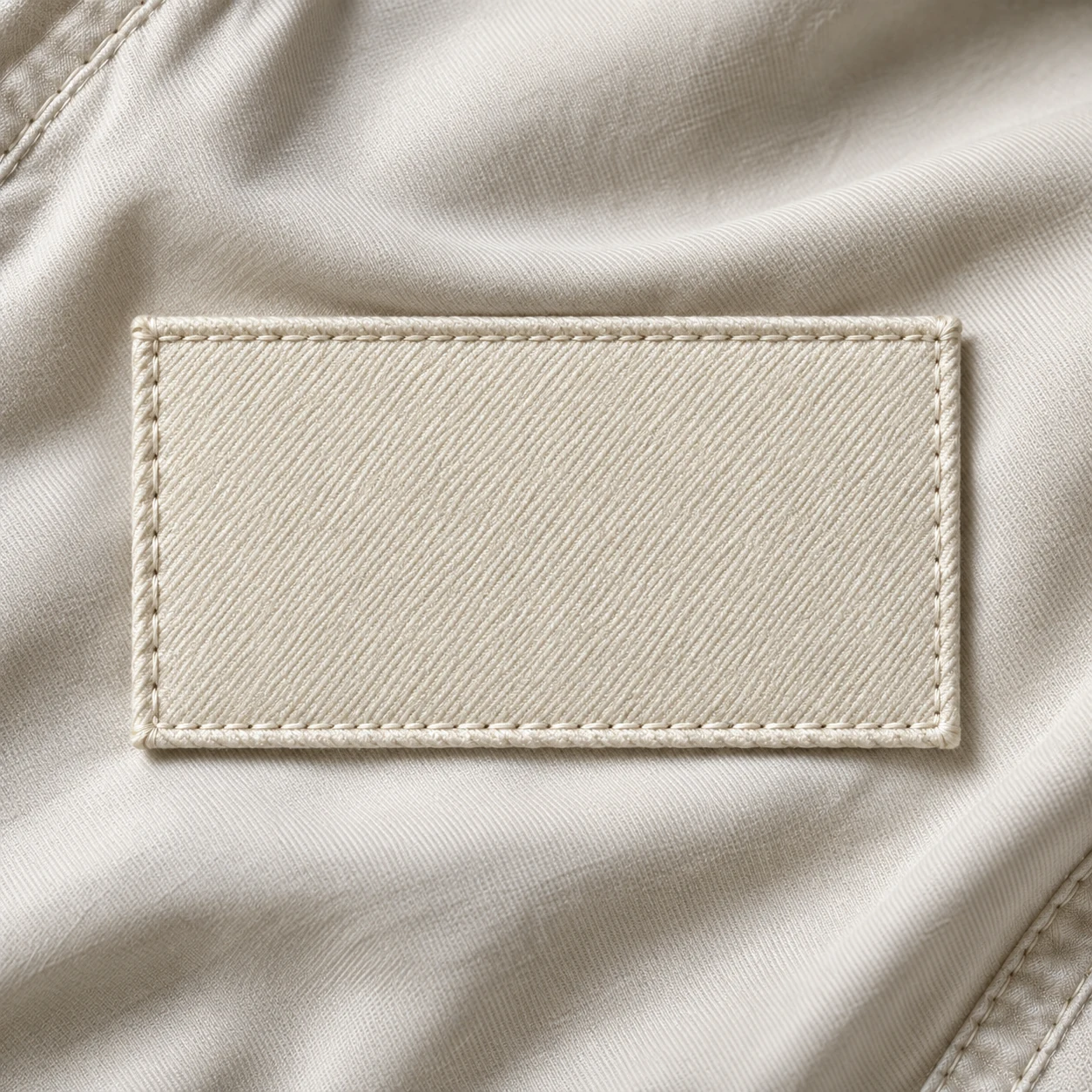
Raised edge · stitched placement
Material mockups with a live wordmark study. Print, weave, colour matching and placement are confirmed on your physical sample.
Patch geometry
Choose compact dots, tonal motif or a separate patch shape; supply size-specific placement measurements because a single scaled graphic may miss smaller or larger knees.
Show colour system
Develop white, tan or brand neutrals with matching pocket bags, zips and thread. Treat opacity approval as a garment decision in every pale colour.
Waist styling
Specify rise, belt-loop arrangement, back-yoke treatment and closure appearance around the intended discipline, remembering that belts and tucked shirts change the fit reading.
Retail branding
Coordinate restrained embroidery, transfer or metal-look trim with labels and hangtags. Confirm logo method compatibility with stretch and care before locking artwork size.
APPROVE THE DETAIL.
THEN THE ORDER.
The first sample helps you make decisions. Define review conditions and acceptance criteria before you compare the result.
Review the women’s knee-grip breeches sample
Sampling takes 7–10 working days from the agreed start. Record each decision against the dated sample before bulk approval.
Rider, material direction, measurements and artwork.
DEFINE THE STARTTurn the agreed direction into a garment to review.
7–10 WORKING DAYSReview fit, finish and changes. Confirm the final specification.
REVISE IF NEEDEDProceed with agreed quantities, colours, labels and packing.
30–45 WORKING DAYSA shared development direction
Bring reference garments, your rider profile, target colours and any artwork. We turn these into the measurements, materials and construction questions that the sample needs to resolve.
Sample feedback can return to development. Revisions and transit are planned separately; timing begins from the agreed specification and start date.
KEEP THE APPROVAL.
WITH THE ORDER.
One agreed reference for the workroom: the dated sample, its specification and your confirmed order breakdown.
Sample decisions
- Knee contact map
Mark saddle-contact zones on the worn prototype, compare them with the artwork placement and revise per size rather than shifting one universal patch.
- Two-point mobility
Have riders shorten stirrups and hold two-point, checking waist gaping, front-rise pressure, thigh restriction and seam rotation through repeated transitions.
- Fly and waistband
Inspect closure alignment while standing and mounted, then wear with the intended belt to reveal bulk, rolling or hook pressure.
Style, colour & size allocation
Confirm each style and colour separately, with the size allocation attached. The minimum is 100 pieces per style, per colour.
Labels, packing & timing
Agree label artwork, packing instructions and the production start. Bulk production takes 30–45 working days from the confirmed start; revisions and transit are planned separately.
A CLEARER BRIEF.
A MORE USEFUL QUOTE.
Price follows an agreed product, quantity and delivery scope. Use these inputs to compare proposals on the same basis.
Patch process
Multi-pass prints, intricate artwork or separately sewn patches change handling time, tooling and material consumption.
Tailored closure
Branded hardware, fly shields, multiple hooks and reinforced belt loops add components and operations.
Pale colour development
Opacity solutions, coordinated pocket bags and additional colour review may require different materials or sampling.
Length options
Regular, short or long inseams increase grading, markers, fit validation and SKU count.
Bring these six things
Planning baseline: 100 pieces minimum per style, per colour. Sampling takes 7–10 working days; bulk production takes 30–45 working days from the agreed start.
100 pieces minimum per style, per colour. State each colour quantity separately; confirm your proposed size allocation.
GOOD QUESTIONS.
BETTER DECISIONS.
Product-specific sourcing questions to resolve before sampling.
Begin from anatomical knee and saddle-contact landmarks, then check each sampled size on a rider. Simply scaling the artwork with the pattern can move the patch too high, low or forward because body proportions and inseam changes are not perfectly proportional.
No. They are used across schooling and several disciplines, but the product story should name its intended rider. Stirrup length, saddle type, desired security and local competition dress rules should drive development rather than a universal discipline claim.
Send a tech pack if available, plus a fit-approved garment or clear reference images, target body chart, saddle-use notes and exact phone dimensions. Mark which reference elements are essential and which are inspiration so the development team does not copy unintended details.