 REINFORM
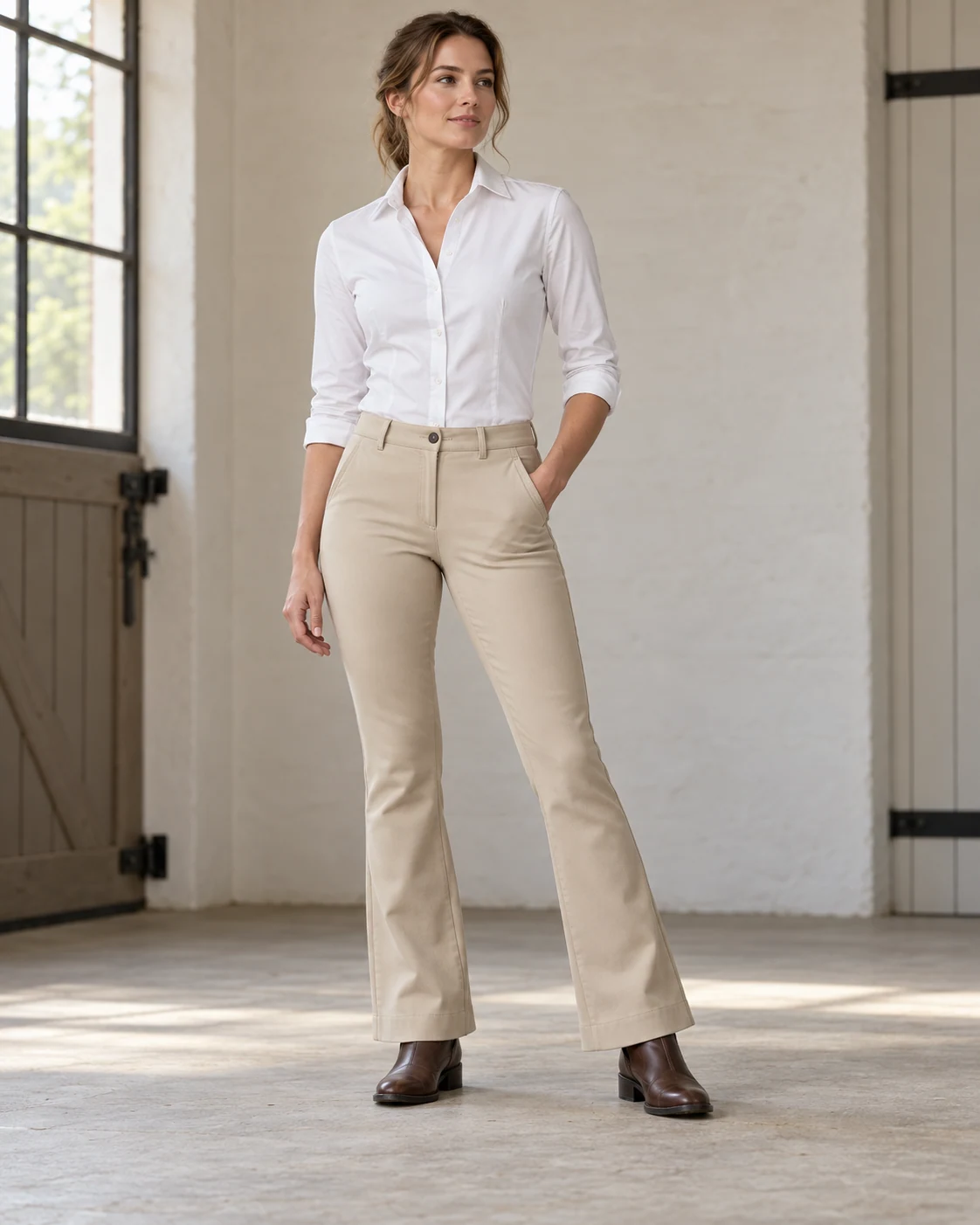
Build the Lower Leg Around the Ankle Boot
Custom Jodhpurs for Ankle-Boot Riding
Custom jodhpurs for equestrian teams: define a knee-to-hem flare, boot reference, waist and pockets through OEM/ODM sample development.
PUBLICATION /
CONTENT REVIEW /
A development direction for your brand. Final material, construction and performance by specification and sample approval.START WITH
THE RIDER.
For equestrian apparel brands and teamwear buyers developing an ankle-boot jodhpur option who need to review lower-leg shape, boot clearance and practical front-pocket placement before confirming a production brief.
Product development context
This custom jodhpurs brief is for an equestrian brand exploring an adult stone or beige woven pant worn over an ankle boot. The proposed design distinction is a visible outward flare from knee to hem, shaped around a buyer-supplied boot reference. It is one jodhpur direction, not a definition of every jodhpur pattern. The starting point is a shared measurement sheet, reference footwear and an agreed front construction: conventional button-and-zip fly, belt loops and two slanted side-entry pockets. This is an OEM/ODM sample-development concept, subject to project feasibility and buyer approval; it does not claim an existing approved production style. REINFORM has operated its own factory since 2016. MOQ is 300 pieces per style per colour. Sampling takes 7–10 working days from the agreed start. Bulk production takes 30–45 working days after sample approval, confirmation of the specification, materials and order details, and agreement of the production start date. Sample revisions and shipping are planned separately.
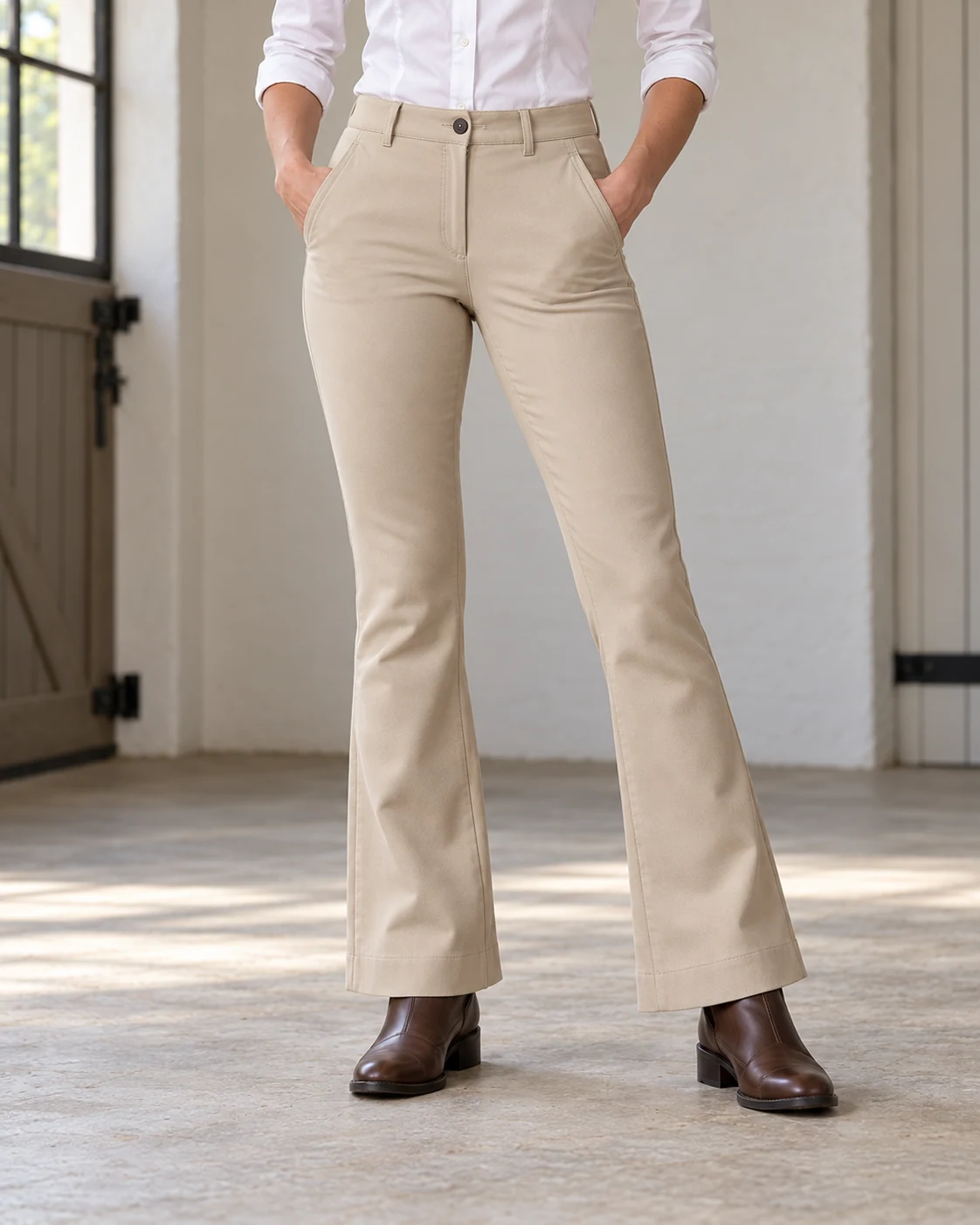
Boot reference before hem approval
Record the boot make or physical sample, shaft height, top circumference and the intended trouser hem position. Review the flare over that reference so the hem clears the boot without assuming one shape suits all ankle boots.
Flare begins at an agreed point
Mark the knee level and finished hem width on the sketch or measurement sheet. Compare left and right leg balance and inspect the side seam through the flare; do not rely on the word “jodhpur” alone to communicate the silhouette.
Simple front construction
Specify the button-and-zip fly, belt-loop positions and two slanted side-entry pockets. Confirm pocket opening, bag depth and closure interaction on the sample; this brief excludes grip, knee patches and underfoot straps.
THE FABRIC
SETS THE FEEL.
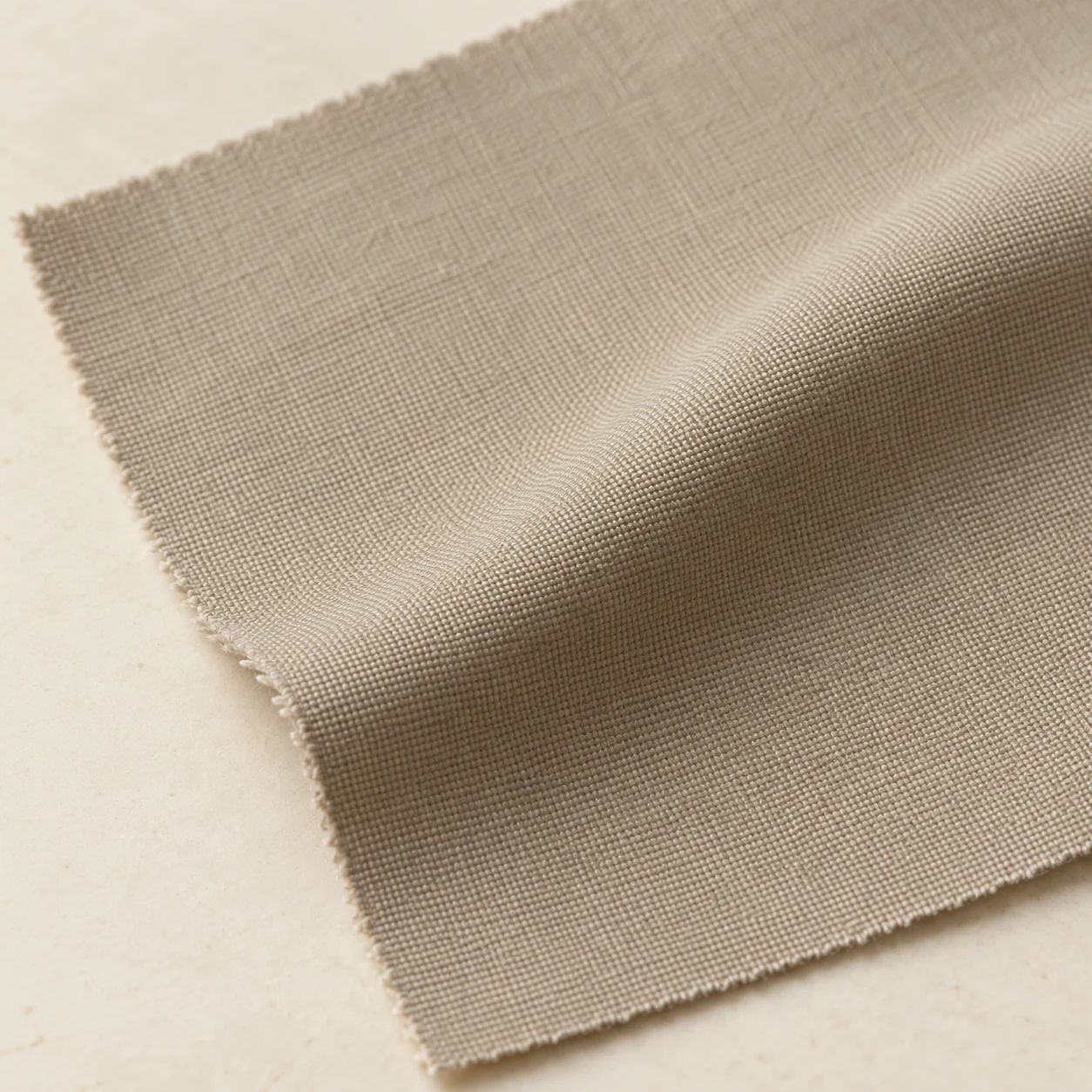
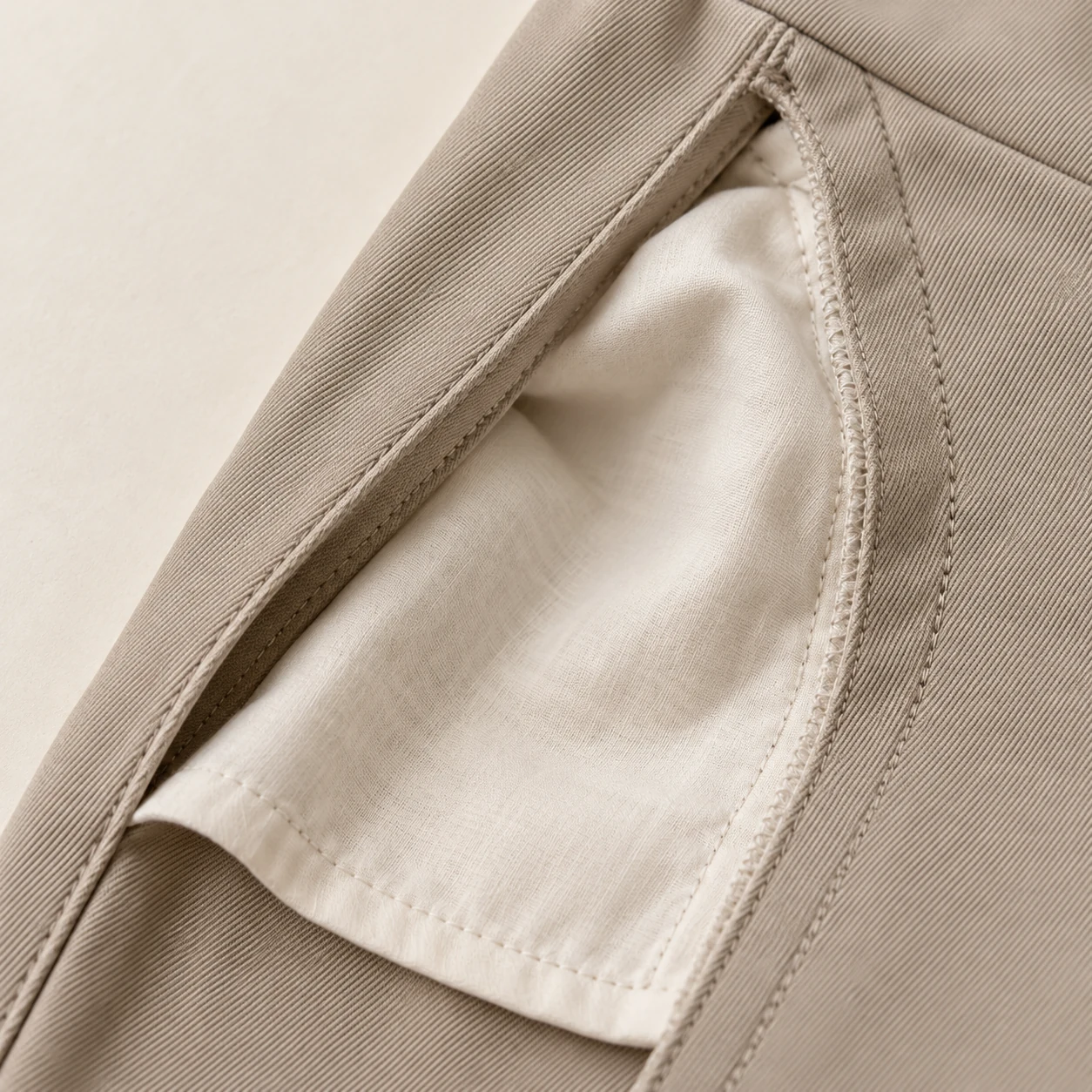
Compare material directions against your rider, climate and care expectations. Request the actual fabric specification and evidence for any performance claim.
| Material direction | Why consider it | What to verify |
|---|---|---|
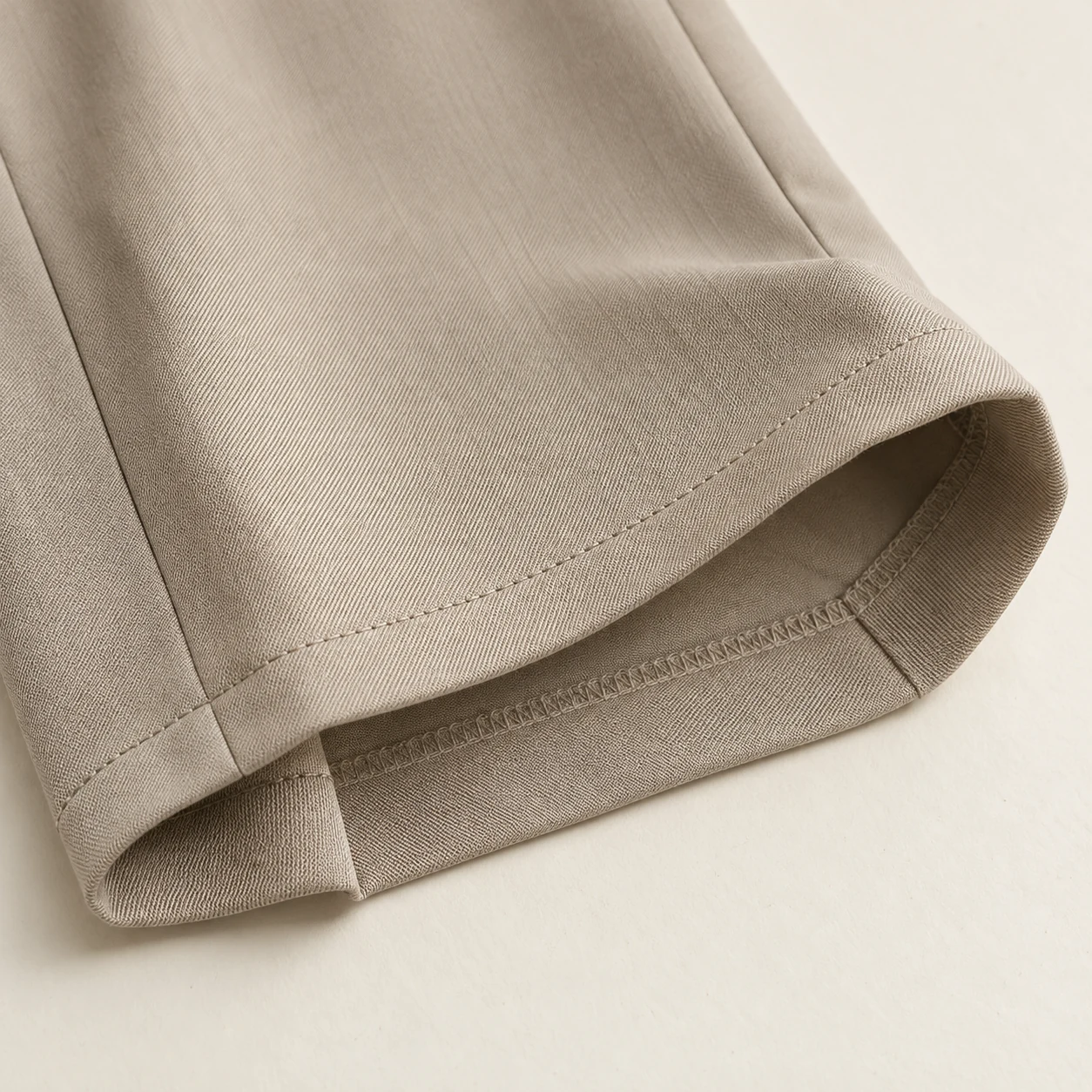
| Stone or beige woven shell direction | A stable woven direction supports the intended tailored pant appearance and lets the buyer judge the flare and crease behaviour on a complete sample. Fibre content, stretch, weight, finish and colour standard remain unselected. | Review supplier composition and construction details, then approve the actual proposed fabric and shade on a sample. Do not assign a fixed fibre or GSM before sourcing and feasibility review. |
| Compatible pocket-bag direction | Pocket-bag hand, opacity and drape affect how the two slanted openings sit and whether the bags show through a light shell. This is a development choice, not an existing fixed material specification. | Approve pocket-bag composition, colour, dimensions and attachment on the sewn sample; check that the opening lies flat and the bag remains contained during movement. |
| Turned-hem finish direction | A turned hem can give the flared leg a clean, adjustable finish, but the depth and internal support should be selected with the chosen shell and intended boot clearance. | Record finished inseam and hem circumference, inspect the hem from inside and outside, and check that both sides hang evenly over the approved ankle-boot reference. |
These are sourcing comparisons, not a list of stocked or certified fabrics. Confirm composition, weight, finish, availability and testing with the material selected for your project.
Proposed adult ankle-boot jodhpur direction; sample measurements and boot clearance remain buyer-defined.IT’S IN
THE DETAILS.
Conventional fly and waistband
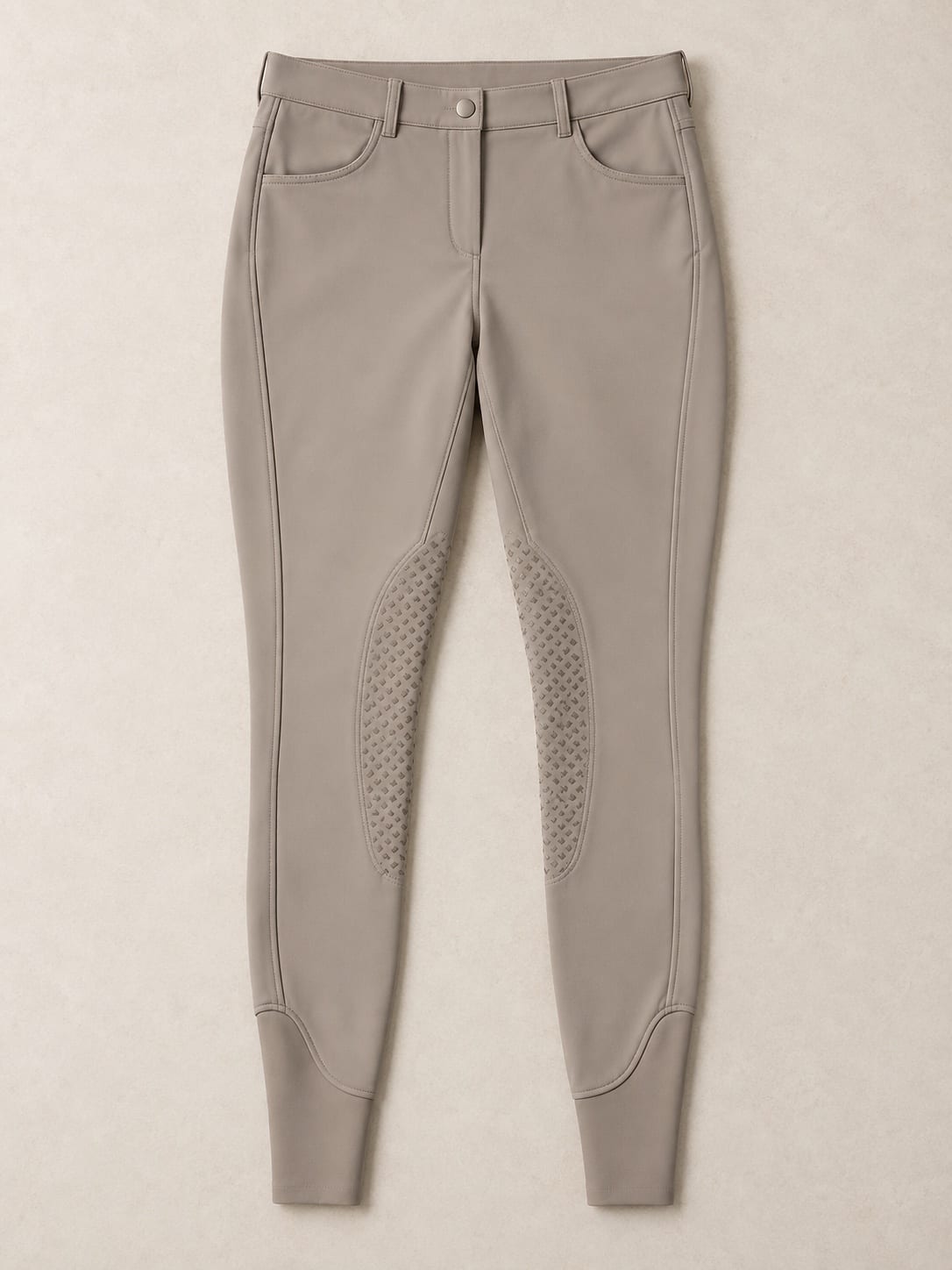
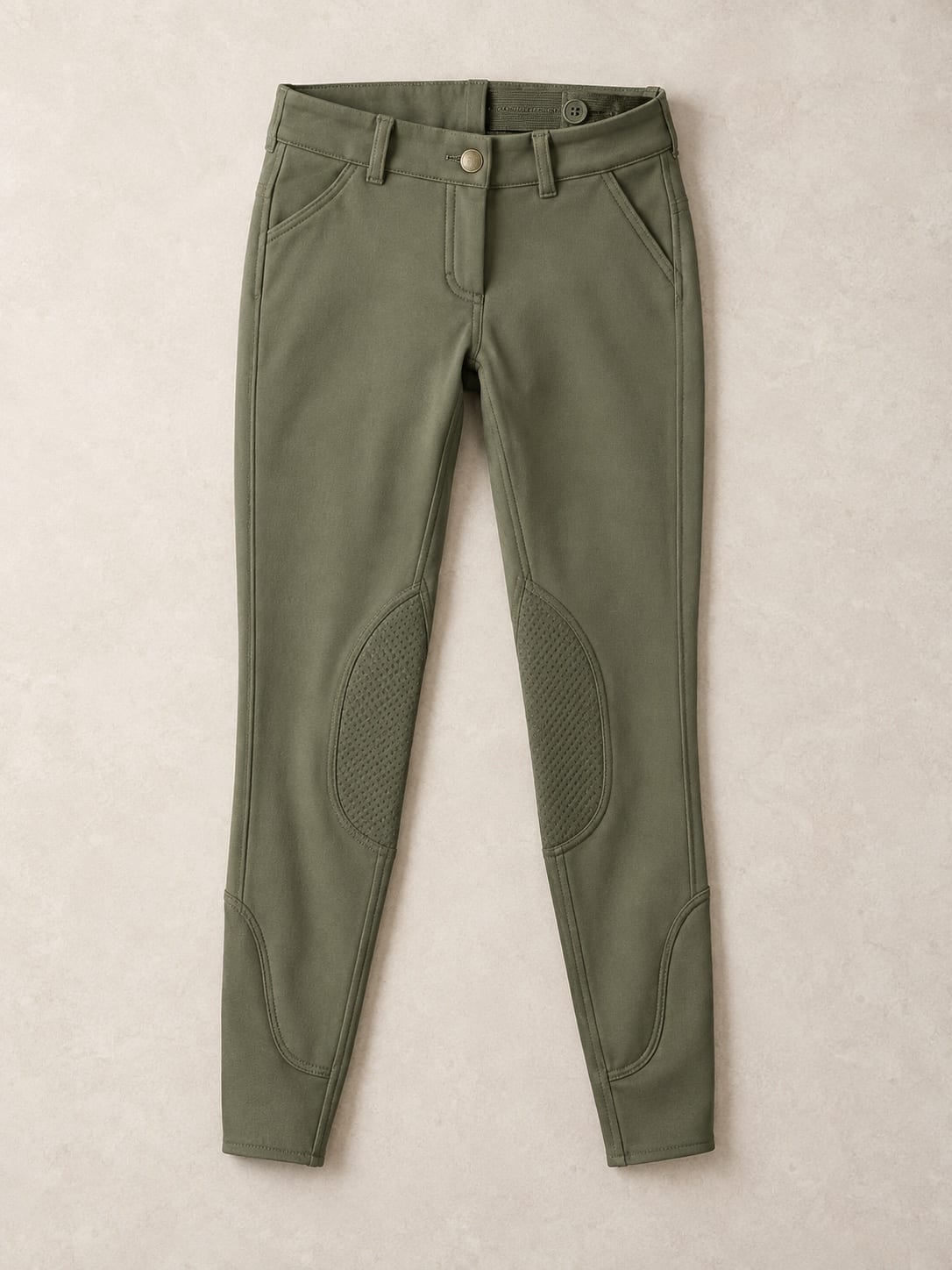
Develop a button-and-zip fly with belt loops placed to the buyer’s belt and waist specification. Confirm closure length, button position, waistband height and finished rise on the approved sample rather than assuming a standard block.
Two slanted side-entry pockets
Keep the design to two front slanted pockets. Mark opening angle and length, bag depth and reinforcement in the tech pack; test access and pocket-bag show-through on the light stone or beige shell.
Knee-to-hem outward flare
Define the knee reference point and hem circumference on the buyer’s sketch. Balance the flare across front, side and back panels so the leg opens outward to cover the named boot without adding a calf-tight tall-boot interface.
Clean lower-leg scope
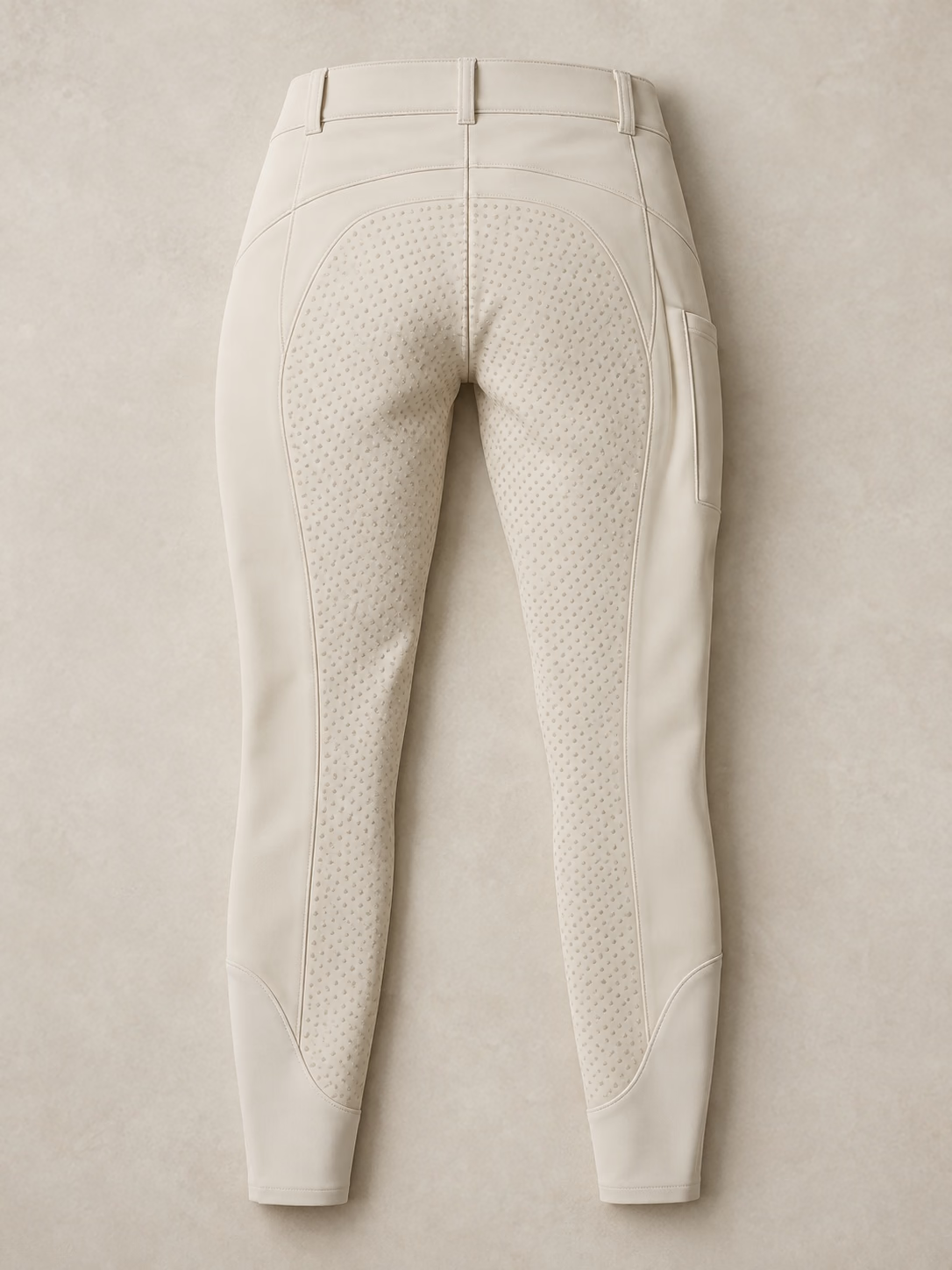
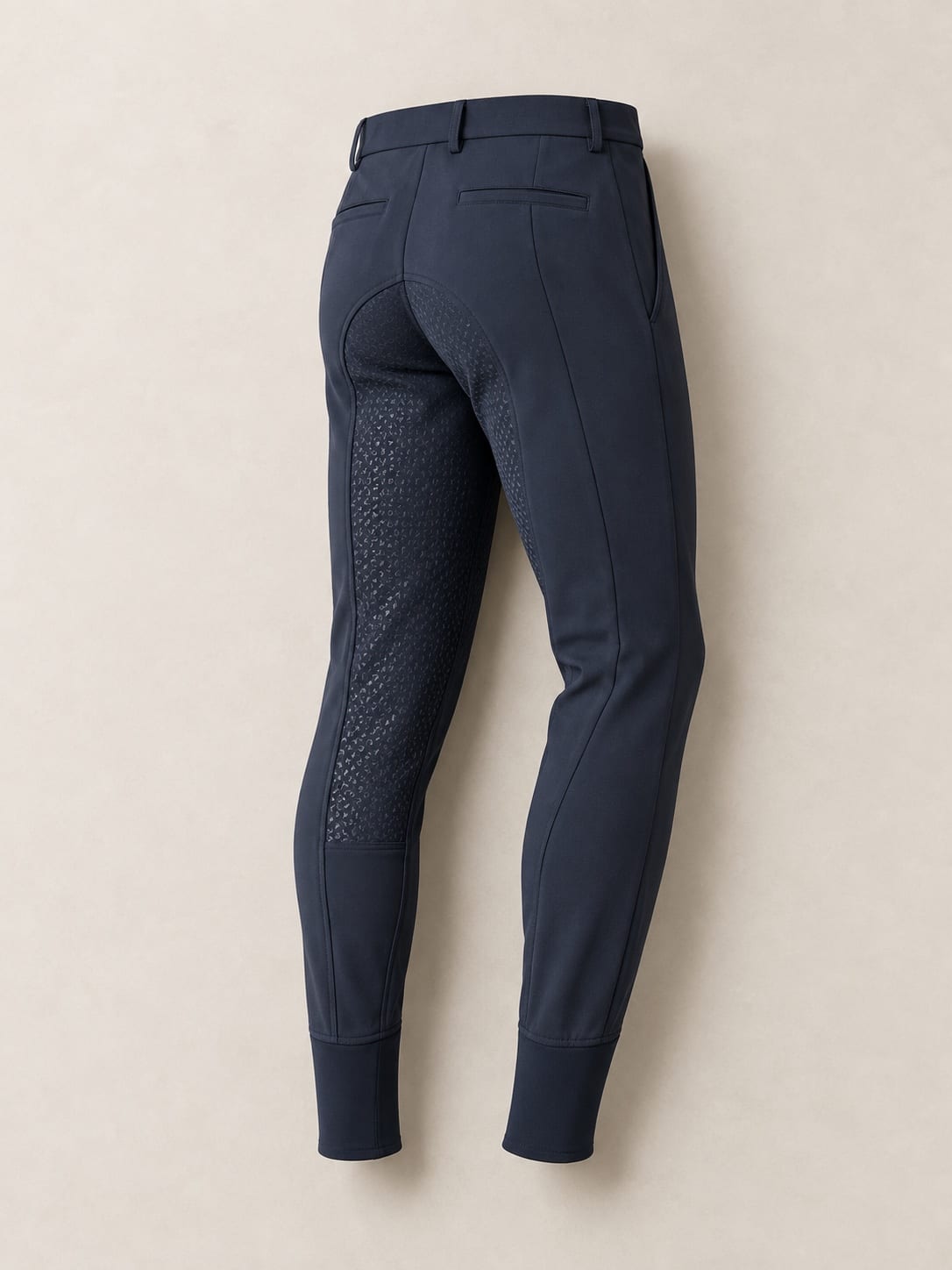
This brief excludes seat or knee grip, patches, all back pockets, a boot strap and an underfoot strap. The rear remains plain. Any design change should be documented as a separate pattern and sample decision.
FROM THE BRIEF.
INTO THE WORKROOM.
Develop this jodhpur direction around the named ankle boot, with the knee-to-hem flare, waist and two slanted pockets recorded on the same brief. Illustrative component references are not an approved fabric specification.
Explore our factory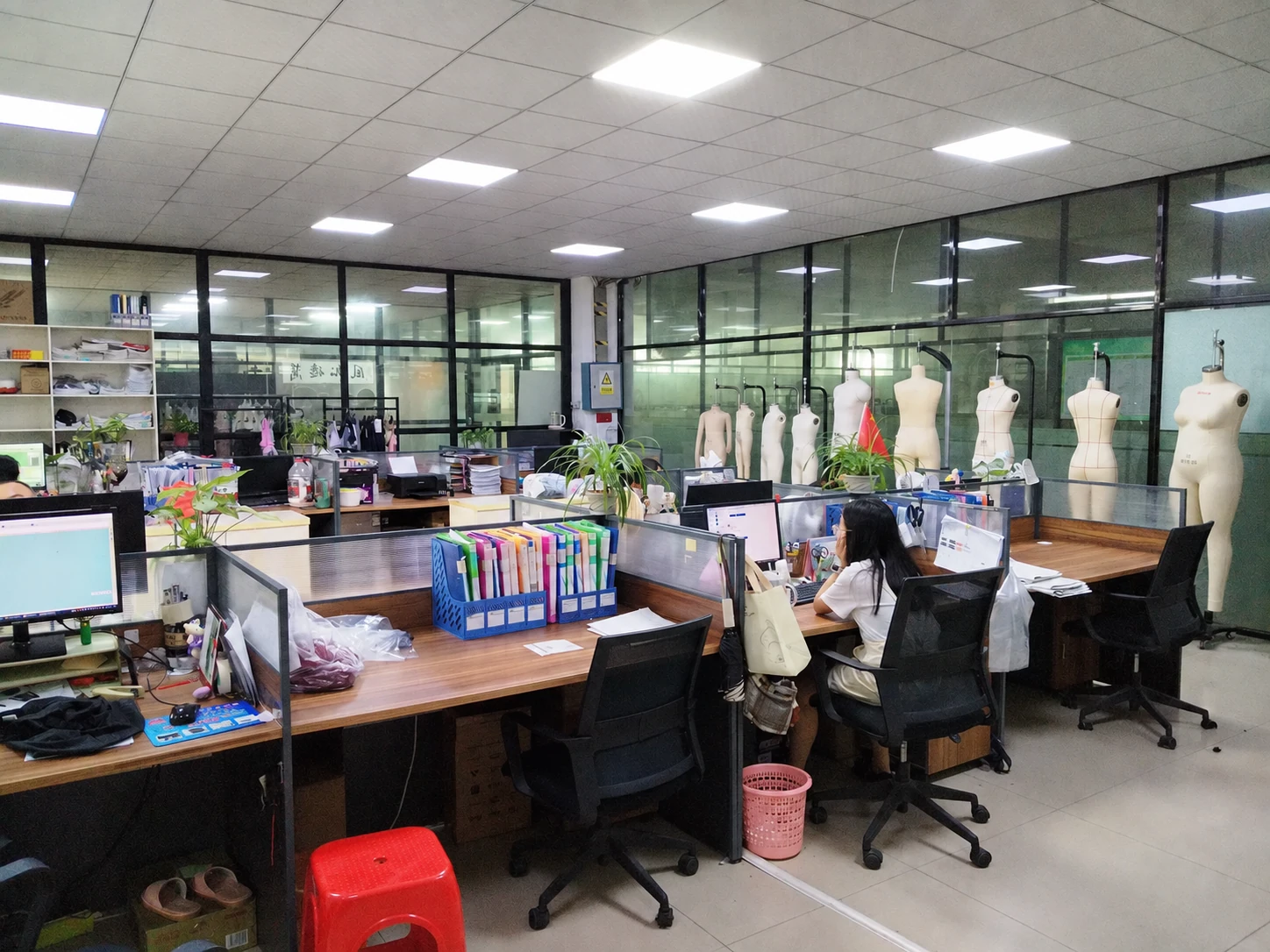
Conventional fly and waistband
Develop a button-and-zip fly with belt loops placed to the buyer’s belt and waist specification. Confirm closure length, button position, waistband height and finished rise on the approved sample rather than assuming a standard block.
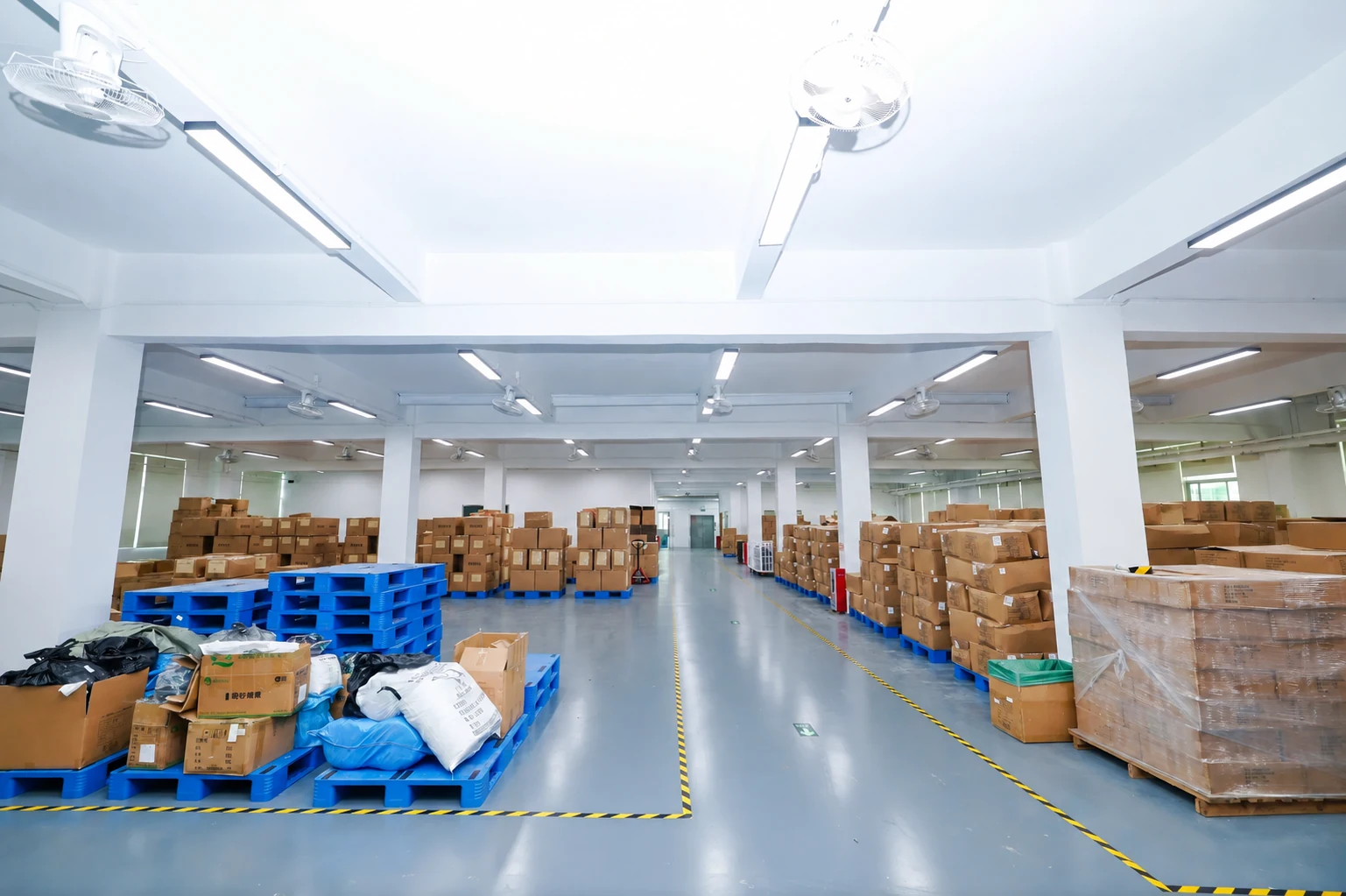
Carry this into approval Factory views show our working environment. Your garment follows its agreed specification and sample.GET THE
RIGHT FIT.

A size label is only the beginning. Agree the measurement method, review the garment in use and keep the approved fit record with your specification.
Your fit-session checklist
Record the size worn, body measurements, intended underlayers and every proposed correction with the dated sample.
Note the size worn, body measurements, intended underlayers and each proposed correction. Recheck the affected measurement after a revision; confirm the size breakdown for each style and colour before bulk.
MAKE IT
RECOGNISABLY YOURS.
Use the product’s construction to guide decoration and finishing. Ask for placement, colour and material approval on the relevant sample.
Small details.
One identity.
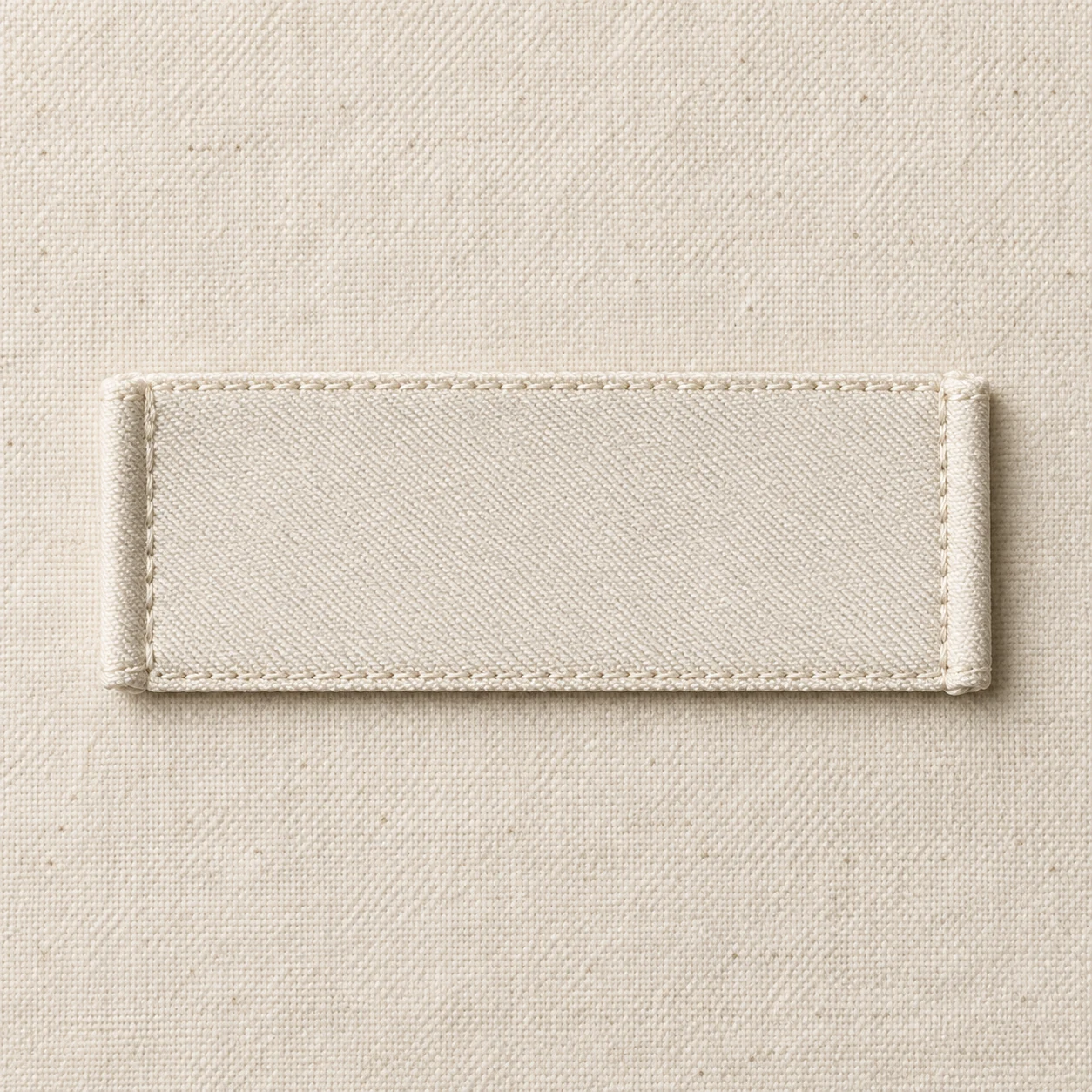
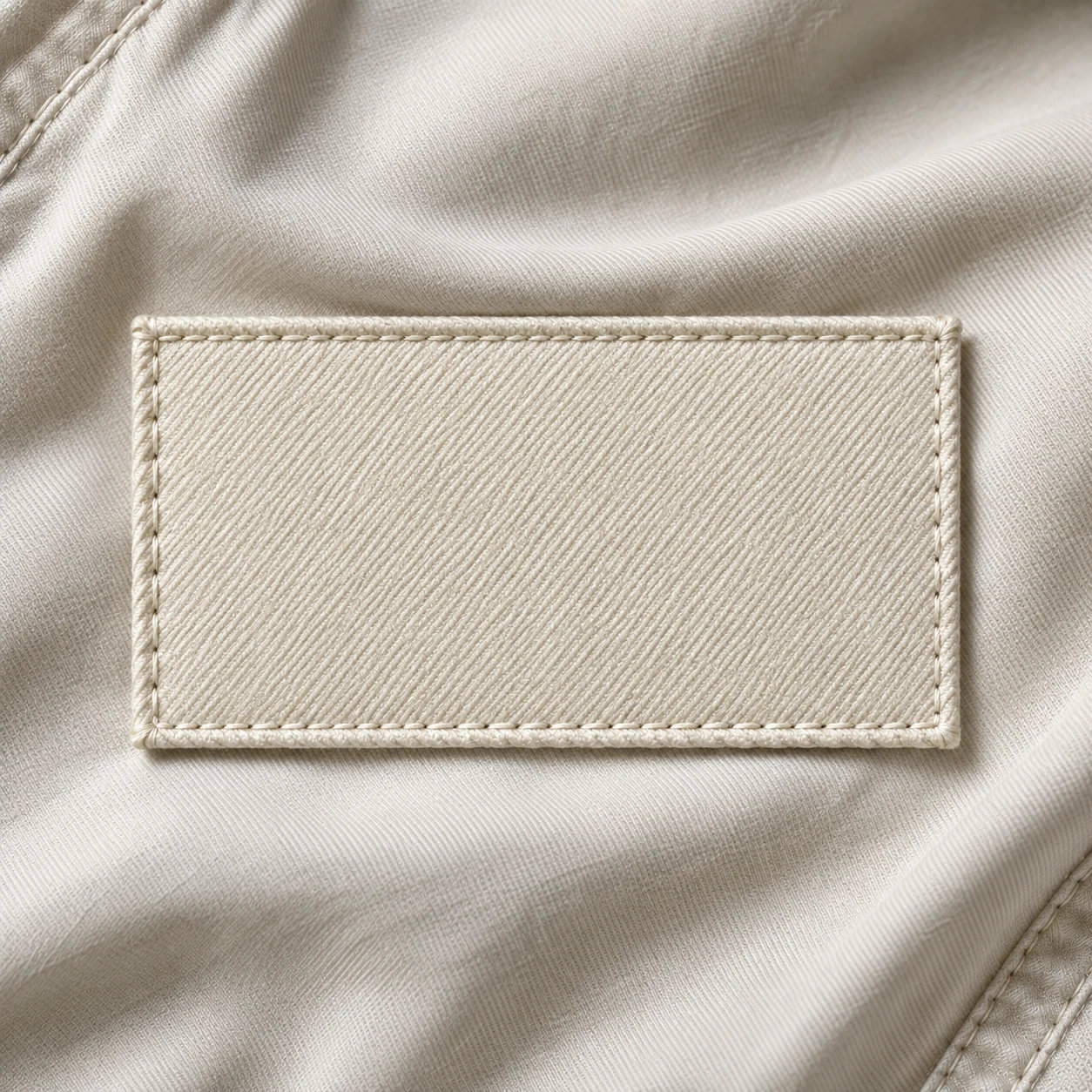
Folded edges · fine weave
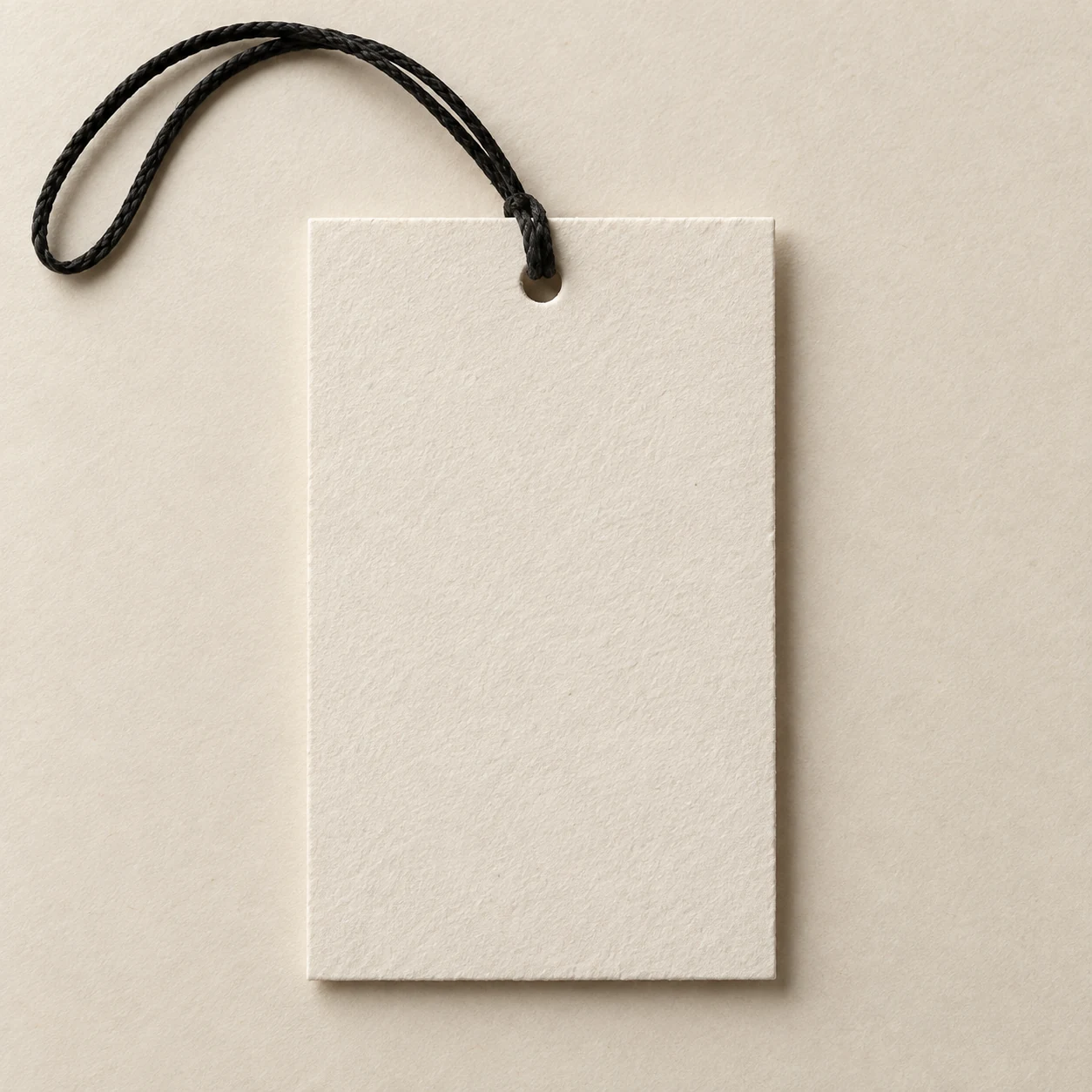
Textured stock · cord attachment
Raised edge · stitched placement
Material mockups with a live wordmark study. Print, weave, colour matching and placement are confirmed on your physical sample.
Leg shape
Set the knee level, hem circumference, flare distribution and inseam from a measured sketch or approved reference sample.
Waist and fly
Specify rise, waistband height, button and zip preferences, belt-loop positions and closure colour.
Pocket layout
Provide the opening angle and length, pocket-bag depth and any reinforcement requirement for the two slanted side-entry pockets.
Colour and labelling
Provide the target shade reference and buyer-approved label copy; confirm destination-market requirements with the responsible buyer before bulk release.
APPROVE THE DETAIL.
THEN THE ORDER.
The first sample helps you make decisions. Define review conditions and acceptance criteria before you compare the result.
Review the ankle-boot riding jodhpurs sample
Sampling takes 7–10 working days from the agreed start. Record each decision against the dated sample before bulk approval.
Rider, material direction, measurements and artwork.
DEFINE THE STARTTurn the agreed direction into a garment to review.
7–10 WORKING DAYSReview fit, finish and changes. Confirm the final specification.
REVISE IF NEEDEDProceed with agreed quantities, colours, labels and packing.
30–45 WORKING DAYSA shared development direction
Bring reference garments, your rider profile, target colours and any artwork. We turn these into the measurements, materials and construction questions that the sample needs to resolve.
Sample feedback can return to development. Revisions and transit are planned separately; timing begins from the agreed specification and start date.
KEEP THE APPROVAL.
WITH THE ORDER.
One agreed reference for the workroom: the dated sample, its specification and your confirmed order breakdown.
Sample decisions
- Boot clearance
Fit the sample over the buyer-supplied or buyer-specified ankle boot. Photograph front, side and back, then record whether the flare covers the intended boot area without catching or dragging.
- Flare symmetry
Measure the marked knee point and finished hem on both legs; compare panel balance and the side seams on a flat table and on the fit wearer.
- Fly and waistband
Open and close the button-and-zip fly, check belt fit and inspect waistband level during standing, sitting and mounting-position simulation.
Style, colour & size allocation
Confirm each style and colour separately, with the size allocation attached. The minimum is 300 pieces per style, per colour.
Labels, packing & timing
Agree label artwork, packing instructions and the production start. Bulk production takes 30–45 working days from the confirmed start; revisions and transit are planned separately.
A CLEARER BRIEF.
A MORE USEFUL QUOTE.
Price follows an agreed product, quantity and delivery scope. Use these inputs to compare proposals on the same basis.
Shell sourcing and colour
The final cost and lead time depend on the selected woven construction, colour availability, supplier minimums and any agreed material verification.
Flare and size matrix
Changing the flare point, hem widths, inseam options or graded size range affects pattern work, sample iterations and cutting plans.
Pocket and closure details
Pocket-bag specification, reinforcement, zip and button choices change component and sewing requirements.
Quantity per style and colour
MOQ is 300 pieces per style per colour; a broader size or colour matrix should be planned against the total order and supplier requirements before confirmation.
Bring these six things
Planning baseline: 300 pieces minimum per style, per colour. Sampling takes 7–10 working days; bulk production takes 30–45 working days from the agreed start.
300 pieces minimum per style, per colour. State each colour quantity separately; confirm your proposed size allocation.
GOOD QUESTIONS.
BETTER DECISIONS.
Product-specific sourcing questions to resolve before sampling.
Are all jodhpurs flared over ankle boots?
No. This page describes one proposed ankle-boot direction with an outward knee-to-hem flare. Pattern shape and hem coverage should be defined against the buyer’s intended footwear and fit brief.
Does this brief include grip or an underfoot strap?
No. The proposed design has no seat or knee grip, patches or underfoot strap. The specified front is a button-and-zip fly with belt loops and two slanted side-entry pockets.
What should be approved before a bulk order?
Record the dated measurements, boot reference, selected shell and colour, pocket layout, fly and waistband, graded size set, sample comments and final care and label information. Bulk planning starts after the buyer and project team confirm the specification and material feasibility.