 REINFORM
Start with the garment, the destination and the decision
For a useful RSL testing brief, list the actual components of the garment, identify the destination and brand requirements, and ask a competent laboratory to confirm the relevant tests and sample preparation. Link every result back to the approved material, colour and finish. A report for an unnamed navy fabric cannot, by itself, approve the elastic, grip print, zip and decoration on a finished riding garment.
This guide is for equestrian brand buyers and product developers commissioning chemical checks before a production decision. It gives a practical way to prepare that instruction, compare laboratory quotations and close gaps. It does not provide a universal test panel or certify a product. Physical stretch, recovery, abrasion and fit remain separate approval tasks. The suggested records below are REINFORM's procurement workflow, not a laboratory procedure or a claim that a particular garment has passed.
Begin with a short decision statement: “We need to decide whether the identified materials and decorations can be released for this style, colour and destination.” That keeps the commission specific. “Please test everything” leaves the laboratory to guess your intended market, user age, components and acceptance criteria; a low quote may simply cover less than the buyer expected.
Use the separate guide for physical fabric performance and sample testing.
Why the October 2026 timing matters
As checked on 20 October 2026, the EU's PFHxA restriction has reached an important application date. Entry 79 introduced by Commission Regulation (EU) 2024/2462 applies from 10 October 2026 to specified uses including clothing textiles and related accessories for the general public. It sets separate limits for PFHxA and its salts, and for PFHxA-related substances, measured in homogeneous material. The regulation includes exemptions and provisions for goods already placed on the market.
This is a specific EU restriction, not a blanket declaration that all PFAS are banned everywhere. Do not automatically apply its dates or scope to Great Britain or the United States. Ask the responsible compliance specialist to establish the requirements for each destination, product and placement date.
For a softshell development programme, our practical response is to revisit the finish record before releasing a new colour or replacement material. Ask what was specified, what was supplied and which evidence addresses it. A photograph of water beading cannot answer a chemical-compliance question.
AFIRM's 2026 RSL, version 11, also provides a current industry reference for restricted substances in apparel and footwear. Brand requirements can differ. Record the exact version agreed with your buyer; do not treat the year in a supplier's folder name as proof that the report addresses that version.
Read the EU regulation, particularly Annex entry 79, for the complete scope and dates.
Consult AFIRM's 2026 RSL and its material-specific guidance.
Build one component register before requesting prices
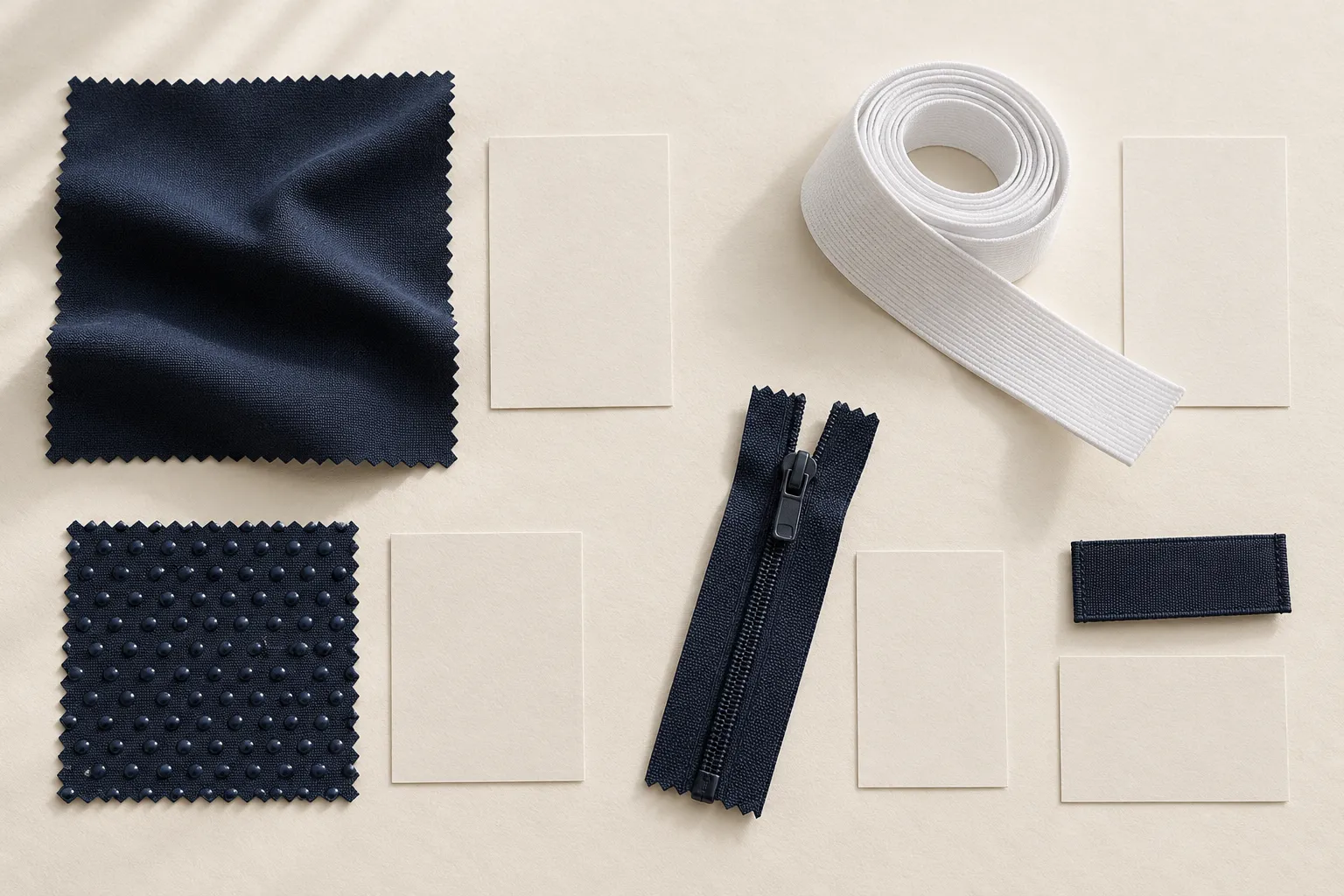
Start from the bill of materials, then inspect the sample against it. The purchase description may say “navy riding breeches”, but the test brief needs identifiable entries for the shell, pocketing, waistband components, grip application, thread, closures, labels and branding. Mark anything not yet selected as pending. Do not fill the space with a generic “approved” to make the spreadsheet look complete.
Give each entry a stable code that can appear on the drawing, sample bag and report review. A suggested record contains the component location, supplier reference, material description, colour reference, finish or decoration process, sample origin, applicable requirement and evidence status. Add the person responsible for answering outstanding questions. This creates a working procurement record that survives staff changes and supplier substitutions.
Consider an illustrative full-seat breech: the main woven fabric could remain unchanged while the silicone artwork, waistband elastic or zip pull changes. Treat these as review points. Ask the laboratory which changes affect the agreed assessment and what additional material it needs. The buyer should not infer chemical equivalence from matching colours or similar touch.
- Shell: identify the fabric reference, dye colour and any finish separately.
- Grip or print: identify the application and the substrate on which it will be used.
- Trims: give each distinct elastic, zip, coated component and label its own reference.
- Decoration: record the final embroidery, transfer or print version and placement.
- Evidence: link the file, tested sample description, review decision and unresolved questions.
Turn the register into a laboratory instruction
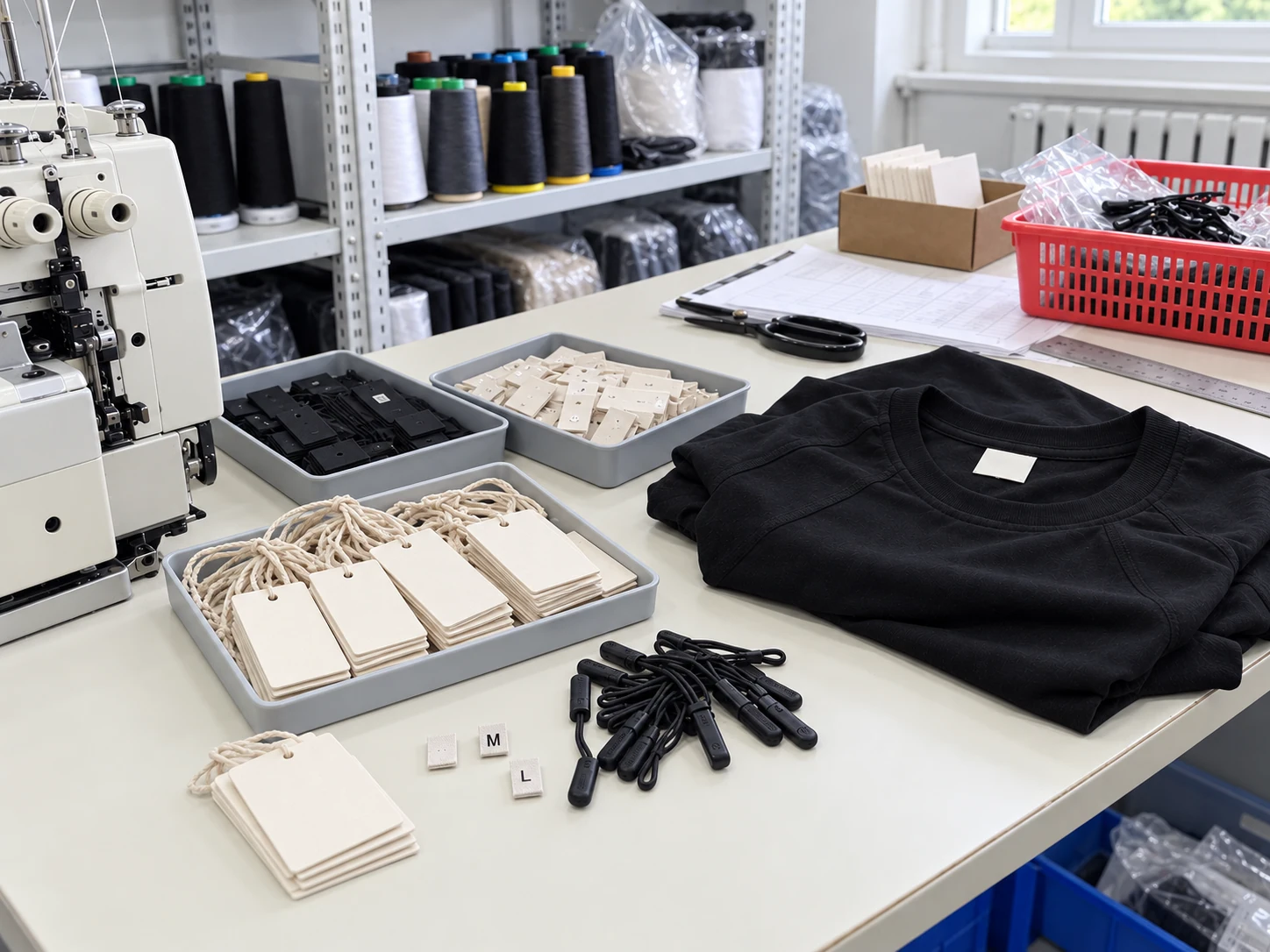
Send the register with clear sample photographs and the current requirement document. Explain whether the sample is development yardage, a decorated panel, a finished prototype or material taken from the intended production lot. Ask the laboratory to specify how much of each component it needs and whether any preparation or grouping is appropriate. Do not cut up and combine small trims before agreeing the sampling plan.
The instruction should ask for confirmation of the test scope, methods, reporting limits, applicable acceptance criteria and any exclusions. These are questions to resolve with the laboratory, not numbers to copy from another brand's report. If a requested panel does not cover a particular component or concern, make that visible in the quotation review. A report can be accurate within its scope and still leave your purchasing decision incomplete.
TÜV SÜD describes RSL testing as a service for manufacturers, retailers and suppliers, with chemical requirements and supply-chain risks informing the programme. That supports involving the testing provider early. It does not mean any provider's standard package will automatically fit every equestrian product.
Keep the commercial instruction just as precise. State who authorises additional tests, who receives the complete report, and what happens if a sample arrives with an unclear identity. Ask for the expected reporting date before fixing the production release meeting.
See TÜV SÜD's explanation of RSL testing and programme scope.
Compare quotations by coverage, not the final total
Put quotations side by side against the same component register. A cheaper offer may exclude decoration, cover fewer colours or assume a different preparation method. None of those choices is automatically wrong, but the buyer must understand the resulting gap. Ask for a revised scope if the quotation does not reflect the actual garment.
For each quoted line, note the material reference, requirement version, included work, exclusions, sample quantity and lead time. Keep laboratory charges separate from supplier sample preparation and courier charges. If the factory will arrange the testing, ask to receive the agreed instruction and the resulting report, not only a statement that “testing is included”.
A useful comparison question is: “If we approve this quote, which parts of the purchasing decision will still be unanswered?” This reveals differences that a price-per-style comparison hides. One supplier may have usable evidence for the unchanged shell but need a new decorated panel. Another may be proposing a new shell, making the apparent saving irrelevant until its evidence is reviewed.
Agree the release gate before the work starts. A technical reviewer should know which documents must be complete, who can resolve an exception, and which commercial commitment waits for that decision. The gate should be proportionate to the order's actual risks and requirements.
Review the report against the sample you are buying
When the report arrives, first match the report number and complete file to the instruction. Check the sample description, colour, component references, photographs where supplied, receipt or testing dates, and the reported methods and conclusions. If the identity is too vague to connect the result to your purchase, ask for clarification through the laboratory and supplier. Keep the original file alongside any corrected version.
Do not translate an isolated “pass” into a claim about the entire collection. Your internal review should state the precise material and decision it supports. A shell result does not describe an untested transfer. A development sample may need a separate assessment before it is accepted as evidence for a substituted production fabric. Ask the responsible reviewer to document that relationship rather than assuming it.
Our suggested status terms are simple: received and awaiting review; accepted for the named scope; clarification required; additional work required; or not accepted. Avoid a single green cell that conceals different reasons for approval. Also record who made the decision and the revision of the bill of materials that they reviewed.
Keep performance marketing separate. Chemical results do not establish breathability, waterproofness, UV protection or mounted comfort. Those statements require their own relevant evidence and should remain outside this report's approval.
Handle a change or an unsatisfactory result without losing the trail
If a result does not support release, identify the affected material and hold the relevant approval while the issue is investigated. Ask the supplier for a proposed correction with a new material or process reference, then agree with the laboratory or technical reviewer what evidence is needed. The buyer's file should show the original issue, proposed change and subsequent decision.
A verbal promise to “use a better finish” is not a usable revision. Record the replacement reference, which colours and orders it affects, when the sample was made and whether the appearance or performance also changed. The replacement can solve one problem while changing hand, stretch, bonding or decoration behaviour; those product decisions still need to be reviewed.
Use the same approach for routine substitutions. An out-of-stock elastic or a change in a logo supplier can arrive late in the calendar. Require notification before use, with a brief description of the change and its evidence impact. Keep the approval specific enough that production can distinguish the accepted version from the previous one.
For split deliveries, retain the connection between the approved references and each shipment record. This is an internal control recommendation, not a claim that every colour or delivery legally requires identical testing. The appropriate verification plan depends on the requirements and evidence available.
A compact brief your team can reuse
The downloadable worksheet turns these decisions into a request that a supplier and laboratory can answer. It is blank by design: there are no invented chemical limits, approved materials or laboratory results. Complete it with your actual garment information and have the testing provider confirm the technical scope before commissioning work.
- Decision and market: style, intended user, destination, placement timing and approval needed.
- Requirements: buyer document, version, named legal review and responsible contact.
- Components: coded materials, colours, finishes, decorations and sample origin.
- Laboratory scope: proposed work, preparation, quantities, exclusions and reporting date.
- Report review: exact evidence, coverage gaps, reviewer and release decision.
- Change control: substitution, affected order, required follow-up and closed revision.
For example, a brand developing a navy team softshell can attach a shell reference, zip and pocketing list, proposed chest embroidery and target markets. The laboratory can then query missing details before a quote is accepted. That is a more useful starting point than sending an undated jacket photograph with a request for “EU testing”.
Download the blank RSL testing brief and component register (.txt).
Bring the evidence plan into the product brief
For a REINFORM enquiry, include the garment category, destination, quantity by style and colour, selected material references and the requirements your team wants reviewed. If those references are still undecided, identify the open choices. This lets the discussion address sampling, quotations and third-party work without suggesting that a concept image or generic fabric description is certification evidence.
REINFORM's minimum is 300 pieces per style, per colour. Sample development normally takes 7–10 working days and bulk production 30–45 working days; confirm the schedule for the actual brief. Laboratory work, unresolved approvals, replacement materials and shipping need to be considered explicitly when setting your launch calendar.
The immediate outcome to aim for is a readable release record: the purchasing decision, the exact scope of supporting evidence, the remaining gaps and the person who closes them. That record helps the next buyer understand why the material was accepted and when a later change needs another review.
Build the fabric, finish and decoration brief for a riding softshell.
Connect the component register to a men's breeches tech pack.
These references cover supplier processes, textile testing and market-specific labelling. They do not certify REINFORM or set the terms of your order. Confirm the product specification, destination requirements and quotation with your team.
Bring the material evidence into your brief
Tell us the garment, destination, component choices and requirements your team needs reviewed. MOQ is 300 pieces per style, per colour.
Discuss the garment brief