 REINFORM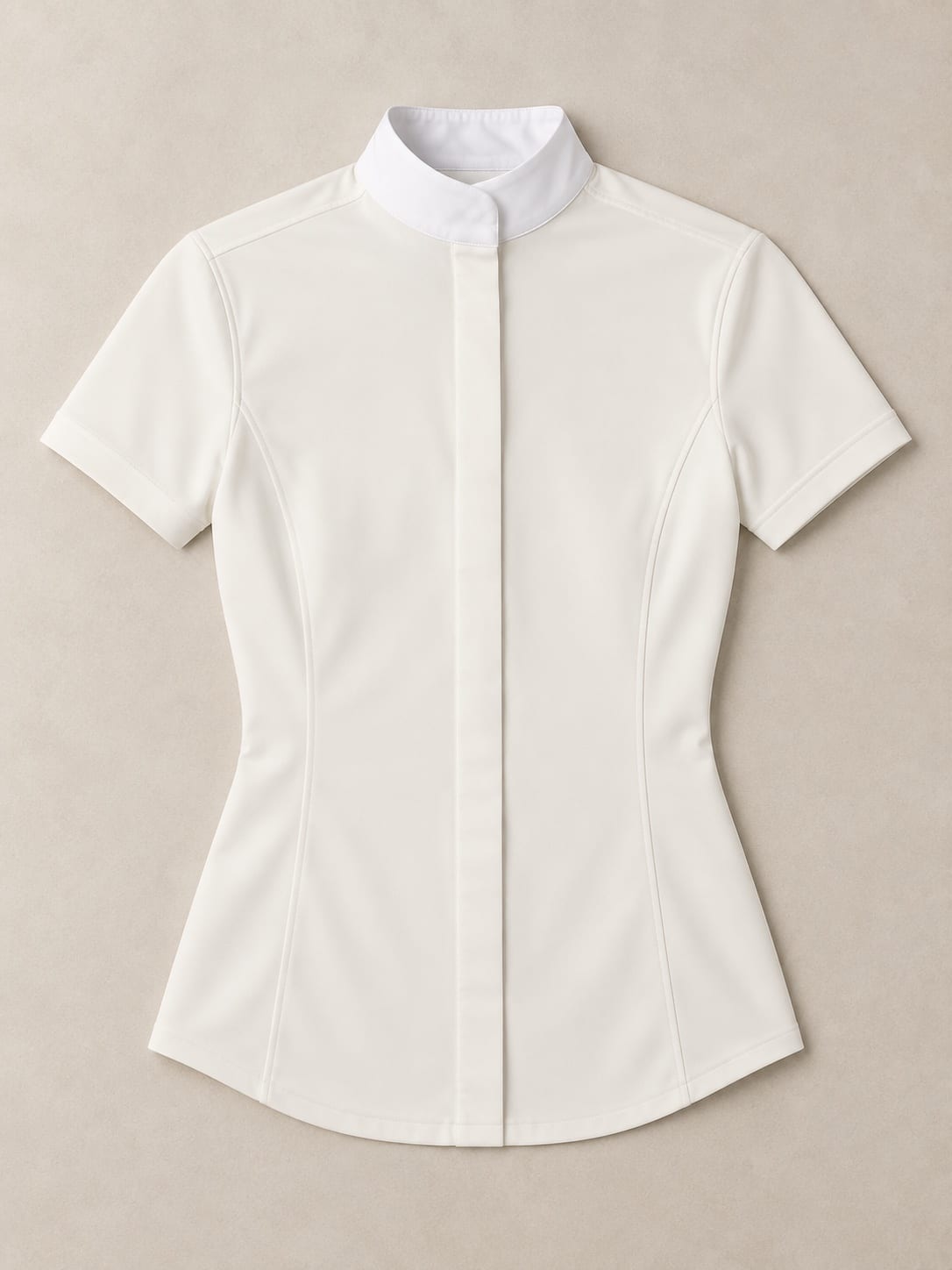
Keep Hot-Weather Formality Clean
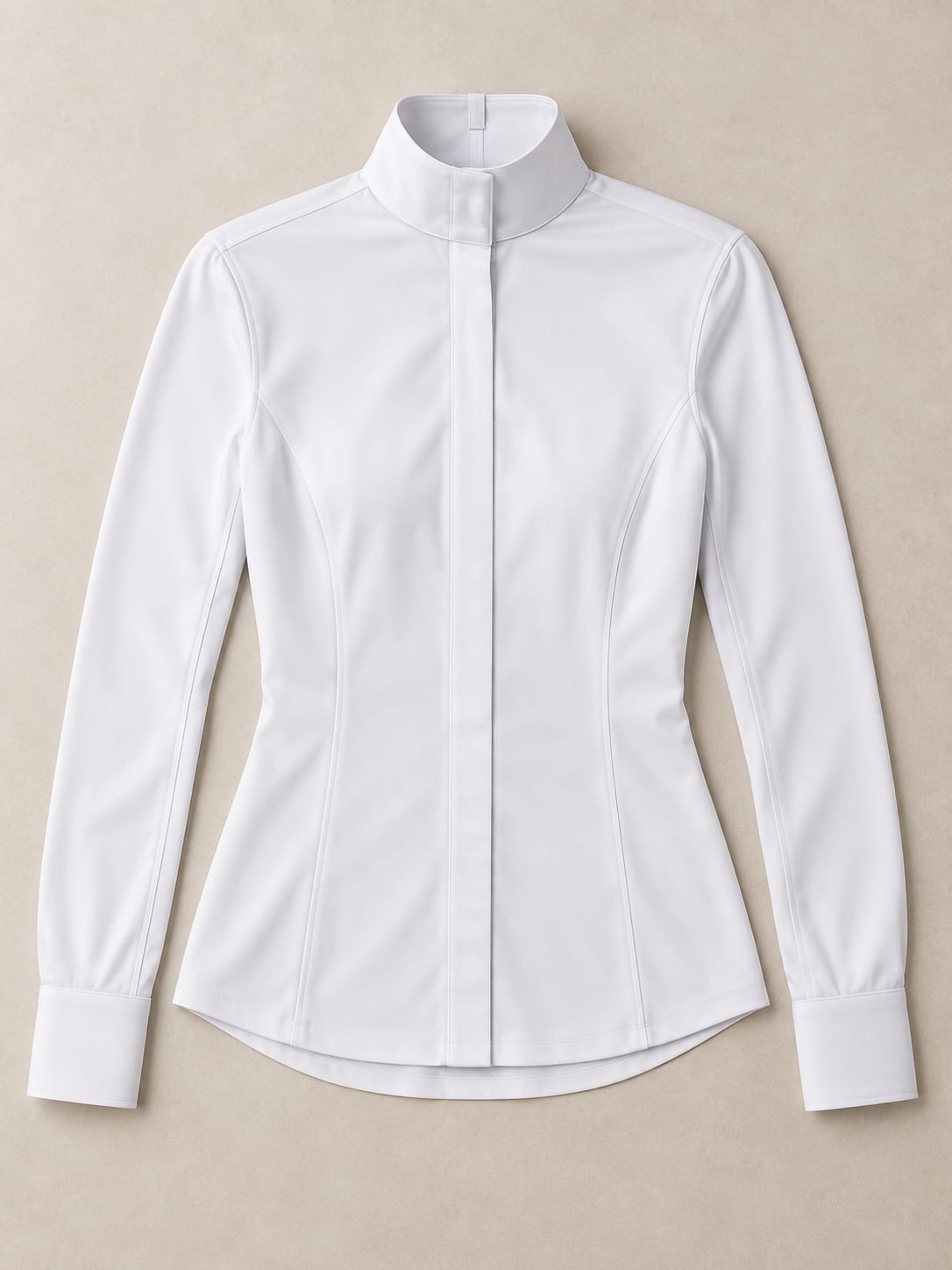
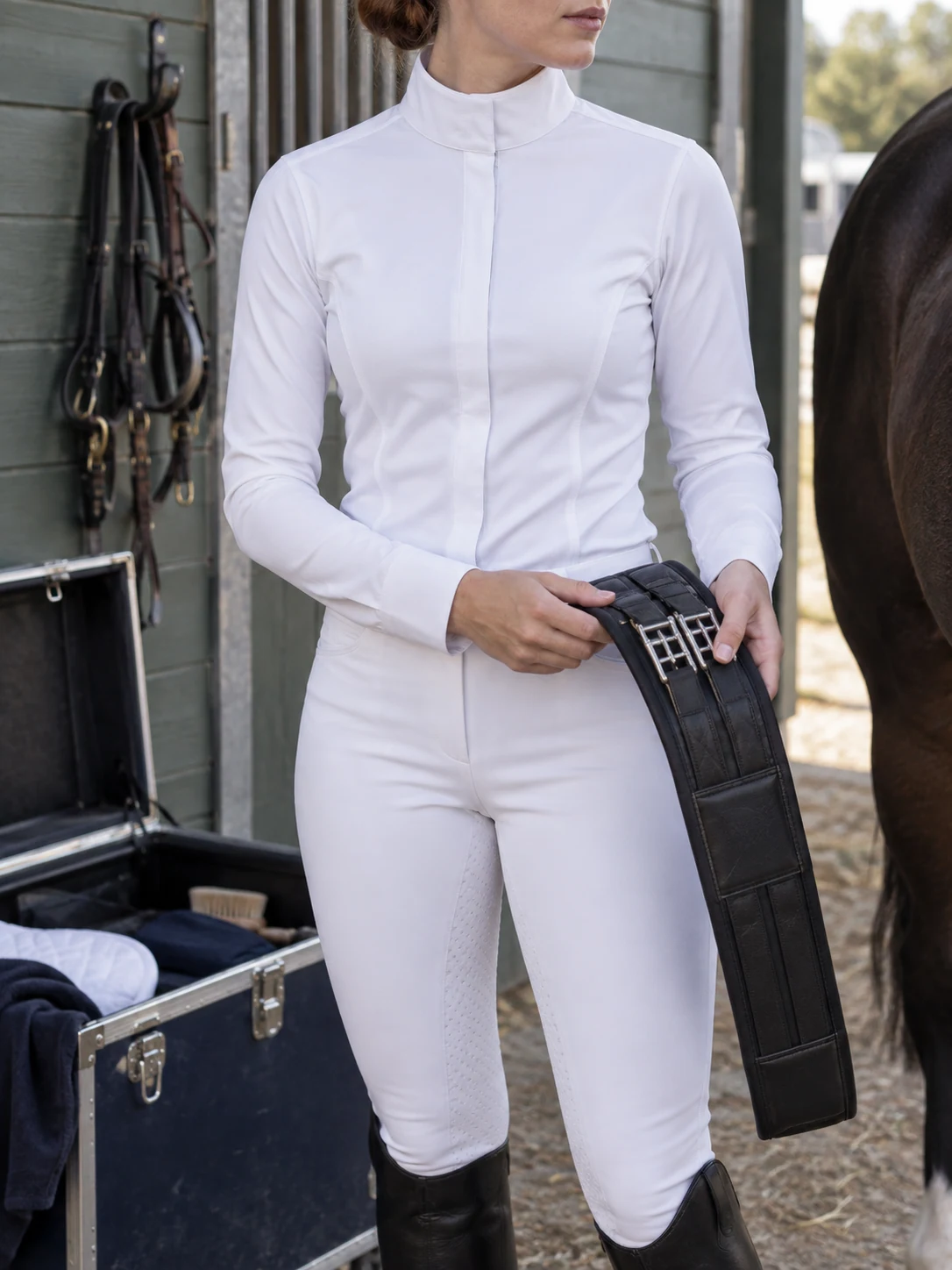
Short-sleeve show shirt:
the private label buying guide.
Private label short-sleeve show shirts for equestrian brands: concealed plackets, formal collars, fabric opacity and sample review. Request an OEM quote.
A development direction for your brand. Final material, construction and performance by specification and sample approval.START WITH
THE RIDER.
For hunter, jumper and warm-weather competition ranges, junior or adult show capsules, and retailers wanting an accessible polished shirt for jacketed or permitted jacket-free classes.
Product development context
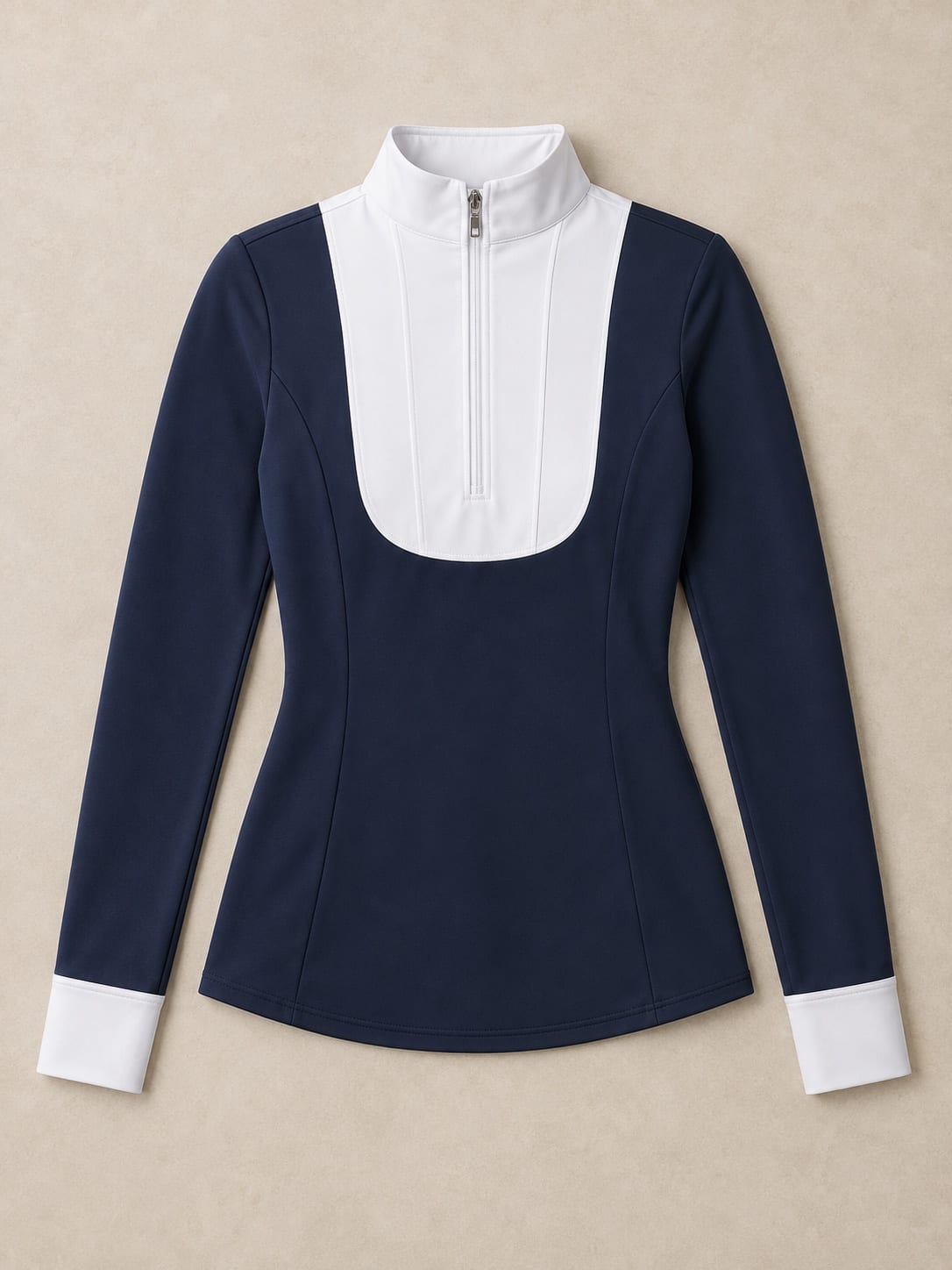
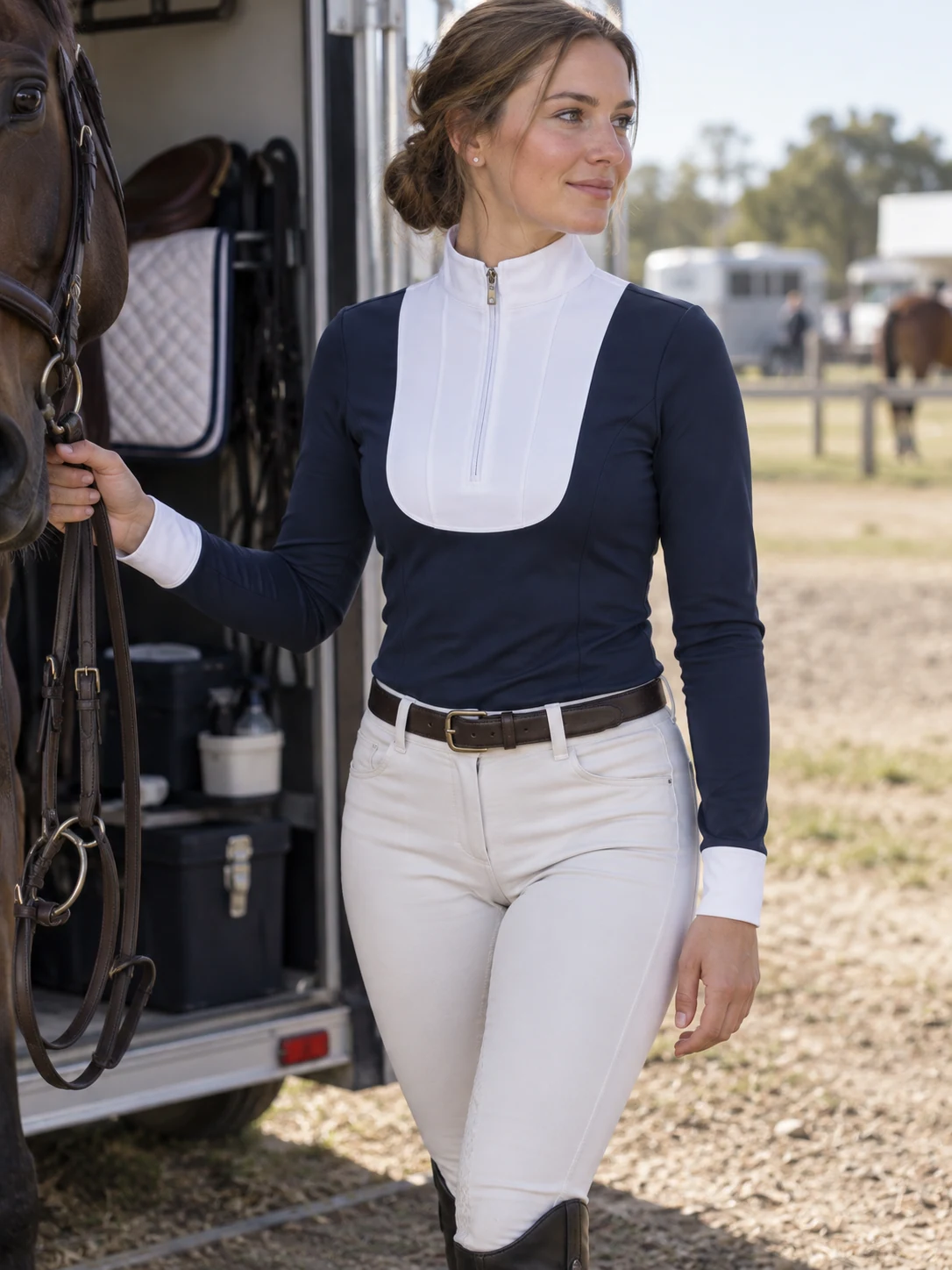
A short-sleeve show shirt must look formal at the collar and jacket opening while managing heat where a competition jacket or vest covers the body. Concealed plackets create a clean face, but stiff tapes, misplaced snaps or a bulky zip can ripple on lightweight fabric. Buyers should set sleeve length and opening around arm movement, define whether the shirt is worn with a jacket, and identify current competition rules for the destination. Breathability and moisture claims should be treated as measurable development requirements, not assumed from a thin fabric.
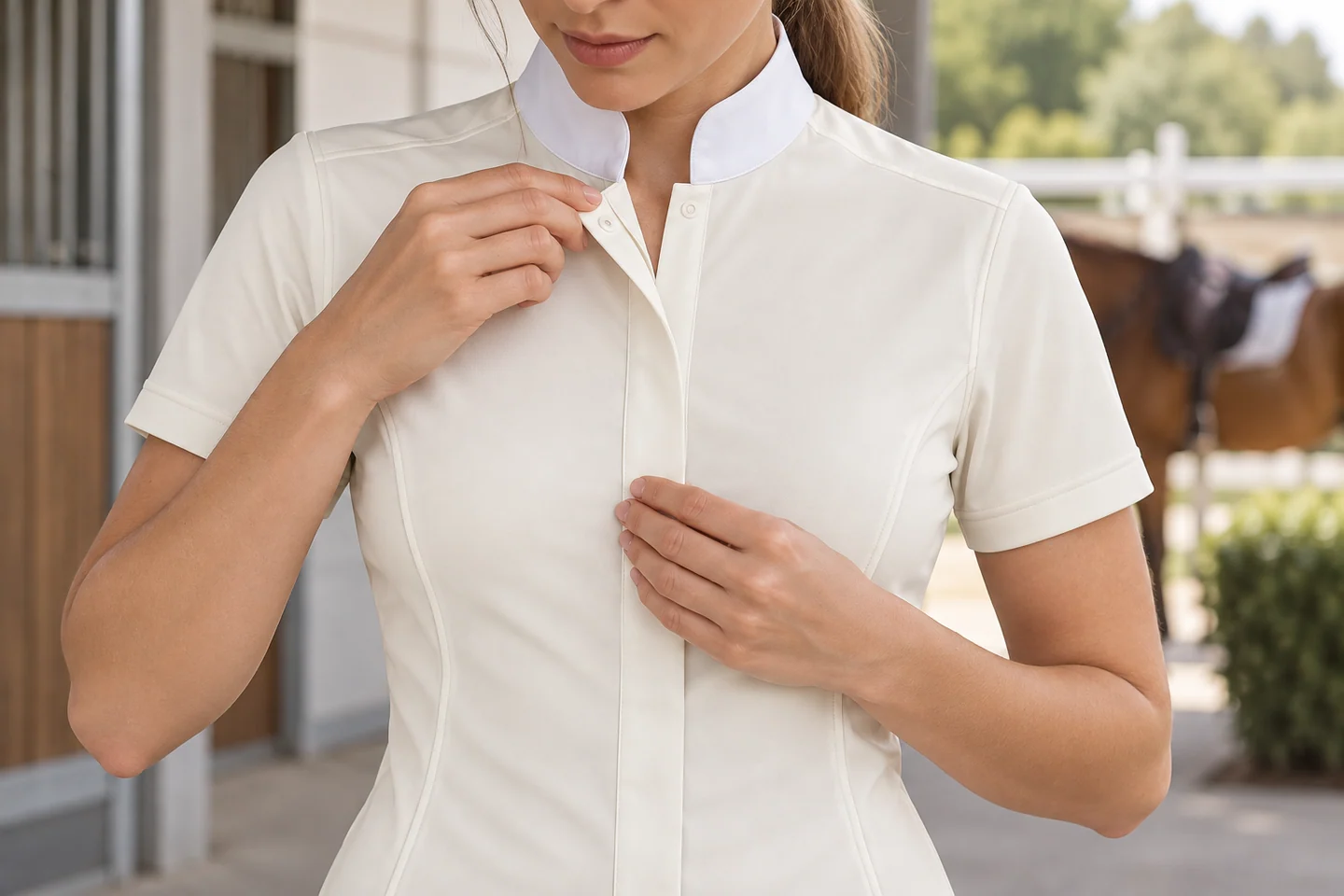
Placket stability
Match closure stiffness to the front fabric and place reinforcement only where needed. The placket should remain flat closed, open easily with one hand and avoid hard points against the sternum when the rider folds forward.
Sleeve mobility
Set cap height, bicep ease and hem circumference for rein position and jacket layering. A tight short sleeve can climb or pinch; an overly loose one may bunch visibly beneath a fitted show jacket.
Competition context
State discipline, governing body, rider level and event type. Check current official rules for sleeves, collar, colour and logos before approval, especially if the shirt may be worn without a jacket in hot-weather exemptions.
THE FABRIC
SETS THE FEEL.
Compare material directions against your rider, climate and care expectations. Request the actual fabric specification and evidence for any performance claim.
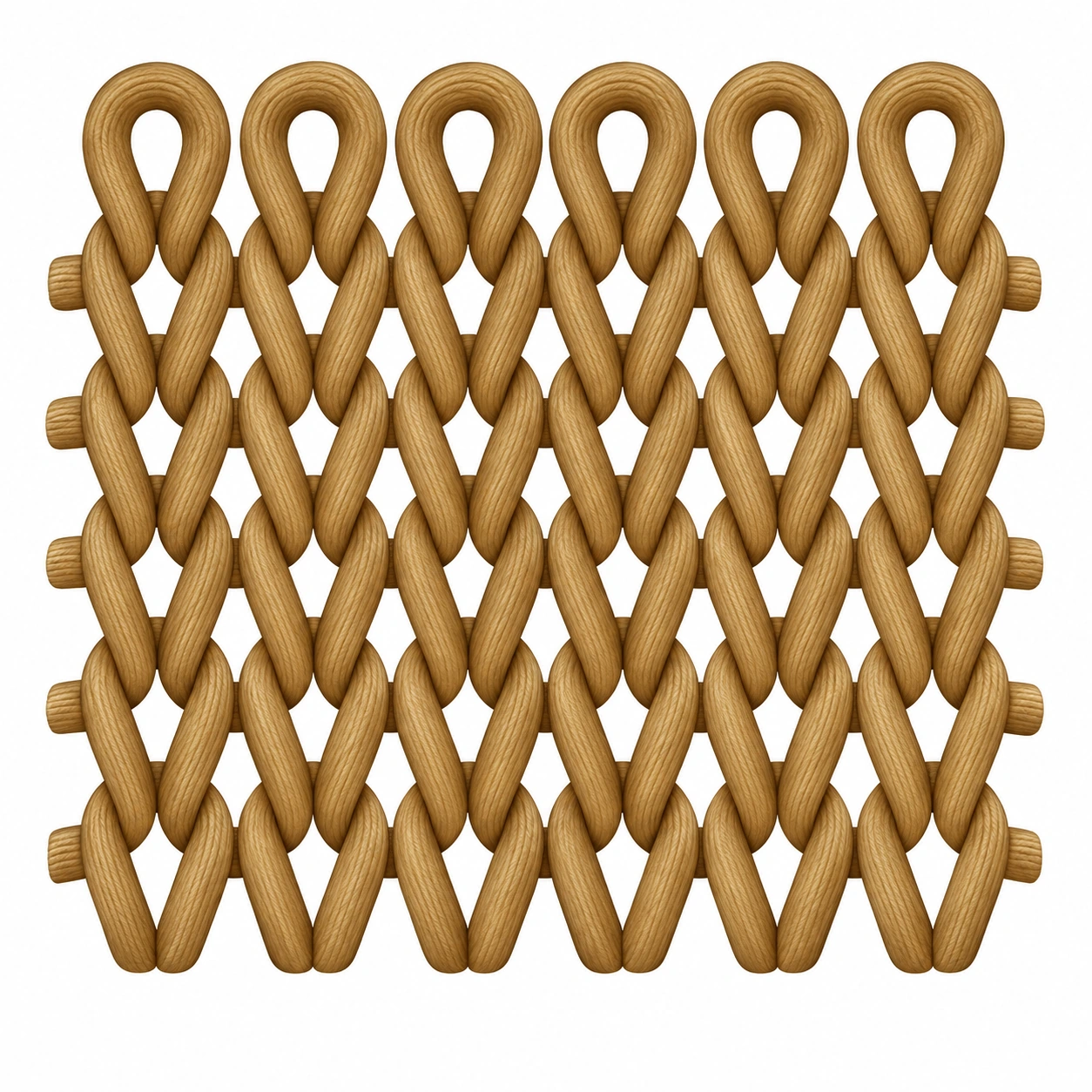
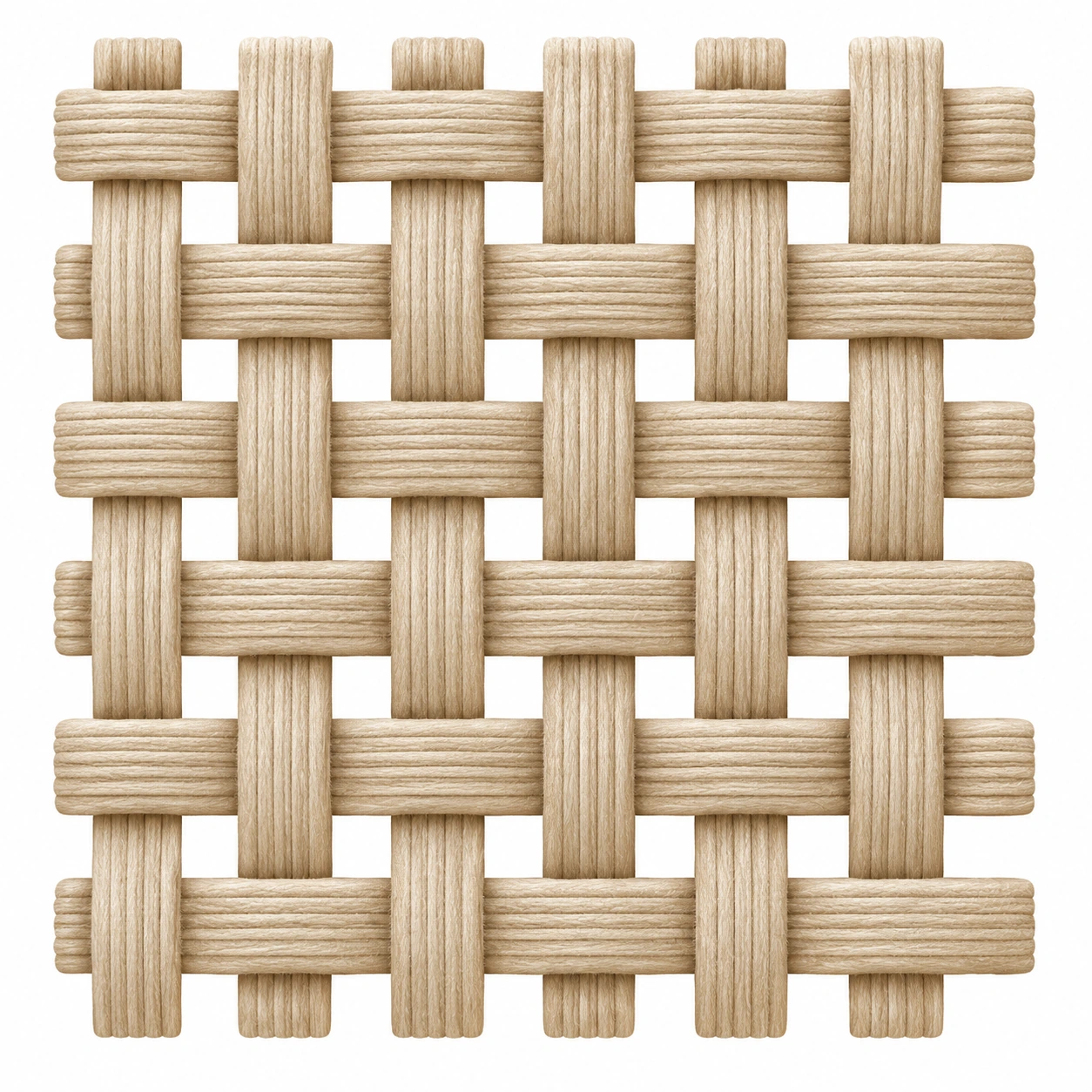
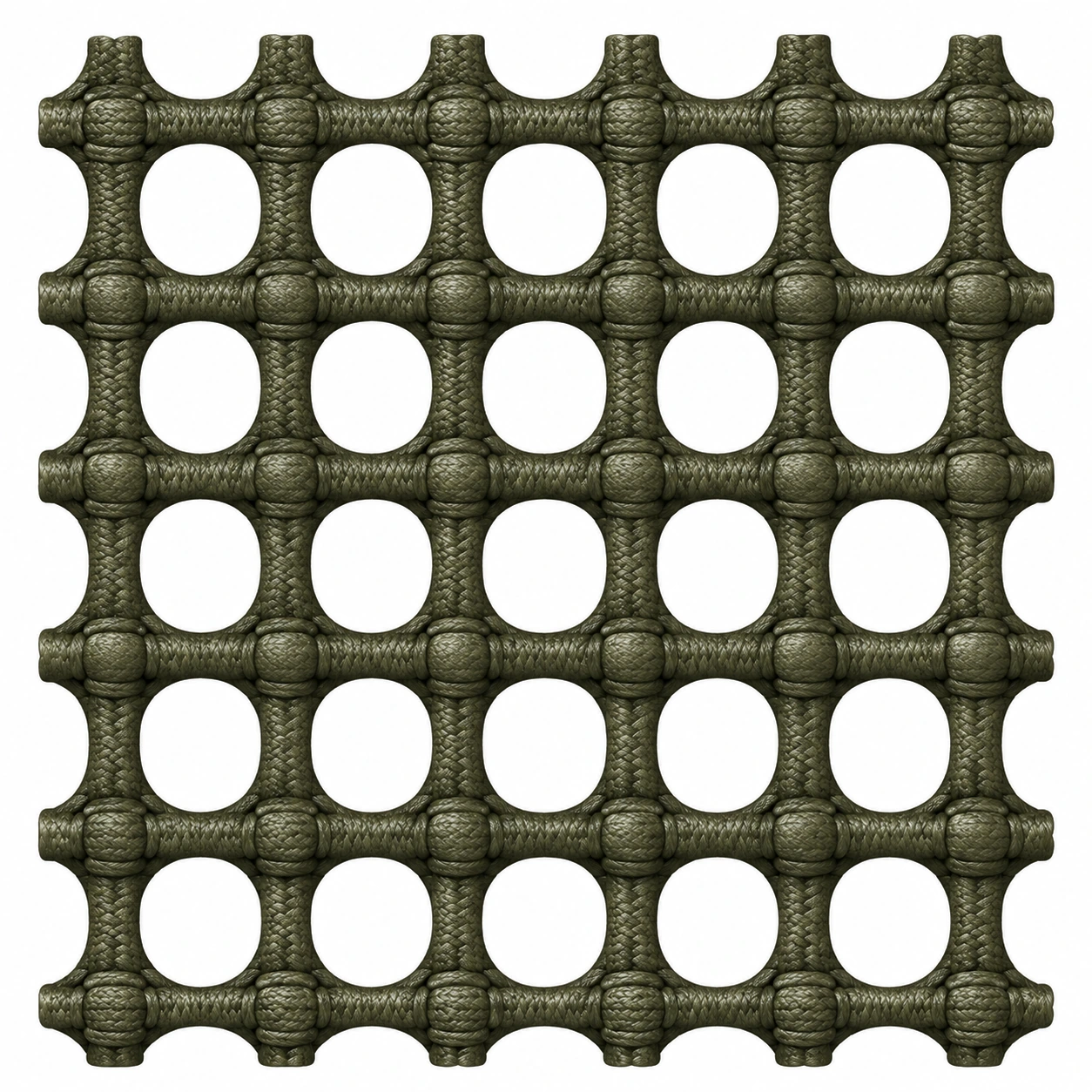
| Material direction | Why consider it | What to verify |
|---|---|---|
| Light stretch competition jersey | A smooth, opaque jersey can support a tailored fit and movement with lower bulk under a jacket. White and pale shades need particular coverage control. | Test production colours for stretch, recovery, dry and wet opacity, pilling, dimensional change, colourfastness and claimed moisture performance. |
| Structured collar material | A slightly firmer compatible fabric or interfacing can help the standing collar remain crisp without making it hot or abrasive. | Assess fused or sewn structure after repeated opening, wear and care for bubbling, edge roll, shrinkage mismatch and skin comfort. |
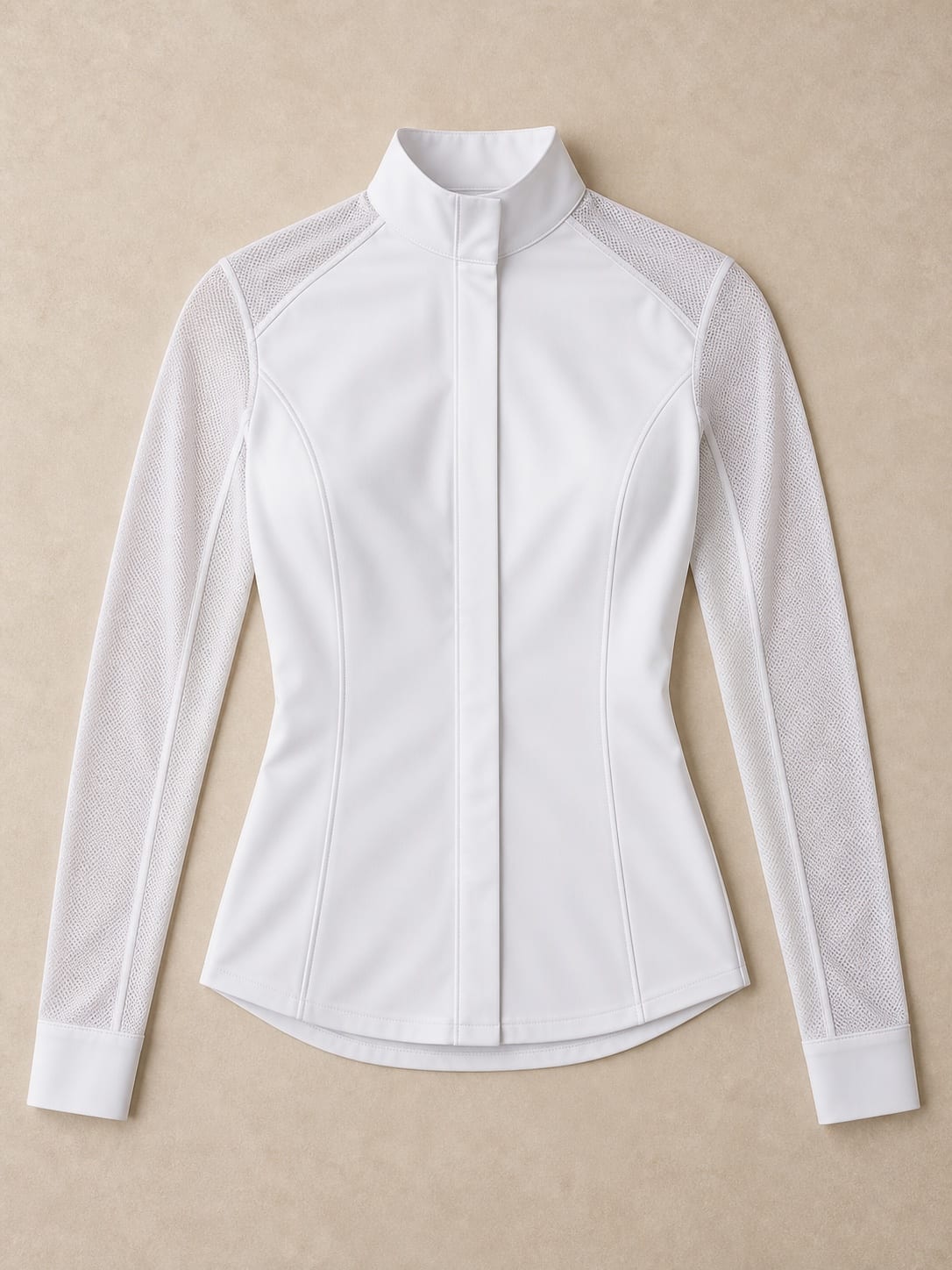
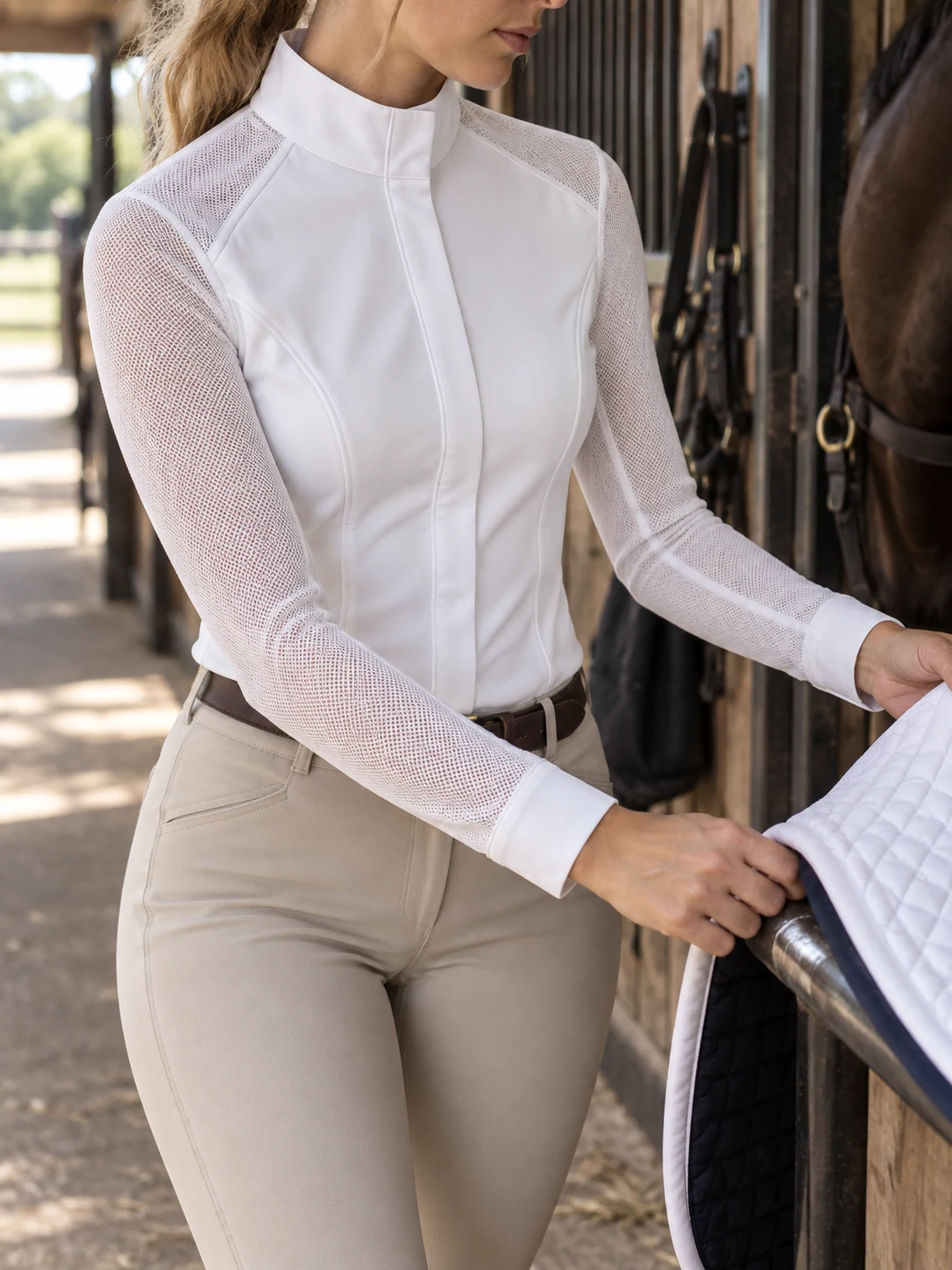
| Soft underarm mesh | A concealed mesh insert can support ventilation beneath the sleeve and jacket while retaining a formal main-body appearance. | Check transparency, seam comfort, stretch matching and snagging, and test it with the intended bra and jacket. |
These are sourcing comparisons, not a list of stocked or certified fabrics. Confirm composition, weight, finish, availability and testing with the material selected for your project.
 A CLOSER LOOK / DEVELOPMENT CONCEPT
IT’S IN
THE DETAILS.
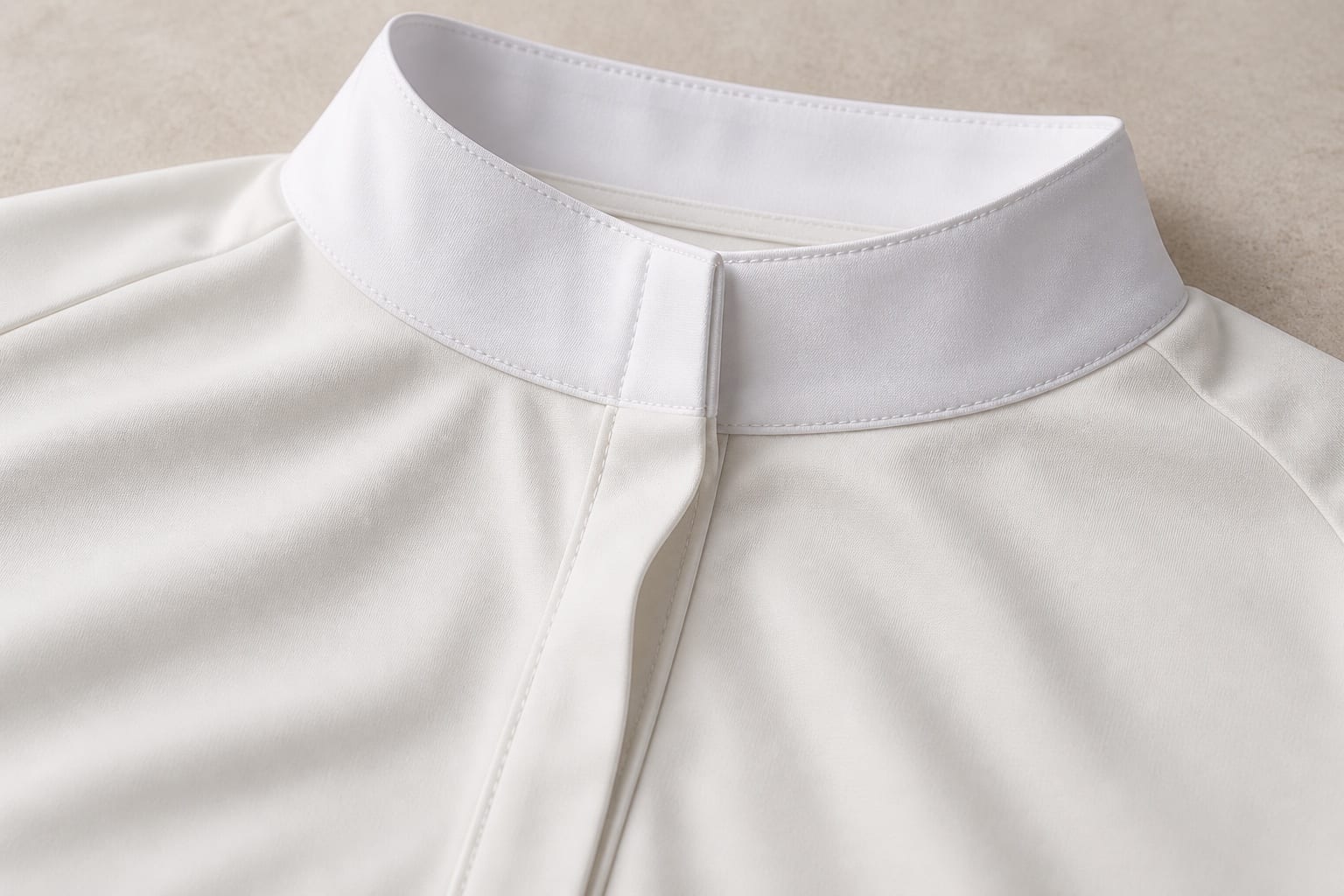
Concealed front
Engineer zip, snaps or buttons with a stable cover, soft reverse and precise top alignment at the collar.
Mobile short sleeve
Shape armhole and sleeve for bent elbows and forward shoulders, keeping the hem smooth beneath a jacket.
Crisp stand collar
Balance support, circumference and closure so the collar stays upright without pressing the throat or chin.
Tuck-stable body
Provide enough length and controlled sweep to remain tucked during mounting, sitting trot and forward reach.
FROM THE BRIEF.
INTO THE WORKROOM.
Competition details need a precise brief: collar shape, front opening and a clean finish under the rider’s jacket.
Explore our factory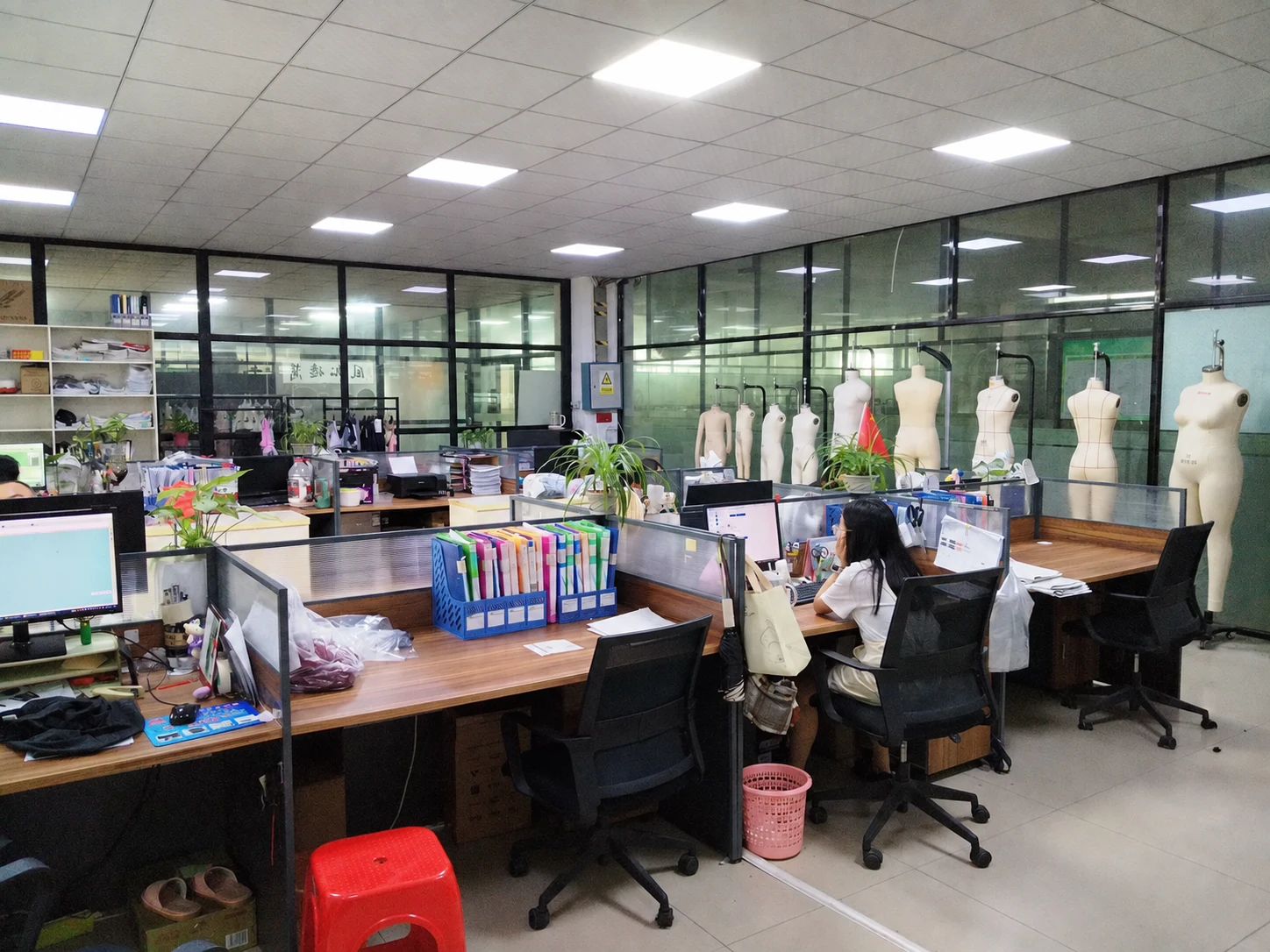
Concealed front
Engineer zip, snaps or buttons with a stable cover, soft reverse and precise top alignment at the collar.
Carry this into approval Factory views show our working environment. Your garment follows its agreed specification and sample.GET THE
RIGHT FIT.
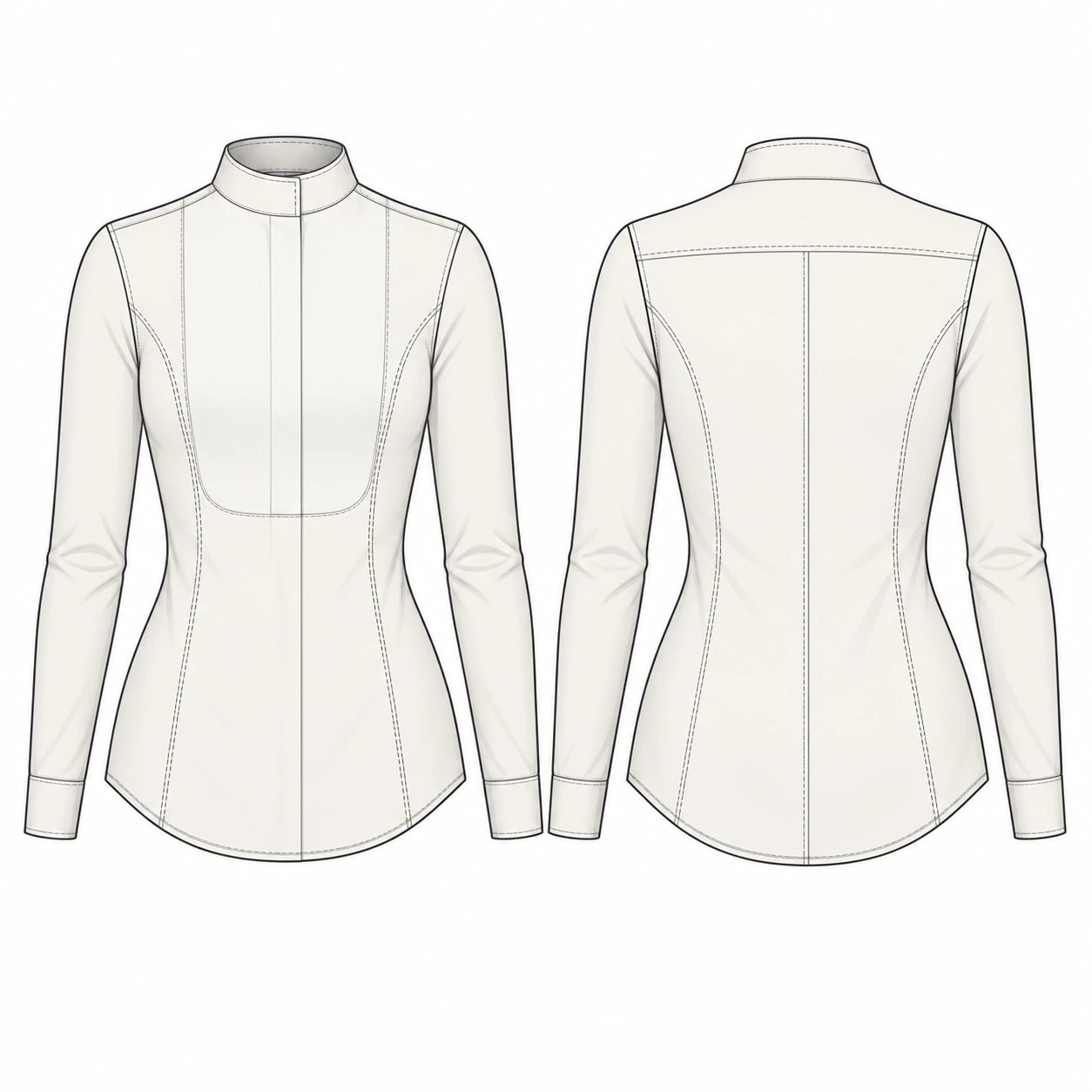
- AChest
- BShoulder span
- CSleeve length
- DBody length
A size label is only the beginning. Agree the measurement method, review the garment in use and keep the approved fit record with your specification.
Your fit-session checklist
Record the size worn, body measurements, intended underlayers and every proposed correction with the dated sample.
Note the size worn, body measurements, intended underlayers and each proposed correction. Recheck the affected measurement after a revision; confirm the size breakdown for each style and colour before bulk.
MAKE IT
RECOGNISABLY YOURS.
Use the product’s construction to guide decoration and finishing. Ask for placement, colour and material approval on the relevant sample.
Small details.
One identity.
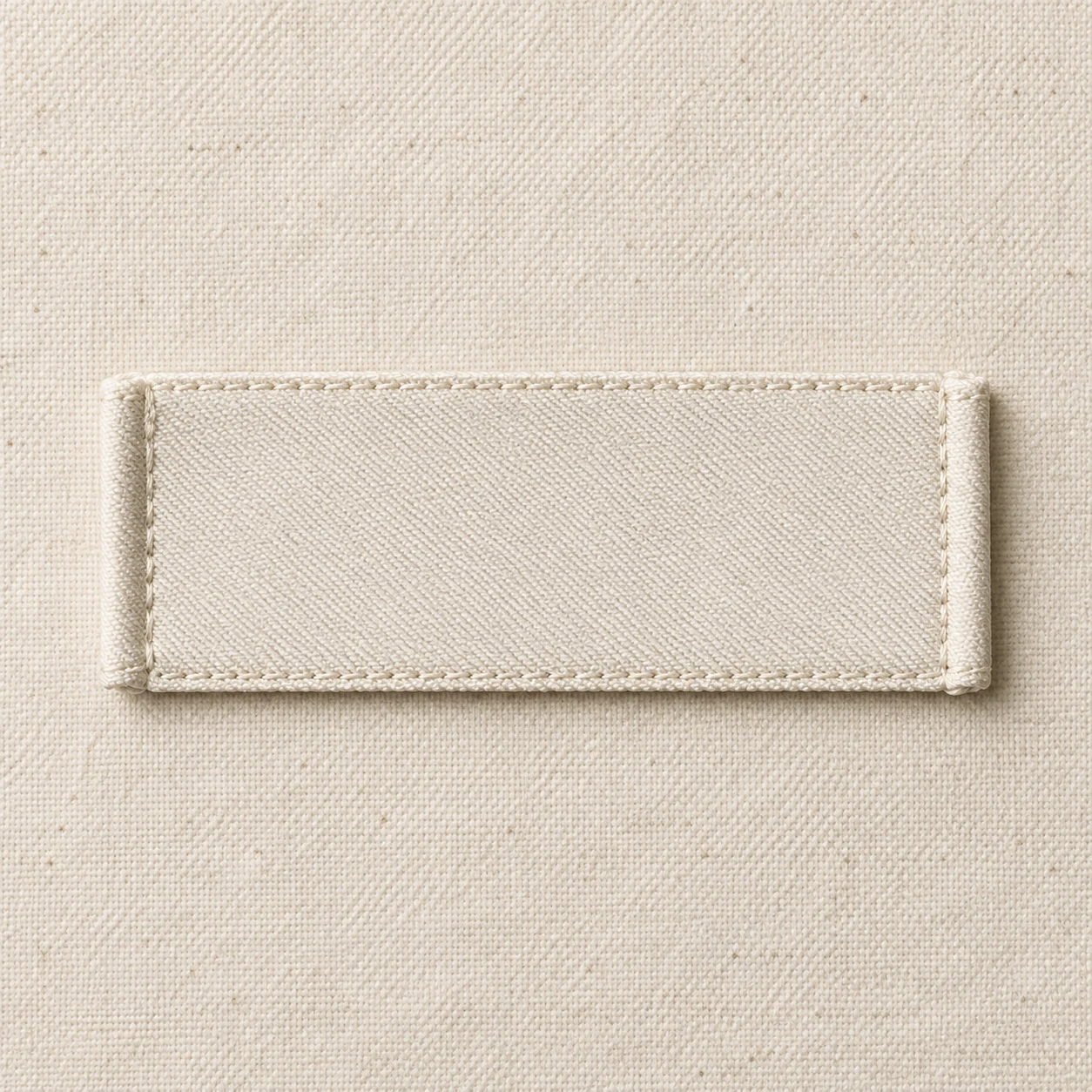
Folded edges · fine weave
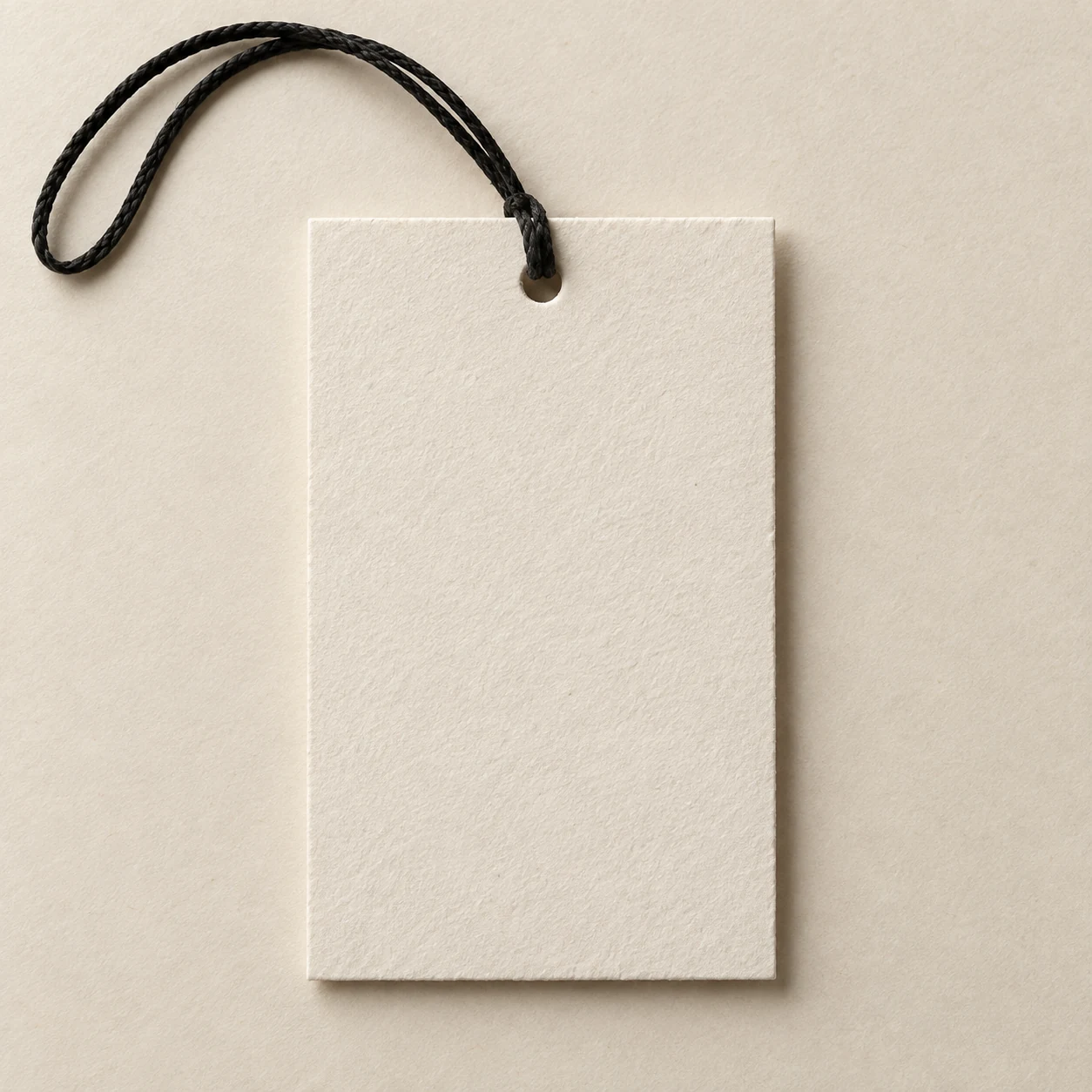
Textured stock · cord attachment
Raised edge · stitched placement
Material mockups with a live wordmark study. Print, weave, colour matching and placement are confirmed on your physical sample.
Closure selection
Choose concealed zip, snaps or buttons around appearance, security and care; approve puller, tape, top stop and opening length physically.
Collar branding
Keep artwork size and position within current rule limits for the named market, verifying comfort and visibility with the jacket.
Vent placement
Use underarm or back mesh where rules and coverage allow, documenting panel boundaries and the claims that apply to each material.
White and colourways
Approve show white separately from navy or seasonal colours because opacity, trim matching and colourfastness can differ substantially.
APPROVE THE DETAIL.
THEN THE ORDER.
The first sample helps you make decisions. Define review conditions and acceptance criteria before you compare the result.
Review the short-sleeve show shirt sample
Sampling takes 7–10 working days from the agreed start. Record each decision against the dated sample before bulk approval.
Rider, material direction, measurements and artwork.
DEFINE THE STARTTurn the agreed direction into a garment to review.
7–10 WORKING DAYSReview fit, finish and changes. Confirm the final specification.
REVISE IF NEEDEDProceed with agreed quantities, colours, labels and packing.
30–45 WORKING DAYSA shared development direction
Bring reference garments, your rider profile, target colours and any artwork. We turn these into the measurements, materials and construction questions that the sample needs to resolve.
Sample feedback can return to development. Revisions and transit are planned separately; timing begins from the agreed specification and start date.

KEEP THE APPROVAL.
WITH THE ORDER.
One agreed reference for the workroom: the dated sample, its specification and your confirmed order breakdown.
Sample decisions
- Closure cycling
Open and close the placket repeatedly with one hand, then inspect alignment, tape wave, cover roll and top-end comfort.
- Jacket fit
Wear beneath the intended show jacket while riding, checking sleeve bunching, collar overlap, front visibility and hem retention.
- Hot-session comfort
Use for a representative warm ride and cool-down, recording cling, chafe and ventilation perception without treating observations as test claims.
Style, colour & size allocation
Confirm each style and colour separately, with the size allocation attached. The minimum is 100 pieces per style, per colour.
Labels, packing & timing
Agree label artwork, packing instructions and the production start. Bulk production takes 30–45 working days from the confirmed start; revisions and transit are planned separately.
A CLEARER BRIEF.
A MORE USEFUL QUOTE.
Price follows an agreed product, quantity and delivery scope. Use these inputs to compare proposals on the same basis.
Concealed closure
Fine zips, snaps, guards, reinforcement and cover alignment add trims and sewing time.
Structured collar
Multiple layers, interfacing and precise top closure increase materials and operations.
Mesh inserts
Secondary fabric adds minimums, shaped pieces, seams and transparency or colour approvals.
White opacity
Higher-cover materials and coordinated pocket-free internal layers may narrow sourcing choices.
Bring these six things
Planning baseline: 100 pieces minimum per style, per colour. Sampling takes 7–10 working days; bulk production takes 30–45 working days from the agreed start.
100 pieces minimum per style, per colour. State each colour quantity separately; confirm your proposed size allocation.
GOOD QUESTIONS.
BETTER DECISIONS.
Product-specific sourcing questions to resolve before sampling.
There is no universal answer. A fine zip offers continuous closure; snaps or buttons create different handling and appearance. Compare security, stiffness, wash response and rider comfort on the proposed fabric before choosing.
Rules vary by discipline, federation, rider category and event, including possible hot-weather provisions. Check the current official rulebook for the exact competition and approve the shirt around that use rather than claiming universal compliance.
Common contributors include stiff tape, incompatible interfacing, differential shrinkage, excess seam tension and a front pattern that is too tight. Review the closed sample before and after care, both standing and in riding posture.