 REINFORM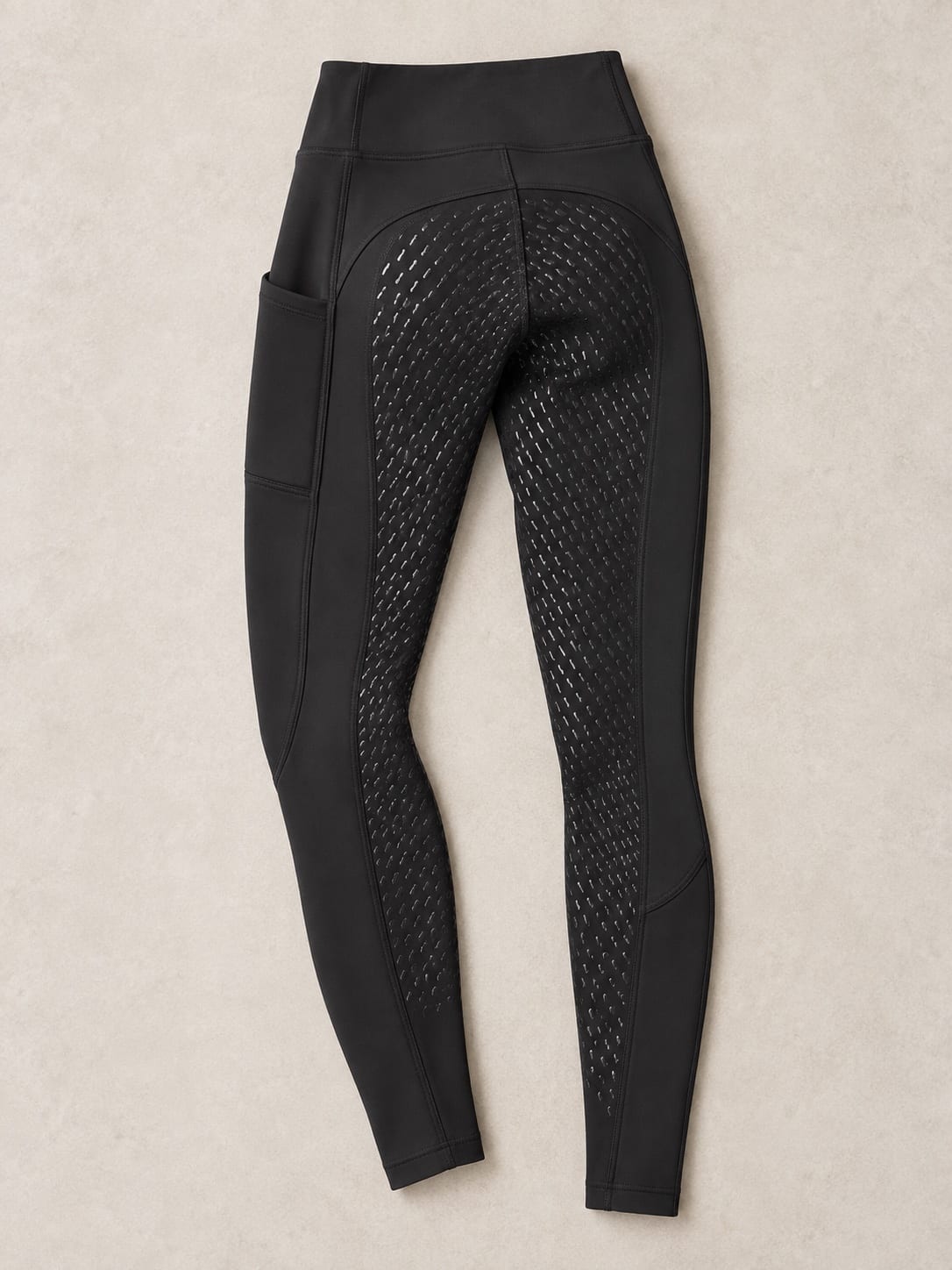
Hold the Waist, Free the Rider
High-rise full-grip riding tights:
the private label buying guide.
Private label high-rise full-grip riding tights for equestrian brands: waist recovery, opacity, phone pockets and silicone grip sampling. Request an OEM quote.
A development direction for your brand. Final material, construction and performance by specification and sample approval.START WITH
THE RIDER.
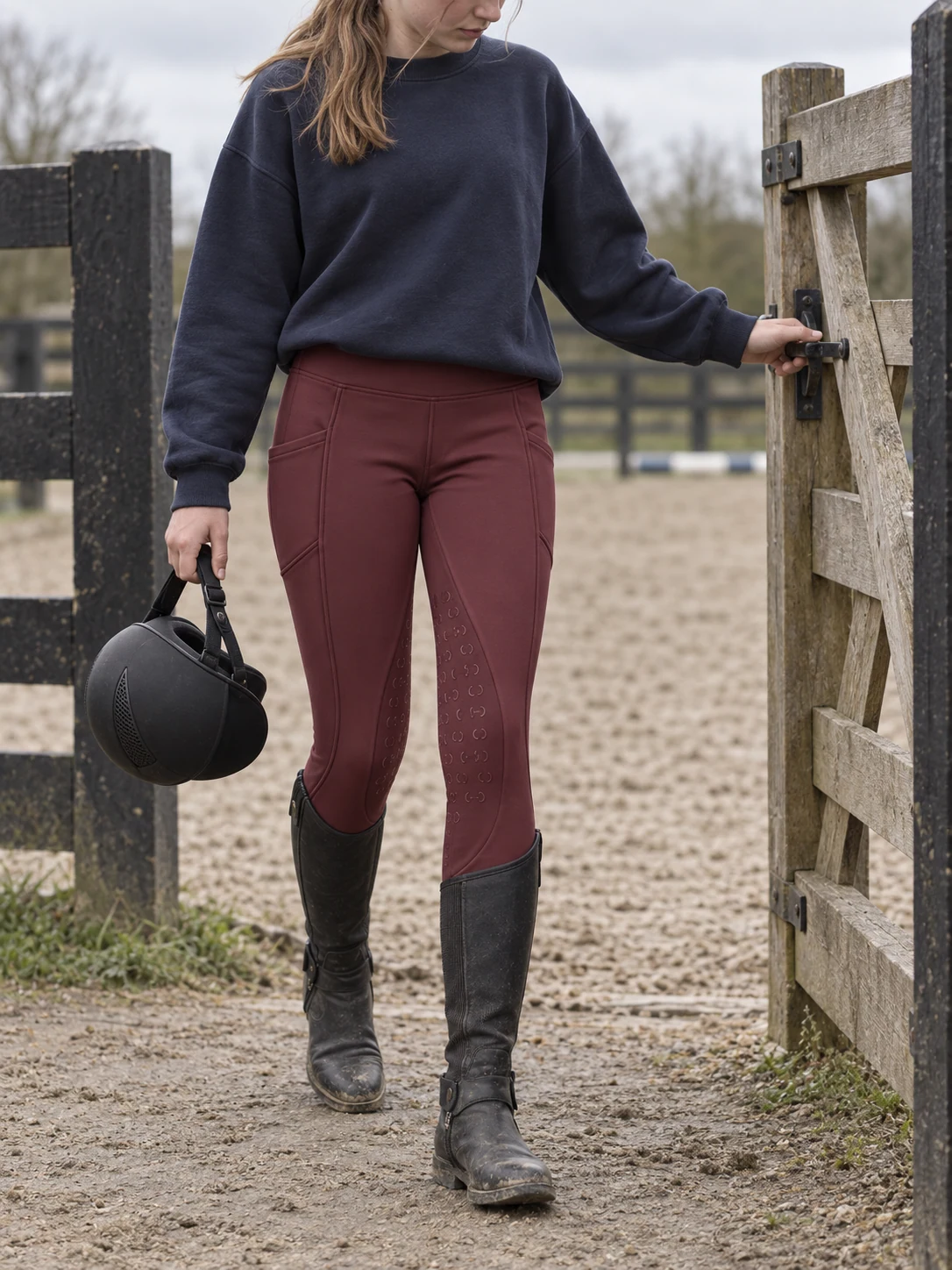
For direct-to-consumer riding brands, dressage and schooling collections, and retailers seeking an easy pull-on hero style with athletic presentation and full-seat contact.
Product development context
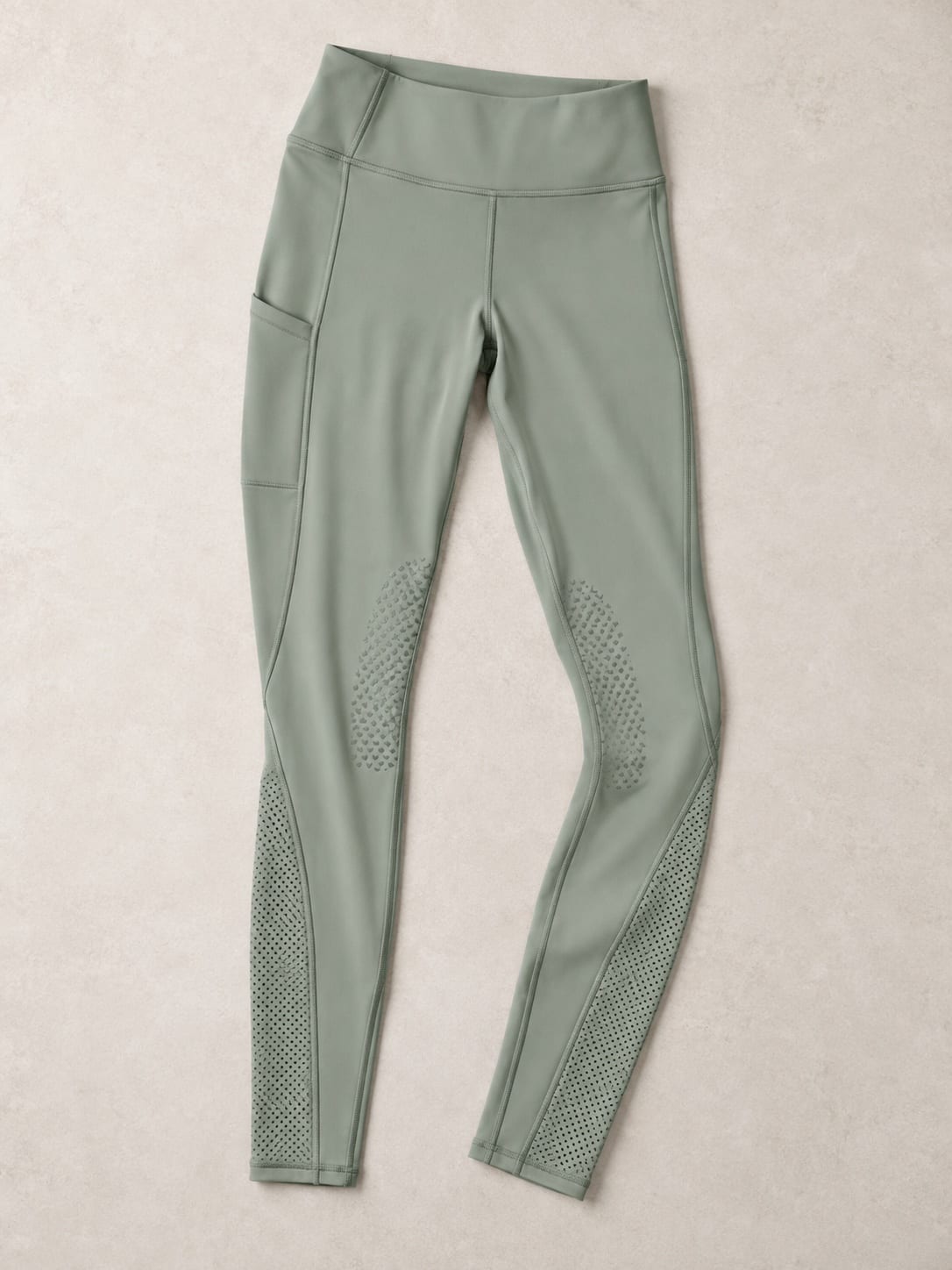
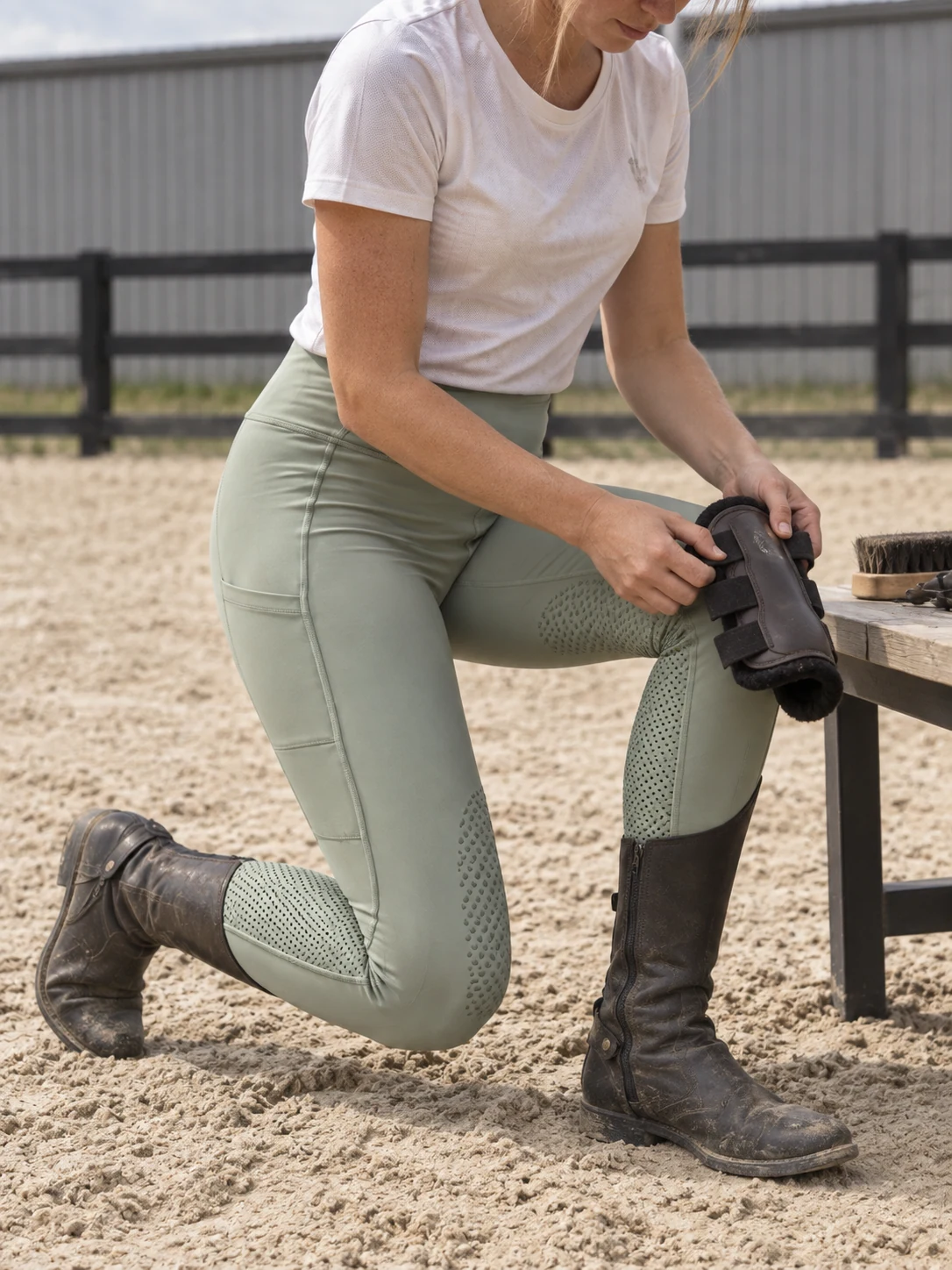
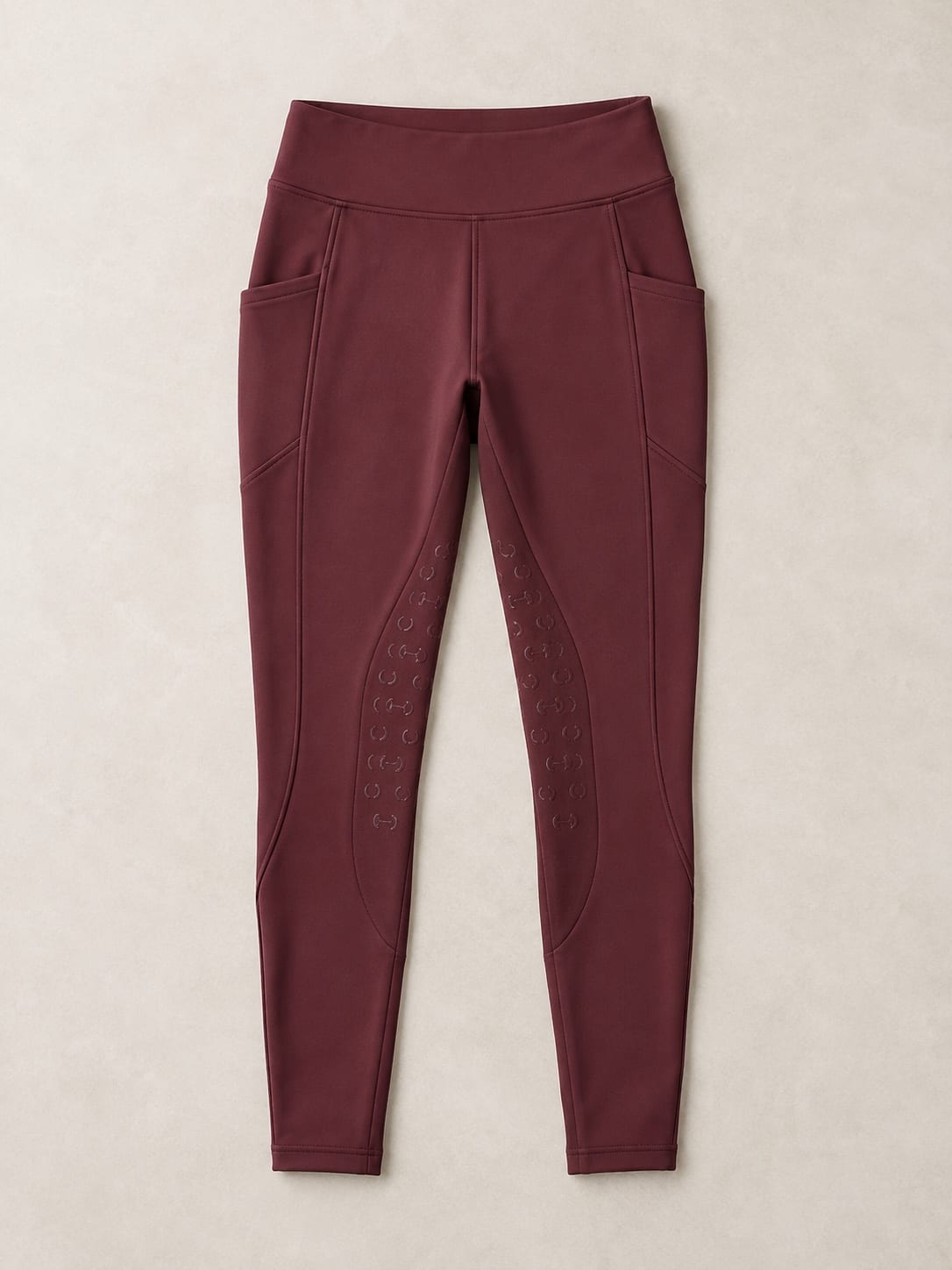
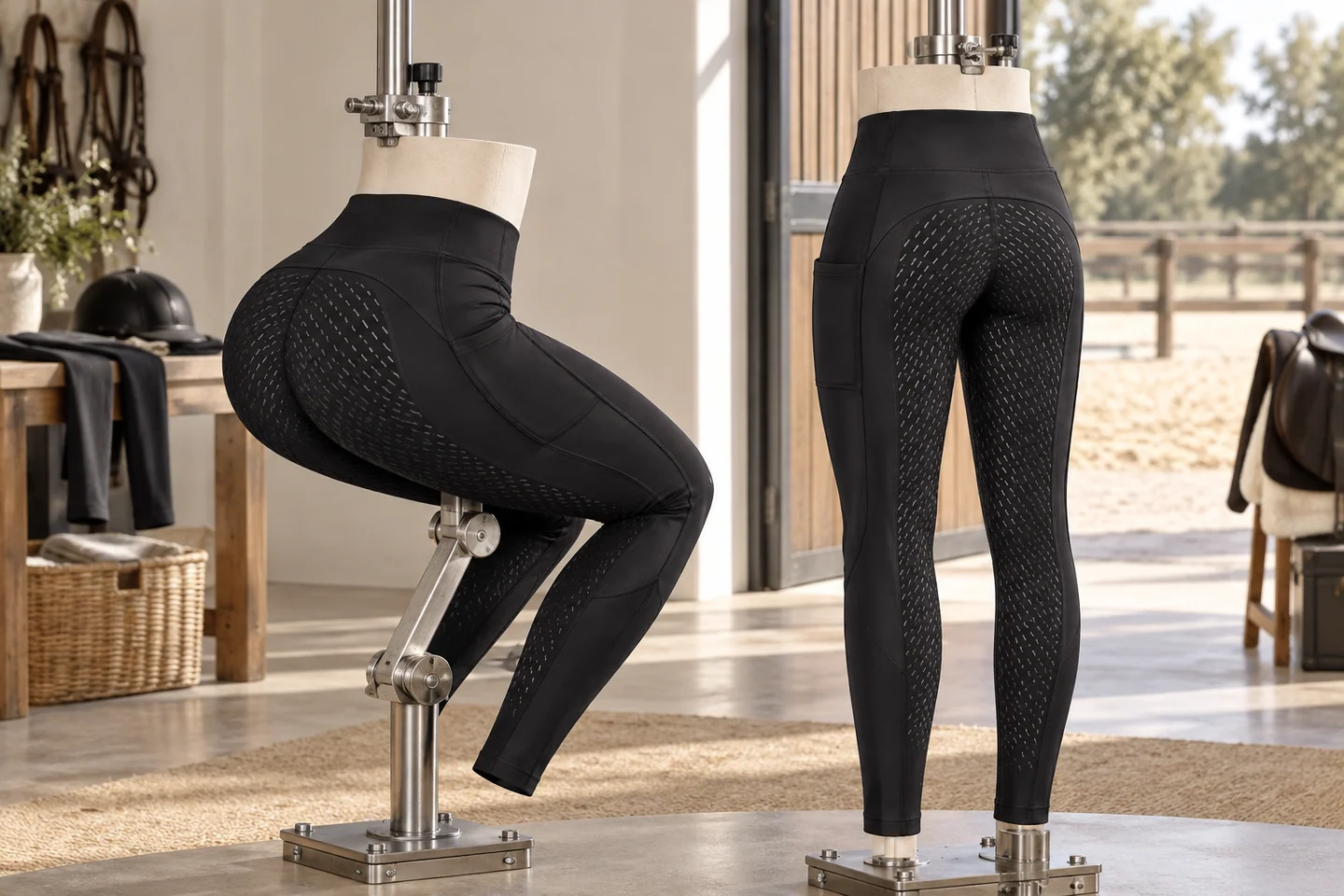
A high-rise riding tight is judged by what happens after an hour in the saddle: whether the waist stays up, the seat remains opaque, seams avoid hot spots and a loaded phone stays controlled. Full-grip coverage adds another material behaviour across the most stretched part of the garment. Buyers should define rise by body landmark and finished measurement, not the word high alone. The development brief should connect waistband depth and recovery, gusset shape, seam route, grip density, pocket position and the compression sensation expected by the target customer.
Waistband recovery
Define waistband height, top-edge circumference and stretch ratio at the sample size. A deep band can still roll or slide if recovery, lining direction or seam placement is wrong, so assess it through mounting, posting and repeated bending.
Opacity under strain
Evaluate the darkest and lightest proposed colours at the seat, gusset and pocket edge while fully stretched. The appearance depends on fabric density, dye, pattern reduction and seam allowance, making garment-level approval more reliable than a hand swatch.
Grip as a panel
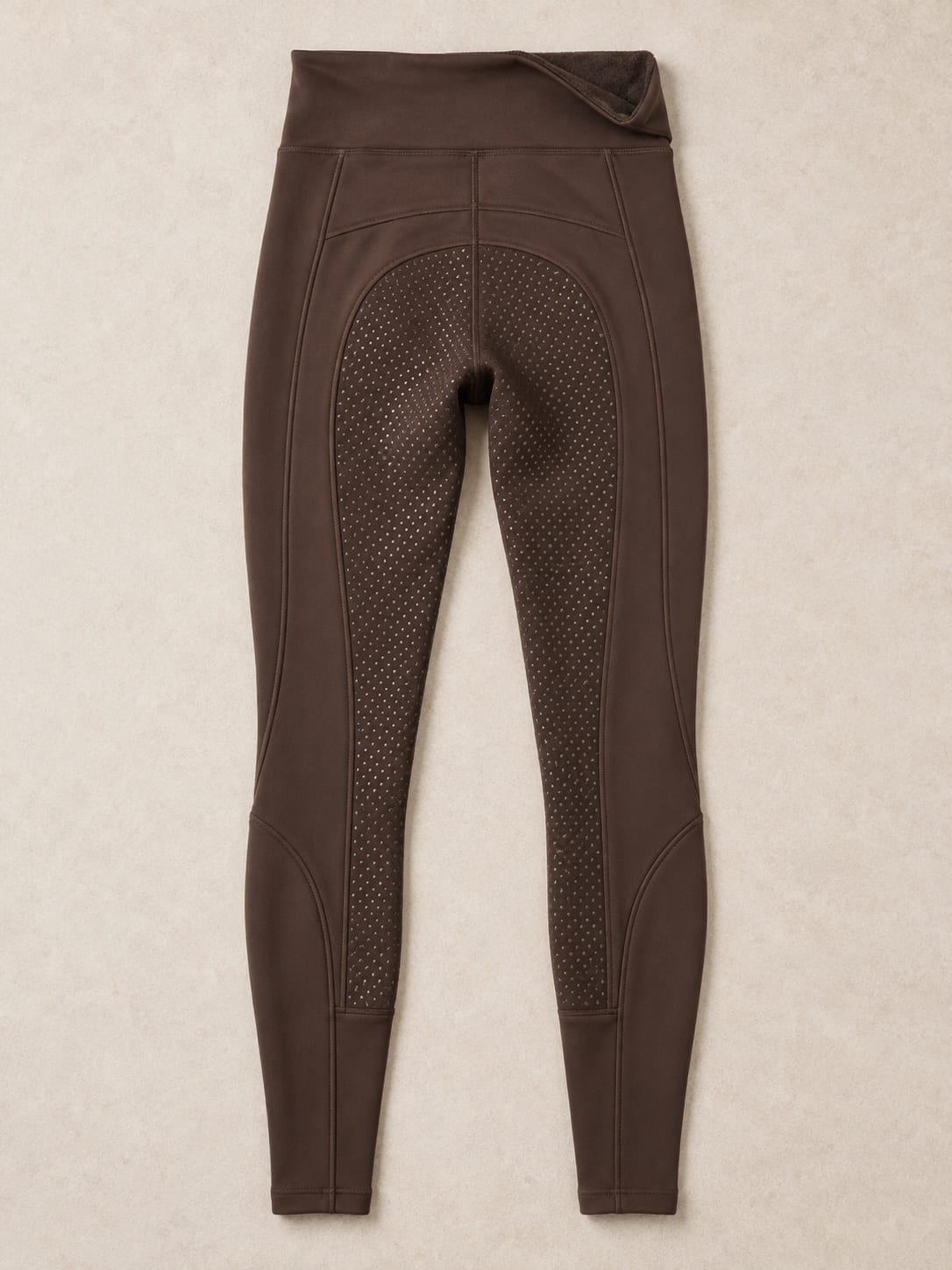
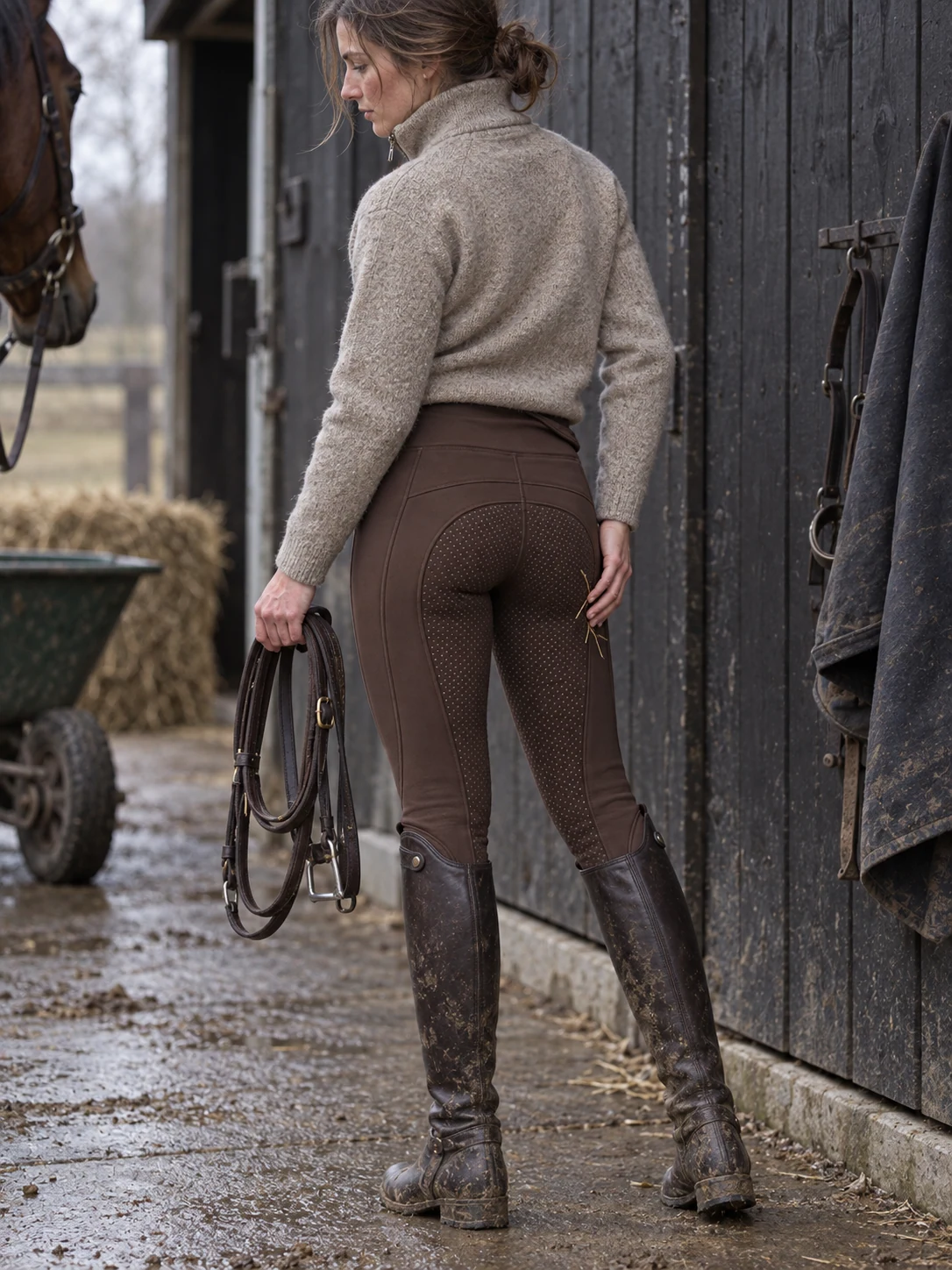
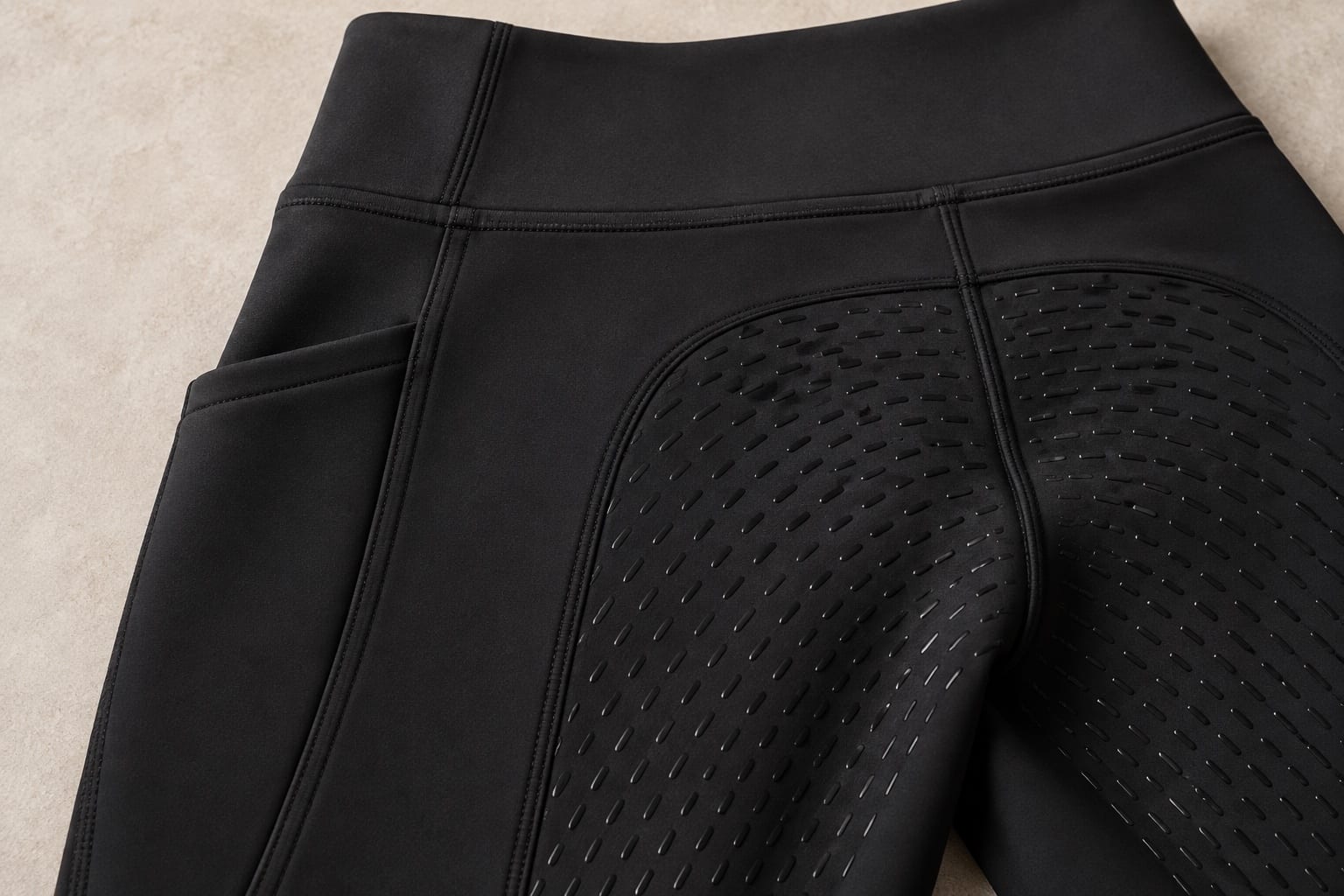
Treat full-seat printing like a functional zone with defined edge clearance, coverage and flex. Dense motifs can restrict drape or create a board-like feel; sparse motifs may not deliver the intended contact. Approve by riding, not touch alone.
THE FABRIC
SETS THE FEEL.
Compare material directions against your rider, climate and care expectations. Request the actual fabric specification and evidence for any performance claim.
| Material direction | Why consider it | What to verify |
|---|---|---|
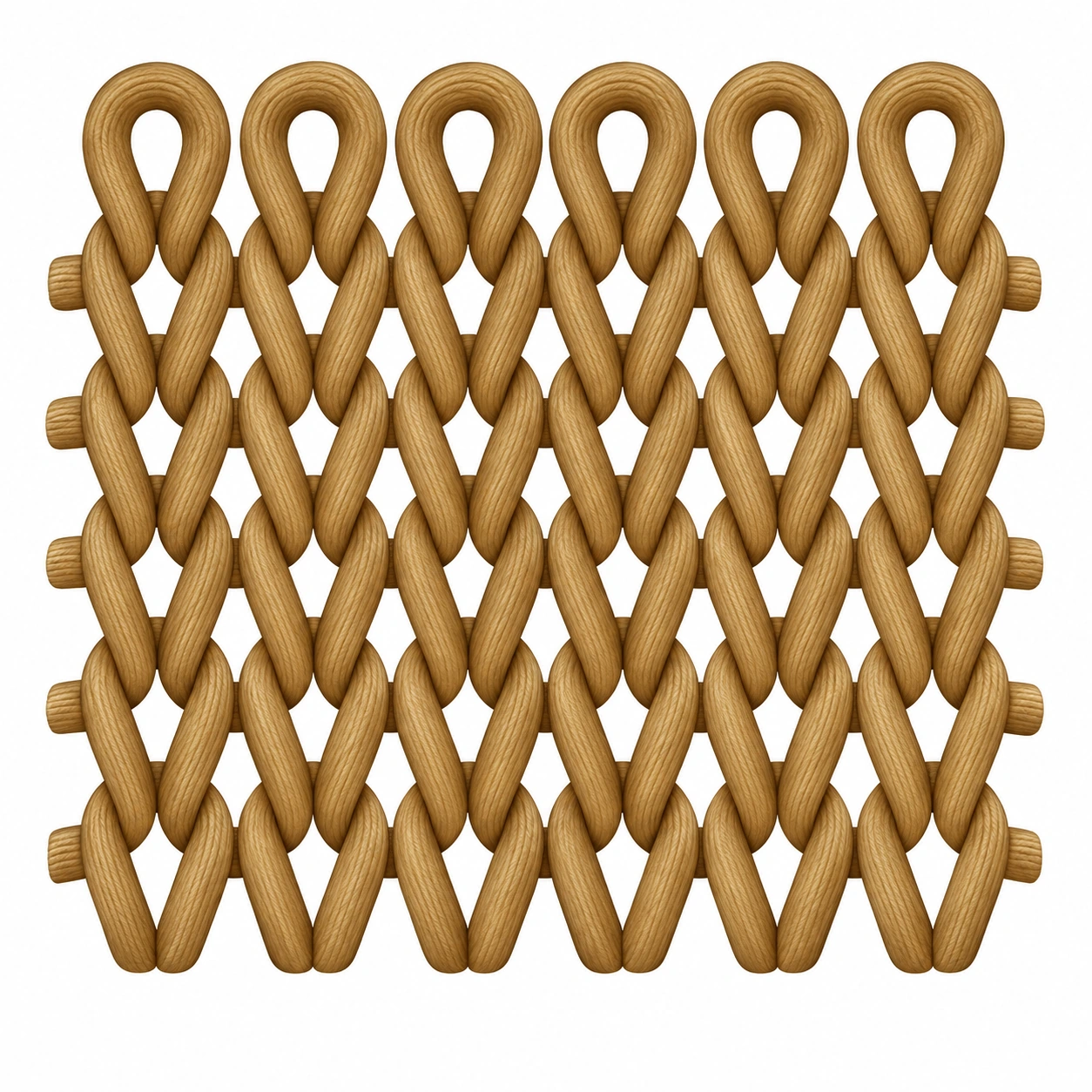
| High-recovery stretch knit | A dense multi-direction stretch knit supports pull-on dressing, close fit and repeated hip flexion. Fibre blend and weight should be selected against hand, climate, opacity and compression goals rather than assumed from appearance. | Request material documentation and test each production colour for stretch, recovery, pilling, abrasion, dimensional change, colourfastness and opacity. |
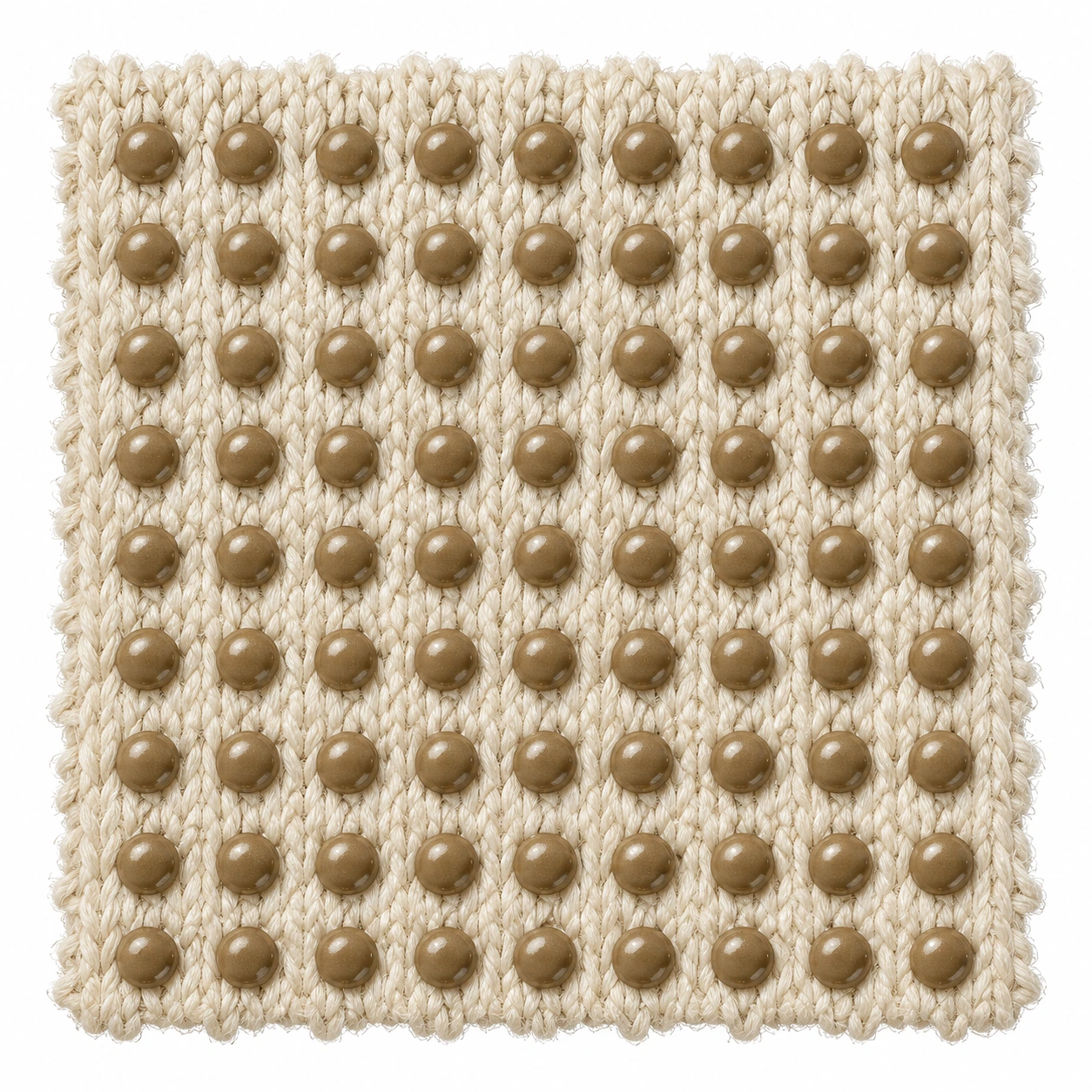
| Silicone full-seat print | Printed grip keeps the garment lightweight and allows a branded repeat, but ink chemistry, cure, deposit and coverage affect tack and flexibility. | Approve physical strike-offs on the selected knit, then wash and wear-test for adhesion, cracking, blocking, staining and a balanced saddle feel. |
| Waistband support layer | A self-fabric double layer or compatible internal support can change compression and recovery without an external closure. It must stretch enough for dressing and recover afterward. | Measure waistband extension and return on the assembled sample, inspect rolling and delamination risk, and confirm all layers tolerate proposed care. |
These are sourcing comparisons, not a list of stocked or certified fabrics. Confirm composition, weight, finish, availability and testing with the material selected for your project.
 A CLOSER LOOK / DEVELOPMENT CONCEPT
IT’S IN
THE DETAILS.
Shaped high waistband
Contour front and back heights around the target body, controlling top-edge tension so the band stays level without digging.
Saddle-safe seam map
Move raised seams away from inner-thigh and seat contact, using flat or low-profile construction where it suits the chosen fabric.
Integrated gusset
Shape the gusset for hip opening and seated coverage, checking seam intersections for bulk and the effect on grip layout.
Anchored phone pockets
Secure pocket bags into stable seams and size them to the stated device so weight does not pull the leg panel downward.
FROM THE BRIEF.
INTO THE WORKROOM.
Fit and stretch have to work together. Use the chosen knit to resolve the waistband, seam route and contact areas.
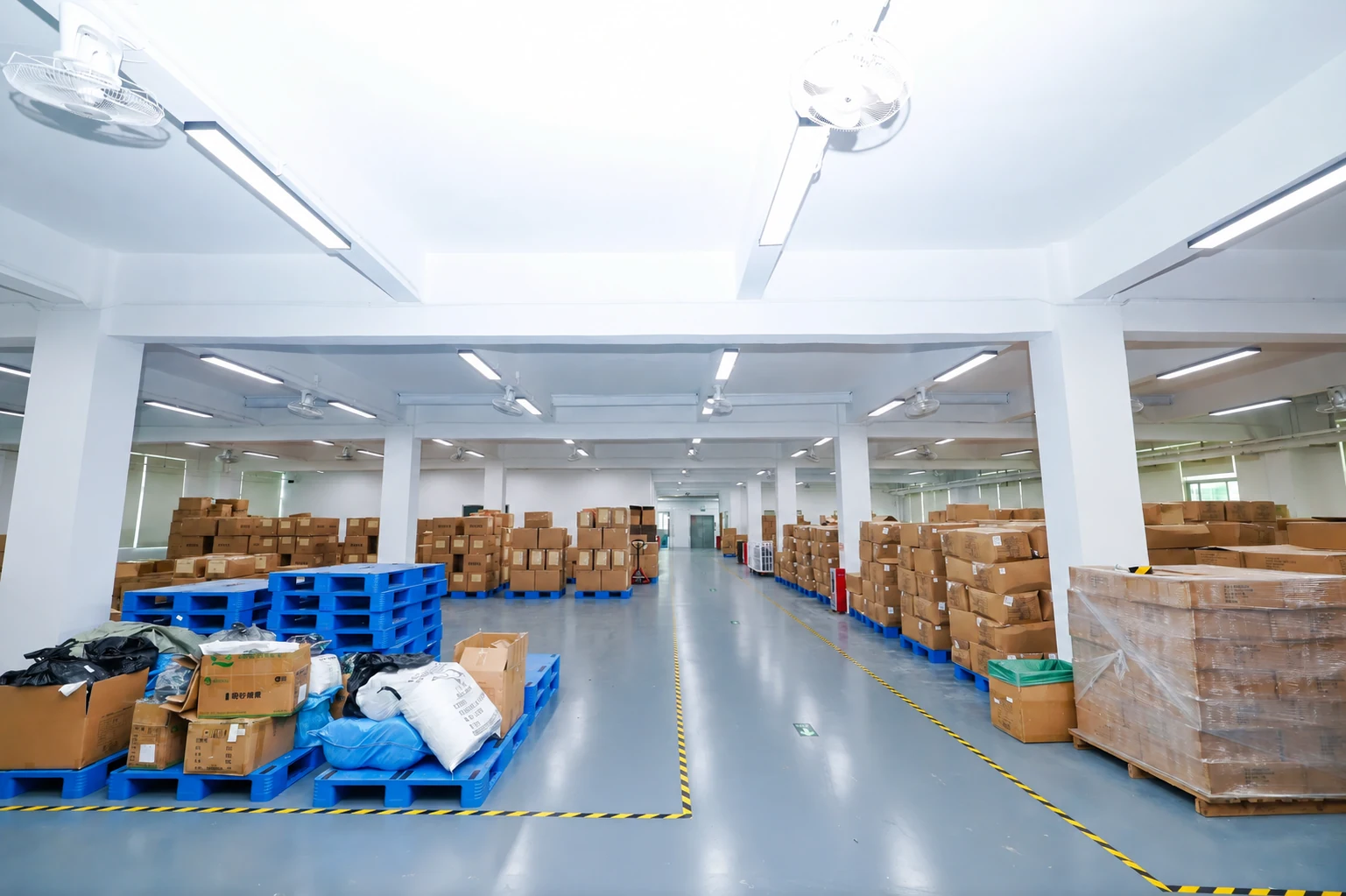
Explore our factory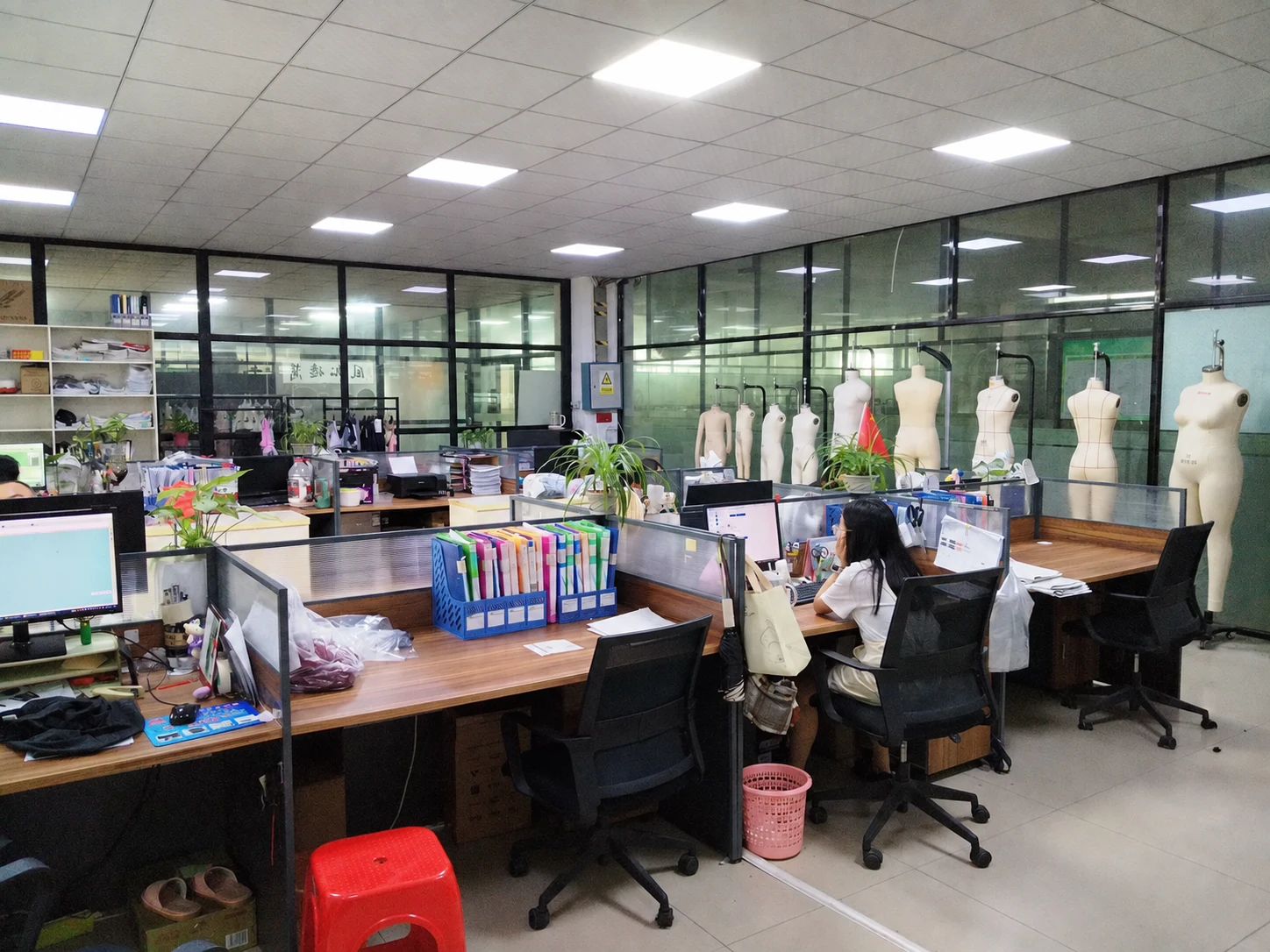
Shaped high waistband
Contour front and back heights around the target body, controlling top-edge tension so the band stays level without digging.
Carry this into approval Factory views show our working environment. Your garment follows its agreed specification and sample.GET THE
RIGHT FIT.
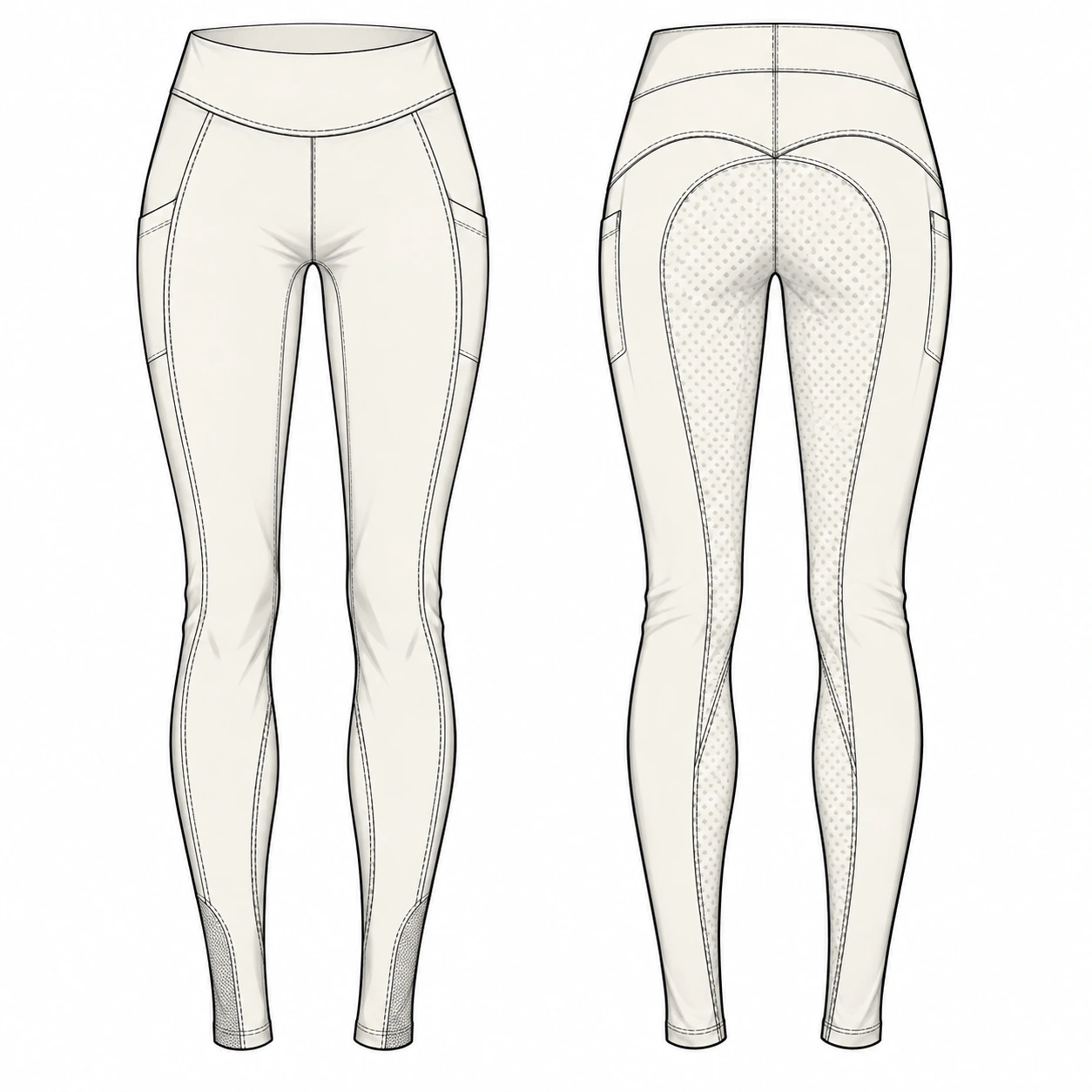
- AWaist
- BHip
- CRise
- DInseam
A size label is only the beginning. Agree the measurement method, review the garment in use and keep the approved fit record with your specification.
Your fit-session checklist
Record the size worn, body measurements, intended underlayers and every proposed correction with the dated sample.
Note the size worn, body measurements, intended underlayers and each proposed correction. Recheck the affected measurement after a revision; confirm the size breakdown for each style and colour before bulk.
MAKE IT
RECOGNISABLY YOURS.
Use the product’s construction to guide decoration and finishing. Ask for placement, colour and material approval on the relevant sample.
Small details.
One identity.
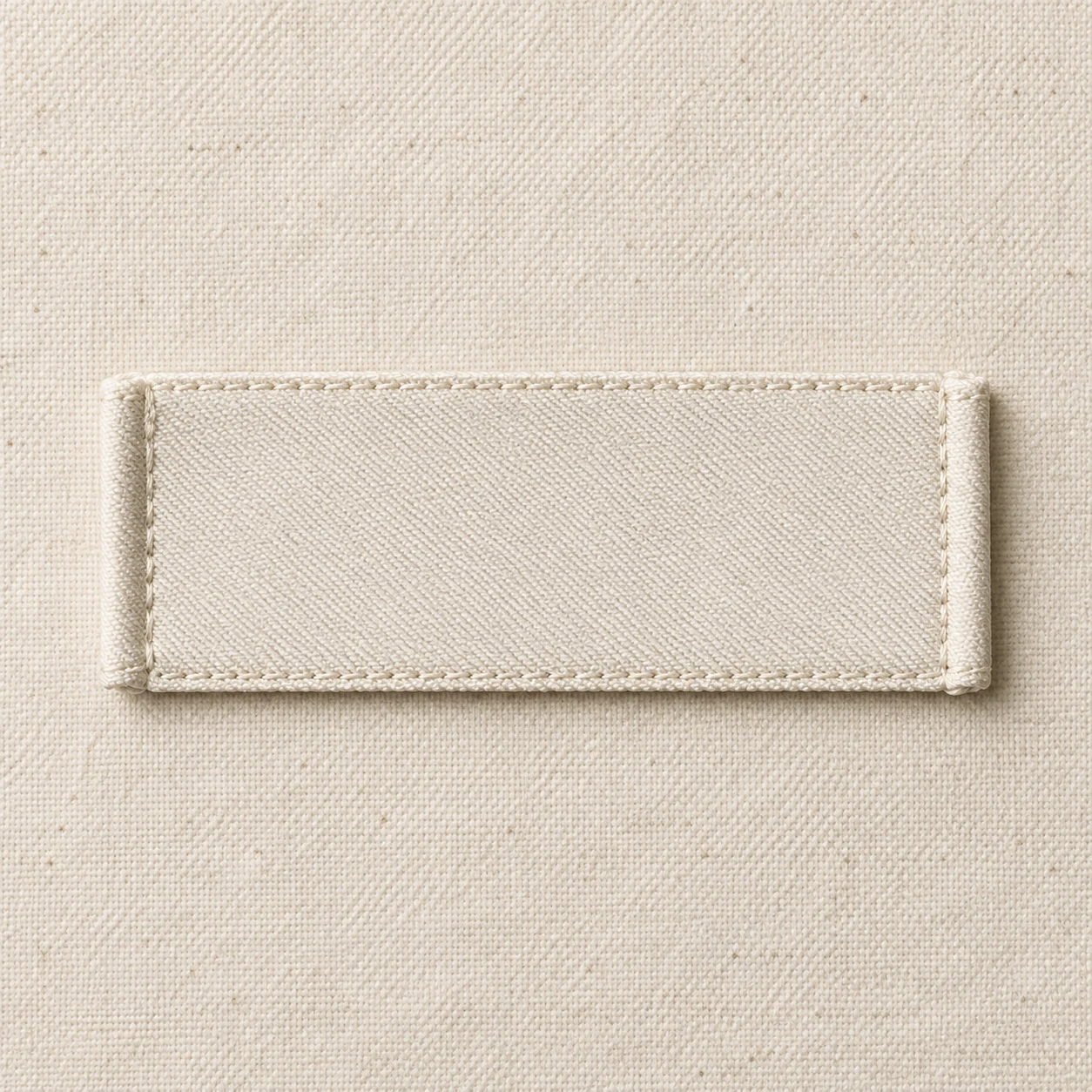
Folded edges · fine weave
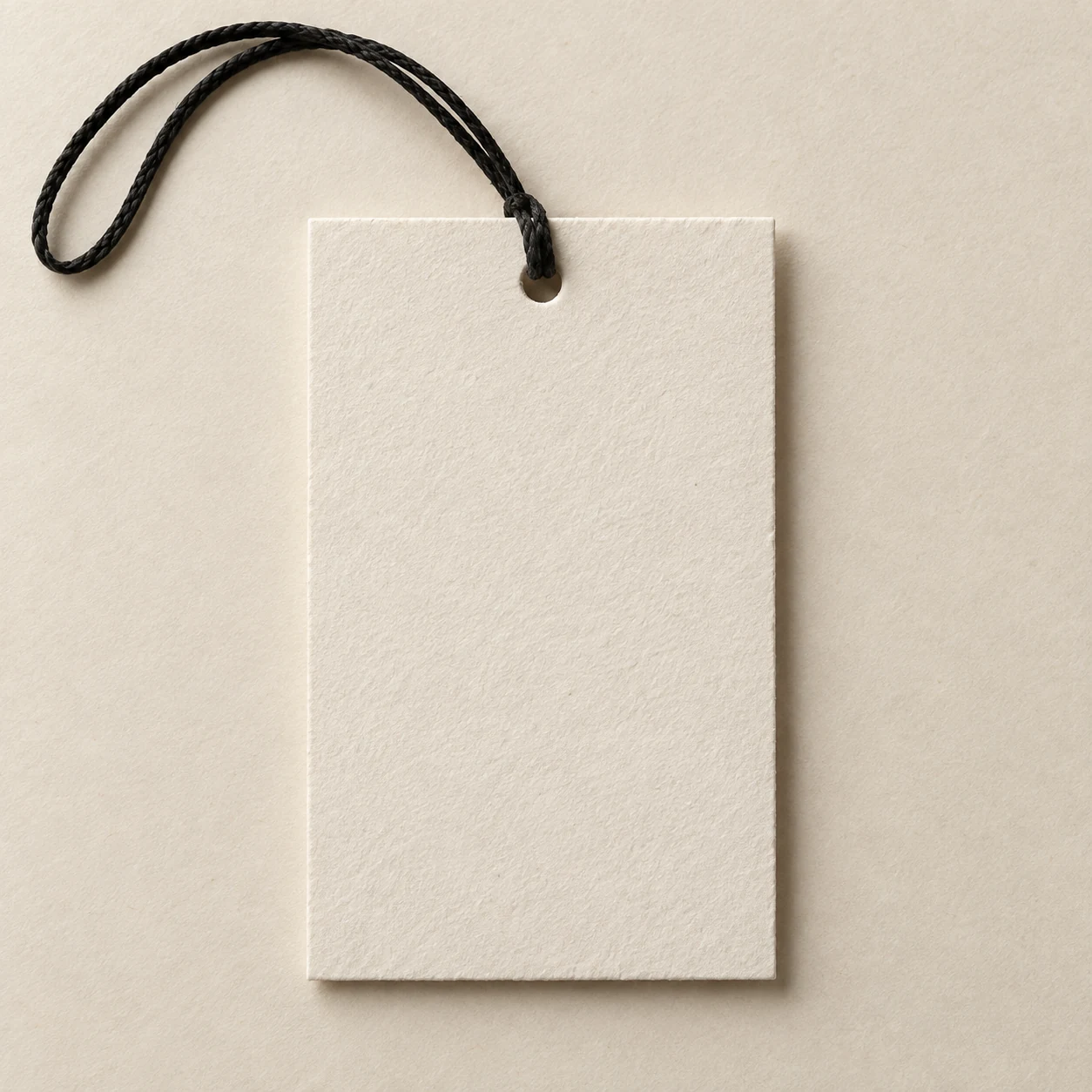
Textured stock · cord attachment
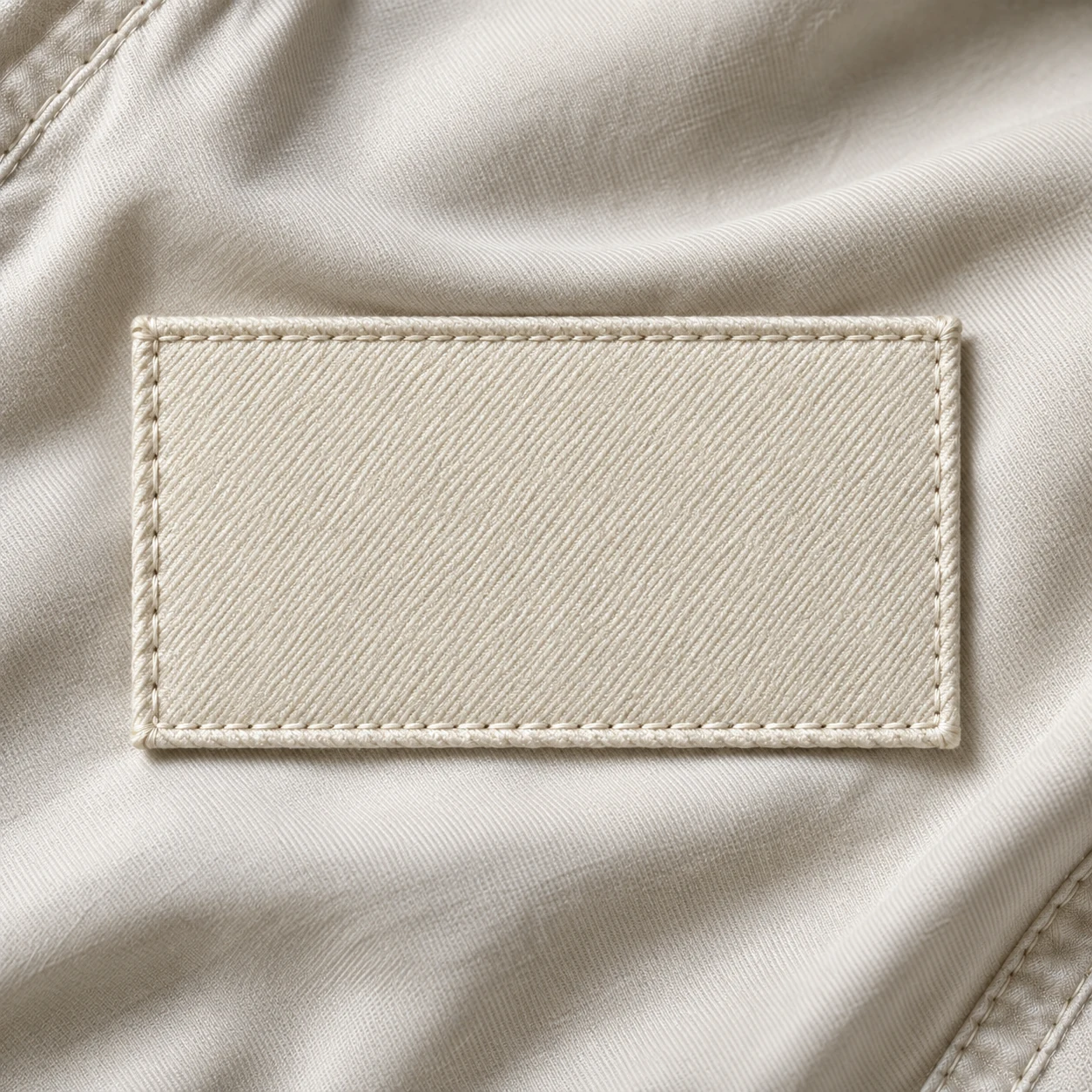
Raised edge · stitched placement
Material mockups with a live wordmark study. Print, weave, colour matching and placement are confirmed on your physical sample.
Rise profile
Specify centre-front, side and centre-back waistband heights plus top-edge circumference; approve the body landmark on multiple target fit riders.
Grip identity
Create a repeat motif or tonal texture with exact scale, density and boundary files. Keep legal brand marks distinct from decorative contact artwork.
Pocket symmetry
Choose one or two thigh pockets, entry shape and optional top closure. Test the actual phone case because nominal screen size understates device bulk.
Seam-led colour blocking
Use panels only where they support fit or merchandising; extra seams across high-stretch zones can add friction and complicate print alignment.
APPROVE THE DETAIL.
THEN THE ORDER.
The first sample helps you make decisions. Define review conditions and acceptance criteria before you compare the result.
Review the high-rise full-grip riding tights sample
Sampling takes 7–10 working days from the agreed start. Record each decision against the dated sample before bulk approval.
Rider, material direction, measurements and artwork.
DEFINE THE STARTTurn the agreed direction into a garment to review.
7–10 WORKING DAYSReview fit, finish and changes. Confirm the final specification.
REVISE IF NEEDEDProceed with agreed quantities, colours, labels and packing.
30–45 WORKING DAYSA shared development direction
Bring reference garments, your rider profile, target colours and any artwork. We turn these into the measurements, materials and construction questions that the sample needs to resolve.
Sample feedback can return to development. Revisions and transit are planned separately; timing begins from the agreed specification and start date.
KEEP THE APPROVAL.
WITH THE ORDER.
One agreed reference for the workroom: the dated sample, its specification and your confirmed order breakdown.
Sample decisions
- Waist retention
Mark the top edge on the body, complete mounting, posting and bending cycles, then measure movement and inspect rolling.
- Squat opacity
View every proposed colour under strong diffuse light over contrasting underwear at standing, squat and mounted stretch positions.
- Grip ride test
Use the target saddle for a normal session and record security during transitions, heat perception and freedom for small seat adjustments.
Style, colour & size allocation
Confirm each style and colour separately, with the size allocation attached. The minimum is 100 pieces per style, per colour.
Labels, packing & timing
Agree label artwork, packing instructions and the production start. Bulk production takes 30–45 working days from the confirmed start; revisions and transit are planned separately.
A CLEARER BRIEF.
A MORE USEFUL QUOTE.
Price follows an agreed product, quantity and delivery scope. Use these inputs to compare proposals on the same basis.
Knit density and recovery
Higher-specification fabric, custom colours and documented performance targets can affect sourcing minimums and testing.
Full-seat print area
Large coverage, fine motifs, multiple colours or extra print passes add material and process time.
Waistband layers
Internal support, elastic, bonding or complex shaping adds components, cutting and assembly operations.
Dual phone pockets
Two anchored bags require extra fabric, seam length, reinforcement and symmetry checks.
Bring these six things
Planning baseline: 100 pieces minimum per style, per colour. Sampling takes 7–10 working days; bulk production takes 30–45 working days from the agreed start.
100 pieces minimum per style, per colour. State each colour quantity separately; confirm your proposed size allocation.
GOOD QUESTIONS.
BETTER DECISIONS.
Product-specific sourcing questions to resolve before sampling.
Record finished centre-front, side and centre-back rise or waistband-height measurements and identify the intended body landmark on the fit model. The label high rise is subjective; the specification and approved worn sample make it repeatable.
It may increase contact, but deposit height, motif shape, saddle material and rider preference also matter. Excess coverage can feel restrictive or alter drape. Compare strike-offs and mounted samples using the same saddle before approving a density.
Approve each production colour on a complete, correctly sized garment under strong light and maximum expected seat stretch. Swatches cannot reveal pattern strain, pocket-bag show-through or seam grin. Document the method and acceptance reference with photographs.