 REINFORM
Set the cutting reference
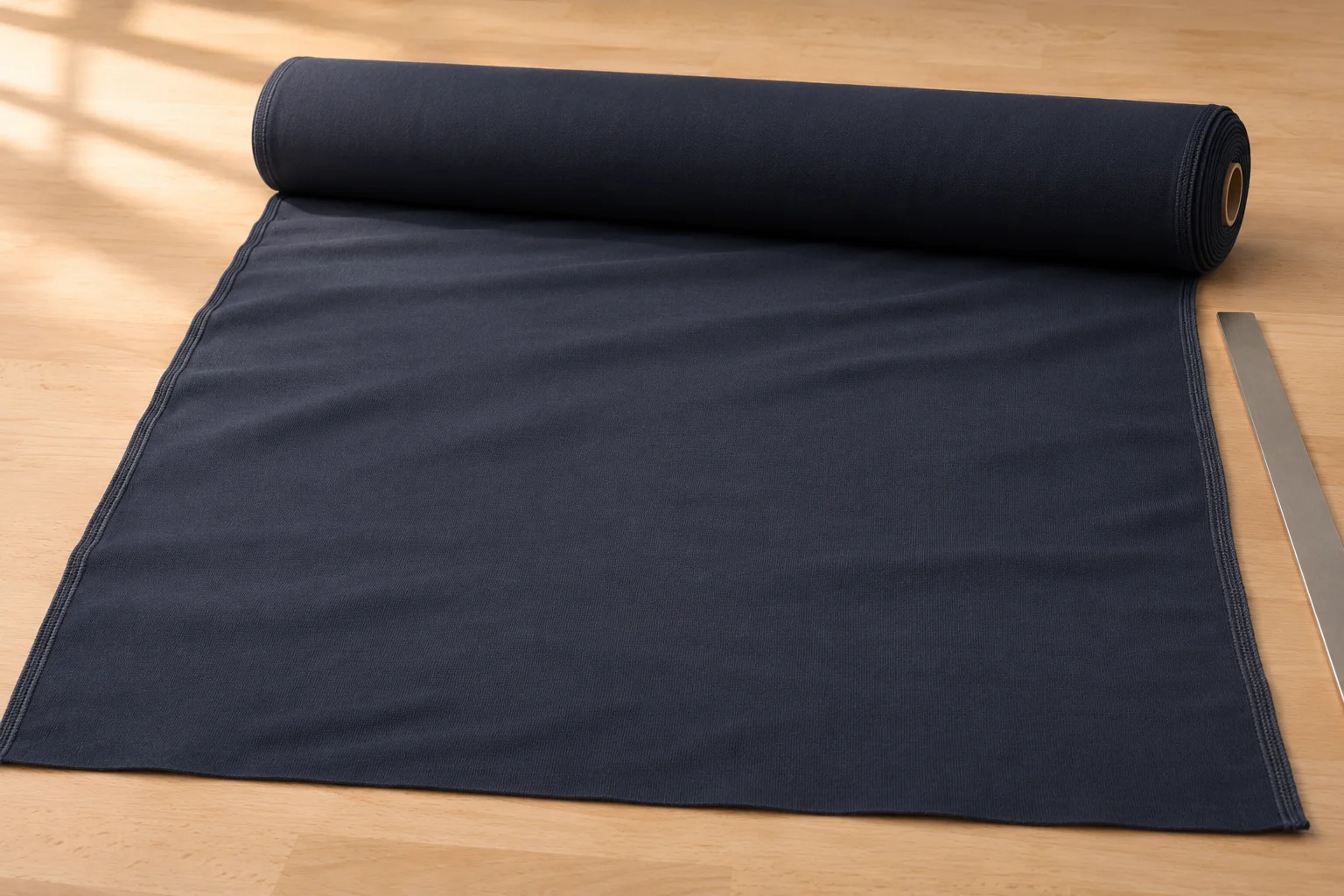
Start with the roll allocated to a specific cut order. A roll label may state the fabric article, colour and nominal width, but the pattern room needs the space that a piece can occupy once the fabric is unfolded and supported. The marker is the cutting layout of the pattern pieces. The lay is the fabric prepared on the table for cutting. Put the current pattern revision, marker ID and lay instruction beside the roll record so that the cutting team knows exactly which combination it is being asked to release.
Agree the width basis first. For example, the marker planner may state the minimum usable span needed with the lay's edge clearance included. Write that basis on the record. At the bench, record physical edge to edge width separately from the usable width after agreed edge exclusions. If one person reports an edge to edge reading and another checks a marker dimension after excluding curled edges, the two values describe different spaces. Use the same unit throughout and record any margin once.
Ask the pattern room which shape features matter on this style. A long riding tights leg panel can run close to one edge for much of the marker. Even where the cloth is broad enough at each measured station, a wavy edge can move inward across that piece. An agreed direction reference such as a visible knit column or a fabric feature can also show whether the layout can sit as intended. Specify what to record and who will review it before opening the roll.
Set the measure and review roles while there is time to ask the pattern room a question. A buyer can request a paired roll record and nominate the project approver. The cutting team can specify how it will support the cloth and repeat the observations. The pattern room can identify the largest or most edge-sensitive pieces and the area their placement needs. Record the agreed version before the first readings so a late change to the marker can be identified as a new decision.
See the pattern and fit decisions a riding tights brief needs to carry.
Mark the same roll
Match the supplier fabric reference, shade or lot where applicable, and individual roll ID to the cut order. Record how the roll arrived and which face and direction the cutting team will measure. If the roll has an accessible end, place enough of it on the bench to make an initial reading of the marked section before the planned unfolding and rest. Record that the end was opened for measurement and label that reading as the initial bench state. If the cloth cannot be measured as specified while still largely wound, have the cutting lead agree an initial set-up and record its limits.
Choose the number and distribution of locations with the cut team. An agreed check may include several stations along the length where the marker is intended to sit and additional stations around a visible inward wave. Assign station IDs and use the agreed non-damaging method to identify the same cross-fabric locations after the cloth has moved. Keep markers out of garment pieces where relevant. Positions on the table alone can move relative to the cloth as it settles. Record a roll reference and a sketch or image that allows a second operator to find each station.
At each station, record the initial overall and usable width and the observed shape. Identify how the crosswise measure was taken and how excluded edges were picked. A note such as ‘right edge rolls inward between B and C’ tells the pattern room much more than ‘edge uneven’. If the shape is compared with a straight datum, identify the datum and the direction of any departure. Record a limit on access when the marked length is only part of the roll so the later instruction can be equally precise.
Unfold and remeasure
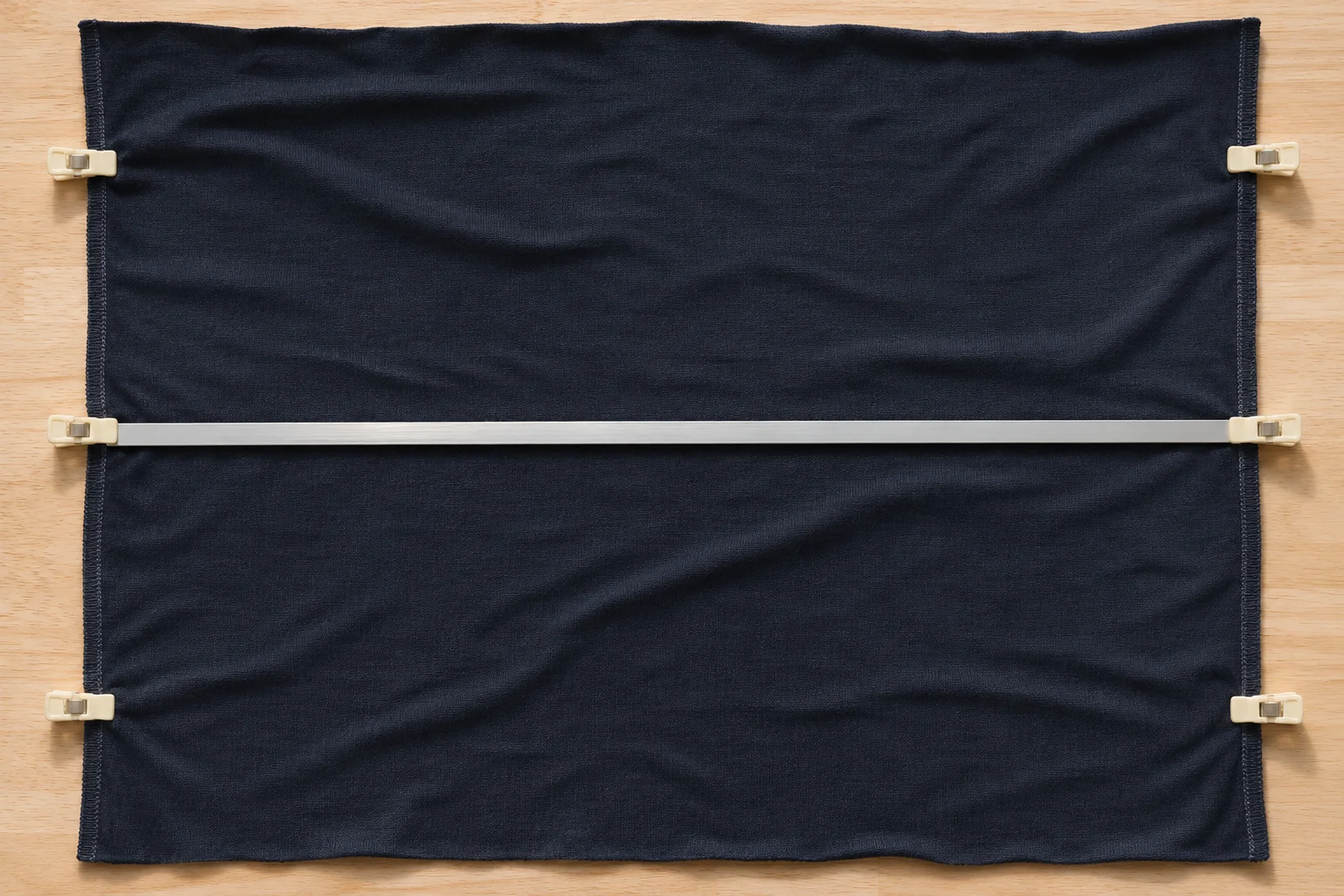
OSHIMA's cutting-room guidance describes tension retained through earlier handling, particularly in knits and stretch fabrics, and explains that width and alignment can move after opening. For the fabric relaxation check, follow the agreed handling method for this cloth and record what actually happened. Note when unfolding started, when the fabric was placed in its agreed rest condition, when the recheck occurred, and whether the roll or cloth was moved, re-folded or re-tensioned between readings.
Use the agreed support and measurement method when the cloth is ready for its recheck. An edge hanging off the table or a fold pulled flat by hand can change the observed width. Lay the measuring rule or tape across the same cloth stations, use the same direction and edge exclusions, and compare the shape with the same reference. If a different table set-up, tool or handling step affects comparability, put that on the record and have the cutting lead agree whether to repeat the pair of readings.
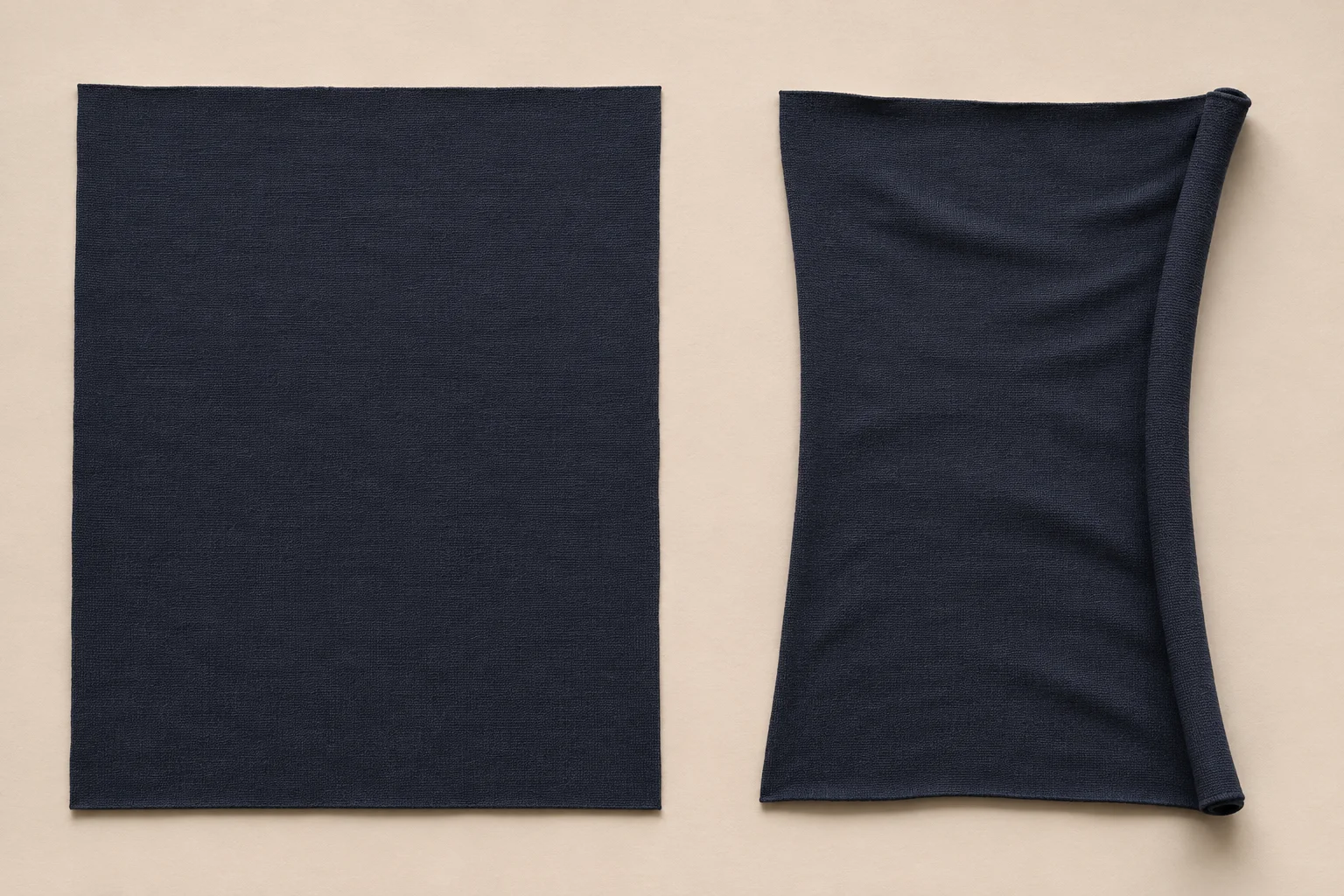
Write the after reading beside the before reading at each station. Width may increase at one point and decrease at another. A narrow point near one end can matter more than a large change elsewhere if a panel crosses the narrow part. Also note what happened between stations. For example, an inward wave can cross the marker line between two readings that both look wide enough. Capture the affected position or extent and take the extra measurements the cutting team needs to show where the layout fits.
Record any continuing change if the project calls for a further check. A timestamp shows when the reading was taken. Release depends on what the latest comparable readings and the observed shape show under the agreed method, together with any project-specific criteria for repeat readings.
Compare with the marker
The International Labour Organization's manufacturing competency guide calls for checking cloth width against lay instructions and checking alignment of marker and lay against the job specification. For this cutting decision, put the marked widths and shape notes against the exact marker and lay instruction in use. Check the span the pieces need throughout the intended length. Include any edge clearance defined in the marker's width basis, and check that the layout fits while keeping the approved piece direction and placement. If the geometry changes when the fabric is transferred to the lay, resolve that difference before the cutter follows the marker.
Take a hypothetical roll R-17 for stretch riding tights. Pattern P04 and marker M03 need 145 cm of usable span including the agreed clearance. At A, B and C, the initial usable widths are 148, 147 and 148 cm. After unfolding and resting as agreed, they are 147, 144 and 146 cm. The right edge curls inward around B, where an outside leg panel runs close to the marker edge. All figures are invented for the example. The whole marked section goes back to the pattern room for a decision under M03, because B is 1 cm below the stated requirement.
For comparison, suppose the paired check had instead recorded 147, 146 and 146 cm after the same agreed handling, with the shape review showing that the fabric stays within the lay requirements throughout the intended span. The authorised cutting lead could then release that roll and section for P04 and M03. In both examples the decision is attached to a named roll and layout. A sister roll from the same delivery needs the coverage the cut plan calls for, since its own usable span and edge shape may differ.
Give the pattern room the shape observations with the dimensions. Two sections may have identical usable widths and leave room for the same marker on paper, yet a change in which edge moves inward can shift that usable span sideways as the lay progresses. Before the roll is released, the team needs to see that the whole marker sits inside the available area under the agreed alignment. For a length that the check could not cover, identify what needs to be measured before it joins the lay.
Issue the cut or return record
Write the instruction so it can travel from the bench to the operator's cut order. A cut release names the roll, the fabric section it covers, the approved pattern and marker versions and the lay conditions that supported the decision. A return keeps that roll out of the affected lay and states the exact mismatch for the pattern room. Include the station or affected span, both readings, the geometry note and the marker requirement. A revised marker may resolve the width conflict if it fits the same approved pieces and direction. Any proposal to change the pieces themselves goes through the applicable pattern approval before a new cutting instruction is issued.
Use the fields below for each roll and keep the paired observations attached when the file moves between teams. Where the measurement is interrupted or a reference is missing, identify the follow-up owner and keep the cutting decision pending until the evidence is complete.
- Identity and scope. Enter the cut order, style, fabric article, colour or lot, roll ID, planned length covered, pattern revision, marker ID and lay instruction.
- Measurement basis. Enter the tool and unit, table set-up, cloth face and direction, agreed edge exclusions, shape reference and marker's required usable span.
- Initial state. Enter time, roll condition, station IDs and map, physical width, usable width and shape observations for each station.
- Unfolding and rest. Enter actual handling and support, placement and recheck times, interruptions and any deviations from the agreed method.
- Recheck. Enter physical and usable widths at the same stations, observed change, limiting point or span, and any comparable repeat readings required by the project.
- Disposition. Enter cut or return to pattern room, the authorised extent and lay reference, reason and supporting record, and the reviewer and decision time. For a return, add the named follow-up owner and the new revision to be checked before cut release.
Before handing the roll over, read the instruction beside the cutter's copy of the marker. If that copy shows a different revision or the roll is reallocated to another lay, have the authorised reviewer check the new combination. The same measurements can inform a second decision when they still apply to the material and handling in question. Attach that decision to the new cut order so the next operator can see why it was issued.
OSHIMA describes how opening tensioned cloth can change its width and alignment. The ILO training reference describes lay and marker checks against job requirements. The paired-station record and cutting example are illustrative buyer tools. Agree the method, limits and release authority for the actual fabric and cut order.
Bring your fabric and pattern references
Share the fabric article, garment direction and the width or shape question that the cutting plan needs to resolve.
Discuss a stretch apparel brief