 REINFORM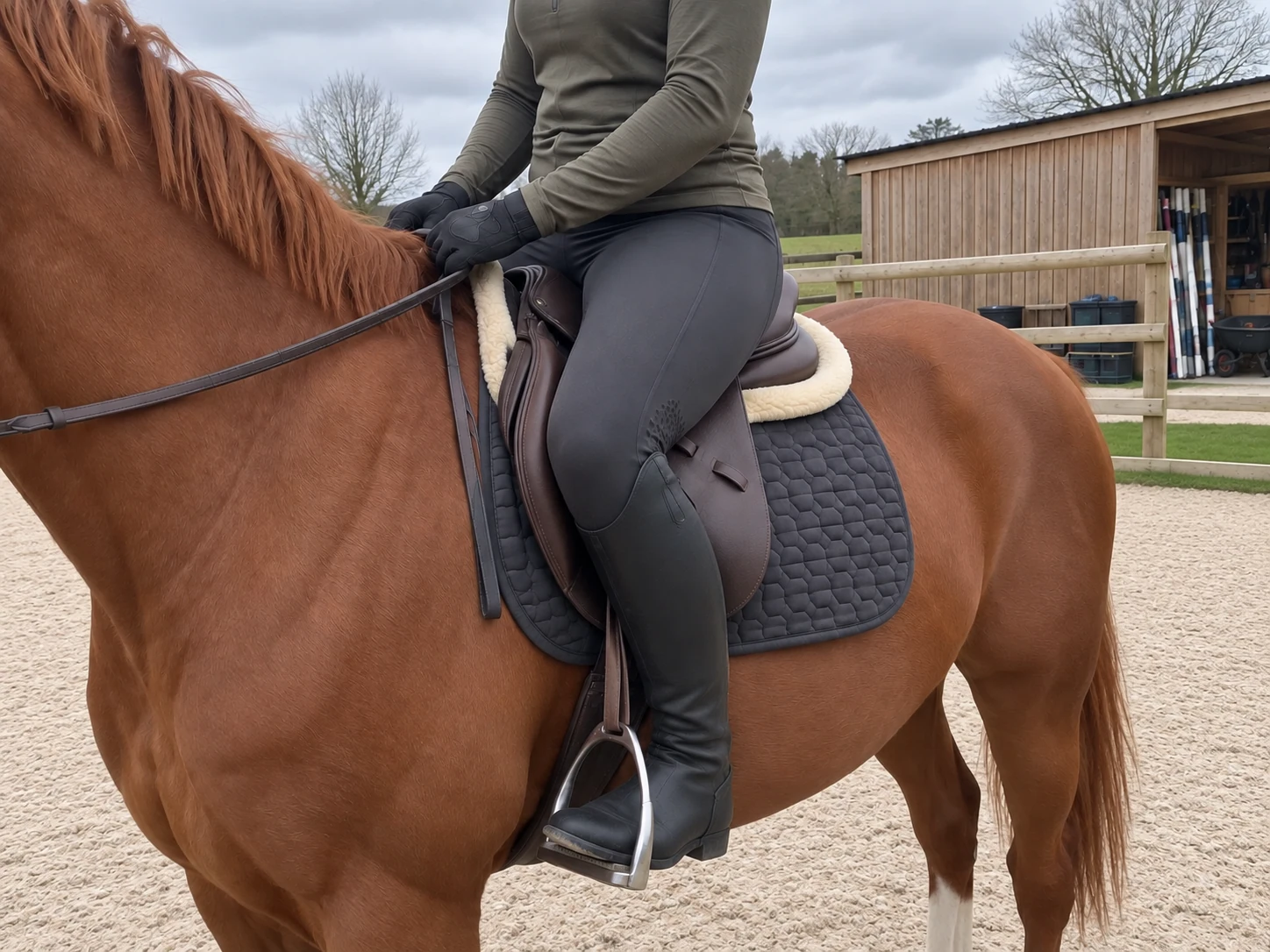
Breeches: a more constructed product language
Breeches usually communicate a tailored, traditional riding look. A developed waistband, belt loops, fly or front closure, shaped panels and refined pocket treatments give the garment more structure. That construction suits brands building a polished training offer or a competition-facing product, especially when the collection needs classic navy, white or light neutral options.
The extra components also create more decisions: waistband height and contour, closure type, pocket placement, lower-leg finish, seam position and trim. Each one affects fit and sampling. A first brief should state whether the reference is a traditional woven-look breech, a stretch-knit breech with tailored details, or another construction entirely.
Riding tights: a clean, close-to-body starting point
Riding tights usually use a pull-on construction and a stretch-knit silhouette. The simpler visual language can suit daily schooling, warm-weather riding and an equestrian-activewear position. Buyers still need to define waistband stability, rise, coverage, seam placement, pocket security and lower-leg comfort. “Legging” should not be treated as shorthand for a generic gym product.
Official product pages show how equestrian tights are differentiated through riding-specific details. Kerrits highlights a stable waistband, no-chafe flat seams, pockets and knee patches, while Equestrian Stockholm separates tights by full-seat or knee-grip options and presents them as part of coordinated riding collections.
Grip is a separate decision
Full-seat and knee-grip treatments can appear on both breeches and riding tights. Choose the coverage around discipline, rider preference and brand position rather than using grip to define the garment category.
The development brief should show the grip area, pattern scale, artwork direction and intended hand feel. It should also define whether a suede-style patch or another seat construction is being considered. Grip placement must be reviewed on the worn sample: a flat drawing cannot show how the pattern moves across the hip, inner thigh and knee.
Make the first range easy to understand
A focused first collection can take one of three routes: one signature breech; one accessible riding tight; or a two-tier offer with a structured breech and a pull-on tight sharing colour and branding. The two-tier route gives retailers a clear good/better story, but it doubles fit development and creates separate MOQ lines for every colour.
Describe performance as a development target until evidence supports a claim. “Four-way stretch target”, “lightweight summer direction” and “water-repellent fabric requested” are responsible brief language. Do not publish moisture-wicking, UPF, waterproof, compression or durability figures merely because a fabric supplier or reference product uses them.
Action: Choose the base construction first, then specify rider, use, fit, grip, pockets, branding and colour. Send a tech pack, reference garment or clear image set so REINFORM can review the most suitable sample route.
These references cover supplier processes, textile testing and market-specific labelling. They do not certify REINFORM or set the terms of your order. Confirm the product specification, destination requirements and quotation with your team.
Put the thinking into your next collection.
Bring your product direction, quantity and questions. We’ll start with a useful project review.
Start your project